AI Coding Live News

Gemini API Deprecates Gemini 2.5 Pro and 2.5 Flash: From December 1, Requests Auto-Route to 3.8 Flash and 3.5 Flash-Lite at the New Models' Rates

In its November 2 Gemini API changelog, Google deprecated gemini-2.5-pro and gemini-2.5-flash and removed both from the Google AI Studio model picker. From December 1, 2026, requests to gemini-2.5-pro will automatically route to gemini-3.8-flash and requests to gemini-2.5-flash to gemini-3.5-flash-lite, billed at the new models' rates. Google flags breaking API changes: stricter function calling and thought_signature validation, thinking_level replacing thinking_budget, and removal of sampling parameters such as temperature and of prefilled model turns. The model string stays valid but behavior can change, so developers should switch model strings and rerun tests before December 1.

Key Takeaways

  • Deadline: from December 1, 2026, gemini-2.5-pro routes to gemini-3.8-flash and gemini-2.5-flash routes to gemini-3.5-flash-lite; API access to 2.5 Pro is already limited to existing users who actively used it.
  • Price change (official price list, per 1M tokens): 2.5 Pro is $1.25 input / $10.00 output for prompts up to 200k; 3.8 Flash is an introductory $0.75 / $3.75 through 2026, rising to $1.50 / $7.50 on January 1, 2027.
  • 2.5 Flash and 3.5 Flash-Lite both cost $0.30 input / $2.50 output for text, while audio input drops from $1.00 to $0.30.
  • The migration guide says to replace thinking_budget with thinking_level (3.8 Flash has no minimal level), drop temperature/top_p/top_k, candidate_count and prefilled model turns, and include call_id and name in every FunctionResponse.
  • It follows the October deprecation of 3.7 Flash, another case of an old model string silently routing to a newer model; 2.5 Pro users will actually land on a Flash-tier model.
Read full story

OpenAI Agents API ships Auto Review, async compaction, experimental time awareness and mid-session tool updates

The OpenAI Developers account shared a post by Steve (@stevendcoffey), who works on the API at OpenAI, listing five Agents API updates this week: Codex-style Auto Review of commands before execution, compaction that runs in the background, an experimental time-awareness feature, updating a session's tools at any time, and automatic caching of system prompts across all sessions. As of writing, the official API changelog does not list these items yet.

Key Takeaways

  • Five updates: Auto Review, async compaction, time awareness (experimental), updating session tools at any time, and automatic cross-session system prompt caching
  • Auto Review mirrors the Codex mechanism and evaluates commands for potential bad behavior before they run
  • Time awareness lets the model act on time-boxed instructions such as "timebox CI fixes to 10 minutes"
  • The Agents API entered public beta on September 10, and this is another round of features within 7 weeks (after computer use on Sep 29, sandbox prewarming on Oct 9 and Ultrafast mode on Oct 16)
  • OpenAI has published no latency or cost-saving numbers, and the changelog has not listed these items yet
Read full story

LM Studio Bionic 1.1.10 adds the oMLX engine, bringing RAM-plus-SSD KV caching and MLX speculative decoding to local models on Macs

LM Studio posted on X at 15:32 UTC on Oct 29 that users can now download a new oMLX engine inside LM Studio and run it with MLX models they already have. The official changelog lists it in Bionic 1.1.10, alongside speculative decoding for MLX models and an in-app terminal. oMLX is an open-source Apple Silicon inference server maintained by developer jundot (Apache 2.0, about 23,000 GitHub stars) built around continuous batching and a two-tier RAM and SSD KV cache. LM Studio has not published speed comparisons for the engine.

LM Studio Bionic 1.1.10 adds the oMLX engine, bringing RAM-plus-SSD KV caching and MLX speculative decoding to local models on Macs

Key Takeaways

  • LM Studio says the oMLX engine can now be downloaded inside the app and used with existing MLX models; the post has about 540 likes (post)
  • The Bionic 1.1.10 changelog (Oct 29) also lists speculative decoding for MLX models, a public in-app terminal and llama.cpp 2.66.0 extension packs (changelog)
  • oMLX is Apache 2.0 open source with about 23,000 GitHub stars and needs macOS 15+ on Apple Silicon M1 to M5 (GitHub)
  • Its core is a two-tier KV cache: hot blocks stay in RAM, overflow is written to SSD as safetensors, and matching prefixes are restored from disk even after a restart
  • LM Studio has published no speed comparison with its existing MLX engine; one user reported that restart-to-update failed after launch and LM Studio is investigating
Read full story
A
Anthropic@AICoder·
👀92
🔥80

Claude Code 2.1.314 adds a block on writes outside working directories, IdP group routing for the apps gateway, and idle compaction in VS Code and Desktop

Anthropic published Claude Code v2.1.314 on GitHub at 01:06 UTC on Oct 30. The official CHANGELOG lists 119 entries, more than half of them fixes. The new features lean enterprise: permissions.blockWritesOutsideWorkingDirectories makes Write, Edit and NotebookEdit refuse paths outside the working directories in every permission mode; Claude apps gateway upstreams can be limited to IdP groups, and Bedrock upstreams can log which guardrail fired; idle compaction now also runs in VS Code and the Code tab of Claude Desktop. It also fixes sessions failing repeatedly when an admin caps effort, and claude -p exiting 0 with no output when startup failed.

Key Takeaways

  • Size: the official v2.1.314 CHANGELOG has 119 entries, more than half of them fixes; released at 01:06 UTC on Oct 30
  • Safety: the new permissions.blockWritesOutsideWorkingDirectories setting stops Write, Edit and NotebookEdit from writing outside the working directories in every permission mode
  • Enterprise gateway: upstreams take an optional groups list so only developers in those IdP groups are routed there, failover included; Bedrock upstreams gain guardrail_trace
  • Experience: idle compaction now runs in VS Code and the Claude Desktop Code tab, summarizing idle conversations above 200K tokens
  • Fixes: when an admin caps effort, Claude Code lowers it and retries; a failed claude -p startup now prints the error and exits 1
Read full story
Linked Models & Agents:
ADSponsored

Google is winding down its async coding agent Jules: read-only after Nov 11 and shut down on Dec 31, with its learnings moving into Antigravity

On Oct 29, Google announced through the official @julesagent account and the Jules changelog that Jules will wind down on December 31, 2026. Users can keep finishing sessions until November 11, after which Jules becomes read-only until the end of the year. Google says its learnings from Jules are going into Google Antigravity, its agent-first development platform, to combine autonomous remote background task execution with an agent-first environment. Google also published an export path for settings, environment variables, scheduled tasks, repositories, memories and every session.

Key Takeaways

  • Key dates: sessions can run until Nov 11, then Jules is read-only, and it shuts down on Dec 31
  • Next stop: Jules learnings go into Google Antigravity; Google does not promise automatic migration of sessions, memories or schedules
  • Export: run npm install -g @google/jules and jules login, then paste the official export prompt into a CLI coding agent; data lands in ~/jules-export
  • Code, branches and PRs already live in GitHub and are unaffected; env-variables.json holds secrets, so keep the export folder out of repos
Read full story

GitHub Enterprise now includes Copilot: $0 seat charge for Enterprise Cloud users, $10 a month Copilot Standalone for others, with AI usage metered from the first request

At Universe 2026 on Oct 28, GitHub announced a new Copilot access billing model: users with a GitHub Enterprise Cloud license pay no Copilot seat charge, and users without one can get Copilot Standalone at $10 per user per month. Both get the same features and models as Copilot Enterprise but no monthly per-seat AI credits; all usage is metered against the enterprise budget from the first request. It is available now only to Enterprise Cloud customers working with a GitHub or Microsoft account team, opens to self-serve customers in stages, and Copilot Business and Enterprise stay on sale.

Key Takeaways

  • Seat charge: $0 for users with a GitHub Enterprise Cloud license; users without one get Copilot Standalone at $10 per user per month
  • Versus the old plans: Copilot Business is $19 per user per month with 1,900 pooled AI credits and Copilot Enterprise is $39 with 3,900; the new model includes no credits and meters usage from the first request
  • When the budget runs out: code completion and next edit suggestions keep working, while Copilot Chat, Copilot code review and Copilot in the cloud need available budget
  • Availability: from Oct 28 only for Enterprise Cloud customers working with a GitHub or Microsoft account team; self-serve opens in stages, and GitHub Free and Team are not eligible
  • Switching is voluntary, but the billing model applies to the whole enterprise, cannot be mixed with Copilot Business or Enterprise seats, and admins still have to assign seats
Read full story

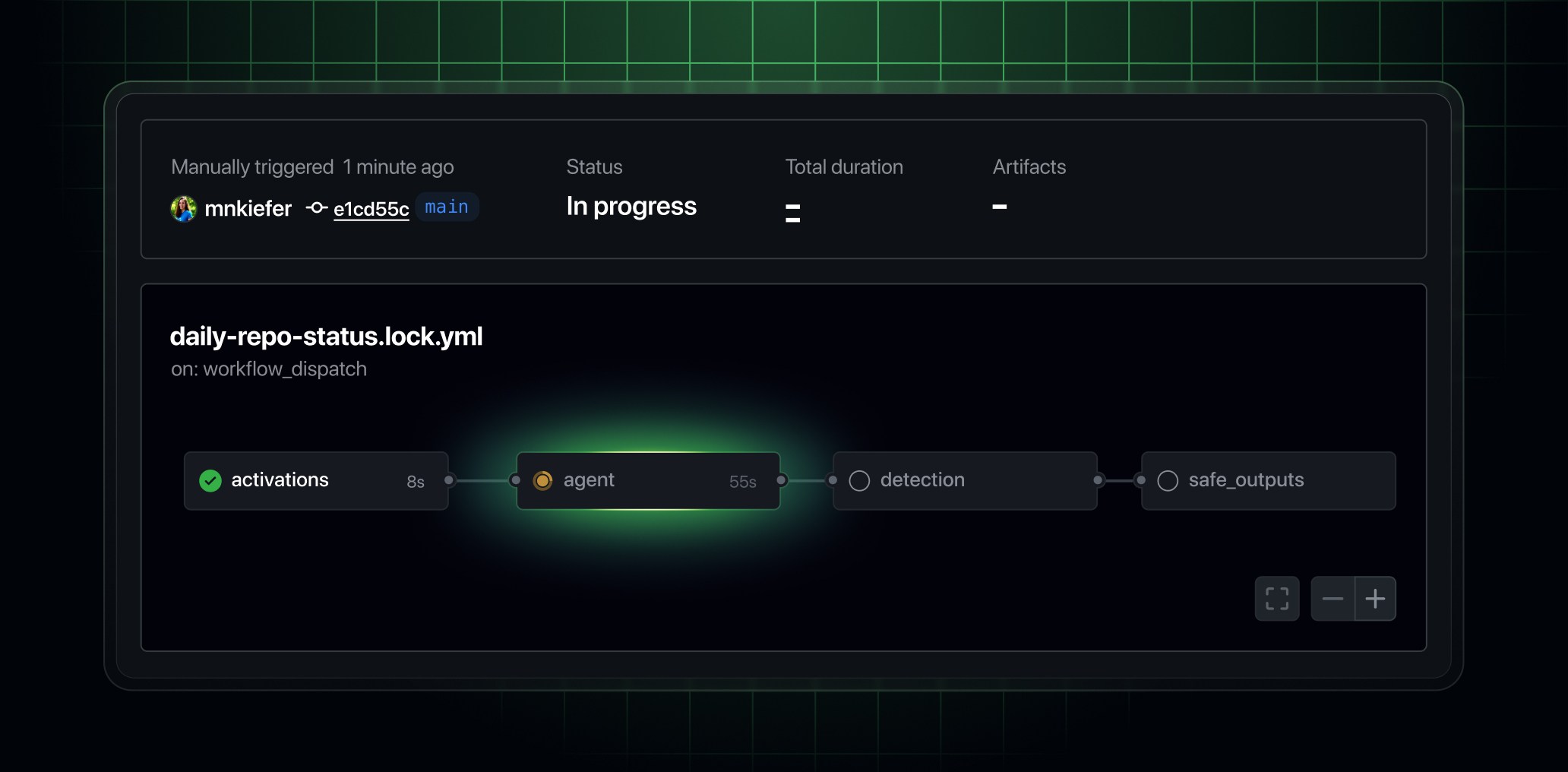
GitHub Agentic Workflows is generally available: write automation in Markdown, compile it to Actions YAML, run Copilot or your own coding agent, now with ARC self-hosting and micro-VM isolation

At Universe 2026 on Oct 28, GitHub made GitHub Agentic Workflows, an open source GitHub Next project, generally available on GitHub Free, Team and Enterprise. Developers describe tasks such as issue triage, CI failure analysis, documentation updates and test writing in natural-language Markdown, and gh aw compiles them into standard Actions YAML run by Copilot or a coding agent of their choice. GA adds self-hosted ARC runners with Docker-in-Docker, a non-experimental gh aw forecast cost estimate, per-workflow model providers and model routing, and Cloud Hypervisor or NVX micro-VM isolation.

GitHub Agentic Workflows is generally available: write automation in Markdown, compile it to Actions YAML, run Copilot or your own coding agent, now with ARC self-hosting and micro-VM isolation

Key Takeaways

  • Availability: GitHub Free, Team and Enterprise on github.com; using the default Copilot CLI engine requires a Copilot license
  • How it works: requirements in Markdown, compiled to standard Actions YAML that reuses existing runner groups and policies; run with Copilot or your own coding agent
  • Safe defaults: read-only permissions, a sandboxed container behind the Agent Workflow Firewall, safe-outputs validation, and a threat detection job before changes are applied
  • New at GA: self-hosted ARC runners with Docker-in-Docker, gh aw forecast out of experimental (with threat detection credits and monthly ranges), per-workflow model providers, model routing, micro-VM isolation and cross-repo enclaves
  • Customer story (Accenture's figures): one lead saved about 29 hours a week, AI authors 91% of the team's commits, and production errors fell from about 11,000 a day to under 1,000
Read full story

Cursor launches Computer Use: agents can control your computer and drive desktop apps like the iOS Simulator to test what they build

On 2026-10-23 (15:59 UTC) the official Cursor account @cursor_ai announced "Cursor can now control your computer": agents can drive desktop apps such as the iOS Simulator to test the features they build. A follow-up post says Computer Use lets agents click and type across any app on your computer, not just the browser. Cursor turns it on by itself when a task needs it, and you can also request it by @-mentioning Computer Use in your prompt; updating Cursor is enough to try it. A community changelog in September mentioned Computer Use on Mac in version 3.20.21, and this is the official launch. Supported platforms, the permission model and benchmarks were not published.

Cursor launches Computer Use: agents can control your computer and drive desktop apps like the iOS Simulator to test what they build

Key Takeaways

  • Cursor officially says its agents can now control your computer and drive desktop apps like the iOS Simulator to test the features they build
  • Computer Use lets agents click and type across any app, not just the browser
  • Cursor uses it automatically when a task needs it, and you can request it by @-mentioning Computer Use in a prompt
  • Update Cursor to try it; supported platforms, the permission model and benchmarks were not published
Read full story

Claude Code 2.1.299 adds idle compaction for 200K+ token sessions before cache expiry and fixes sandboxed writes into --plugin-dir

Anthropic released Claude Code 2.1.299 on Oct 14. A new default compacts a 200K+ token terminal conversation after about 54 idle minutes, before its one-hour prompt cache expires, so the next message doesn't reprocess everything; tune it with CLAUDE_CODE_IDLE_COMPACT_MIN_TOKENS or turn it off with "idleCompaction": false. The release also fixes sandboxed shell commands being able to write into a --plugin-dir folder whose code Claude Code reloads outside the sandbox, and adds --disallow-tools to claude plugin eval.

Claude Code 2.1.299 adds idle compaction for 200K+ token sessions before cache expiry and fixes sandboxed writes into --plugin-dir

Key Takeaways

  • Idle compaction: triggers at 200K+ tokens after ~54 idle minutes, before the one-hour prompt cache expires
  • Configurable: CLAUDE_CODE_IDLE_COMPACT_MIN_TOKENS changes the 200K floor; "idleCompaction": false in settings.json disables it
  • Security fix: sandboxed commands could write into a --plugin-dir folder whose code is reloaded and run outside the sandbox
  • Custom ANTHROPIC_BASE_URL streams now wait 300 s instead of 180 s with no data; gateway-specific model names no longer fail compaction near 200K tokens
  • claude plugin eval gains --disallow-tools and a disallowed_tools case field to keep built-ins such as Agent out of eval runs
Read full story
Linked Models & Agents:

Codex Day 7: GPT-6.1 Sol default context rises from 272K to 500K, no long-context fees on subscription usage

OpenAI's Codex lead Tibo says GPT-6.1 Sol's default context in Codex and ChatGPT Work goes from 272K to 500K (~80% more) to cut compactions on long tasks, with no long-context fees when usage comes from a ChatGPT subscription. Separately, the official Codex changelog says GPT-5.5 retires from ChatGPT and Codex on all plans on October 14 (the API keeps it).

Key Takeaways

  • Default context 272K → 500K (~+80%) for GPT-6.1 Sol in Codex and ChatGPT Work; OpenAI says it will go higher later
  • No long-context fees on subscription usage; on the API, prompts over 272K input tokens bill at 2x input and 1.5x output
  • API GPT-6.1 Sol: 1,050,000-token context window, 128,000 max output, $2 / $10 per 1M tokens standard
  • Override with model_context_window and model_auto_compact_token_limit in ~/.codex/config.toml
  • GPT-5.5 retires from ChatGPT and Codex on all plans on Oct 14; the API keeps it
Read full story
ADSponsored

Grok Bot 0.68.1: slide decks to PowerPoint/Google Slides, formatted email from drafts, 1920×1200 Bot computer

Grok Bot v0.68.1 (Oct 7, official changelog): slide decks delivered as PowerPoint or Google Slides, formatted email from draft cards, Gmail Spam search, Bot-colored 1:1 chats, and a 1920×1200 Bot computer (up from 1280×800) with faster actions. No official speedup figures.

Grok Bot 0.68.1: slide decks to PowerPoint/Google Slides, formatted email from drafts, 1920×1200 Bot computer

Key Takeaways

  • Version: Grok Bot v0.68.1, released 2026-10-07 (official changelog)
  • Slides: sample slides to choose from, delivered as PowerPoint or Google Slides
  • Bot computer screen 1280×800 → 1920×1200 (~2.25× pixels); new windows skip a 5 s wait
  • Email: formatted send from draft cards; Gmail Spam search/restore; Gmail send waits out rate limits
  • Reliability: stuck steps stop within ~30 s, stuck pages abandoned after 25 s; no official speedup %
Read full story
Linked Models & Agents:

Google officially ships Nano Banana 2.1 (gemini-nano-banana-2.1) GA: 1K/2K images now half the price of Nano Banana 2, and human-eval Elo 1050 beats Nano Banana Pro

On 2026-10-06 Google officially launched Nano Banana 2.1 and marked it GA in the Gemini API changelog as gemini-nano-banana-2.1. It is based on Gemini 3.6 Flash and is rolling out across the Gemini app, AI Studio, Search AI Mode, Flow, Stitch, Google Ads and Gemini Enterprise Agent Platform. Image output is priced at $30 per 1M tokens (Nano Banana 2: $60), which works out to $0.0336 per 1K image and $0.0504 per 2K image, about half the old price. The model card's side-by-side human eval puts text-to-image Elo at 1050, ahead of Nano Banana 2 (990) and Nano Banana Pro (935). gemini-3.1-flash-image is now deprecated, with no shutdown date announced. This confirms the silent Flow rollout we reported earlier.

Google officially ships Nano Banana 2.1 (gemini-nano-banana-2.1) GA: 1K/2K images now half the price of Nano Banana 2, and human-eval Elo 1050 beats Nano Banana Pro

Key Takeaways

  • Per-image price: 1K $0.0336 (was $0.067, -50%), 2K $0.0504 (was $0.101, -50%), 4K $0.113 (was $0.151, -25%); Batch halves it again to $0.0168 per 1K image (pricing)
  • Text side got pricier: input $1.50/1M tokens (was $0.50), text+thinking output $7.50 (was $3), so re-check costs for long prompts and many reference images
  • Human-eval Elo (model card): T2I overall 1050 vs NB2 990 vs Pro 935; multi-character consistency 1106 vs 978 vs 1011; infographic factuality 0.521 vs 0.179 vs 0.265
  • Specs: up to 14 reference images (4 characters + 10 objects), fixed 2K/4K tiling artifacts at 1:8/8:1, Google Web + Image Search grounding, thinking levels minimal/medium/high
  • Migration: gemini-3.1-flash-image is deprecated (no shutdown date yet); 131,072-token input limit; no function calling, structured outputs or caching (model docs)
Read full story
Linked Models & Agents:
⚡ Nano Banana 2.1⚡ Nano Banana 2⚡ Nano Banana Pro⚡ Gemini 3.6 Flash🌐 Google🌐 Google DeepMind

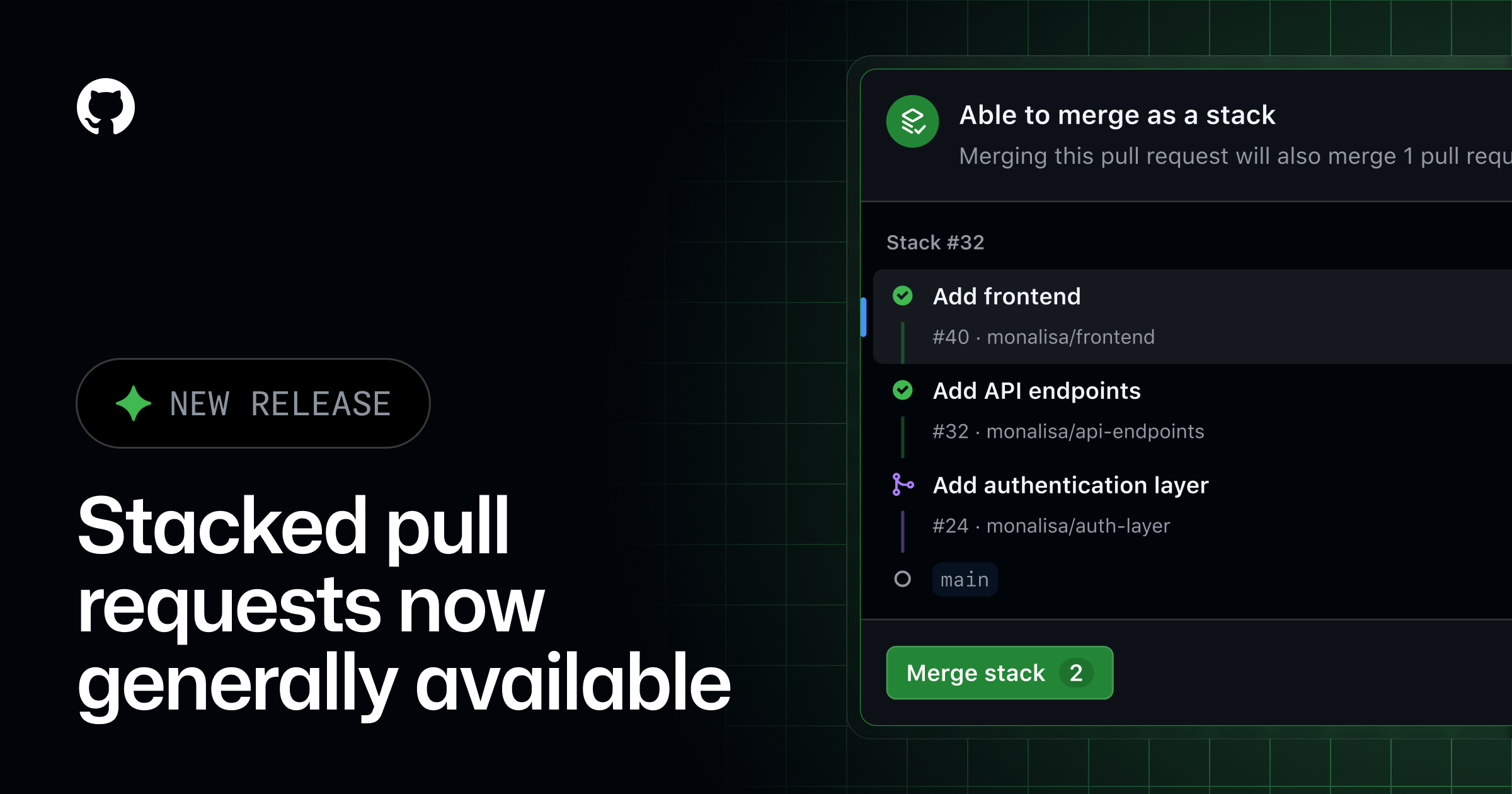
GitHub stacked pull requests are generally available on all github.com plans: approvals survive rebases, whole stacks land via merge queue, and gh stack ships an AI-agent skill

On 2026-10-06 GitHub made stacked pull requests generally available on all github.com plans, with GitHub Enterprise Server support coming in a later release. Since the public preview, repos using stacks have merged 9% more code than their peers, and more than two-thirds of the top 1% of repos now use them, with a 5% faster time-to-merge. New in GA: approvals are kept for unchanged code after a rebase, replacement commits are signed automatically, a whole stack enters the merge queue as one merge group, stacks retarget automatically when their base branch is deleted, and stack auto-merge is rolling out over the coming weeks. The gh-stack CLI extension (v0.2.0) now supports Git worktrees, and gh skill install github/gh-stack teaches AI coding agents how to split large changes into stacked PRs.

GitHub stacked pull requests are generally available on all github.com plans: approvals survive rebases, whole stacks land via merge queue, and gh stack ships an AI-agent skill

Key Takeaways

  • Impact (changelog): repos using stacks merge 9% more code; over 2/3 of the top 1% of repos use them, with 5% faster time-to-merge
  • Approvals and signing: Rebase stack keeps approvals on unchanged code even when stale approvals are dismissed; replacement commits are signed and keep the original authorship
  • Merge queue: a stack lands as 1 merge group; with the merge-commit method, each PR gets its own merge commit; stack auto-merge rolls out over the next few weeks
  • Agents: gh-stack v0.2.0 (2026-10-02, 1.6k stars) supports worktrees and installs an agent skill via gh skill install github/gh-stack; the pull_request webhook gains a stacked action
  • Coverage: all github.com plans now, GHES in an upcoming release; requires gh v2.0+ and Git 2.36+
Read full story

OpenAI opens the Decisions API public beta: POST /v1/decisions on gpt-6-luna returns typed predicate, choice and score answers ~10x faster than the Responses API, billed only for input at $0.10 per 1M tokens

Per the OpenAI API changelog, the Decisions API entered public beta on 2026-10-06 with gpt-6-luna: a dedicated POST /v1/decisions endpoint takes text/images plus a list of questions and returns typed predicate, choice or score answers with probabilities, about 10x faster than the Responses API. Billing is input-only at $0.10 per 1M tokens (no output or cache charges); ZDR and HIPAA are supported and GA is expected within weeks.

OpenAI opens the Decisions API public beta: POST /v1/decisions on gpt-6-luna returns typed predicate, choice and score answers ~10x faster than the Responses API, billed only for input at $0.10 per 1M tokens

Key Takeaways

  • Speed: typed answers about 10x faster than the Responses API (Decisions guide)
  • Price: input-only $0.10 per 1M tokens, no output or cache read/write fees; regular gpt-6-luna is $0.10 in / $0.50 out
  • 3 question types: predicate (0–1 probability), choice (value + probabilities + confidence), score (probability-weighted ordinal level)
  • Compliance: ZDR and HIPAA eligible, US and Europe (EEA + Switzerland) data residency; GA expected in weeks
  • Limits: gpt-6-luna only; images must be inline base64, no hosted URLs or file_id
Read full story
Linked Models & Agents:

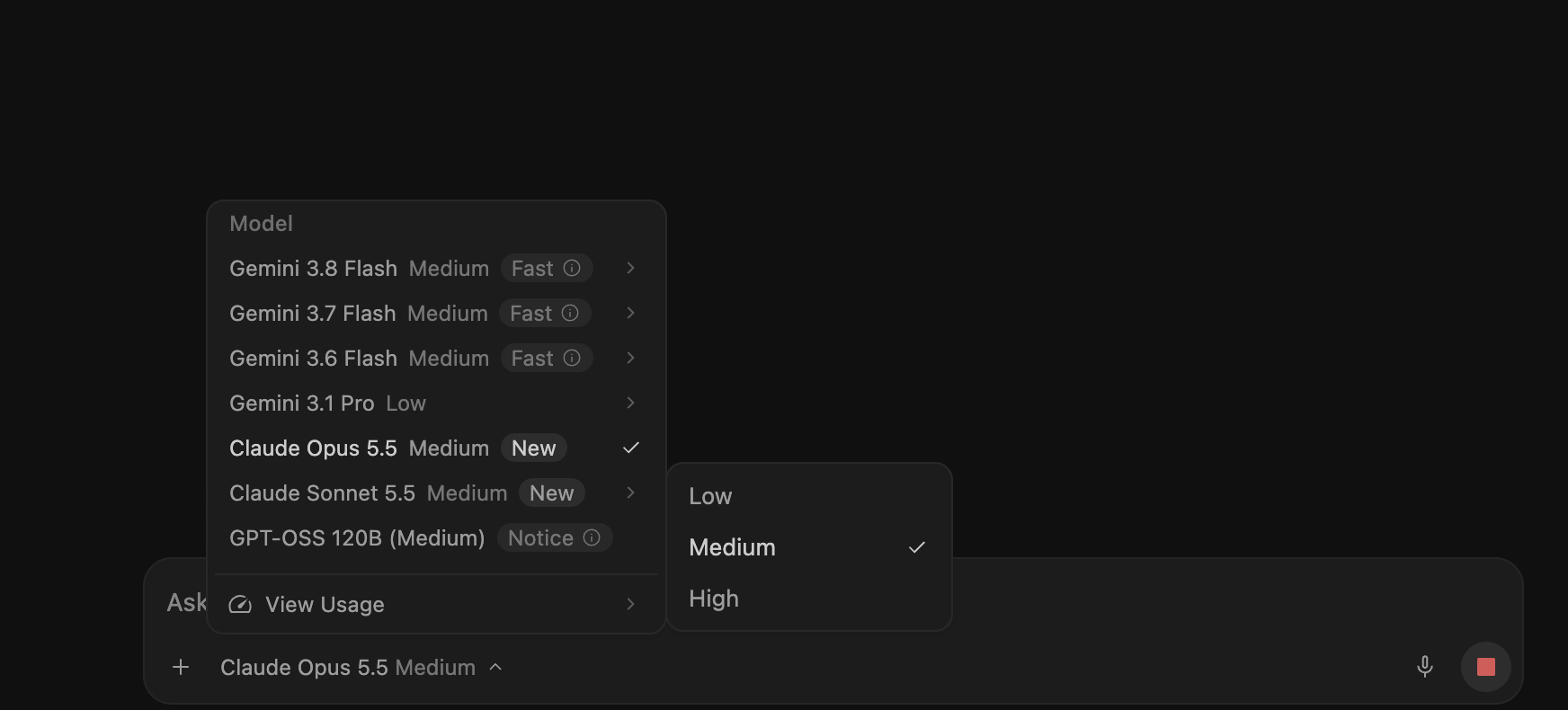
Google Antigravity lists Claude Opus/Sonnet 5.5: paid non-trial Pro + Ultra only; Claude 4.6 and GPT-OSS-120b retire Nov 2

Official Antigravity Models docs now list Claude Sonnet 5.5 (thinking) and Claude Opus 5.5 (thinking): Free/Plus/Enterprise ❌; Google AI Pro non-trial only ✅; Ultra ✅. Footnote: Claude 4.6 and GPT-OSS-120b remove on 2026-11-02. No separate changelog post—docs table is the source. No invented Antigravity SWE scores.

Google Antigravity lists Claude Opus/Sonnet 5.5: paid non-trial Pro + Ultra only; Claude 4.6 and GPT-OSS-120b retire Nov 2

Key Takeaways

  • Source of truth: antigravity.google/docs/models + /docs/plans — Claude 5.5 (thinking) rows are live in the table
  • Access: Google AI Ultra and paid non-trial Pro only; Free/Plus/Enterprise/trial Pro excluded
  • Retirement: Claude Sonnet/Opus 4.6 and GPT-OSS-120b removed 2026-11-02 per docs footnote
  • Switching: model picker under the prompt; mid-turn changes apply after the turn ends or is cancelled
  • Quotas: Pro/Ultra five-hour + weekly limits; optional AI Credit overages; no BYOK
Read full story