AI Coding Live News

X discussion: Shopify CEO Tobi Lütke backs the monorepo as a Shopify engineer calls it a boon for coding agents, while critics still prefer split repos

Shopify distinguished engineer Burke Libbey posted on November 1 that moving to a monorepo has been a boon for agents at Shopify; it needs thoughtful tooling and has downsides that take effort to mitigate, but he would not go back. He was replying to Darren Shepherd, who said a day earlier that he hates the idea that monorepos are great for agents. Shopify CEO Tobi Lütke then quoted Burke and recalled Mikhail Parakhin telling him that every engineer hates the idea of moving to a monorepo, yet once it is there no engineer would want to work somewhere without one. Tobi's post drew about 1,115 likes, 454 bookmarks and 89K views and set off a wide debate. These are practitioner opinions, not an official technical announcement.

Key Takeaways

  • Original post: @tobi, Nov 1, 15:39 UTC, about 1,115 likes, 454 bookmarks, 95 replies and 89K views at fetch time
  • Shopify distinguished engineer Burke Libbey wrote that moving to a monorepo has been a boon for agents at Shopify; it needs thoughtful tooling and its downsides take effort to mitigate, but he would not go back
  • On the other side, Darren Shepherd (Rancher and k3s background) posted on Oct 31 that he hates the idea that monorepos are great for agents and that the best way to scale is to avoid scaling
  • Mikhail Parakhin replied to Tobi's retelling: "True story! And now, with agents, it more true than ever."
  • Supporters in the quote posts say agents can see every caller at once and get cross-stack type checking and atomic changes; skeptics ask whether agents make independent, separately evolving repos more attractive
Read full story
Linked Models & Agents:

Benji Taylor, head of design at X and SpaceXSI, open-sources Stageshow, an agent skill for realistic faux product UI and animated demos

On Oct 31, Benji Taylor, head of design at X and SpaceXSI, released Stageshow on X: an open-source skill (MIT license) for coding agents that helps them produce faux product UI that looks real, including stills, cursor demo animations, and bento grids, delivered as ordinary React components. It installs with one command, and he says it works with Grok Build, Claude Code, Codex, Gemini, and others. The launch post drew about 4,500 likes and 6,500 bookmarks. He notes it rarely nails a demo in one shot and most still take a few rounds of feedback.

Benji Taylor, head of design at X and SpaceXSI, open-sources Stageshow, an agent skill for realistic faux product UI and animated demos

Key Takeaways

  • Install: npx skills add benjitaylor/skills --skill stageshow; the author says it works with Grok Build, Claude Code, Codex, Gemini, and other agents (author's post)
  • Contents: a seven-step workflow in SKILL.md, reference rule docs, dozens of gold examples, a React kit, and self-check scripts such as film.mjs (GitHub)
  • License: the stageshow folder is MIT licensed; the repo was created Oct 26 and had about 61 stars at writing time
  • Reach: the launch post had about 4,521 likes, 6,561 bookmarks, and 213k views as of Nov 1, 08:00 SGT
  • Quality claims are the author's own: the same prompts did better with the skill, but no quantitative evaluation was published
Read full story

OpenCode team ships Hex 3.0 stable: local voice dictation for Mac, Windows and Linux, built for talking to coding agents

Anomaly, the company behind open-source coding agent OpenCode, shipped Hex 3.0 stable: hold a shortcut, speak, and the text is pasted at your cursor. Recognition runs on-device, local model memory drops from about 900 MB to about 160 MB, and it adds vocabulary hints, a hex CLI and optional OpenCode rewriting.

OpenCode team ships Hex 3.0 stable: local voice dictation for Mac, Windows and Linux, built for talking to coding agents

Key Takeaways

  • Hex v3.0.0 was released on GitHub at 00:38 UTC on Oct 31; it is MIT-licensed, written in Rust, and the repo has about 1,557 stars (release notes)
  • Vendor figures: local model memory drops from about 900 MB to about 160 MB; since 2.3.0 it streams, so a 2-minute dictation finishes about 0.1 s after release on an RTX 5070 Ti
  • Runs on macOS 15+ (Apple silicon), Windows x64/ARM64 and Linux x64/ARM64, with new .deb and .rpm packages on Linux
  • 3.0 does not auto-update from 2.3.1 and starts fresh, so settings, History and models must be set up again; Voice Action and spoken commands are removed
  • The @opencode launch post drew about 2,400 likes, 1,600 bookmarks and 100k+ views (post)
Read full story
Linked Models & Agents:
⚡ Parakeet⚡ Whisper🤖 OpenCode🤖 Hex🌐 Anomaly

Kaggle and IBM Research launch the ScarfBench Java migration leaderboard: Gemini 4 Argon with Antigravity leads at 75.2%, and about 72% of failures happen at runtime

Kaggle announced ScarfBench with IBM Research, a 204-task benchmark that tests whether coding agents can migrate enterprise Java apps between Jakarta EE, Quarkus and Spring without changing behavior. IBM's October 27 technical note shows Gemini 4 Argon with Antigravity first on the smoke score at 75.2%, Claude Opus 5.5 with Claude Code highest on all-tests-pass at 72.1%, and GPT-6.1 Sol with Codex cheapest at $1.25 per solved task.

Kaggle and IBM Research launch the ScarfBench Java migration leaderboard: Gemini 4 Argon with Antigravity leads at 75.2%, and about 72% of failures happen at runtime

Key Takeaways

  • 204 migration tasks and 10 model-plus-harness configurations; top smoke scores are Gemini 4 Argon + Antigravity 75.2%, Claude Opus 5.5 + Claude Code 70.5% and Claude Opus 5 + Claude Code 69.8% (IBM figures)
  • Claude Opus 5.5 + Claude Code has the highest all-tests-pass rate at 72.1%, just ahead of Gemini 4 Argon at 71.1%
  • Compiling is mostly solved: 8 of 10 configurations compiled at least 97% of solvable tasks, yet smoke scores spanned more than 50 points
  • 535 of 745 classified failing runs (about 72%) were runtime behavioral failures, including 210 lost-route/404 failures
  • Cost per solved task: $1.25 for GPT-6.1 Sol + Codex, $1.59 for Gemini 3.8 Flash + mini-swe and $10.10 for Claude Opus 5.5 + Claude Code; public submissions are not open yet
Read full story
ADSponsored

Android Studio Rabbit 2 goes stable with Bring Your Own Agent: 40+ coding agents including Claude Agent, Codex and Antigravity via the open ACP

On Oct 28, the day of Android Dev Summit, Google shipped Android Studio Rabbit 2 (2026.2.2) to the stable channel. The headline change is that Bring Your Own Agent (BYOA) moves from its September Canary preview to a stable feature: developers can plug any Agent Client Protocol (ACP) compatible coding agent into the IDE agent window. Google says more than 40 are available, including Anthropic Claude Agent, OpenAI Codex, JetBrains Junie and Google Antigravity, and users can sign in with personal or enterprise plans. The release also adds an agent skills manager, AI Change Review and agent-assisted LeakCanary fixes.

Android Studio Rabbit 2 goes stable with Bring Your Own Agent: 40+ coding agents including Claude Agent, Codex and Antigravity via the open ACP

Key Takeaways

  • Version 2026.2.2 reached the Stable channel on Oct 28; BYOA first appeared in preview with the Rabbit 2 Canary in September
  • Google says 40+ ACP-compatible agents are available; Claude Agent, Codex and Antigravity are the defaults, and others install from the registry under Settings > Tools > AI > Agents
  • Agents get IDE tools: the project graph and build diagnostics, Android SDK tools, terminal execution, emulator control, Logcat and Compose Preview
  • Sign in with personal API keys or consumer and enterprise subscriptions; the built-in Android Studio agent stays free
  • Also new: a skills manager preloaded with Android and Firebase skills, AI Change Review from three entry points, and agent-assisted LeakCanary fixes; Google's Mishaal Rahman said Android CLI users grew 10x
Read full story

Vercel CI enters beta: runs only the Turborepo tasks a change affects, 2-6x faster CI built for coding agents

On Oct 28 Vercel launched Vercel CI in beta on all plans. It reads turbo.json, runs only the tasks affected by a code change, serves unchanged tasks from Remote Cache, and gives each task its own machine on Hive, Vercel's compute layer. Vercel says time from git push to "CI passed" in its own repos is 2-6x faster and that nearly 8 million tasks have run across its repos and the private beta; agents can watch and debug CI through the Vercel CLI and MCP.

Vercel CI enters beta: runs only the Turborepo tasks a change affects, 2-6x faster CI built for coding agents

Key Takeaways

  • Speed: push-to-"CI passed" time in Vercel's own repos is 2-6x faster (vendor figure)
  • Scale: nearly 8 million tasks completed across Vercel's repos and the private beta
  • Setup: add "tags": ["ci"] to a task in turbo.json, with no workflow YAML, and Remote Cache is on by default
  • Agent-ready: vc ci ls, inspect, logs and grep plus Vercel MCP let agents inspect runs, logs and flaky tests
  • Compatible: posts a check to GitHub pull requests so existing branch protection still works; beta on all plans
Read full story

X discussion: Zerodha CEO Nithin Kamath asks what traders are building with free Kite APIs and AI coding agents

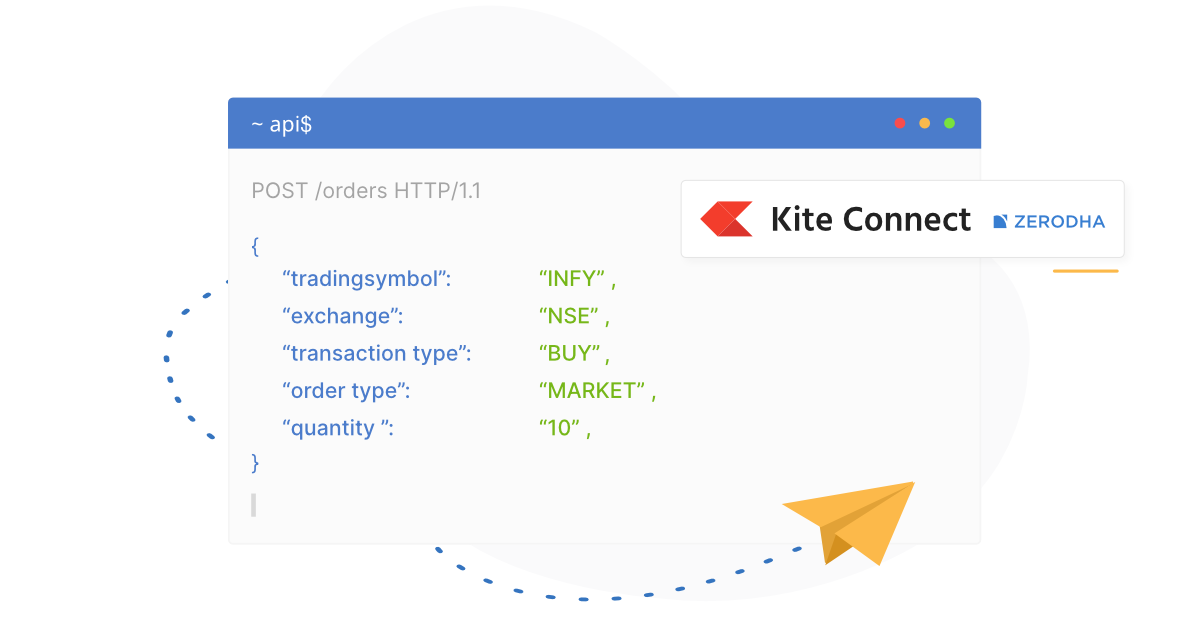
On Oct 26, Zerodha founder and CEO Nithin Kamath asked on X how people are using Kite APIs with AI agents now that they are free, and what they have built. He said AI coding agents such as Claude Code and Codex have made it much easier for traders and investors to build their own tools without much coding experience, and that Zerodha is seeing more Kite API usage because of these agents. Within about 10 hours the post drew more than 2,200 likes, over 2,000 bookmarks and 200+ replies. This is an X discussion and the CEO's own view, not a new product launch.

X discussion: Zerodha CEO Nithin Kamath asks what traders are building with free Kite APIs and AI coding agents

Key Takeaways

  • Engagement (as of 2026-10-26 21:08 UTC, public X API metrics): about 183K views, 2,256 likes, 2,039 bookmarks, 219 replies and 113 reposts
  • Source of the view: an original post by Zerodha founder and CEO Nithin Kamath (@Nithin0dha), who says coding agents are driving more Kite API usage; Zerodha has not published how much
  • Pricing (per the official Zerodha API page): the Personal tier is free with orders, GTT, alerts, margin computation and portfolio management; the Connect tier costs ₹500/month and adds realtime WebSocket streaming and historical candles
  • Official SDKs cover 8 languages (Python, Java, Node.js, C#/.NET, Go, Rust, PHP and C++), so coding agents can generate client code directly
  • The debate: AI coding agents make it common for non-programmers to build their own trading tools, which also puts risk control and automated order placement in individual hands
Read full story

X discussion: Thorsten Ball's "How I work with Agents" lists 15 habits for coding with AI agents and draws nearly 4K bookmarks

At 15:58 UTC on 2026-10-25, developer Thorsten Ball (@thorstenball) published an X article, "How I work with Agents" (post), summarizing how he works with coding agents "as of October 2026": use only the latest and strongest models, prompt for what you want rather than how to do it, make the whole development lifecycle from deploys to production logs visible to the agent, ask agents for "irrefutable proof", and review only code with a high blast radius. When we pulled it, the post had about 1,935 likes, 143 reposts, 92 replies, 3,981 bookmarks and 137K views, and it reached X's trending stories. This is a personal account of practice presented as opinion, not a verified conclusion.

X discussion: Thorsten Ball's "How I work with Agents" lists 15 habits for coding with AI agents and draws nearly 4K bookmarks

Key Takeaways

  • Main post: post, published 15:58 UTC on 10-25, with about 1,935 likes, 143 reposts, 92 replies, 3,981 bookmarks and 137K views when we pulled it; bookmarks are about twice the likes, suggesting many readers saved it as a checklist
  • Models: the author says to use only the latest and strongest models, because when a model is wrong 10% of the time you do not know which 10%, so you end up retrying
  • Prompting: describe the outcome, for example "Make the bytecode compiler and VM AS FAST AS YOU CAN. Do not stop until it's 2x faster."
  • Verification and review: ask agents for end-to-end walkthroughs, demo videos and before/after numbers as proof; the author personally reviews only high-blast-radius changes such as fewer than 5 central files and database migrations
  • Workflow: do not wait for agents, let them wait on you; the author calls schedules, wake-ups and heartbeats a "killer feature" and says context compaction works well enough that manual token management is wasted effort
Read full story
Linked Models & Agents:

Google previews Gemini API CLI (gemini-api), a zero-dependency Go binary that lets Claude Code, Codex, Cursor and other coding agents generate media, transcribe and run managed agents from the shell

The Google AI Studio team released an experimental preview of the Gemini API CLI (command name gemini-api). It is a stateless, zero-dependency Go binary for macOS, Linux and Windows, open source under Apache 2.0. Any coding agent with shell access and a GEMINI_API_KEY can call text reasoning, image, video, music and speech generation, file and YouTube analysis, audio and video transcription, and managed agents such as Deep Research with one command. Media is written straight to disk and only the file path goes to stdout, so base64 payloads never land in the context window. Google labels it experimental and not a supported Google product.

Google previews Gemini API CLI (gemini-api), a zero-dependency Go binary that lets Claude Code, Codex, Cursor and other coding agents generate media, transcribe and run managed agents from the shell

Key Takeaways

  • Default models (official README): gemini-3.8-flash for generate, analyze and transcribe; gemini-nano-banana-2.1 for image; gemini-omni-1.1-flash for video; lyria-3.5 for music; gemini-3.8-flash-tts for speech
  • Install with a one-line curl script on macOS/Linux, a PowerShell script on Windows, or go install; the latest GitHub release is v0.4.3 (published 2026-10-19)
  • Built for agents: --usage prints the command tree as KDL, --schema prints JSON Schema, --dry-run validates offline with credentials redacted, plus --output-format json/toon and inline --jq
  • Exit codes separate 4 cases: 0 success, 1 runtime/API failure, 2 usage or validation error, 3 auth failure; --agent-mode emits structured JSON errors
  • It also manages sandbox environments, server-side credentials, webhooks and cron triggers for managed agents; files uploaded via the Files API are kept for 48 hours
Read full story
Linked Models & Agents:
⚡ Gemini 3.8 Flash⚡ Gemini Nano Banana 2.1⚡ Gemini Omni 1.1 Flash⚡ Lyria 3.5⚡ Gemini 3.8 Flash TTS🤖 Gemini API CLI🤖 Claude Code🤖 Codex🤖 Cursor🤖 Antigravity🤖 Deep Research🌐 Google

GitHub Next Releases PDD Kit: Provable Specification Enforcement for Coding Agents to Eliminate Edge-Case Regressions

GitHub Next officially released PDD Kit (Property-Driven Development Kit), establishing a formal verification toolkit tailored for autonomous coding agents. Addressing the pervasive reliability gap where agent-generated code passes isolated unit tests but crashes on subtle edge cases, PDD Kit combines property-driven specifications with automated formal solvers. Instead of testing arbitrary sample inputs, PDD Kit mathematically proves that agent code adheres to rigorous invariant specifications across every possible input, preventing regressions and elevating coding agents from probabilistic generation to provable correctness.

GitHub Next Releases PDD Kit: Provable Specification Enforcement for Coding Agents to Eliminate Edge-Case Regressions

Key Takeaways

  • GitHub Next releases PDD Kit to eliminate edge-case flaws in agent-generated code via automated mathematical proofs
  • Pioneers 'proofs for every input', replacing fragile, underspecified unit test samples with comprehensive invariant verification
  • Eliminates deadlocks, boundary index out-of-bounds, and state desynchronization in agentic refactoring workflows
  • Provides an indispensable verification foundation for deploying autonomous coding agents into mission-critical production systems
Read full story
ADSponsored

FrontierRefactor Introduces First Code Performance Benchmark: 41% of Agent Patches Pass Tests with Zero Gain or Regressions

Published in arXiv:2610.25834, FrontierRefactor establishes the industry's first evaluation benchmark targeting autonomous coding agents on multi-scale, performance-oriented codebase refactoring. Unlike traditional benchmarks like SWE-bench that measure only functional pass rates, FrontierRefactor spans seven programming languages and 60 Amdahl-qualified tasks ranging from kernels to full repositories (10^1 to 10^4+ LOC). Initial evaluations reveal that over 41% of agent patches pass functional equivalence suites yet yield zero verified speedup—with 19.3% triggering severe runtime performance regressions, highlighting the vital need for multi-turn profiling feedback.

FrontierRefactor Introduces First Code Performance Benchmark: 41% of Agent Patches Pass Tests with Zero Gain or Regressions

Key Takeaways

  • FrontierRefactor (arXiv:2610.25834) introduces the first multi-scale performance-oriented codebase refactoring benchmark across 7 languages and 60 tasks
  • Reveals acute blindspot: over 41% of agent submissions pass functional tests but deliver zero verified acceleration (19.3% regress, 21.9% noise)
  • Cross-language rewrites offer high theoretical speedups but suffer contract collapse; in-place optimizations preserve contracts but fail without profiling
  • Multi-turn execution-timing feedback serves as the decisive lever, multiplying strict success rates across complex codebases
Read full story

VS Code Preview Introduces Canvases: Shared Workspaces for Developers and Coding Agents

The Microsoft VS Code team announced Canvases in VS Code Preview (v1.142), introducing dedicated shared visual workspaces connecting developers with autonomous coding agents. Addressing the severe UX limitations of cramped sidebar chat windows—where complex multi-file architectural modifications and agent diffs become hard to track—Canvases provides an expansive, interactive infinite-canvas whiteboard. Developers and agents (such as GitHub Copilot, Claude Code, and Cline) can collaboratively organize system flowcharts, live interactive code diffs, execution traces, and unit test rollouts side by side.

VS Code Preview Introduces Canvases: Shared Workspaces for Developers and Coding Agents

Key Takeaways

  • Microsoft VS Code Preview v1.142 introduced Canvases, pioneering a spatial human-agent collaborative interface
  • Transceives beyond claustrophobic sidebar chats to an expansive, pan-and-zoom whiteboard mapping concurrent multi-file agent diffs
  • Embeds code files, architecture diagrams, interactive git diffs, terminal outputs, and test runners as unified interactive cards
  • Natively bridges GitHub Copilot, Claude Code, and third-party coding agent harnesses, accelerating IDE spatial development
Read full story

llm-d 1.0 ships: the Kubernetes-native open-source distributed inference stack led by Red Hat, IBM and Google hits production readiness, with vendors reporting 3,000 self-hosted coding agents at 5-10x lower cost than commercial APIs

At PyTorch Conference North America on Oct 20, the CNCF Sandbox project llm-d released version 1.0. It turns inference engines such as vLLM and SGLang into one coordinated serving pool, and 1.0 adds multi-tenant priority and fairness scheduling (flow control), router high availability with zero-downtime rolling upgrades (DisaggregatedSet), a v1 configuration API, and agent-aware session routing with Responses API state. Founded in 2025 by Red Hat, IBM, Google Cloud, CoreWeave and NVIDIA, the project has 500+ contributors, and JetBrains, DigitalOcean and Mistral already run it in production.

llm-d 1.0 ships: the Kubernetes-native open-source distributed inference stack led by Red Hat, IBM and Google hits production readiness, with vendors reporting 3,000 self-hosted coding agents at 5-10x lower cost than commercial APIs

Key Takeaways

  • Scale (Red Hat press release, vendor-reported): GLM 5.2, roughly 753B parameters, on NVIDIA GPUs peaked at 6.6M output tokens per minute and served up to 3,000 concurrent coding agents with zero preemptions, 5-10x cheaper per token than equivalent commercial API pricing at cloud rental rates
  • Cache reuse: IBM says the prefix-aware router captured 97% of available cache reuse on an agentic coding workload; an IBM Research quantum error correction project saw ~98% prefix hits, ~$0.11 per million tokens, and 11.5x lower cost than an all-proprietary setup
  • Google Cloud figures: on Ironwood TPU, prefix-aware routing plus host memory offload cut median time-to-first-token by more than 85% and raised throughput 2.4x on an agentic coding workload; the Gemini platform doubled its prefix cache hit rate from 35% to 70%
  • New in 1.0: flow-control multi-tenant QoS, router hot-standby HA, DisaggregatedSet for coordinated prefill/decode rollouts, a v1 config API, and previous_response_id support in the Responses API
  • Ecosystem: 500+ contributors from 25+ organizations; JetBrains' free Junie Lite, DigitalOcean Serverless Inference and Mistral's tiered commercial traffic run on it; the GitHub v1.0.0 notes admit not every tracked goal shipped
Read full story

Modal will run agent Sandboxes on NVIDIA Vera CPUs: up to 2x the throughput of comparable x86 under heavy load

Modal said in an October 19 blog post that it will add NVIDIA's Arm-based Vera CPU to power Modal Sandboxes, its first step beyond an all-x86 fleet. Using Agentless Agent Bench, a 50-task suite built from Terminal-Bench, Modal measured up to 2x the task throughput of a comparable x86 GNR machine under heavy concurrency, with per-task latency equal or lower (vendor figures). On an idle host running tasks serially, Vera's edge was small. The capacity targets background coding agents and reinforcement learning rollouts.

Modal will run agent Sandboxes on NVIDIA Vera CPUs: up to 2x the throughput of comparable x86 under heavy load

Key Takeaways

  • Throughput: under heavy concurrency Vera reached up to 2x the task throughput of a comparable x86 GNR machine, with per-task latency equal or lower (Modal early tests, vendor figures).
  • Benchmark: Agentless Agent Bench uses 50 Terminal-Bench oracle solutions and verifiers with network calls removed, isolating CPU work such as compilation, grep, git and device emulation.
  • Idle serial runs: across the 50 tasks Vera was often but not always faster, and not by a large margin; the gap opens under contention.
  • Why: Modal credits Vera's high memory bandwidth for packing more containers per core without throttling; x86 alternatives plateaued earlier as CPU counts rose.
  • Rollout: this is Modal's first Arm support and needs infrastructure and image-build changes; no launch date or pricing was announced.
Read full story

SWE-at-Scale: Reverse-Engineering Historical Bug Fixes to Exponentially Synthesize Verifiable Software Engineering Tasks

Training and evaluating frontier coding agents is bottlenecked by the finite supply and high curation cost of real-world software engineering (SWE) issues. Researchers from Shanghai Jiao Tong University introduce SWE-at-Scale, which reverse-engineers historical bug fixes into mechanistic bug-induction supervision and transfers those learned failure patterns to novel code contexts. SWE-at-Scale robustly synthesizes up to 200 distinct, realistic executable bug types from a single file context.

SWE-at-Scale: Reverse-Engineering Historical Bug Fixes to Exponentially Synthesize Verifiable Software Engineering Tasks

Key Takeaways

  • Fix-to-bug mechanistic inversion: reverse-engineers historical bug fixes into grounded bug-induction supervision
  • Scales to 200 distinct bugs per file: transfers learned failure patterns to new code contexts with robust diversity up to 200 generations per file
  • Open-source SWE synthesis engine: turns finite historical commits into an abundant supply of verifiable RLVR training tasks
Read full story