AI Coding Live News

OpenAI Shares Progress on ChatGPT and Codex for Hardware Engineering: GPT-6 Astra Designs a Codex Device in Under a Week, Mazda Joins for Aerodynamics Research

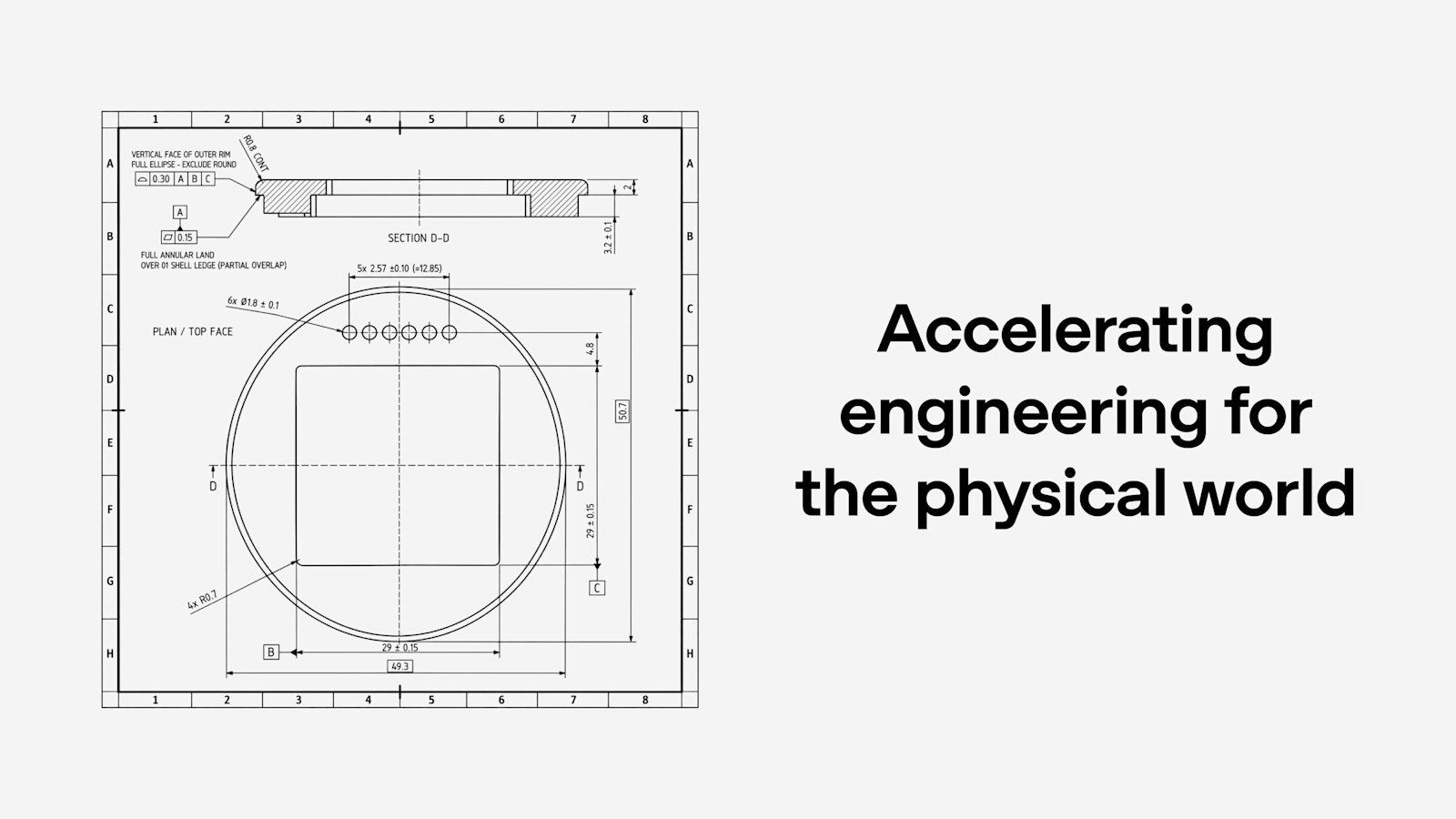
On November 3, OpenAI published "Accelerating engineering for the physical world," describing how its models help with mechanical design, electrical design and simulation. Two employees used GPT-6 Astra to design a device for talking to Codex (enclosure, PCB, firmware and software) in under a week, and a contract manufacturer built a small prototype batch in under a month, though manufacturing readiness still took several rounds of human review. Token usage across OpenAI hardware teams has grown 23-fold since February. On BenchCAD 2.0, a newer internal model averaged 0.875 versus 0.594 for GPT-6 Astra at its highest reasoning setting (OpenAI-reported). OpenAI is also expanding its work with Chip Ganassi Racing and announced a new research collaboration with Mazda.
OpenAI Shares Progress on ChatGPT and Codex for Hardware Engineering: GPT-6 Astra Designs a Codex Device in Under a Week, Mazda Joins for Aerodynamics Research

Key Takeaways

  • In a test with no direct human edits, GPT-6 Astra handled the look, enclosure structure, component selection, PCB layout, UI and firmware; two employees finished the design in under a week as a side project, and prototypes came back in under a month, per the OpenAI blog.
  • OpenAI names the gaps: Astra did not consistently account for the manufacturer's production limits, tolerances or assembly details, so manufacturing readiness took several rounds of review.
  • OpenAI hardware and infrastructure teams use Codex and ChatGPT for CAD models, 2D manufacturing drawings, simulation and FEA setup, and design reviews; token usage has grown 23-fold since February (OpenAI-reported).
  • BenchCAD 2.0 (reconstructing 3D parts and assemblies, identifying circuit-board connections): a newer internal model scored 0.875 versus 0.594 for GPT-6 Astra at its highest reasoning setting (OpenAI-reported; the internal model is unnamed and unreleased).
  • Collaborators: Chip Ganassi Racing is testing 3D-scan-to-editable-CAD and 2D drawing workflows; Mazda is working with OpenAI researchers on airflow and structural simulations for vehicle design, with results promised "in the coming months."
Read full story

Entire, led by ex-GitHub CEO Thomas Dohmke, launches a Git forge for agent-human collaboration: Trails replace PRs, pushes up to 89x faster than GitHub per its benchmarks

On Oct 26, Entire co-founder and CEO Thomas Dohmke announced on X and the company blog that Entire is live as "the Git forge for agent-human collaboration." It has three parts: Trails, which replace diff-based review with eval scores computed on every push; Git-compatible distributed hosting that can replicate across regions or mirror from GitHub; and Continuous Memory, which stores agent sessions in the repo. Buildkite and Depot are the first CI integrations, and it is open to any developer today.

Entire, led by ex-GitHub CEO Thomas Dohmke, launches a Git forge for agent-human collaboration: Trails replace PRs, pushes up to 89x faster than GitHub per its benchmarks

Key Takeaways

  • Push speed (vendor-reported, open-source benchmark): Entire 418 pushes/s vs Cursor Origin 65, Pierre 15, GitLab 10, GitHub 4.7, i.e. up to 89x faster than GitHub and 6x faster than Cursor Origin
  • Trails: on every push, several review agents score the change independently in cloud sandboxes (defaults include Security, Slop and Human Review Required), showing the last 5 runs plus the current one; per-repo Gates can require human approval and passing CI before merge
  • Continuous Memory: two open-source, local-first plugins, entire-graph and entire-brain; entire-graph saved up to 71% of tokens in Entire's testing
  • Regions at launch: US, EU, Australia and India; repos can be mirrored from GitHub with GitHub kept as the source of truth
  • Pricing: not stated in the launch post
Read full story

X discussion: Grok Imagine's official account posts Episode 1 of an AI-made Odyssey series (about 7 minutes, 4K), drawing 2.4M views and a debate over whether AI video can carry a long story

At 19:23 UTC on 2026-10-23, the official Grok Imagine account (@imagine) posted Episode 1 of its Odyssey series (post), saying it was made with Grok Imagine in a creative collaboration with Wonder Studios (@WonderStudiosX) and director Dev Walker (@glumlot_). The video runs about 7 minutes 12 seconds and is served in a 3840x2160 version. When we pulled it, the post had about 12,055 likes, 1,275 reposts, 433 quotes, 974 replies and 2.4M views, and the account asked whether people want a full breakdown of how it was made. Discussion on X kept growing over the past half day: supporters see it as AI video moving from short clips to whole episodes, while critics point to uneven acting and visible AI artifacts. This is an X discussion presented as opinions, not a verdict on the film's quality.

Key Takeaways

  • Main post: official Grok Imagine post, published 19:23 UTC on 10-23, with about 12,055 likes, 1,275 reposts, 433 quotes, 974 replies, 6,361 bookmarks and 2.4M views when we pulled it
  • What the account says: made with Grok Imagine, in collaboration with Wonder Studios and director Dev Walker; the video is about 7 minutes 12 seconds and comes in a 4K (3840x2160) version
  • The account asked whether people want a full breakdown of how it was made; no workflow, clip count or cost has been published yet
  • Opinions are split: some say AI video can now ship by the episode and that directing and storyboarding matter more than the model; others criticize uneven acting and visual artifacts
  • Treated as an X discussion; production-day and asset counts circulating online are not confirmed by the official account, so we do not use them
Read full story
Linked Models & Agents:

Tencent ARC & Tsinghua Open-Source Looking Ahead: Lookahead Attention Eradicates Autoregressive Video Drift

Tencent ARC in collaboration with Tsinghua University released and open-sourced Looking Ahead (arXiv:2610.29989, GitHub: TencentARC/Looking-Ahead), establishing a breakthrough paradigm for autoregressive video synthesis. Overcoming the chronic pathology of traditional autoregressive video models—where unidirectional sequential extrapolation causes exponential error accumulation and severe visual collapse over extended rollouts—Looking Ahead introduces Lookahead Attention. By coupling casual autoregressive decoding with a forward-looking planning stream that anchors future spatiotemporal keypoints, the framework eliminates cumulative drift and visual jitter in long-form generation.

Tencent ARC & Tsinghua Open-Source Looking Ahead: Lookahead Attention Eradicates Autoregressive Video Drift

Key Takeaways

  • Tencent ARC and Tsinghua University introduce Looking Ahead (arXiv:2610.29989), open-sourcing a long-horizon video framework
  • Eliminates exponential error propagation and visual degeneration inherent to unidirectional token-by-token video rollouts
  • Pioneers Lookahead Attention, leveraging global temporal keypoint anchors to constrain local micro-texture rollouts
  • Establishes a new state-of-the-art across physical consistency and dynamic motion metrics for open-weight autoregressive models
Read full story
Linked Models & Agents:
ADSponsored

SGLang Introduces Elastic EP with NIXL: Dynamic Live MoE Scaling Without Restarts or Traffic Draining

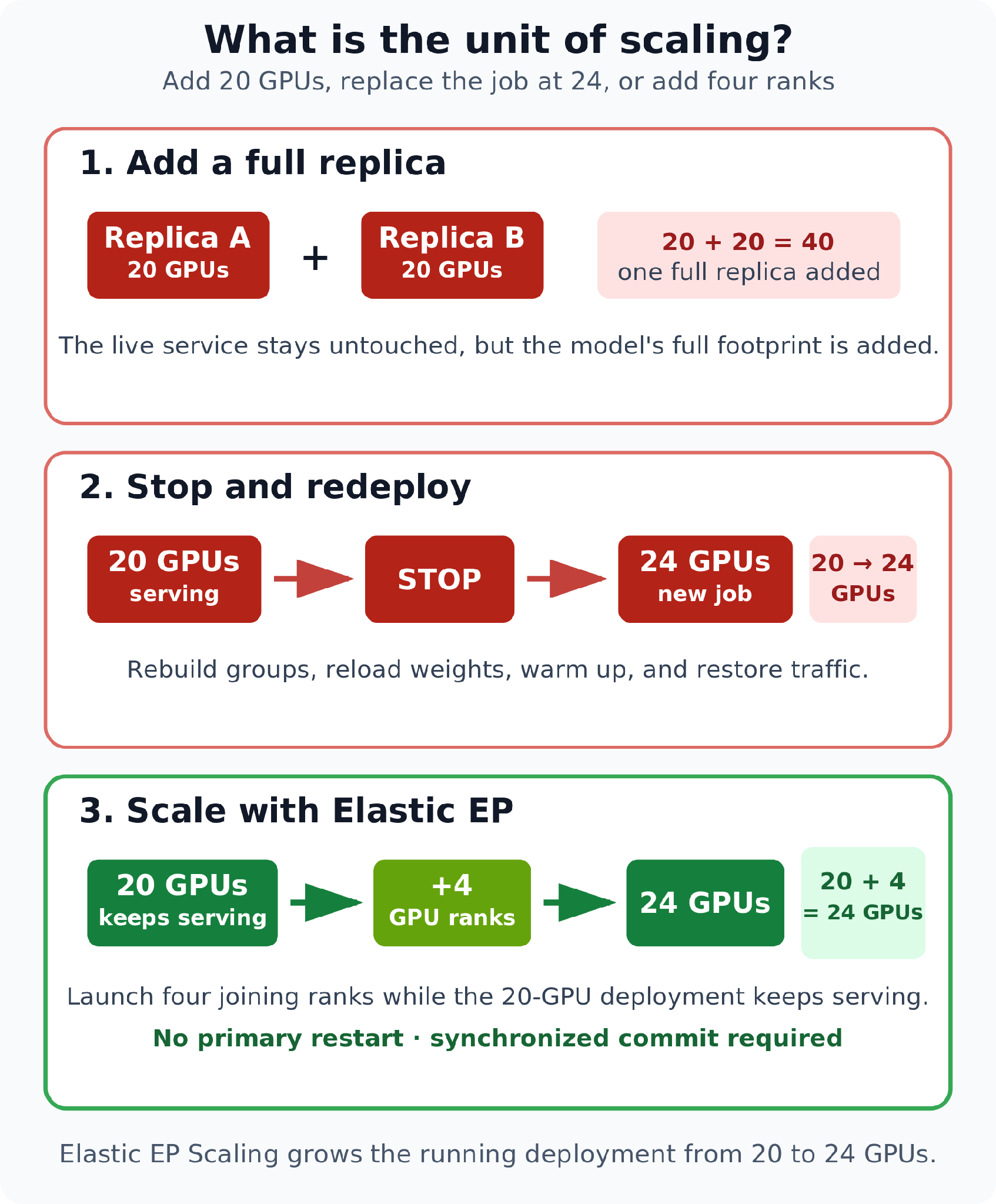
LMSYS Org in collaboration with the NVIDIA Dynamo team officially unveiled Elastic Expert Parallelism (Elastic EP) with NIXL backend integration in SGLang (@lmsysorg). Addressing the critical vulnerability of large-scale MoE deployments (such as DeepSeek-V3/V4) where static EP causes entire cluster crashes upon single-node failures and prevents live capacity resizing, Elastic EP decouples rigid expert-to-GPU bindings. Leveraging NVIDIA NIXL device APIs and Mooncake orchestrators, SGLang enables live scaling of active MoE serving deployments (e.g. dynamically expanding from 20 to 24 GPUs) without draining traffic or restarting clusters, while delivering resilient fault tolerance.

SGLang Introduces Elastic EP with NIXL: Dynamic Live MoE Scaling Without Restarts or Traffic Draining

Key Takeaways

  • LMSYS Org and NVIDIA Dynamo team roll out Elastic EP in SGLang, enabling live scaling of production MoE clusters
  • Eliminates the single-point-of-failure bottleneck in static EP deployments, enabling instantaneous fault-tolerant degradation
  • Integrates NVIDIA NIXL device primitives (--moe-a2a-backend nixl) with native RDMA and NVLink zero-copy token routing
  • Demonstrates zero-downtime live expansion, seamlessly growing active deployments (e.g. from 20 to 24 GPUs) under live query load
Read full story

humans& releases its first model, Ampersand v0.1: a group-collaboration model trained from GLM 5.3, now open via its Agents API

On Oct 20, AI startup humans& released its first model, Ampersand v0.1, pitched as a collaborator that helps groups reach individual and shared goals rather than an assistant that completes tasks alone. It is trained from Z.ai's GLM 5.3 (about 744B total, about 40B active parameters) with long-horizon multi-party RL against simulated users played by humans&'s own user model, Persimmon. It is available now, with no waitlist, through an API compatible with OpenAI's Agents API.

humans& releases its first model, Ampersand v0.1: a group-collaboration model trained from GLM 5.3, now open via its Agents API

Key Takeaways

  • Base: GLM 5.3 MoE with about 744B total and about 40B active parameters and a 1,048,576-token context (official model card)
  • Long-term collaboration simulation (vendor figures): 12.94 for Ampersand versus 9.89 for base GLM 5.3
  • Collaborative Intelligence teamwork 59.1% (GLM 5.3: 54.3%); CooperBench cooperative success 39.0% versus 17.3% for GLM 5.3
  • Trade-off: SWE-bench Pro v2 (Hard-51) 82.4%, slightly below the base model's 84.3%; humans& also admits it sometimes over-coaches
  • Access: model ID ampersand-v0.1, usable with the official OpenAI SDK pointed at the humans& base URL
Read full story
Linked Models & Agents:

GitSwarm Unveils Decentralized Compounding Inference: Multi-Agent Collaboration via Git Branching and Atomic Commits

Tackling long-horizon problem solving and scientific discovery requires computation to compound across successive attempts. While humans build upon partial proofs, failed experiments, and prior hypotheses, current test-time compute paradigms (e.g., MCTS and Best-of-N) isolate search trajectories into independent silos, discarding intermediate reasoning artifacts upon branch failure. Researchers introduce compounding inference and its open-source instantiation GitSwarm (arXiv:2610.04862). GitSwarm establishes an asynchronous multi-agent coordination architecture where homogeneous LLM agents collaborate through structured persistent memory hosted in a shared, branchable Git repository. Intermediate artifacts are preserved as atomic commits, while explicit semantic dependencies link cross-branch contributions, enabling agents to inspect, branch, verify, and synthesize past discoveries. Evaluated on rigorous long-horizon benchmarks, GitSwarm paired with GPT-5.5 solves all 30 problems on IMOProofBench-Advanced in a single execution run, and scores 79.4% on ProgramBench compared to 65.1% for the strongest reported baseline under identical budgets.

Key Takeaways

  • Introduces Compounding Inference and GitSwarm, converting transient test-time compute into persistent knowledge assets
  • Employs Git repositories as multi-agent memory, tracking atomic commits, semantic dependencies, and cross-branch merges
  • Solves 100% of IMOProofBench-Advanced problems with GPT-5.5 in a single run and achieves 79.4% on ProgramBench
Read full story
Linked Models & Agents:

OpenAI and Ironclad train GPT-6 Astra on real contracting software: 55.0% vs GPT-5.6 Sol's 41.6% on 11 workflows, ~48% less time per attempt

OpenAI's first vertical-SaaS computer-use collaboration: with Ironclad it defined 11 legal, procurement and commercial tasks, let models practice in hosted Ironclad environments, and used RL on synthetic tasks. GPT-6 Astra scores 55.0% mean rubric vs 41.6% for GPT-5.6 Sol, with estimated time per attempt down from 37.0 to 19.2 minutes; an internal model reaches 63.7%. OpenAI is inviting more software companies to partner.

OpenAI and Ironclad train GPT-6 Astra on real contracting software: 55.0% vs GPT-5.6 Sol's 41.6% on 11 workflows, ~48% less time per attempt

Key Takeaways

  • 11 real contracting tasks, each graded on 8–50 criteria; ~30–40 min per task for an experienced human user
  • GPT-6 Astra (Max) 55.0% mean rubric vs GPT-5.6 Sol (High) 41.6%, ~32% relative gain
  • Estimated time per attempt 37.0 → 19.2 minutes (~48% lower) — simulated, not measured customer savings
  • Demo task: Astra ~94% of criteria in ~20 min vs Sol ~85% in ~32 min; an internal model hits 63.7%
  • Synthetic training tasks built from public SEC EDGAR contracts; no OpenAI or Ironclad customer data used
Read full story

AgentWorld: Benchmarking Long-Horizon Collaboration of Multi-Agent LLMs Across 50+ Rounds

Overcoming the limits of traditional multi-agent benchmarks that only test short-horizon (<20 steps) or competitive settings, UPenn researchers released AgentWorld. Spanning 50+ interaction rounds in an MMORPG sandbox across 100 human-annotated tasks with 3-20 asymmetric black-box agents, it introduces Causal Collaboration Effectiveness (CCE). Even frontier models achieve only 52.0% task success, exposing severe communication breakdown and shared plan decay.

AgentWorld: Benchmarking Long-Horizon Collaboration of Multi-Agent LLMs Across 50+ Rounds

Key Takeaways

  • Long-Horizon Collaboration: Moves beyond <20-step toy benchmarks by simulating 50+ round interactions in an MMORPG sandbox with 3 to 20 asymmetric agents operating in black-box environments.
  • Novel CCE Metric: Introduces Causal Collaboration Effectiveness (CCE), a graph-based metric that traces causal dependencies between agent actions to measure effective team contribution.
  • Frontier Model Failure Modes: Evaluated on Gemini 3 Flash, Claude Haiku 4.5, GPT-5 Mini, and DeepSeek R1-70B, top success rate reached only 52.0%, highlighting role confusion and plan erosion.
Read full story
Linked Models & Agents:

cf-mailroom: Open-Source Self-Hosted Email System for Humans and AI Agents on Cloudflare via MCP

Indie developer wong2 released cf-mailroom, a fully self-hosted email system powered by Cloudflare (Workers, Email Routing, D1, R2, Web Push) designed for seamless human-agent collaboration. While humans interact through a responsive Gmail-like web UI, AI agents access mailboxes via the Model Context Protocol (MCP) with scoped OAuth permissions. The platform features automated natural-language email labeling, intelligent agent draft generation with custom playbooks, and one-click human approval workflows.

cf-mailroom: Open-Source Self-Hosted Email System for Humans and AI Agents on Cloudflare via MCP

Key Takeaways

  • Serverless native: runs completely on Cloudflare Workers, D1 database, R2 object storage, and Email Routing
  • Dual access: Gmail-style web UI for humans and MCP server endpoints for AI coding/productivity agents
  • Human-in-the-loop: inbound mail auto-triaged and replied by agent drafts, pending one-click approval
  • Zero Trust security: protected by Cloudflare Access and scoped OAuth authentication
  • Instant deployment: one-click Cloudflare deploy button with automatic D1 schema migrations
Read full story
ADSponsored

Tencent Hunyuan & Fudan University Open-Source ExplorationBench: Verifiable Alien Worlds Benchmark for Scientific Exploration

Tencent Hunyuan in collaboration with Fudan University's NLP group has open-sourced ExplorationBench (arXiv: 2609.30199, Project: explorationbench.com), establishing a rigorous framework to quantify an AI agent's genuine scientific exploration and hypothesis-testing capacity. To prevent models from cheating via pre-training memorization, the benchmark introduces 'Alien Worlds'—computational sandbox environments (AlienCode and AlienLogic) governed by strictly executable rules that directly contradict terrestrial intuition. Agents must actively frame hypotheses, design probe experiments via API tools, and revise causal models under feedback.

Tencent Hunyuan & Fudan University Open-Source ExplorationBench: Verifiable Alien Worlds Benchmark for Scientific Exploration

Key Takeaways

  • Pioneers 'Alien Worlds' executable sandboxes whose rules contradict earthly knowledge, preventing pre-training data leakage.
  • Comprises two distinct discovery sandboxes—AlienCode and AlienLogic—spanning 55 discovery targets and 140 scientific tasks.
  • Furnishes agents with intentionally flawed documentation, environmental feedback, and dedicated tool-calling interfaces.
  • Benchmarking 10 frontier models reveals that while leading models discover novel rules, extended exploration frequently stalls or degrades early gains.
  • Project portal, sandbox execution runtimes, and evaluation suites released openly on GitHub.
Read full story

NYU and DeepMind Unveil Framework for Autonomous Math Discovery: Quantifying Intrinsic Theorem Value via 27B Prover

Researchers from New York University in collaboration with Google DeepMind's Rémi Munos have published 'Learning to Discover Interesting Mathematics' (arXiv: 2609.28603). While LLMs excel at proving existing conjectures, autonomous mathematical expansion has been crippled by models spamming trivial or useless lemmas. The authors formulate a metric for intrinsic mathematical interestingness—defined by the compression ratio between proof length and statement brevity. Powered by a specialized 27B proof-difficulty model, the framework autonomously conjectures, verifies, and curates high-value theorems, enabling self-expanding formal mathematical libraries without human-specified goals.

NYU and DeepMind Unveil Framework for Autonomous Math Discovery: Quantifying Intrinsic Theorem Value via 27B Prover

Key Takeaways

  • Establishes a quantitative mathematical metric for intrinsic theorem interestingness based on proof-to-statement complexity ratios.
  • Demonstrates robust correlation between intrinsic syntactic interestingness and downstream extrinsic utility across mathematical domains.
  • Trains a 27B proof-difficulty predictor that outperforms frontier general-purpose LLMs in evaluating proof feasibility.
  • Reduces Mathlib redundant theorem overlap from 91.9% down to 30.6%, driving 69.4% of exploration into entirely out-of-distribution math.
  • Preprint, Lean verification harnesses, and autonomous conjecture pipelines released openly on arXiv and Hugging Face.
Read full story
Linked Models & Agents:

DHH: Alibaba Cloud joins Omacom as founding patron with $3M; Omarchy coming to Qwen Book

DHH (@dhh) announced Alibaba Cloud as a Founding Corporate Patron of the Omacom Foundation: $3 million in funding, collaboration on Omarchy China, and bringing Omarchy to the newly announced Qwen Book. He argues agentic computers need a native agentic OS. Details: omarchy.org news post.

DHH: Alibaba Cloud joins Omacom as founding patron with $3M; Omarchy coming to Qwen Book

Key Takeaways

  • Alibaba Cloud commits $3M as an Omacom Foundation founding corporate patron.
  • Collaboration covers Omarchy China and shipping Omarchy onto the new Qwen Book.
  • Thesis: agentic computers need a native agentic OS (Omarchy).
Read full story
Linked Models & Agents:
⚡ Alibaba Qwen 3.8 Flash🌐 alibaba🌐 Qwen (通义千问)

Anthropic opens Model Hardware Standard preview so agents can safely operate lab and factory equipment

Anthropic kicked off phase one of the Model Hardware Standard (MHS) research preview: a proposed interface so AI agents can safely operate scientific and advanced-manufacturing equipment. The company said MHS currently best covers lab and manufacturing gear, and that many developers are already using Claude Code to drive hardware such as boards and cameras. The research preview is intended to bring those devices under one interface rather than one-off scripts per instrument. For coding-agent vendors, this is a concrete expansion of the agent surface area from repositories, terminals, and browsers onto physical equipment, with safety and discoverability as first-class constraints. Anthropic published a dedicated news post and a collaboration story with HHMI on how the standard began. Teams already letting Claude Code touch cameras or lab controllers are the intended early adopters.

Key Takeaways

  • Coding agents are moving from repos onto lab benches and factory floors; a hardware interface standard is the next substrate.
  • Claude Code is already driving boards and cameras; MHS is the path to one safe interface for those devices.
  • Phase one targets discoverable, safer control of scientific and advanced-manufacturing equipment.
Read full story

Cursor Launches Origin Git Hosting Platform: Native In-Editor Code Collaboration for Cloud Agents

Cursor unveiled Origin, its native Git hosting platform engineered for high-speed agentic code collaboration with seamless GitHub repo syncing and day-1 CI/CD integrations with Vercel and Buildkite.

Key Takeaways

  • Cursor expands beyond the editor layer into core repository hosting infrastructure;
  • Supports frictionless two-way syncing with existing GitHub repositories for low-risk adoption;
  • Day-1 CI/CD integration with Vercel, Buildkite, and Depot enables instant build and deployment loops.
Read full story