AI Coding Live News

RoboColosseum Opens Real-Robot Evaluation: 100+ Robots at 124 Sites, Claude Opus 5.5 and GPT-6 Astra Rival Specialized VLA Policies Zero-Shot

Hugging Face, BitRobot, the Singapore Embodied AI Centre, NUS and others launched RoboColosseum on November 4, a distributed real-robot evaluation framework covering four embodiments: SO-101, Franka, Bimanual-YAM and the Unitree G1 humanoid. The first study ran 5,699 blinded pairwise comparisons at 124 sites across 5 VLA policies and 3 frontier models. Claude Opus 5.5 and GPT-6 Astra beat their VLA counterparts on average task progress by 12.1 and 11.0 points, while Grok 4.7 trailed by 7.5. All rollouts are open on Hugging Face, and the project pledges 10,000 free evaluation hours to academic labs.

RoboColosseum Opens Real-Robot Evaluation: 100+ Robots at 124 Sites, Claude Opus 5.5 and GPT-6 Astra Rival Specialized VLA Policies Zero-Shot

Key Takeaways

  • Two tracks: the Open Track runs blinded zero-shot pairwise comparisons, and the Fine-tune Track gives each VLA the same 100 demonstrations per task across 20 tasks.
  • The VLAs tested are GR00T N1.7, pi0.5, MolmoAct2, G0.5 and LingBot-VLA v2; the frontier models are GPT-6 Astra, Claude Opus 5.5 and Grok 4.7.
  • After fine-tuning, GR00T N1.7 leads on SO-101 and pi0.5 leads on Franka and Bimanual-YAM; on the G1 humanoid no policy completes any task, with average progress of 13.3% to 23.2%.
  • Rankings agree only weakly across robots (Kendall W = 0.24), and zero-shot rankings poorly predict rankings after fine-tuning.
Read full story

Moonshot Releases Kimi K3.1 Pro Open Weights on Hugging Face: 2.8T-Parameter, 104B-Active MoE in MXFP4 at About 1.56TB, Custom License Limits Large Model-as-a-Service Use

The official Kimi account @Kimi_Moonshot announced the Kimi K3.1 Pro model weights at 16:00 UTC on November 4; the moonshotai/Kimi-K3.1-Pro repository is public and not gated. The model card describes a natively multimodal MoE with 2.8T total and 104B active parameters and a 1M-token context, shipped as MXFP4 weights from quantization-aware training, about 1.56TB in total; vLLM, SGLang and TokenSpeed are the recommended engines. The license allows free use and modification, but Model-as-a-Service businesses with over $20M in annual revenue need a separate agreement.

Moonshot Releases Kimi K3.1 Pro Open Weights on Hugging Face: 2.8T-Parameter, 104B-Active MoE in MXFP4 at About 1.56TB, Custom License Limits Large Model-as-a-Service Use

Key Takeaways

  • Architecture: 93 layers (1 dense), 69 KDA plus 24 Gated DSA attention layers, 896 experts with 16 selected per token plus 2 shared experts, and a 401M MoonViT-V2 vision encoder.
  • Compared with K3, the full-attention Gated MLA layers are replaced with Gated DeepSeek Sparse Attention for more efficient long-context modeling.
  • Vendor-reported scores on the model card: Terminal-Bench 4.0 65.7 (Opus 5.5 66.4), SWE Marathon v1.1 51.7 (Opus 5.5 46.3), HLE-Full with tools 70.0 and BrowseComp 92.1; ProgramBench 31.5 trails Opus 5.5 at 65.0.
  • License: a Model-as-a-Service business with over $20M revenue in any 12 months needs a separate agreement with Moonshot, and products above 100M monthly users or $20M monthly revenue must prominently display "Kimi K3.1-Pro"; internal use is exempt from both.
Read full story

Epic Says Unreal Engine 6 Will Remove Blueprints, Actors and the C++ Gameplay Framework, Going All-In on Verse With MCP and Python for AI-Assisted Development

At the Unreal Fest Tokyo 2026 keynote on November 3, Epic CEO Tim Sweeney said Unreal Engine 6 (Early Access targeted around 2027) will remove Actors, Blueprints and the C++ Gameplay Framework outright. Gameplay moves to Verse with Scene Graph entities and components, AI integration runs through MCP and Python for any major model, Epic will not build or sell models, and AI-assisted tools will help convert Blueprints and C++ gameplay code to Verse. On X, Sweeney added that after UE6 Preview 1, UE5 will only get critical security and platform compatibility fixes.

Key Takeaways

  • UE6 Early Access targets roughly 2027; keynote slides marked Actors, Blueprints and the C++ Gameplay Framework as "Remove", not deprecated
  • Gameplay moves to Verse with Scene Graph entities and components; C++ stays only in engine internals such as rendering and physics
  • Four AI principles: open, developer-controlled, any major model via MCP and Python, and Epic neither builds nor sells models
  • Epic says AI already makes its teams 1.5x to 4x more productive in programming, debugging and level design (vendor claim); Fortnite is moving thousands of Blueprints to Verse
  • Sweeney on X: after UE6 Preview 1, UE5 gets only critical security and platform fixes; leading models saw little Verse in training, which "will change by January"
Read full story
Linked Models & Agents:

Axion 1.0 Open Agent Foundation Model: Two SFT Stages Plus RL, 35B-A3B Reproduction Checkpoint Under Apache 2.0, Full Recipe Released

arXiv paper 2611.03233 by Yuqi Jia, Yunjie Tian and five co-authors introduces Axion 1.0, an agent foundation model that is open beyond its weights. It uses just two lightweight SFT stages plus reinforcement learning, with no dedicated mid-training, DPO or on-policy distillation, and about 18K SFT trajectories in total. Training code is hosted under the bytedance GitHub organization, and the training data and an Axion 1.0-35B reproduction checkpoint (Qwen3.6-35B-A3B base, 35B total / 3B active, Apache 2.0) are on Hugging Face; weights for the paper's 122B model are listed as coming soon.

Axion 1.0 Open Agent Foundation Model: Two SFT Stages Plus RL, 35B-A3B Reproduction Checkpoint Under Apache 2.0, Full Recipe Released

Key Takeaways

  • A minimal recipe: SFT stage one for self-contained scientific reasoning, stage two for tool use and information seeking, then RL for long-horizon interaction, with 18,363 SFT trajectories and 484 RL tasks
  • The release covers data construction, generation, filtering, verification, prompts and training code (GitHub), not just weights
  • The 35B reproduction checkpoint scores 52.8 on HLE, 60.4 on SEAL-0, 85.0 on FrontierScience Olympiad and 55.0 on FrontierScience Research (HF model card)
  • The paper's 122B model reports 59.0 on HLE with restricted website access and 66.7 on FrontierScience Research; 122B weights are not out yet
  • All scores are self-reported; the HF card lists Claude Opus 5 at 63.6 on HLE, so Axion still trails the strongest closed models
Read full story
Linked Models & Agents:
⚡ Axion 1.0-35B⚡ Axion 1.0-122B⚡ Qwen3.6-35B-A3B🌐 ByteDance🌐 Hugging Face
ADSponsored

Artificial Analysis Upgrades Its Six Capability Indexes to v2.0, Weighting Non-Hallucination and Agentic Tool Use; Claude Opus 5.5 Leads All Six

Independent evaluator Artificial Analysis announced on X on November 4 that its six Capability Indexes (Finance & Accounting, Strategy & Ops, Legal, Healthcare & Medical, Engineering, Economics) are now v2.0, aligned with Intelligence Index v5.0 evaluations and weighting Non-Hallucination and Agentic Tool Use more heavily. Across the indexes, HLE becomes HLE-Diamond, AA-Omniscience moves to v1.1 and GDPval-AA is removed; Engineering gains a new Science capability. Per Artificial Analysis, Claude Opus 5.5 (max) leads all six, with GPT-6 Astra (max) second in Finance & Accounting, Legal and Engineering. Among open-weights models, Kimi K3.1 Pro (weights not yet released) leads all six at #5 to #8.

Artificial Analysis Upgrades Its Six Capability Indexes to v2.0, Weighting Non-Hallucination and Agentic Tool Use; Claude Opus 5.5 Leads All Six

Key Takeaways

  • The six indexes map O*NET occupation tasks to representative benchmarks, weighted by how often each capability appears in that occupation (methodology page)
  • Common changes: HLE becomes HLE-Diamond, AA-Omniscience moves to v1.1, and GDPval-AA is dropped from Agentic Knowledge Work (now AA-Briefcase v1.1)
  • Non-Hallucination weight rises to 15% in Finance & Accounting and Legal; Agentic Tool Use (AutomationBench-AA) is 35% of Strategy & Ops, its largest component
  • Engineering adds Science (20%, CritPt v2 Hard Subset plus Terminal-Bench-Science 0.1) and FrontierCode 2.0 under Agentic Coding; Economics swaps AA-LCR for GDP.pdf
  • Results per Artificial Analysis: Claude Opus 5.5 (max) is #1 in all six; among open weights, Kimi K3.1 Pro leads all six, MiniMax-M3.1-Flash leads Strategy & Ops (#10) and DeepSeek V4.1 Flash 1017 (max) leads Healthcare & Medical (#12)
Read full story

X Discussion: Sam Altman Says People Should Always Control the Future and That This Should Ultimately Constrain AI Progress

At 01:40 UTC on November 4, OpenAI CEO Sam Altman (@sama) posted on X that "people should always be in control of the future," saying OpenAI is against the idea of people being relegated to doing things that "AI systems think makes sense to reward in humans," and that people should not cede control of the future to superintelligence, a requirement that "should ultimately constrain AI progress." Within about 25 minutes it drew roughly 1,360 likes, 337 replies and nearly 100K views; Francois Chollet and others voiced support while many replies pushed back. This is Altman's stated view, not a new OpenAI policy or product announcement.

Key Takeaways

  • Engagement: about 1,360 likes, 337 replies, 89 reposts, 74 quotes and roughly 99K views within about 25 minutes (per the X API); the high reply ratio signals a contested post
  • Three core lines: people should always be in control of the future; OpenAI rejects people being relegated to doing what "AI systems think makes sense to reward in humans"; people should not cede the future to superintelligence, and that requirement "should ultimately constrain AI progress"
  • Support: Francois Chollet (@fchollet) posted "Co-sign," saying the only future worth building is one where AI remains a tool in human hands; Matthew Berman said Altman made the same point in their interview last week
  • Pushback: replies asked "which people?", argued that AI systems "don't think anything," or contrasted the post with Altman's recent comments on RAM and concentrating compute in data centers
  • The post does not say where the quoted phrase comes from and names no concrete policy or timeline; online links to a GPT-6.2 Astra release date are speculation
Read full story
Linked Models & Agents:

Vercel Security Review Enters Public Beta: Vulnerability Review on Every GitHub Push, One-Click Fixes with Vercel Agent

On November 3 (US Pacific time), Vercel launched Security Review in public beta. It is a new Vercel Agent capability alongside Code Review and Investigation: once enabled, every push to connected GitHub repositories triggers a diff-only vulnerability review that finishes in seconds. Findings land in the Security dashboard, PR comments and the CLI, and can be fixed with one click by Vercel Agent or pulled into your own coding agent via vercel security vulnerabilities. It is available to Pro and Enterprise teams, and reviews are free until November 10.

Vercel Security Review Enters Public Beta: Vulnerability Review on Every GitHub Push, One-Click Fixes with Vercel Agent

Key Takeaways

  • Trigger: every GitHub push (including direct pushes to production) is reviewed automatically; only the diff is scanned, which Vercel says finishes in seconds, so it can run on every preview and production deployment
  • Beyond pattern matching: the agent traces how changed code is reached, checks existing protections and rechecks each finding, which Vercel says catches logic flaws such as missing authorization checks
  • Teams can write security policies in plain language, scoped to projects or the whole team, and manage them with vercel security policy
  • Pricing: Vercel Agent rate, model tokens at provider cost with no markup, plus $0.25 per million tokens; reviews are free until November 10, 2026, while Agent fixes are billed
  • Availability: public beta for Pro and Enterprise teams; Vercel has not published detection-rate or false-positive benchmarks
Read full story

X Discussion: Grok Bot Engineer poteto Calls Adversarial Agent Code Reviews "Mostly a Waste of Tokens" and Argues for Empirical Plus Formal Verification Instead

On November 3, @poteto (lauren), whose bio says she works on Grok @bot at SpaceXSI, is on the React Compiler core team, and previously worked at Cursor, Meta and Netflix, posted what she called "maybe a hot take": she now considers adversarial reviews mostly a waste of tokens and thinks those tokens are far better spent on empirical combined with formal verification. She says she has updated her agent skill pack pstack to use its interrogate (multi-model adversarial review) skill less and may eventually remove it. She adds that she has found very little value in code review in the abstract, because agents tend to get lost in nitpicks and YAGNIs. The post drew about 906K views, 9,227 likes and 5,538 bookmarks. It is a personal opinion that sparked debate over the value of AI code review.

Key Takeaways

  • Opinion (personal, not an official finding): adversarial reviews are "mostly a waste of tokens"; empirical plus formal verification is the better use of them
  • Action: the author says she has made pstack use the interrogate skill less and may remove it; at fetch time the public pstack folder in GitHub cursor/plugins had no commits after October 27, so the change is not visible there yet
  • What interrogate is: per its public SKILL.md, it spawns one read-only reviewer per configured model (defaults Claude Opus 5.5 xhigh and Grok 4.7 xhigh fast) to attack the diff, then sorts findings into Act on, Consider, Noted and Dismissed without auto-applying fixes
  • Author (per her X and GitHub bios): engineer on Grok Bot at SpaceXSI, React Compiler core team, previously at Cursor, Meta and Netflix
  • Reach: about 906K views, 9,227 likes, 5,538 bookmarks, 668 replies, 356 reposts and 210 quotes
Read full story

OpenAI Shares Progress on ChatGPT and Codex for Hardware Engineering: GPT-6 Astra Designs a Codex Device in Under a Week, Mazda Joins for Aerodynamics Research

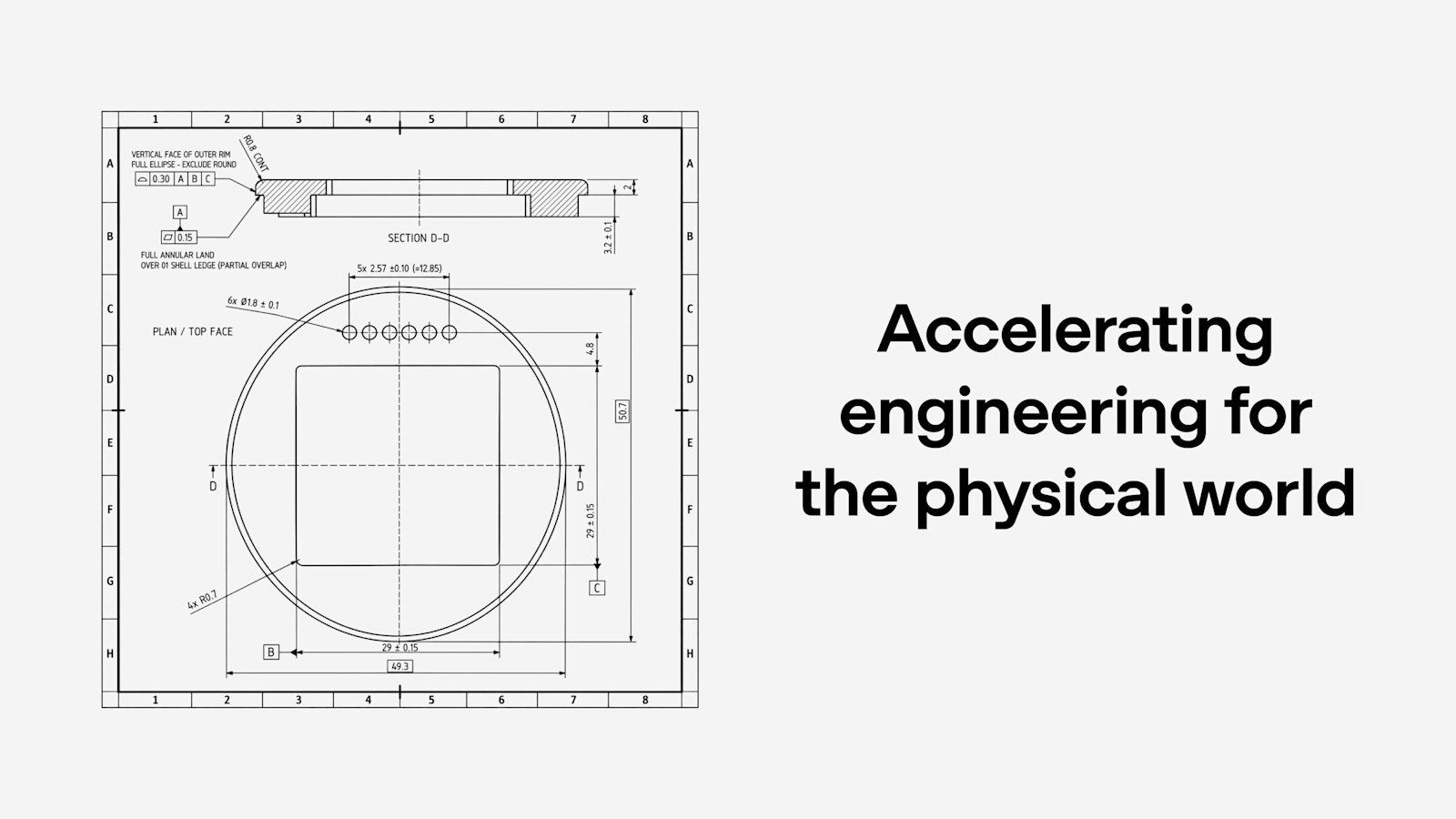
On November 3, OpenAI published "Accelerating engineering for the physical world," describing how its models help with mechanical design, electrical design and simulation. Two employees used GPT-6 Astra to design a device for talking to Codex (enclosure, PCB, firmware and software) in under a week, and a contract manufacturer built a small prototype batch in under a month, though manufacturing readiness still took several rounds of human review. Token usage across OpenAI hardware teams has grown 23-fold since February. On BenchCAD 2.0, a newer internal model averaged 0.875 versus 0.594 for GPT-6 Astra at its highest reasoning setting (OpenAI-reported). OpenAI is also expanding its work with Chip Ganassi Racing and announced a new research collaboration with Mazda.

OpenAI Shares Progress on ChatGPT and Codex for Hardware Engineering: GPT-6 Astra Designs a Codex Device in Under a Week, Mazda Joins for Aerodynamics Research

Key Takeaways

  • In a test with no direct human edits, GPT-6 Astra handled the look, enclosure structure, component selection, PCB layout, UI and firmware; two employees finished the design in under a week as a side project, and prototypes came back in under a month, per the OpenAI blog.
  • OpenAI names the gaps: Astra did not consistently account for the manufacturer's production limits, tolerances or assembly details, so manufacturing readiness took several rounds of review.
  • OpenAI hardware and infrastructure teams use Codex and ChatGPT for CAD models, 2D manufacturing drawings, simulation and FEA setup, and design reviews; token usage has grown 23-fold since February (OpenAI-reported).
  • BenchCAD 2.0 (reconstructing 3D parts and assemblies, identifying circuit-board connections): a newer internal model scored 0.875 versus 0.594 for GPT-6 Astra at its highest reasoning setting (OpenAI-reported; the internal model is unnamed and unreleased).
  • Collaborators: Chip Ganassi Racing is testing 3D-scan-to-editable-CAD and 2D drawing workflows; Mazda is working with OpenAI researchers on airflow and structural simulations for vehicle design, with results promised "in the coming months."
Read full story

CrowdStrike Agrees to Acquire Fiddler and Dreadnode and Ships an AI Kill Switch, Bringing Agent Observability, Pre-Deployment AI Security Testing and Agent Termination Into Falcon

At Fal.Con Europe in Barcelona on November 3, CrowdStrike said it signed definitive agreements to acquire AI agent observability company Fiddler AI and automated AI security testing company Dreadnode, and launched an AI Kill Switch in Falcon Guardian that can terminate a misbehaving agent, block it from relaunching and cut its enterprise network access. Both deals are expected to close in CrowdStrike's fiscal Q4 FY27, with the products generally available that quarter. CrowdStrike did not disclose prices; CyberScoop, citing the Wall Street Journal, put Fiddler at about $400 million and Dreadnode at about $95 million.

CrowdStrike Agrees to Acquire Fiddler and Dreadnode and Ships an AI Kill Switch, Bringing Agent Observability, Pre-Deployment AI Security Testing and Agent Termination Into Falcon

Key Takeaways

  • Both acquisitions were announced the same day and are expected to close in CrowdStrike's fiscal Q4 FY27, paid mostly in cash plus some stock subject to vesting conditions.
  • CyberScoop, citing the Wall Street Journal, puts Fiddler at about $400 million and Dreadnode at about $95 million, roughly $495 million combined; CrowdStrike did not disclose the amounts.
  • Fiddler will be sold as Falcon Observe: pre-deployment evaluation, tracing of decisions and tool calls across the agent hierarchy, drift and hallucination detection, and evaluation costs cut by up to 98% using purpose-built models.
  • Dreadnode runs more than 100 known AI attack strategies (jailbreaks, prompt injection, multi-turn and agent-specific attacks) against models, agent reasoning loops, applications and MCP servers, mapping findings to OWASP LLM Top 10, OWASP Agentic ASI01-ASI10, MITRE ATLAS and NIST AI RMF.
  • The AI Kill Switch is available today: an authorized admin triggers it, the agent is stopped first at the Gateway (endpoint enforcement coming soon), blocked from relaunching and cut off from the network, with every action logged.
Read full story
ADSponsored

X Discussion: Addy Osmani of Claude Code Warns of "Cognitive Surrender" and Urges Developers to Keep Critical Thinking When Agents Do the Work

Addy Osmani (@addyosmani), whose X bio lists Claude Code at Anthropic, posted a long article on X on November 3 titled "Critical thinking when agents do the work." He describes a spectrum of working with AI: cognitive offloading (delegating a task but owning the result), deferral (the tool output becomes your new input), and "cognitive surrender" (the AI output quietly becomes your own and you feel no need to check it), a term he credits to Steven Shaw and Gideon Nave at Wharton. He offers self-check questions and verification habits. Within about three hours the post drew roughly 1,400 likes, 2,400 bookmarks and more than 72,000 views and reached X trending. These are the author's views, not an Anthropic announcement.

Key Takeaways

  • The spectrum: cognitive offloading (delegate but keep ownership, which the author says he does all day), deferral (the output stops being a hypothesis), and cognitive surrender (no more checking; it becomes your conclusion). Read the X article.
  • His argument: as models improve there are fewer obvious errors, so well-written, mostly correct output no longer demands a second look, and even with many agents running you still have only one pair of eyes on the results.
  • Self-check questions: write down your hypothesis before asking; know whether the AI is helping you think or thinking for you; ask what would make it wrong and test it; have several models argue the other side; ask whether you would bet on it in front of the person who maintains it.
  • Verification habits: define "verified" up front (a passing test, a screenshot, a log); a green check proves one property, so ask what it did not prove; have Claude Code critique its work with a fresh-context subagent, and finish by asking "Did I miss anything?"
  • Delegate fully where being wrong is cheap, but keep the reasoning for decisions whose consequences land on others, such as what to build and whether it is safe to ship.
Read full story
Linked Models & Agents:

DeepSeek Harness Launches Creator Mode: Describe a Plugin in Chat and the Agent Builds It, With 7 Official Demo Prompts

DeepSeek Harness, DeepSeek's open-source, MIT-licensed agent app, announced Creator Mode on its official X account on November 2: users describe the plugin they want in plain language, and the agent turns it into a plugin they can use. Demos include a 3D landmark gallery, a 3D Transformer visualizer, a video editing workbench and a paper reader. DeepSeek also published seven bilingual demo prompts on cdn.deepseek.com, cautioning that some plugins took several rounds of conversation, so a single prompt may not reproduce the video exactly. The post drew about 20,000 likes and 1.69 million views. No benchmarks were published.

DeepSeek Harness Launches Creator Mode: Describe a Plugin in Chat and the Agent Builds It, With 7 Official Demo Prompts

Key Takeaways

  • Creator Mode: describe the plugin you want in natural language and the agent turns it into a usable plugin, from a design workspace to a sandbox game or a 3D LLM visualizer.
  • DeepSeek published 7 demo prompts: a 3D landmark gallery, a 3D Transformer demo, a five-style app theme switcher, a poster workbench, a video editor, a paper reader and a token-usage statistics plugin.
  • The entry point shipped in v0.2.1-rc.5 (Oct 30 pre-release): plugin management gained a "Let Agent create a plugin" button that opens Creator mode and keeps the draft.
  • The GitHub repo has about 270,000 stars under the MIT license; Harness is still in preview.
  • No benchmarks or success rates were published; the announcement drew about 20,000 likes and 1.69 million views.
Read full story
Linked Models & Agents:

X Discussion: DHH Says the Age of Agents Will Be Great for Most Programmers but Hard on Cantankerous Ones Who Relied on Rare Skills

Ruby on Rails creator and 37signals CTO DHH (David Heinemeier Hansson) posted two related takes on X on November 2. First: "The great gift of agents is how they allow you to route around every insufferable gatekeeper in software." Then: the age of agents will be amazing for most programmers but hard on the cantankerous ones, because specialized knowledge and rare skills will no longer offer immunity to people who are a pain to work with, so they should learn basic people skills. The second post drew about 3,600 likes, 106K views and 280+ replies in roughly four hours. This is a personal opinion, not an announcement from any company.

Key Takeaways

  • This is a personal opinion post by DHH, not an official statement from 37signals or any AI company, and it cites no data or study.
  • The main post (2026-11-02 13:03 UTC) had about 3,609 likes, 180 reposts, 282 replies, 60 quotes, 106K views and 400 bookmarks at fetch time.
  • His earlier post about 1.5 hours before, saying agents let you route around every insufferable gatekeeper in software (11:41 UTC), had about 2,831 likes, 131 reposts and 80K views.
  • Supporters: tech analyst Ben Dickson (@bendee983) quoted it saying great engineers used to get a free pass for being difficult, and AI is leveling the field, though solid engineering knowledge is still required.
  • Pushback and additions: one reply joked that cantankerous people just found a coworker who never complains back; another argued an agent will do the work but will not make you nicer, so being easy to work with becomes more valuable.
Read full story
Linked Models & Agents:

SemiAnalysis releases GDPx, an agentic benchmark of 206 tasks across 11 high-value domains where the top model, Claude Opus 5.5, scores just 12%

On Nov 2, semiconductor and AI research firm SemiAnalysis released GDPx, a benchmark of agentic capability across 11 domains: chip design, cybersecurity, biology, finance, legal, quant trading, recursive self-improvement (RSI), hardware design, materials science, alignment and software engineering. Its 206 tasks were built by 14 specialist data partners, with SemiAnalysis doing final QA. On the official leaderboard Claude Opus 5.5 leads at 12.0%, followed by Gemini 4 Carbon at 10.9% and GPT-6 Astra at 9.6%; nearly every model scores 0 on finance and legal. SemiAnalysis says safety classifiers drag down Opus 5.5 and GPT-6 Astra, and plans a new version every 3–6 months. All scores are as reported by SemiAnalysis.

SemiAnalysis releases GDPx, an agentic benchmark of 206 tasks across 11 high-value domains where the top model, Claude Opus 5.5, scores just 12%

Key Takeaways

  • Scale: 11 domains, 14 data partners and 206 tasks, with a default time limit of 8 hours per task (GDPx site)
  • Leaderboard (as reported by SemiAnalysis): Claude Opus 5.5 12.0%, Gemini 4 Carbon 10.9%, GPT-6 Astra 9.6%, Muse Wonder Full 9.0%, Claude Fable 5.1 8.5%, GPT 6.1 Sol 8.4%, Claude Sonnet 5.5 8.2%
  • Lower tier and open weights: DeepSeek 4.1 Flash 1017 5.4%, GPT-6 Luna 5.1%, Grok 4.7 3.9%, GLM 5.3 2.7%; almost every model scores 0 on finance and legal
  • Method: each model runs in its native harness where one exists (Claude Code for Opus, Codex for Astra, Antigravity for Carbon), otherwise OpenCode; the headline is pass@1 over three attempts with all domains weighted equally (SemiAnalysis blog)
  • By domain: Opus 5.5 wins quant trading, hardware and chip design; Gemini 4 Carbon wins biology and software engineering; GPT-6 Astra wins RSI and materials science; Muse Wonder Full is the strongest cyber model
Read full story

X discussion: FT chief data reporter John Burn-Murdoch says the US productivity jump "doesn't look like AI" and is mostly tech layoffs, while Gavin Baker argues it shows "ROI on AI"

On November 1, John Burn-Murdoch, a Financial Times columnist and chief data reporter, posted a long X thread with his FT piece arguing that the productivity rise in AI-adopting US sectors began in 2020, before AI agents existed, shows up only in the US, and comes mainly from tech layoffs and hiring pullbacks rather than AI. The thread opener has about 1,344 likes, 306 reposts and 186K views. Gavin Baker, managing partner and CIO of Atreides Management, quoted the FT charts and said it is hard not to see some evidence of "ROI on AI," citing a16z and EPB Research data; his post has about 793 likes and 102K views. Burn-Murdoch replied that he is "slightly on the fence" and that the data cannot rule out a role for AI. These are two readings of the same data, not a settled finding.

X discussion: FT chief data reporter John Burn-Murdoch says the US productivity jump "doesn't look like AI" and is mostly tech layoffs, while Gavin Baker argues it shows "ROI on AI"

Key Takeaways

  • Opener: John Burn-Murdoch's thread, posted 2026-11-01 15:04 UTC, with about 1,344 likes, 306 reposts and 186K views; his X bio says he is an FT columnist and chief data reporter
  • His core argument: the productivity rise in AI-adopting US sectors started in 2020, and even a 2022 re-acceleration is "too early to be AI. Back then it was chatbots, not agents"; other rich countries use AI just as widely but show no similar jump
  • Splitting productivity into output and headcount, he argues the US acceleration since 2022 is mainly a tech layoffs story: output stayed on trend while employment fell
  • Counterpoint: Gavin Baker's reply, with about 793 likes and 102K views; citing EPB Research, he says the 3 industries that adopted AI most went from 2.2% to 5% productivity growth, and that the US is 72% of Anthropic revenue (figures he cites from third parties; AICoder has not verified them)
  • Replying to Baker, Burn-Murdoch said he is "slightly on the fence": the "this looks like AI" case is overstated, but the data cannot rule out a role for AI either
Read full story
Linked Models & Agents: