AI Coding Live News

Google DeepMind expands Gemini-built PlanAssist to 15 English councils after pilots cut planning assessment time by up to 58%

On October 31, Google DeepMind said PlanAssist, a Gemini-built planning tool developed with the UK government, Google Cloud and Faculty, will be made available to 12 more local planning authorities in England, bringing the total to 15 for a 12-month Beta on live applications. In early pilots at Barnet, Camden and Dorset, DeepMind says the average officer time on householder assessment tasks fell by 58%, and more than 70% of the drafted reports were approved with no edits. Planning officers keep the final decision.

Google DeepMind expands Gemini-built PlanAssist to 15 English councils after pilots cut planning assessment time by up to 58%

Key Takeaways

  • Scale: from 3 pilot councils to 15; the 12 new ones join in three cohorts for a 12-month Beta (DeepMind blog)
  • Efficiency: average officer time on householder assessment tasks fell 58% in pilots (vendor-reported; DeepMind's X post says "up to 58%")
  • Quality: more than 70% of AI-drafted reports were approved by officers with no edits (vendor-reported)
  • The UK government says, together with new rules, routine householder processing can halve from eight weeks to four, and it aims to offer the tool to every council in England in 2027 (GOV.UK)
Read full story
A
Anthropic (Claude Help Center)support.claude.com·
👀6
🔥82

Anthropic extends Claude text watermarking to older models including Mythos 5, Opus 4.7/4.6 and Sonnet 4.6, reportedly from November 3

Anthropics help center article "How Claude marks AI-generated content" (updated Oct 28) now lists older models released before Aug 2, 2026, including Claude Mythos 5, Opus 4.7, Opus 4.6, Opus 4.5, Sonnet 4.6 and Sonnet 4.5, as carrying text watermarks on first-party surfaces, and says Anthropic is adding watermarks to these models to meet EU AI Act Article 50 transparency duties. According to a customer email screenshot reported by outlets such as MACCUS, the legacy rollout starts Nov 3, with Amazon Bedrock possibly a few days later; Anthropics public pages do not state that date. The watermark follows Google DeepMinds SynthID-Text approach, adds no hidden characters or extra tokens, and detection is in private preview only for regulators, media, researchers and similarly obligated organizations, which has drawn complaints on X that users cannot check their own text.

Anthropic extends Claude text watermarking to older models including Mythos 5, Opus 4.7/4.6 and Sonnet 4.6, reportedly from November 3

Key Takeaways

  • Scope: in the official support table, older models such as Mythos 5, Opus 4.7/4.6/4.5 and Sonnet 4.6/4.5 are ticked only for first-party text watermarks; cloud-partner watermarks and C2PA file credentials remain limited to models launched after Aug 2 (see the help center)
  • Timing: a customer email reported by media puts the start at Nov 3, with Bedrock possibly a few days later (MACCUS); Anthropics public pages give no date
  • Cost and quality: Anthropic says the watermark adds no characters, no extra tokens and no extra cost, using a variant of SynthID-Text (see Anthropics explainer)
  • Detection: the detection API is in private preview for regulators, law enforcement, media, fact-checkers, researchers and obligated enterprises; ordinary users cannot check text yet
  • Reach: watermarks apply worldwide across Claude, the Claude Platform API, Claude Code, Cowork and Tag, because Anthropic says it has no durable way to scope them by region yet
Read full story

Google releases Gemini 4 Carbon two weeks after Argon: 59 and first place on the Artificial Analysis Intelligence Index v5, state-of-the-art cybersecurity and long-horizon coding, with early access for cyber defenders in the Fairwind program

Google DeepMind announced Gemini 4 Carbon on Oct 28, calling it its strongest model, just two weeks after Gemini 4 Argon. The official blog says it ranks first on v5.0 of the Artificial Analysis Intelligence Index at 59 and leads three cybersecurity evaluations: 88.2% on SEC-bench Pro for finding vulnerabilities, 54.8% on ExploitGym for exploitation and 71.0% on CWE-bench for patching; it also gains 89 points to rank fourth on WebDev Arena at 1769. Access starts this week for a subset of cyber defenders in the Fairwind program, with developers, businesses and consumers to follow. Introductory pricing matches Argon at $2 per million input tokens and $10 per million output tokens, rising to $4 and $20 afterwards.

Google releases Gemini 4 Carbon two weeks after Argon: 59 and first place on the Artificial Analysis Intelligence Index v5, state-of-the-art cybersecurity and long-horizon coding, with early access for cyber defenders in the Fairwind program

Key Takeaways

  • Positioning: Google calls it its strongest model, aimed at cybersecurity and long-horizon agentic work; internal teams saw it run for days to root-cause and patch subtle bugs across large codebases and low-level systems
  • Official scores (evaluated without guardrails): 88.2% on SEC-bench Pro, 54.8% on ExploitGym and 71.0% on Collinear's CWE-bench; 59 and first place on the Artificial Analysis Intelligence Index v5.0; +89 to fourth place on WebDev Arena at 1769
  • Safety and alignment: successful cheating on Terminal-Bench 4.0 fell to 0.0% with a 0.4% attempt rate, high-severity misalignment alerts in internal live coding dropped by almost 80%, unsupported claims are about half of Argon's, and the Gray Swan indirect prompt injection attack success rate fell from Argon's 0.7% to 0.0%
  • Internal examples: more than 2x Argon's success rate at generating secure code, and the Chrome team reports more than 10x better high-quality patches than another lab's large frontier model
  • Rollout: a subset of cyber defenders in the Fairwind program first, alongside the U.S. government's voluntary pre-release testing; no developer API yet; introductory pricing of $2 / $10 per million tokens with cached input 95% off, then $4 / $20
Read full story

Google DeepMind unveils Genie 4 world model: built on Gemini Omni, first with native real-time audio and dialogue, in research preview for trusted testers

Google DeepMind announced Genie 4 on Oct 27, calling it its most realistic and interactive world model yet. Built on Gemini Omni, it improves physics and human motion, natively generates ambient audio and interactive character dialogue for the first time, and uses Gemini 3.8 Flash in the loop to plan complex events. It is a research preview for trusted testers for now, coming soon to Google AI Ultra (Project Genie) and early access partners in the Gemini API and AI Studio; no quantitative benchmarks were published.

Google DeepMind unveils Genie 4 world model: built on Gemini Omni, first with native real-time audio and dialogue, in research preview for trusted testers

Key Takeaways

  • Per Google DeepMind, Genie 4 is its most realistic and interactive world model yet, with Gemini Omni anchoring real-world appearance and behavior
  • It is DeepMind's first real-time world model with native audio: ambient sound, music and character dialogue are generated with the world, and characters respond live
  • Gemini 3.8 Flash acts as a guiding agent in the loop, splitting goals into steps and checking frames; a demo pairs Gemini 4 Argon with Genie 4 to simulate an Apollo humanoid
  • Official limitations: only a few minutes of continuous interaction and drift over longer sessions; no quantitative benchmarks were published
  • Trusted testers only for now; coming soon to Google AI Ultra (Project Genie) and Gemini API / AI Studio early access partners, with SynthID on all outputs
Read full story
Linked Models & Agents:
ADSponsored

Google brings Gemini Robotics ER 2, DeepMind's embodied reasoning model, to Google Cloud in public preview so enterprises can orchestrate VLA models and multi-robot teams

On Oct 27 Google Cloud announced that Gemini Robotics ER 2, Google DeepMind's embodied reasoning model, is in public preview on the Gemini platform via Model Garden, under the model ID gemini-robotics-er-2-preview and built on Gemini 3.5 Flash. It acts as a robot's high-level brain: it reasons over space and time in video, plans multi-step tasks, checks whether an action succeeded, and calls VLA models and navigation APIs as tools, including across teams of different robots. Google says it pinpoints key video frames with 91.3% accuracy.

Key Takeaways

  • Model ID gemini-robotics-er-2-preview, built on Gemini 3.5 Flash, takes text, image, video and audio input, with a 131,072-token input and 65,536-token output limit
  • The core pattern is declaring VLA models, navigation APIs or custom functions as tools, with ER 2 planning and orchestrating them while explaining itself and accepting redirection in natural language
  • It classifies task progress as binary, discrete or continuous scores; Google cites 91.3% accuracy and a 0.96-second mean frame distance for finding key moments in video
  • It reads values from more than 10 instrument types, including dials, sight glasses, digital displays and rulers
  • The enterprise version adds IAM, security controls and function calling; the Cloud preview supports GenerateContent but not the Live API, and Boston Dynamics and Arm are among early users
Read full story
Linked Models & Agents:

Google's Gemma team says Gemini 4 Argon wrote vLLM optimizations that speed up gemma-4-E2B-it 2.85x on an A100

On Oct 26, Google's official @googlegemma account said a set of vLLM optimizations built with Gemini 4 Argon lifted gemma-4-E2B-it throughput on a single A100 from about 37,900 to 108,000+ tokens/sec, roughly 2.85x, with 100% token parity. The PRs were filed by Luciano Martins of Google DeepMind, and most are still under review.

Google's Gemma team says Gemini 4 Argon wrote vLLM optimizations that speed up gemma-4-E2B-it 2.85x on an A100

Key Takeaways

  • Google says gemma-4-E2B-it throughput on an A100 rose about 2.85x (about 37.9K to 108K+ tokens/sec) with 100% token parity
  • The PRs come from Luciano Martins of Google DeepMind and cover fused Triton kernels, MTP speculative decoding and KV-sharing fast prefill
  • The 2.85x figure is Google's claim for the full set; PR #60674 alone self-reports up to 1.90x prefill and about 1.06x decode
  • As of Oct 27, only 3 of the 10 PRs in the linked list are merged; the rest are still in review
  • It is a public example of using a frontier coding model for inference-kernel performance work, still awaiting reproduction by the vLLM community
Read full story
Linked Models & Agents:

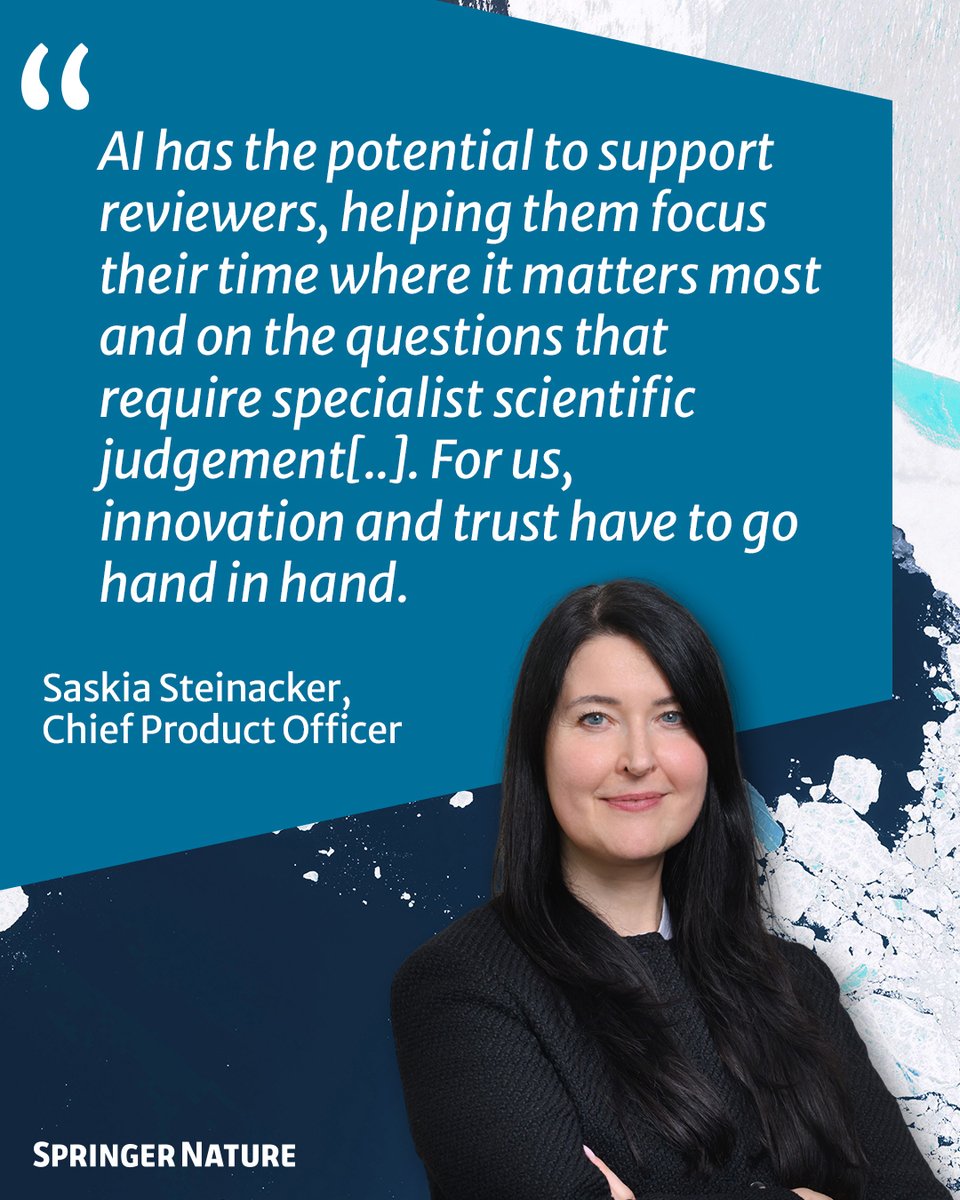
Springer Nature and Google DeepMind partner on an AI peer review assistant built on Gemini and the open-source ADK; a prototype is in testing and human reviewers keep final judgment

On Oct 26 Springer Nature, one of the world's largest research publishers, announced a research partnership with Google DeepMind to co-design an AI peer review assistant. It uses DeepMind's frontier Gemini models and builds on Google's earlier agentic research tools ScholarPeer and Deep Review to help reviewers navigate manuscripts, analyse large amounts of text, charts and figures, and flag areas that may need closer attention. The system is built with Google's open-source Agent Development Kit (ADK) and runs only inside Springer Nature's private Gemini Enterprise environment, so manuscript content stays in its secure environment. A prototype is being tested; the publisher stresses 'human first, AI second' and has not given a launch date or any performance data.

Springer Nature and Google DeepMind partner on an AI peer review assistant built on Gemini and the open-source ADK; a prototype is in testing and human reviewers keep final judgment

Key Takeaways

  • Partners: Springer Nature (publisher of the largest number of journals and books) and Google DeepMind, announced 2026-10-26 from London, Berlin and New York (press release)
  • Stack: frontier Gemini models plus Google's open-source Agent Development Kit (ADK), building on the ScholarPeer and Deep Review agentic research tools
  • Data isolation: runs only on Springer Nature's private Gemini Enterprise platform, keeping author and reviewer confidentiality
  • Status: prototype in testing; no launch date, journal coverage or accuracy figures have been published
  • Role: helps reviewers find areas needing attention, while final scientific judgment stays with human experts
Read full story

Google DeepMind: Four Gemini 4 Argon Agents Autonomously Beat Minecraft from Scratch in 27 Hours by Writing 2,783 Programs

Google DeepMind announced that a team of four Gemini 4 Argon agents completed Minecraft from scratch in 27 hours and 14 minutes without human assistance. Operating in a sandboxed survival world using only standard Mineflayer APIs, code execution, and text chat, the agents autonomously divided roles, recovered teammates' items across 605 deaths, and wrote and debugged 2,783 JavaScript programs to defeat the Ender Dragon.

Google DeepMind: Four Gemini 4 Argon Agents Autonomously Beat Minecraft from Scratch in 27 Hours by Writing 2,783 Programs

Key Takeaways

  • First-ever end-to-end autonomous Minecraft completion: four Gemini 4 Argon agents defeated the Ender Dragon from a random survival seed in 27 hours and 14 minutes
  • 2,783 self-written programs with zero human help: coordinated via in-game chat and shared notes, debugging code and recovering items across 605 deaths
  • WANDR record & Perplexity launch: Gemini 4 Argon simultaneously set a new record on the WANDR benchmark and rolled out to Perplexity Pro and Max users
Read full story

Elorian launches Glimpse, a visual-thinking model that revisits images and video frames mid-reasoning; $0.60/$3 per M tokens, ahead of GPT-6 Astra on four vendor-run evals

Elorian, founded by ex-Google DeepMind researcher Andrew Dai, released Glimpse on Oct 16: a visual-thinking model that crops regions, rewatches clips at denser frame rates and runs code while reasoning. Post-trained on an open-weights base with a few hundred GPUs, priced at $0.60/$3 per million input/output tokens. Vendor evals put it ahead of GPT-6 Astra on WGO Bench, CharXiv-R, UGC-VideoCap and FSC-147, but behind on HSS, BabyVision, TOMATO and Video-MME v2.

Elorian launches Glimpse, a visual-thinking model that revisits images and video frames mid-reasoning; $0.60/$3 per M tokens, ahead of GPT-6 Astra on four vendor-run evals

Key Takeaways

  • Pricing: $0.60 input / $3.00 output per M tokens, 94% below GPT-6 Astra ($10/$50) per Elorian
  • Vendor-reported wins: WGO Bench 42.70 vs Astra 39.42; UGC-VideoCap 82.66 vs 80.32; FSC-147 83.36 vs 82.02; CharXiv-R 92.90 vs 92.10 (Opus 5.5: 93.40)
  • Vendor-reported gaps: HSS 46.36 vs Astra 53.6 (humans 93.1); Video-MME v2 56.68 vs 64.06; TOMATO 93.60 vs 96.02
  • LIBERO planning demo for the π0.5 policy: $0.035 per episode vs $0.249 with Astra
  • Small team, a few hundred GPUs, post-trained on an open-weights base; $55M seed at $300M valuation (TechCrunch)
Read full story

Gemini 4 Argon is generally available: gemini-4-argon ships in the Gemini API and AI Studio with a 1M unified window, long decode and $2/$10 intro pricing

On Oct 13 Google made Gemini 4 Argon globally available: the stable gemini-4-argon model is live on the Gemini API paid tier and AI Studio, in Antigravity for AI Ultra, and in the Gemini app and AI Mode for Pro and Ultra subscribers. Input, thinking and output share a 1,048,576-token window, and background execution lets one response run up to 1M tokens. Intro pricing is $2 input / $10 output per million tokens through Nov 30, then $4 / $20. There is no free tier, explicit caching is unsupported, and temperature/top_p/top_k are ignored.

Gemini 4 Argon is generally available: gemini-4-argon ships in the Gemini API and AI Studio with a 1M unified window, long decode and $2/$10 intro pricing

Key Takeaways

  • Model ID gemini-4-argon is marked GA (Stable) in the Gemini API changelog; text/image/video/audio/PDF in, a 1,048,576-token unified window, 65,536 default synchronous output
  • Pricing (official): $2 input / $10 output (incl. thinking) per 1M tokens through Nov 30, 2026, then $4 / $20; implicit cache hits at 95% off ($0.10); not on the Free tier or the Google AI Pro plan
  • Long decode: with background: true and max_output_tokens above 65,536 the server chains 64K hops up to ~1M tokens minus input (guide)
  • Vendor-reported: #1 on Vals Index, 87% on ERQA, 0.7% attack success on Gray Swan indirect prompt injection across 15 adaptive attempts; internally +35% agentic code submissions in Antigravity with roughly a third fewer rollbacks
  • Antigravity expands to AI Pro (official @antigravity, Oct 15): Pro gets a separate weekly-only Argon quota alongside the 3.8 Flash bucket, size not published; Google case studies: Gemma 4 E2B on vLLM/A100 went from ~37,900 to 108,000+ tokens/s (2.85x); ADK cut long-session prep time 40% and cold imports 21%
Read full story
ADSponsored

Google officially ships Nano Banana 2.1 (gemini-nano-banana-2.1) GA: 1K/2K images now half the price of Nano Banana 2, and human-eval Elo 1050 beats Nano Banana Pro

On 2026-10-06 Google officially launched Nano Banana 2.1 and marked it GA in the Gemini API changelog as gemini-nano-banana-2.1. It is based on Gemini 3.6 Flash and is rolling out across the Gemini app, AI Studio, Search AI Mode, Flow, Stitch, Google Ads and Gemini Enterprise Agent Platform. Image output is priced at $30 per 1M tokens (Nano Banana 2: $60), which works out to $0.0336 per 1K image and $0.0504 per 2K image, about half the old price. The model card's side-by-side human eval puts text-to-image Elo at 1050, ahead of Nano Banana 2 (990) and Nano Banana Pro (935). gemini-3.1-flash-image is now deprecated, with no shutdown date announced. This confirms the silent Flow rollout we reported earlier.

Google officially ships Nano Banana 2.1 (gemini-nano-banana-2.1) GA: 1K/2K images now half the price of Nano Banana 2, and human-eval Elo 1050 beats Nano Banana Pro

Key Takeaways

  • Per-image price: 1K $0.0336 (was $0.067, -50%), 2K $0.0504 (was $0.101, -50%), 4K $0.113 (was $0.151, -25%); Batch halves it again to $0.0168 per 1K image (pricing)
  • Text side got pricier: input $1.50/1M tokens (was $0.50), text+thinking output $7.50 (was $3), so re-check costs for long prompts and many reference images
  • Human-eval Elo (model card): T2I overall 1050 vs NB2 990 vs Pro 935; multi-character consistency 1106 vs 978 vs 1011; infographic factuality 0.521 vs 0.179 vs 0.265
  • Specs: up to 14 reference images (4 characters + 10 objects), fixed 2K/4K tiling artifacts at 1:8/8:1, Google Web + Image Search grounding, thinking levels minimal/medium/high
  • Migration: gemini-3.1-flash-image is deprecated (no shutdown date yet); 131,072-token input limit; no function calling, structured outputs or caching (model docs)
Read full story
Linked Models & Agents:
⚡ Nano Banana 2.1⚡ Nano Banana 2⚡ Nano Banana Pro⚡ Gemini 3.6 Flash🌐 Google🌐 Google DeepMind

Google DeepMind releases EmbeddingGemma 2: a 740M Apache-2.0 multimodal embedding model that maps text, code, images, audio and video into one space, +9.92 on MTEB Code

On 2026-10-06 Google DeepMind released EmbeddingGemma 2, a 740M-parameter Apache-2.0 embedding model built on Gemma 4 that maps text, code, images, audio and video into one 768-dim space with an 8K context. MTEB Code rises from 68.76 to 78.68, and quantized text-only inference needs ~191MB RAM on a Pixel 11 Pro. Hugging Face Transformers v5.19.0 supports it natively.

Google DeepMind releases EmbeddingGemma 2: a 740M Apache-2.0 multimodal embedding model that maps text, code, images, audio and video into one space, +9.92 on MTEB Code

Key Takeaways

  • Size: 740M params, modular 270M text backbone + 170M vision + 300M audio encoders, loadable on demand
  • Code retrieval: MTEB Code 68.76 → 78.68 (+9.92); Google claims leading sub-1B multimodal scores on MTEB Code and MAEB
  • Storage: Matryoshka embeddings truncate 768 → 512/256/128 dims, up to 6x smaller local vector stores
  • On-device: ~191MB RAM text-only / ~567MB full multimodal (quantized, Pixel 11 Pro); 8K context (4x v1) covers 5.5 min audio, 29 images or 58 video frames
  • Ecosystem: Apache 2.0 weights on Hugging Face and Kaggle; supported in Transformers v5.19.0, plus sentence-transformers, vLLM, llama.cpp, SGLang, Ollama and MLX per Google
Read full story
Linked Models & Agents:
⚡ EmbeddingGemma 2⚡ Gemma 4🌐 Google DeepMind🌐 Google

The Sharpening Tax in Post-Training: How RL Alignment Sacrifices Agentic Solution Coverage and How PTGS Restores It

Reinforcement learning (RL) post-training is widely assumed to instill novel agentic reasoning capabilities into large language models. However, groundbreaking research from Stanford, UW-Madison, and Google DeepMind titled 'Sharpening Tax in Post-Training' (arXiv:2610.01509) challenges this paradigm. The authors demonstrate that RL post-training predominantly sharpens preexisting base-model behaviors, inflating single-shot Pass@1 accuracy at the steep cost of solution coverage (Pass@K) on multi-turn agentic tasks. Under sufficient test-time compute budgets, raw pretrained models wrapped in lightweight harnesses frequently solve a broader variety of challenging tasks than their aligned counterparts. The team formalizes the 'Sharpening Tax' diagnostic metric and introduces Posterior-Tempered Group Sampling (PTGS), a plug-and-play Bayesian temperature adaptation algorithm that minimizes the tax while simultaneously elevating both Pass@1 accuracy and diverse solution coverage.

The Sharpening Tax in Post-Training: How RL Alignment Sacrifices Agentic Solution Coverage and How PTGS Restores It

Key Takeaways

  • Identifies the 'Sharpening Tax' in RL post-training, demonstrating that optimizing Pass@1 severely degrades test-time agentic solution coverage (Pass@K)
  • Audits 14 model pairs across 42 evaluations, proving raw base models wrapped in light harnesses often solve more total tasks under repeated sampling
  • Proposes Posterior-Tempered Group Sampling (PTGS), reducing the sharpening tax while improving both single-shot accuracy and solution coverage
Read full story

Google DeepMind launches Gemini 4 Argon: DeepSWE 77.9%, 1M output; Fairwind trusted defenders first

DeepMind announced frontier Gemini 4 Argon for long-horizon coding, enterprise knowledge work, and cyber defense—first via Fairwind trusted defenders. Official: DeepSWE v1.1 77.9%, AutomationBench #1 at 51.3%, LVBench 91.7%, CWE-bench v1 tied 68%; intro $2/$10 per 1M tokens; 1M output limit.

Google DeepMind launches Gemini 4 Argon: DeepSWE 77.9%, 1M output; Fairwind trusted defenders first

Key Takeaways

  • Model: Gemini 4 Argon for long-horizon coding / enterprise knowledge work / cyber defense — official blog
  • Benchmarks (official): DeepSWE v1.1 77.9% SOTA; AutomationBench 51.3% #1; LVBench 91.7%; CWE-bench v1 tied 68%; Fairwind charts: vuln discovery 85.8% / Wiz pen-test 70.9%
  • Capacity & price: 1M output tokens (from ~64K); intro $2/$10 per 1M in/out (~95% off cached input), then $4/$20
  • Access: Fairwind trusted defenders today; next paid API + Google AI Ultra; not in public AI Studio yet — Fairwind
  • Internal: quantum subroutine spacetime −40% vs published baseline; libgav1 Rust port 2.7× faster; 300+ TiB memory freed in datacenters
Read full story

Google DeepMind & Kaggle Launch Game Arena: Dynamic Competitive Benchmarks for LLM Strategic Evaluation

Addressing the rapid saturation and benchmark overfitting of static LLM evaluations, Google DeepMind and Kaggle unveiled Game Arena. By orchestrating head-to-head live agent matchups with dynamic Elo rating evolution, Game Arena prevents performance saturation across three pilot environments: Chess (perfect information), Texas Hold'em Poker (imperfect information), and Werewolf (multiplayer social deduction and deception), systematically benchmarking long-horizon strategic reasoning.

Google DeepMind & Kaggle Launch Game Arena: Dynamic Competitive Benchmarks for LLM Strategic Evaluation

Key Takeaways

  • Dynamic Head-to-Head Evaluation: Replaces static, easily saturated benchmarks with real-time model-versus-model matchups and dynamic Elo tracking that scales naturally as LLM reasoning capabilities evolve.
  • Comprehensive Game Theory Spectrum: Spans perfect information (Chess), imperfect information with strategic betting (Poker), and multi-turn multi-agent social deduction and deception (Werewolf).
  • Reproducible Sandboxed Infrastructure: Jointly open-sourced by DeepMind and Kaggle, providing standardized Python tournament APIs, replay verification pipelines, and sandboxed anti-cheat guardrails.
Read full story
Linked Models & Agents: