
AI Coding Live News

Google DeepMind Releases Gemini Robotics 2.5: 30% to 100% Higher Success Across 200 Tasks, a 96% Parts-Kitting Rate for Apptronik Apollo 2 on Mercedes-Benz Lines, and an Open-Source ASIMOV-Jailbreak Benchmark

On November 10, Google DeepMind released Gemini Robotics 2.5, which it calls its most capable vision-language-action (VLA) model so far. Across more than 200 evaluated tasks, DeepMind reports a 30% to 100% higher success rate than earlier baselines depending on the task type, with tasks finished 20% to 30% faster. In a proof of concept with Apptronik and Mercedes-Benz, the Apollo 2 humanoid sorted parts on car production lines in Hungary and Germany with a 96% success rate. The model is rolling out only to robotics partners for now, so developers cannot call it directly yet.

Google DeepMind Releases Gemini Robotics 2.5: 30% to 100% Higher Success Across 200 Tasks, a 96% Parts-Kitting Rate for Apptronik Apollo 2 on Mercedes-Benz Lines, and an Open-Source ASIMOV-Jailbreak Benchmark

Key Takeaways

  • Task breadth: evaluated on 200+ tasks (tying a bow, serving food with tongs, pipetting), with a 30%–100% higher success rate than earlier baselines and 20%–30% faster completion (company figures, official blog)
  • Factory test: Apptronik's Apollo 2 kitted parts at Mercedes-Benz plants in Kecskemet, Hungary, and Sindelfingen, Germany, with a 96% success rate (a proof of concept, not a production rollout)
  • Safety: inference-time safety guidance raised safe task completion by 33% around obstacles and 43% near people; the new open-source ASIMOV-Jailbreak benchmark shows 99.5% jailbreak resistance for Gemini 4 Argon versus 82% for the earlier Gemini Robotics ER 2 baseline
  • Faster training: Gemini 4 Argon builds digital twins and thousands of simulated practice runs from a single camera view and analyzes failure videos, which DeepMind says sped up months of training work
  • Availability: rolling out to robotics partners only, with no public API yet; it runs on Apollo 2 (five-finger, 22-degree-of-freedom SharpaWave hand) and the two-arm Franka Duo platform
Read full story
Linked Models & Agents:
⚡ gemini-robotics-2.5⚡ Gemini 4 Argon⚡ Gemini Robotics Er 2🌐 google-deepmind🌐 apptronik🌐 mercedes-benz
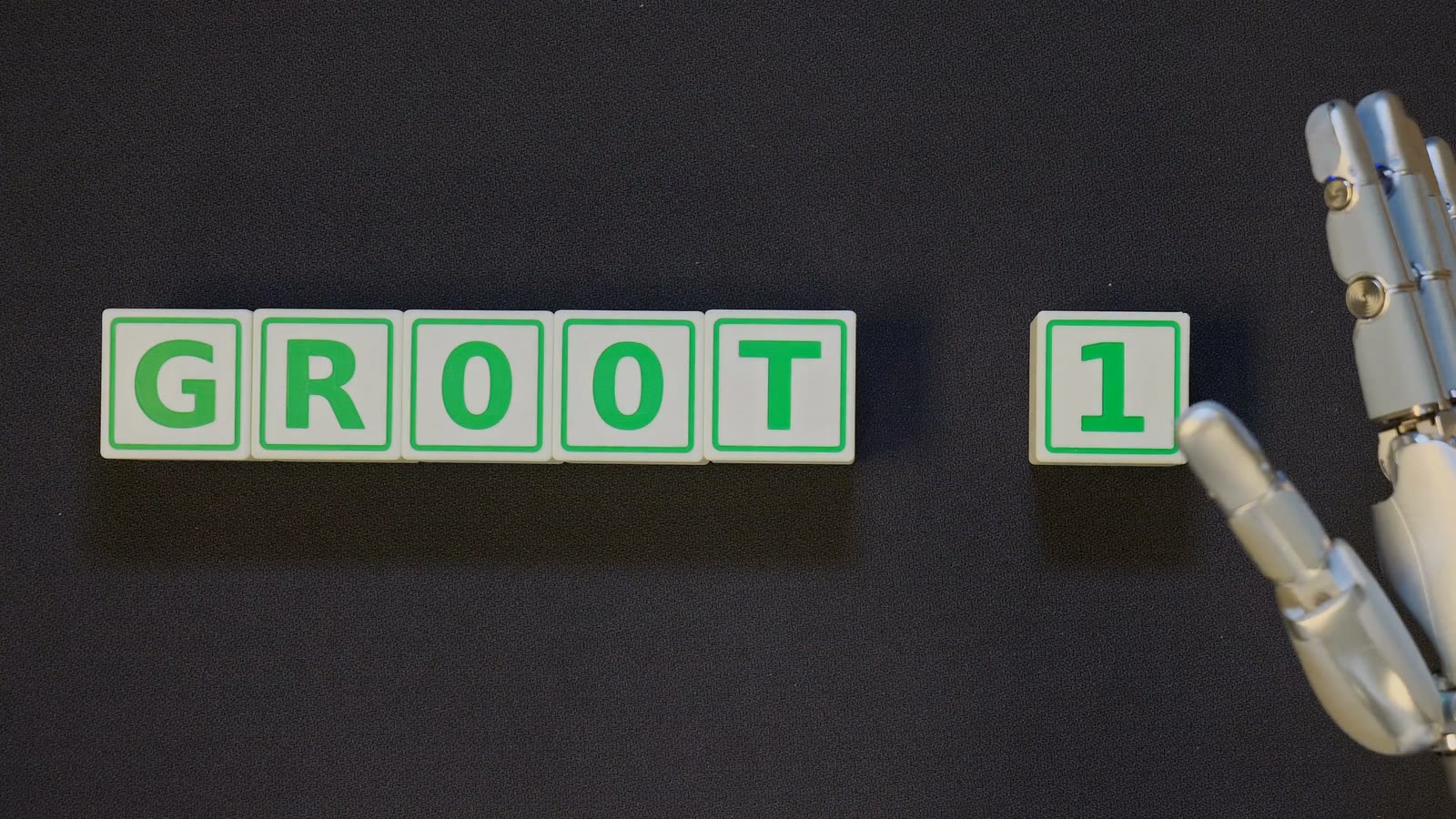
NVIDIA Unveils Open World Action Model GR00T 2 at CoRL: Predicts Future Video and Robot Actions Together, 40% Zero-Shot on Unseen Tasks, 95% After a 30-Minute Fine-Tune on 5 Demos, Code Coming in December

NVIDIA Robotics announced GR00T 2 at CoRL 2026, and NVIDIA GEAR lab lead Yuke Zhu posted the technical details. GR00T 2 is a new generation of world action model (WAM) built on Cosmos: one diffusion transformer denoises future video and an action chunk together, and one model drives parallel grippers, dexterous hands and humanoids. Pretraining mixes 402,730 hours of egocentric human video, 10,184 hours of handheld UMI gripper demos and 23,500 hours of robot teleoperation. By NVIDIA's numbers, it reaches 40% zero-shot success on 50 tasks the target robot never practiced, rising to 95% with five demos per task (under 3 minutes of robot data) and a 30-minute LoRA fine-tune on one RTX 5090. Reasoning models can call GR00T 2 as a tool through the WAM API. Code arrives in December; 100,000 hours of the human video data are already on Hugging Face.

NVIDIA Unveils Open World Action Model GR00T 2 at CoRL: Predicts Future Video and Robot Actions Together, 40% Zero-Shot on Unseen Tasks, 95% After a 30-Minute Fine-Tune on 5 Demos, Code Coming in December

Key Takeaways

  • Architecture: one diffusion transformer predicts future video and action chunks together; small per-robot heads let one model cover grippers, dexterous hands and humanoids
  • Data: 402,730 h of egocentric human video + 10,184 h of UMI demos (2,897 tasks) + 23,500 h of teleoperation; going from 0% to 100% of the human video lifts real-robot task progress from 50% to 70% (NVIDIA figures)
  • Adaptation: 40% zero-shot on 50 unseen tasks, 71% with 1 demo, 95% with 5 demos, about a 30-minute LoRA fine-tune on one RTX 5090
  • Agents: a reasoning model calling GR00T 2 via the WAM API completes 97+ of 100 back-to-back assemblies for each of three toys; marking grasp points on the camera view lifts instruction following from 40% to 92%
  • GR00T 2 Turbo is a 2B-parameter variant running at 124 ms per prediction on the Unitree G1's Jetson Thor; code ships in December, and 100k hours of human video are already on Hugging Face
Read full story
Linked Models & Agents:
⚡ GR00T 2⚡ GR00T 2 Turbo⚡ Cosmos🌐 NVIDIA

RoboColosseum Opens Real-Robot Evaluation: 100+ Robots at 124 Sites, Claude Opus 5.5 and GPT-6 Astra Rival Specialized VLA Policies Zero-Shot

Hugging Face, BitRobot, the Singapore Embodied AI Centre, NUS and others launched RoboColosseum on November 4, a distributed real-robot evaluation framework covering four embodiments: SO-101, Franka, Bimanual-YAM and the Unitree G1 humanoid. The first study ran 5,699 blinded pairwise comparisons at 124 sites across 5 VLA policies and 3 frontier models. Claude Opus 5.5 and GPT-6 Astra beat their VLA counterparts on average task progress by 12.1 and 11.0 points, while Grok 4.7 trailed by 7.5. All rollouts are open on Hugging Face, and the project pledges 10,000 free evaluation hours to academic labs.

RoboColosseum Opens Real-Robot Evaluation: 100+ Robots at 124 Sites, Claude Opus 5.5 and GPT-6 Astra Rival Specialized VLA Policies Zero-Shot

Key Takeaways

  • Two tracks: the Open Track runs blinded zero-shot pairwise comparisons, and the Fine-tune Track gives each VLA the same 100 demonstrations per task across 20 tasks.
  • The VLAs tested are GR00T N1.7, pi0.5, MolmoAct2, G0.5 and LingBot-VLA v2; the frontier models are GPT-6 Astra, Claude Opus 5.5 and Grok 4.7.
  • After fine-tuning, GR00T N1.7 leads on SO-101 and pi0.5 leads on Franka and Bimanual-YAM; on the G1 humanoid no policy completes any task, with average progress of 13.3% to 23.2%.
  • Rankings agree only weakly across robots (Kendall W = 0.24), and zero-shot rankings poorly predict rankings after fine-tuning.
Read full story

GreenWAM: Universal Robotics World Foundation Model Controls Real Humanoids Across 20 Embodiment Families

Robotics research typically separates world models (predicting scene transitions) from control policies (generating actions), fragmented by proprietary robot-specific kinematic formats. Sber AI researchers introduced GreenWAM, a foundational world model for robotics. GreenWAM unifies 20 robot embodiment families (from bimanual arms to dexterous humanoids) under a common joint coordinate space, co-training across visual, action-conditioned, and world-action objectives with specialized action-expert heads. GreenWAM achieves top-tier 3D trajectory and depth accuracy on WorldArena 1.0, establishes state-of-the-art policy benchmark scores on RoboTwin 2.0 and LIBERO-plus, and successfully drives real-world humanoid robots outperforming Cosmos 3 Edge and pi_0.5.

GreenWAM: Universal Robotics World Foundation Model Controls Real Humanoids Across 20 Embodiment Families

Key Takeaways

  • Unified anatomical action space: standardizes joint coordinates across 20 diverse robot families, breaking down proprietary kinematic data silos
  • Dual world model and policy capability: unifies visual scene generation with real-time policy execution via action-conditioned multi-task pretraining
  • Real humanoid deployment: tops WorldArena 1.0 3D trajectory benchmarks and outperforms Cosmos 3 Edge and pi_0.5 on physical humanoid manipulation
Read full story
Linked Models & Agents:
ADSponsored