GitHub's official changelog says Copilot now works directly in Xcode's built-in coding assistant, in public preview starting with Xcode 27.3 beta. It needs macOS Tahoe 26.6 or later, is set up under Xcode > Settings > Intelligence, and supports all Copilot plans; the existing Copilot for Xcode extension stays available.
Key Takeaways
Copilot joins Xcode's native coding assistant in public preview, starting with Xcode 27.3 beta
Requires macOS Tahoe 26.6 or later
Set it up under Xcode > Settings > Intelligence; all Copilot plans are supported
The existing GitHub Copilot for Xcode extension remains a separate option
Apple's Xcode 27.3 beta 1 release notes list it under Coding Intelligence
Cognition released SWE-2 Flash on November 4 (19:55 UTC). Its official blog says the model is built on Thinking Machines' Inkling-Small (276B total, 12B active parameters) and, for the first time, adds a large mid-training stage before reinforcement learning, lifting FrontierCode 2.0 from 3.2% to 24.0% and Terminal-Bench 4.0 from 0.9% to 20.0%. Cognition says it beats every American open-weight model. It generates about 200 tokens per second at one-fifth the price and 3x the speed of SWE-2, and is free for Pro, Max and Teams users in Devin Desktop and CLI until the end of November. Weights are not public; a secure sharing program for partners and researchers is planned.
Zoom
Key Takeaways
SWE-2 Flash is built on Thinking Machines' Inkling-Small, with 276B total and 12B active parameters, about one-tenth the size of SWE-2 (2.8T-A104B).
Training adds a three-stage mid-training run on a few trillion tokens of scientific articles, blogs, code and other sources, followed by large-scale RL with higher-quality and more diverse tasks.
Official scores: FrontierCode 2.0 24.0 (SWE-2 scores 23.8), DeepSWE 1.1 60.1, Terminal-Bench 2.1 89.2, SWE-Bench Pro v2 Hard 89.9 and Terminal-Bench 4.0 20.0.
It runs at about 200 tokens per second versus about 60 for SWE-2, at one-fifth the price, and is free for Pro, Max and Teams users in Devin Desktop and CLI through November.
Citing cyber risk, the weights are not openly released; Cognition says details of a secure weight-access program will follow in the coming weeks.
On November 3, Apple announced on its Developer site that a new Developer Preview in the iOS 27.3, iPadOS 27.3, macOS 27.3 and visionOS 27.3 betas lets any app bring its content and actions into Siri AI through App Intents, tapping personal context, onscreen awareness and natural language. Apple also introduced skills, which teach Siri AI to combine several actions into one experience, and Siri AI can now surface any entity in the Spotlight semantic index. It is a preview only: customer rollout is a few months away and App Store submissions open in spring. Siri AI remains unavailable in the EU on iOS, iPadOS and watchOS.
Zoom
Key Takeaways
Covers four platform betas: iOS 27.3, iPadOS 27.3, macOS 27.3 and visionOS 27.3 (Apple Developer news)
Any app can join Siri AI via App Intents; new skills combine several actions into one request, and Siri AI can surface any Spotlight semantic-index entity, not just ones that fit an existing schema
Apple has already rolled the capabilities into 15 of its own apps, including Calendar, Files, Finder, Mail, Maps, Messages, Notes, Photos, Safari, Shortcuts and Weather
Timeline: customers get it "in a few months," App Store submissions open in spring, and Apple Intelligence Group Labs run November 4-5
Limits: Siri AI is unavailable in the EU on iOS, iPadOS and watchOS and for users under 13; server-model features have daily usage limits, with paid expanded access promised later
On November 2, Abu Dhabi Crown Prince Sheikh Khaled met OpenAI CEO Sam Altman and witnessed four agreements: ADNOC, with G42 subsidiary Inception42, will deploy OpenAI frontier technology; the Abu Dhabi Government and OpenAI launched an AI-native Machine-Readable Government initiative whose first food-import compliance pilot is already in production; Mubadala will apply AI to investment analysis; and Inception42 and OpenAI signed a five-year partnership. Inference runs inside the UAE.
Zoom
Key Takeaways
Four agreements in one signing, spanning government, energy and investment, announced officially by the Abu Dhabi Media Office.
ADNOC becomes the first energy company globally to deploy OpenAI frontier technology, powered by GPT models on in-country UAE inference, with human experts keeping oversight of consequential decisions.
The Machine-Readable Government initiative turns a defined set of policies and regulations into machine-readable form to help officials with permit and certificate compliance checks, each traceable to the governing rule; its first pilot is already in production with ADAFSA on food imports.
Inception42 and OpenAI signed a five-year partnership for government, enterprise and education; Mubadala will use AI for investment analysis and risk assessment.
Anomaly, the company behind open-source coding agent OpenCode, shipped Hex 3.0 stable: hold a shortcut, speak, and the text is pasted at your cursor. Recognition runs on-device, local model memory drops from about 900 MB to about 160 MB, and it adds vocabulary hints, a hex CLI and optional OpenCode rewriting.
Zoom
Key Takeaways
Hex v3.0.0 was released on GitHub at 00:38 UTC on Oct 31; it is MIT-licensed, written in Rust, and the repo has about 1,557 stars (release notes)
Vendor figures: local model memory drops from about 900 MB to about 160 MB; since 2.3.0 it streams, so a 2-minute dictation finishes about 0.1 s after release on an RTX 5070 Ti
Runs on macOS 15+ (Apple silicon), Windows x64/ARM64 and Linux x64/ARM64, with new .deb and .rpm packages on Linux
3.0 does not auto-update from 2.3.1 and starts fresh, so settings, History and models must be set up again; Voice Action and spoken commands are removed
The @opencode launch post drew about 2,400 likes, 1,600 bookmarks and 100k+ views (post)
Anthropics help center article "How Claude marks AI-generated content" (updated Oct 28) now lists older models released before Aug 2, 2026, including Claude Mythos 5, Opus 4.7, Opus 4.6, Opus 4.5, Sonnet 4.6 and Sonnet 4.5, as carrying text watermarks on first-party surfaces, and says Anthropic is adding watermarks to these models to meet EU AI Act Article 50 transparency duties. According to a customer email screenshot reported by outlets such as MACCUS, the legacy rollout starts Nov 3, with Amazon Bedrock possibly a few days later; Anthropics public pages do not state that date. The watermark follows Google DeepMinds SynthID-Text approach, adds no hidden characters or extra tokens, and detection is in private preview only for regulators, media, researchers and similarly obligated organizations, which has drawn complaints on X that users cannot check their own text.
Zoom
Key Takeaways
Scope: in the official support table, older models such as Mythos 5, Opus 4.7/4.6/4.5 and Sonnet 4.6/4.5 are ticked only for first-party text watermarks; cloud-partner watermarks and C2PA file credentials remain limited to models launched after Aug 2 (see the help center)
Timing: a customer email reported by media puts the start at Nov 3, with Bedrock possibly a few days later (MACCUS); Anthropics public pages give no date
Cost and quality: Anthropic says the watermark adds no characters, no extra tokens and no extra cost, using a variant of SynthID-Text (see Anthropics explainer)
Detection: the detection API is in private preview for regulators, law enforcement, media, fact-checkers, researchers and obligated enterprises; ordinary users cannot check text yet
Reach: watermarks apply worldwide across Claude, the Claude Platform API, Claude Code, Cowork and Tag, because Anthropic says it has no durable way to scope them by region yet
On October 31, Chris Tate of Vercel Labs, creator of agent-browser, announced agent-desktop on X as "agent-browser, for your whole computer". It is an Apache-2.0 Rust CLI and C library that reads a desktop app's OS accessibility tree and returns every actionable element as a JSON ref; the agent clicks or types on a ref and snapshots again to verify, with no pixel matching, headless by default. Version 1.0.0 shipped on October 27 and added Linux support; the current npm release is 1.0.2.
Zoom
Key Takeaways
Install: npm install -g agent-desktop, one package with native x64/ARM64 binaries; 1.0.0 (Oct 27) added Linux (glibc 2.35+, via AT-SPI), and the latest npm release is 1.0.2 (Oct 30)
Loop: snapshot prints a JSON tree with refs, click @<snapshot_id>:eN acts, then snapshot again to verify; a changed UI returns STALE_REF, and errors say whether a retry is safe
Scope: the README lists 60 command names, 56 of them operational, spanning windows, keyboard and mouse, notifications, clipboard, waits and session traces
Headless by default: ref actions go through accessibility APIs without moving the pointer or stealing focus, with --headed for physical input; Chris Tate says multiple agents can use the computer in parallel, each with its own cursor
Benchmarks: no official success-rate or speed numbers; it is a tool with no model inside, and web pages stay with agent-browser
In a press release on its China newsroom, Apple said the first Apple Intelligence features will open for testing in the latest iOS developer beta starting November 4 and reach users in China with the iOS 27.3 release in December. The features run on Apple-built generative models and include Live Translation, Writing Tools, Visual Intelligence, Clean Up, Genmoji, notification and Mail summaries, and Type to Siri; Apple also partnered with Alibaba to bring Qwen into Siri, Writing Tools and Visual Intelligence. The first wave covers iPhone 15 Pro and newer only; Siri AI and the other next-generation features announced at WWDC 2026, plus Image Playground, are not included, and Mac, iPad and other platforms wait on further approvals.
Zoom
Key Takeaways
Timeline (Apple): testing in the latest iOS developer beta from November 4, public rollout with iOS 27.3 in December, no exact date given
First-wave features include Live Translation (Messages, FaceTime, Phone and AirPods), Writing Tools, Visual Intelligence, Clean Up, Genmoji, natural-language photo search, Priority Mail, notification summaries and Type to Siri
Alibaba Qwen is built into Siri, Writing Tools and Visual Intelligence: users can ask about photos, PDFs and presentations and use Qwen to compose original text, signing in with a Qwen account or Sign in with Apple
Supported devices: iPhone 16 and later, iPhone Duo, iPhone 15 Pro/Pro Max and iPhone Air, with Siri and device language set to English and Simplified Chinese
Siri AI and other next-generation WWDC 2026 features are excluded, MacRumors says Image Playground is also missing, and other platforms follow after the necessary approvals
LM Studio posted on X at 15:32 UTC on Oct 29 that users can now download a new oMLX engine inside LM Studio and run it with MLX models they already have. The official changelog lists it in Bionic 1.1.10, alongside speculative decoding for MLX models and an in-app terminal. oMLX is an open-source Apple Silicon inference server maintained by developer jundot (Apache 2.0, about 23,000 GitHub stars) built around continuous batching and a two-tier RAM and SSD KV cache. LM Studio has not published speed comparisons for the engine.
Zoom
Key Takeaways
LM Studio says the oMLX engine can now be downloaded inside the app and used with existing MLX models; the post has about 540 likes (post)
The Bionic 1.1.10 changelog (Oct 29) also lists speculative decoding for MLX models, a public in-app terminal and llama.cpp 2.66.0 extension packs (changelog)
oMLX is Apache 2.0 open source with about 23,000 GitHub stars and needs macOS 15+ on Apple Silicon M1 to M5 (GitHub)
Its core is a two-tier KV cache: hot blocks stay in RAM, overflow is written to SSD as safetensors, and matching prefixes are restored from disk even after a restart
LM Studio has published no speed comparison with its existing MLX engine; one user reported that restart-to-update failed after launch and LM Studio is investigating
On Oct 29 Amp shipped macOS Satellites: threads keep running on a Linux orb, and when work needs macOS Amp boots a fresh cloud Mac with Xcode and simulators, uses it only to build, run and test, and returns screenshots, logs and screen recordings to the thread. mac.medium costs $2/hour and mac.large $4/hour; the beta is waitlisted. CEO Quinn Slack says agents need a Mac only about 35% of the time even for macOS-heavy work.
Zoom
Key Takeaways
Amp says the cloud Mac is ready in about 30 seconds with Xcode, iOS simulators and Homebrew preinstalled
Two sizes: mac.medium (6 CPUs, 14 GB) at $2/hour and mac.large (12 CPUs, 28 GB) at $4/hour, drawn first from plan orb usage, then Amp credits
A Mac stays up 20 minutes after use so follow-ups reuse its build cache, then it is deleted and nothing is saved
CEO Quinn Slack posted on X that even macOS-heavy agent work needs a Mac only ~35% of the time (company figure)
Beta only: join the waitlist under Settings > Experimental Features
On Oct 28 Vercel launched Vercel CI in beta on all plans. It reads turbo.json, runs only the tasks affected by a code change, serves unchanged tasks from Remote Cache, and gives each task its own machine on Hive, Vercel's compute layer. Vercel says time from git push to "CI passed" in its own repos is 2-6x faster and that nearly 8 million tasks have run across its repos and the private beta; agents can watch and debug CI through the Vercel CLI and MCP.
Zoom
Key Takeaways
Speed: push-to-"CI passed" time in Vercel's own repos is 2-6x faster (vendor figure)
Scale: nearly 8 million tasks completed across Vercel's repos and the private beta
Setup: add "tags": ["ci"] to a task in turbo.json, with no workflow YAML, and Remote Cache is on by default
Agent-ready: vc ci ls, inspect, logs and grep plus Vercel MCP let agents inspect runs, logs and flaky tests
Compatible: posts a check to GitHub pull requests so existing branch protection still works; beta on all plans
On Oct 26, investor Guillermo Flor (@guilleflorvs) shared a video clip of Anthropic CEO Dario Amodei on X. Amodei says Claude has told people to restart their Mac about 10 million times, which is worth a dollar or less, while telling a pharma company to move an aromatic ring to the other end of a molecule could be worth tens of millions of dollars. He expects pay-for-results pricing, or labor-like hourly pricing, to emerge. The post has about 1.11M views and 2,600+ likes, and has been widely quoted by AI builders and analysts over the past day. This is a discussion of the CEO's view, not an Anthropic pricing change.
Zoom
Key Takeaways
Engagement (as of 2026-10-28 01:11 UTC, public X API metrics): about 1.11M views, 2,611 likes, 1,779 bookmarks, 364 replies and 326 quotes
Source of the view: a video clip of Anthropic CEO Dario Amodei, posted with a summary by investor Guillermo Flor; the post does not say where the clip is from, and it is not an Anthropic announcement
Amodei's two examples: saying 'restart your Mac' about 10 million times is worth a dollar or less, while a molecule-change suggestion to a pharma team could be worth tens of millions of dollars
He expects pay-for-results pricing or labor-like hourly pricing, and says many pricing models will be tried because this is a new industry
Reality check: per Anthropic's S-1 as cited in the post, usage-based pricing was about 80% of H1 2026 revenue and subscriptions about 20%; much of the debate is that value pricing needs a measurable cost baseline first
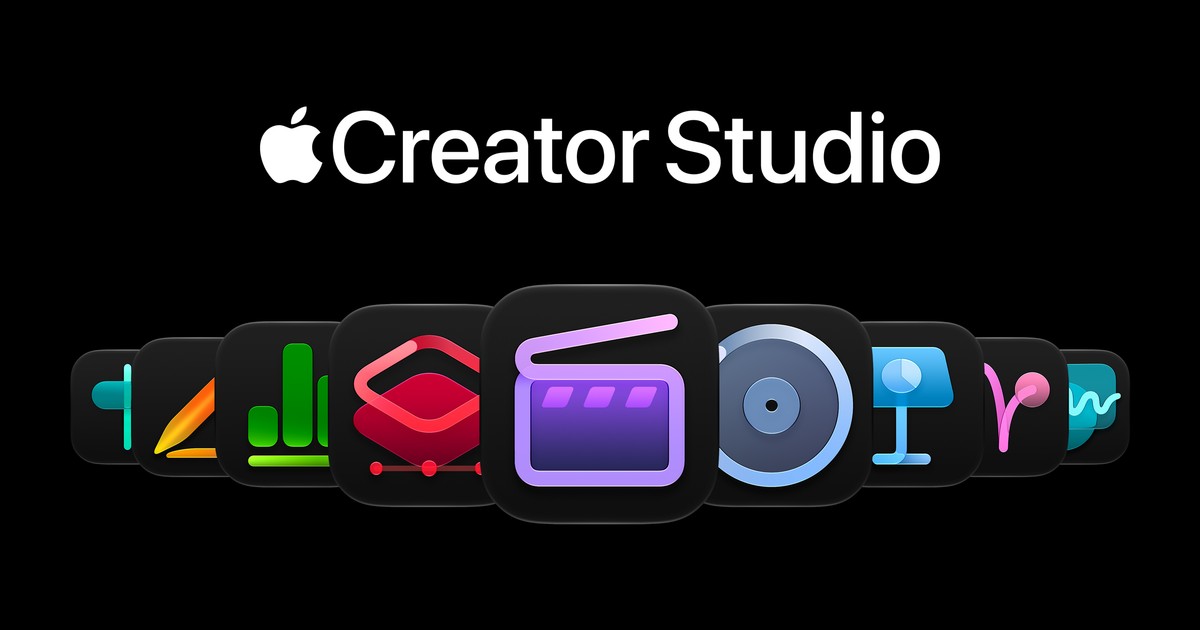
On October 27 Apple announced a major Apple Creator Studio update: Logic Pro for Mac plus Keynote, Pages and Numbers gain beta intelligent assistants that Apple says are powered by a combination of Apple-built models and OpenAI and understand document context. Keynote, Pages and Numbers also add Model Context Protocol (MCP) support, letting external AI agents read content, make edits and run automated actions inside the apps. Pixelmator Pro adds natural-language Generate Fill, and Keynote introduces the open JSON-based .keyx format. The update ships free to existing subscribers on the App Store in November; pricing stays $12.99 per month or $129 per year.
Zoom
Key Takeaways
Logic Pro for Mac, Keynote, Pages and Numbers gain beta assistants that Apple says run on a combination of Apple-built models and OpenAI
Keynote, Pages and Numbers support MCP so external AI agents can read content, edit and automate actions (requires macOS 27 or later)
Keynote adds the open JSON-based Keynote Interchange Format (.keyx), designed to be readable by external tools and AI agents
Assistants are U.S. English only and need an Apple Intelligence-capable device on iOS, iPadOS or macOS 27; free update for subscribers in November
Pricing unchanged at $12.99 per month or $129 per year, $2.99 per month for education
On Oct 26 Apple released iOS, iPadOS, macOS, watchOS and visionOS 27.2, and Siri AI (beta), the assistant rebuilt on Apple Intelligence, now supports French, Japanese, Korean, Portuguese and Spanish in addition to English. Apple says Traditional Chinese, Norwegian, Turkish and Vietnamese will follow by the end of the year. Per the iOS 27.2 release notes, Siri AI can now recall past conversations and draw on more sources such as photos in Messages, Calendar attendees and voicemails. Siri AI is still unavailable in the EU on iOS, iPadOS and watchOS and in mainland China, and server-side features have daily usage limits; Apple says expanded access will be offered for a fee in the future.
Zoom
Key Takeaways
Languages: Siri AI grows from English-only to 6 languages, adding French, Japanese, Korean, Portuguese and Spanish; Apple says Traditional Chinese, Norwegian, Turkish and Vietnamese arrive by year end
5 platforms: iOS, iPadOS, macOS, watchOS and visionOS 27.2 shipped the same day, with Siri AI still labeled beta
New abilities (per iOS 27.2 release notes): recall of past conversations, more sources including photos in Messages, Calendar attendees and voicemails, plus one Excluded Apps setting
Limits: unavailable on iOS/iPadOS/watchOS in the EU, for mainland China accounts and for users under 13; server-side features have daily caps, and Apple says paid expanded access is coming
Devices: Apple Intelligence hardware such as iPhone 15 Pro and later and M1-or-later iPad and Mac, with device and Siri language set to the same supported language
On Oct 26 Cursor announced that its Agent SDK is generally available. An agent's system prompt is written in Markdown and its tools in TypeScript; agents can be deployed on Cursor's hosted infrastructure or run on your own machines, and built-in evals measure every change. Cursor's docs say it uses the same Cursor SDK harness that powers Bugbot, Security Review, Approval Bot and Rollouts, can be triggered from source-control events, issue trackers, Slack or schedules, and is managed under Deployed Agents after deployment. Cursor has not published pricing or benchmarks.
Zoom
Key Takeaways
Same harness: Cursor's docs say Agent SDK runs on the harness behind four of its own agents: Bugbot, Security Review, Approval Bot and Rollouts
Project layout: bot/instructions.md is the required always-on system prompt, each bot/tools/*.ts file is one typed tool, with folders for skills, MCP connections, subagents, channels, hooks and schedules, and evals live in evals/*.eval.ts
Triggers and deployment: runs can be triggered from source control, issue trackers, Slack, webhooks or schedules; deploy on Cursor-managed hosting or self-host, then manage under Deployed Agents
CLI: agent-sdk validate, run and eval check the project, run a real turn and run evals; Cursor says only run and eval need a Cursor credential