AI Coding Live News

X Discussion: Addy Osmani of Claude Code Warns of "Cognitive Surrender" and Urges Developers to Keep Critical Thinking When Agents Do the Work

Addy Osmani (@addyosmani), whose X bio lists Claude Code at Anthropic, posted a long article on X on November 3 titled "Critical thinking when agents do the work." He describes a spectrum of working with AI: cognitive offloading (delegating a task but owning the result), deferral (the tool output becomes your new input), and "cognitive surrender" (the AI output quietly becomes your own and you feel no need to check it), a term he credits to Steven Shaw and Gideon Nave at Wharton. He offers self-check questions and verification habits. Within about three hours the post drew roughly 1,400 likes, 2,400 bookmarks and more than 72,000 views and reached X trending. These are the author's views, not an Anthropic announcement.

Key Takeaways

  • The spectrum: cognitive offloading (delegate but keep ownership, which the author says he does all day), deferral (the output stops being a hypothesis), and cognitive surrender (no more checking; it becomes your conclusion). Read the X article.
  • His argument: as models improve there are fewer obvious errors, so well-written, mostly correct output no longer demands a second look, and even with many agents running you still have only one pair of eyes on the results.
  • Self-check questions: write down your hypothesis before asking; know whether the AI is helping you think or thinking for you; ask what would make it wrong and test it; have several models argue the other side; ask whether you would bet on it in front of the person who maintains it.
  • Verification habits: define "verified" up front (a passing test, a screenshot, a log); a green check proves one property, so ask what it did not prove; have Claude Code critique its work with a fresh-context subagent, and finish by asking "Did I miss anything?"
  • Delegate fully where being wrong is cheap, but keep the reasoning for decisions whose consequences land on others, such as what to build and whether it is safe to ship.
Read full story

Anthropic Open-Sources FlashProve: zkSNARK Proofs That a Reply Came From the Committed Model, About 110 Tokens/s for 400B Llama 4 Maverick on One H100

Anthropic's Frontier Red Team published a research post on November 2 and open-sourced FlashProve under Apache 2.0. A model provider commits to hidden weights once, then attaches a zero-knowledge proof to each reply, so a user without the weights can check on an ordinary CPU that the reply really came from that model. That targets routing services that quietly swap in cheaper models and tampered token streams. Anthropic reports about 110 tokens/s on one H100 for Llama 4 Maverick (400B MoE, 4-bit), proofs of about 19 MB per 1,024-token request, and roughly 70-95x the GPU time of vLLM inference. It is an unmaintained research prototype limited to 1,024-token contexts and greedy decoding of an integer version of the model. Anthropic engineer Steve Weis shared the release on X.

Anthropic Open-Sources FlashProve: zkSNARK Proofs That a Reply Came From the Committed Model, About 110 Tokens/s for 400B Llama 4 Maverick on One H100

Key Takeaways

  • Anthropic-reported: on Llama 4 Maverick (400B MoE, 4-bit) one H100 proves about 110 tokens/s (prefill, 24 requests per batch), with proofs of about 19 MB per 1,024-token request.
  • It is costly: roughly 70-95x the GPU time of vLLM inference; the performance page lists about 270 GB of host memory for serving and about 39 minutes to commit to a set of weights.
  • Verification needs no GPU: the C++ verifier checks a proof in about 21 seconds on one thread, and a slower Lean verifier plus Lean 4 proofs of the security theorem are included.
  • Against prior work: VerInf proved the same model at about 0.02 tokens/s; the commercial Attestable reached 53-77 tokens/s on Gemma 4 31B but has no open-source release.
  • Limits: v0.16.0 is an unmaintained research prototype with 1,024-token contexts, greedy decoding of an integer model only, and no architecture hiding.
Read full story
Linked Models & Agents:

OpenAI Plans Its Next Internal Security Sprint With Cathedral, More Than Quadruples Critical Bug Bounty Rewards to Up to $172,000

On November 2 (US time) OpenAI said it is planning its next internal security sprint and partnering with security firm Cathedral, whose researchers will use OpenAI models alongside OpenAI teams to challenge its defenses. It is also changing its Security Bug Bounty program, more than quadrupling rewards for critical findings; OpenAI's X post says exceptional findings can earn up to $172,000 including bonuses. Per OpenAI, the last sprint dedicated 25% of its product engineers to finding and fixing weaknesses, using Codex to reproduce vulnerabilities and prepare patches, and it has committed $1 billion in subsidized access over six months for frontline defenders.

OpenAI Plans Its Next Internal Security Sprint With Cathedral, More Than Quadruples Critical Bug Bounty Rewards to Up to $172,000

Key Takeaways

  • Critical bug bounty rewards are more than quadrupled; per OpenAI's X post, exceptional findings can earn up to $172,000 including bonuses.
  • Researchers from partner Cathedral will use OpenAI models alongside OpenAI teams to test its defenses.
  • Per OpenAI, the last sprint dedicated 25% of product engineers and used Codex to reproduce vulnerabilities in isolated environments and prepare patches.
  • OpenAI has committed $1 billion in subsidized access over six months for defenders of essential services and digital infrastructure.
  • Timing, scope and finding counts for the next sprint were not disclosed.
Read full story
Linked Models & Agents:

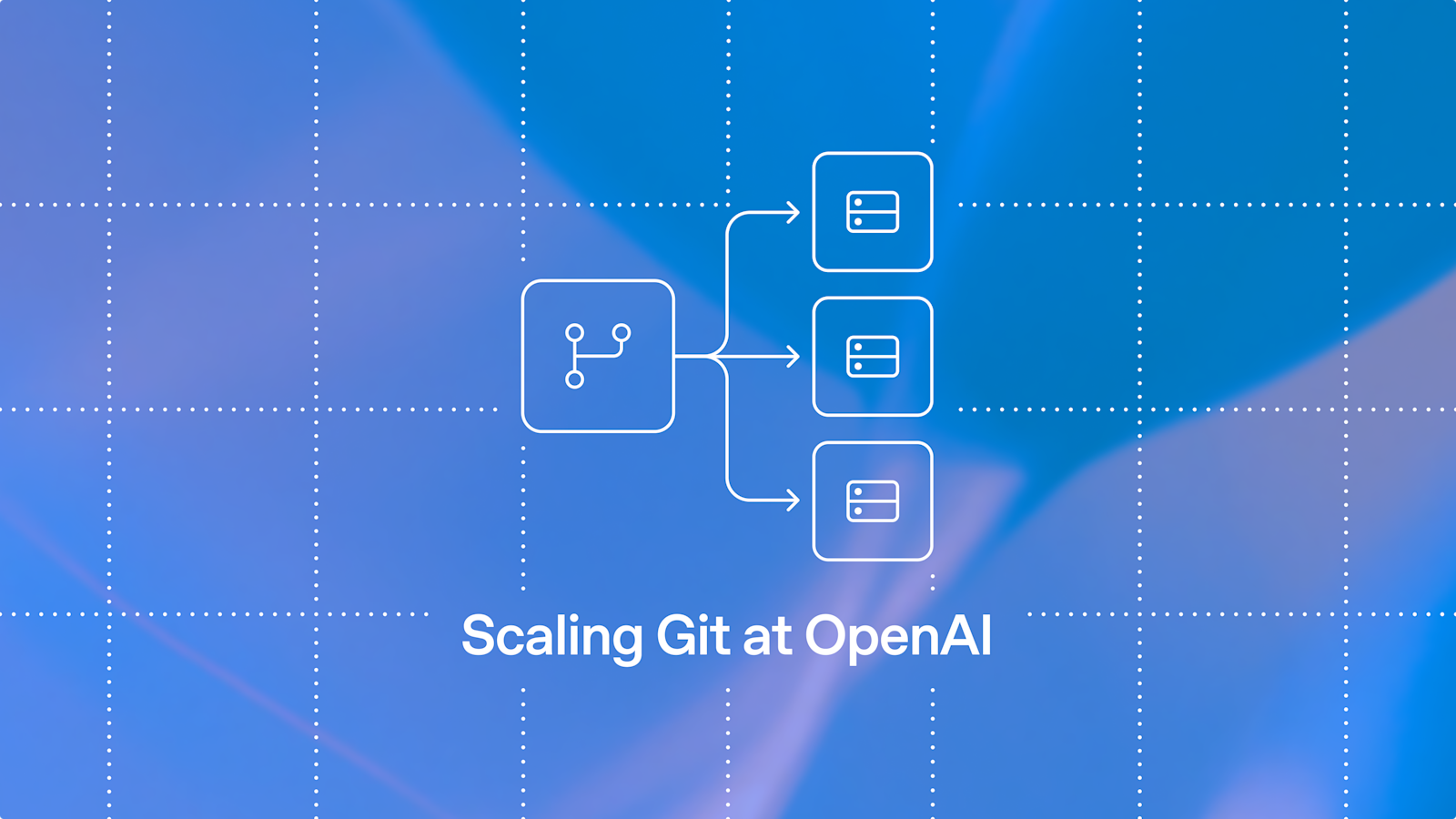
OpenAI Details Pando, Its In-House Git Backend: Median Push Latency Down Nearly 5x, Nearly 1 PB Served Daily, Built With Codex in 10 Weeks

On November 2 OpenAI published "Scaling Git at OpenAI", describing Pando, a Git-compatible backend it built for its monorepo. Per OpenAI, Pando cut median push latency by nearly 5x (about 80%), now delivers nearly a petabyte of Git data per day, and has served more than 57 TB in a single hour. It is written in Rust, its core was designed by one engineer and implemented by teams of Codex agents, and it went from kick-off to production in 10 weeks, serving production traffic since April. The trigger: Codex multiplied parallel branches and pushes, and the old system's reliability at times fell below 90%.

OpenAI Details Pando, Its In-House Git Backend: Median Push Latency Down Nearly 5x, Nearly 1 PB Served Daily, Built With Codex in 10 Weeks

Key Takeaways

  • Per OpenAI: median push latency down nearly 5x (about 80%), nearly 1 PB of Git data delivered per day, and a peak of more than 57 TB in one hour, with over 99% of bytes from local disk cache.
  • The trigger: Codex let engineers run far more branches and CI jobs in parallel; the old system struggled from late last year, with reliability at times below 90%.
  • The key trade-off: Pando drops repository-wide consistency for per-branch causal consistency and reuses pushed packfiles, stored as immutable blobs, to serve later fetches.
  • Written in Rust, core designed by one engineer and implemented by teams of Codex agents in 10 weeks; agents using GPT-6 Astra also wrote Lean and TLA+ specs to find bugs and prove properties.
  • Several improvements, such as packfile-uri fixes, are already in upstream Git, and OpenAI says it is exploring ways to share the technology with users.
Read full story
ADSponsored

X Discussion: roon Says "Sparks" of an AI Ability Mean It Is Months to Years From Superhuman, and "You Are Almost Always Underhyping"

roon (@tszzl), a well-known AI account with about 500,000 followers, posted on November 2: "when you see β€œsparks” of any ability in ai models that means you’re months-years from it being superhuman at it. today grade school math, tomorrow navier stokes. it is hard to overhype these results. you are almost always underhyping no matter what." Within about five hours it drew nearly 2,000 likes and 59,000 views. Adam Karvonen, a researcher at Truthful AI and former Anthropic Fellow, pushed back that the domains where models are superhuman are verifiable, easy to simulate and fast to get feedback on, and that research taste, robotics or running companies may not move as fast. This is a debate between personal views, not any company's official position.

Key Takeaways

  • roon's exact claim: "sparks" of an ability mean a model is months to years from being superhuman at it, "today grade school math, tomorrow navier stokes," and "you are almost always underhyping."
  • "Sparks" echoes the MIT CSAIL blog post "Sparks of Weight-Space Programming" that circulated the same day; in a reply roon called that paper "signs of life" pointing toward AI designing neural network behaviors directly.
  • Adam Karvonen's pushback: the domains where models are superhuman are verifiable, easy to simulate, fast-feedback and error-tolerant, and research taste, robotics or running companies may not move as fast.
  • Supporters such as Derya Unutmaz (about 344,000 followers) say people dismiss AI as hype when the opposite is true; others say extrapolating exponential curves is unreliable.
  • These are personal views with no new benchmarks or data, and they do not represent OpenAI or any other company.
Read full story
Linked Models & Agents:

X Discussion: levelsio Used Claude Code to Decompile the Battlefield 1942 Demo and Put It in the Browser With Multiplayer, Citing About 1M Output Tokens

Indie developer Pieter Levels (@levelsio) said on X on November 2 that he used Claude Code to decompile the engine of the free Battlefield 1942 demo, port it to C, compile it to WebAssembly and host it at bf1942.pieter.com, where it runs in the browser with online co-op on the Tobruk map. He said the job took about 1 million output tokens, roughly $100 at API prices, while he pays for a $100-a-month Claude subscription. His two main posts drew about 2,200 likes and 340,000 views and reached X trending. These are the author's own claims and community discussion, not independently verified.

X Discussion: levelsio Used Claude Code to Decompile the Battlefield 1942 Demo and Put It in the Browser With Multiplayer, Citing About 1M Output Tokens

Key Takeaways

  • Author's account: Claude Code decompiled the Battlefield 1942 demo engine, which was ported to C and compiled to WebAssembly to run in the browser.
  • The live build at bf1942.pieter.com opens directly, is labeled non-commercial and unofficial, and offers online co-op on Tobruk with no install.
  • Cost: about 1 million output tokens by the author's count, roughly $100 at API prices; he actually pays for a $100-a-month Claude subscription.
  • He said it was much harder than his earlier Quake and DOOM ports, whose engine source code id Software released long ago.
  • Reach: the first post had about 1,100 likes and 230,000 views, the launch post about 1,100 likes and 107,000 views; testers are already reporting bugs.
Read full story
Linked Models & Agents:

OpenAI Launches Grid Protectors Program: Future Compute Campuses Will Cut Power When Grids Are Strained, Starting With Up to 1,000 MW in Georgia

On November 2, OpenAI announced the Grid Protectors Program on its official blog: working with utilities and regulators so its future self-built compute campuses (its new term for data centers) cut electricity use when the grid is strained, while paying the full infrastructure and electric-service costs. The pilot is the planned campus in Effingham County, Georgia (Project Camellia), which Georgia Power says needs about 3,200 MW and commits up to 1,000 MW of flexible demand response, equal per OpenAI to the average use of roughly 700,000 households. The campus is still in development.

OpenAI Launches Grid Protectors Program: Future Compute Campuses Will Cut Power When Grids Are Strained, Starting With Up to 1,000 MW in Georgia

Key Takeaways

  • The Effingham campus (Project Camellia) needs about 3,200 MW, and Georgia Power can cut up to 1,000 MW of supply to it during peaks under a 25-year agreement (Georgia Power figures).
  • OpenAI says 1,000 MW equals the average demand of roughly 700,000 households, more than Washington, D.C., and Boston combined.
  • Georgia Power projects about $950 million a year in customer savings from 2029 from its large-load portfolio including this project, at least $15 a month for a typical home.
  • OpenAI commits to paying the full grid infrastructure and electric-service costs; terms for other campuses will be shared once finalized.
  • OpenAI cites a projection that U.S. data center capacity will exceed 100 GW by 2030.
Read full story

Gemini API Deprecates Gemini 2.5 Pro and 2.5 Flash: From December 1, Requests Auto-Route to 3.8 Flash and 3.5 Flash-Lite at the New Models' Rates

In its November 2 Gemini API changelog, Google deprecated gemini-2.5-pro and gemini-2.5-flash and removed both from the Google AI Studio model picker. From December 1, 2026, requests to gemini-2.5-pro will automatically route to gemini-3.8-flash and requests to gemini-2.5-flash to gemini-3.5-flash-lite, billed at the new models' rates. Google flags breaking API changes: stricter function calling and thought_signature validation, thinking_level replacing thinking_budget, and removal of sampling parameters such as temperature and of prefilled model turns. The model string stays valid but behavior can change, so developers should switch model strings and rerun tests before December 1.

Key Takeaways

  • Deadline: from December 1, 2026, gemini-2.5-pro routes to gemini-3.8-flash and gemini-2.5-flash routes to gemini-3.5-flash-lite; API access to 2.5 Pro is already limited to existing users who actively used it.
  • Price change (official price list, per 1M tokens): 2.5 Pro is $1.25 input / $10.00 output for prompts up to 200k; 3.8 Flash is an introductory $0.75 / $3.75 through 2026, rising to $1.50 / $7.50 on January 1, 2027.
  • 2.5 Flash and 3.5 Flash-Lite both cost $0.30 input / $2.50 output for text, while audio input drops from $1.00 to $0.30.
  • The migration guide says to replace thinking_budget with thinking_level (3.8 Flash has no minimal level), drop temperature/top_p/top_k, candidate_count and prefilled model turns, and include call_id and name in every FunctionResponse.
  • It follows the October deprecation of 3.7 Flash, another case of an old model string silently routing to a newer model; 2.5 Pro users will actually land on a Flash-tier model.
Read full story

Anthropic Launches Message Threads in Public Beta on the Messages API: Server-Side Conversations Cut Claude Code TTFT About 35% on 500K-1M Token Requests

On November 2 (US time) Anthropic put message threads into public beta on the Messages API (beta header message-threads-2026-08-12). The API keeps the conversation on the server: the first request sends the full conversation and creates a thread, and each later request sends only new messages plus the previous response id. Anthropic says threads are on by default for most Claude Code users, cutting median time to first token by about 35% on 500K-1M token requests, while the median long-conversation request shrank from about 800 KB to 1.8 KB. Threads expire after 5 idle minutes; pricing and rate limits are unchanged.

Anthropic Launches Message Threads in Public Beta on the Messages API: Server-Side Conversations Cut Claude Code TTFT About 35% on 500K-1M Token Requests

Key Takeaways

  • Per Anthropic, median time to first token on 500K-1M token Claude Code requests is about 35% lower.
  • The median long-conversation request fell from about 800 KB to about 1.8 KB, since each turn uploads only new messages plus previous_message_id.
  • A thread expires 5 minutes after its last request and is deleted within 1 hour; an expired thread returns 404 thread_not_found and must be replayed in full.
  • Pricing and rate limits are unchanged; Message Batches, token counting and on-demand compaction are unsupported, and threads are not ZDR or HIPAA eligible.
  • Available on the Claude API, Claude Platform on AWS, Google Cloud (Anthropic managed) and Microsoft Foundry, with a thread helper in the SDKs.
Read full story

X Discussion: MIT Team Says GPT-6 Astra Can Read and Write Neural Network Weights, Editing 0.016% of Qwen3.5-0.8B to Lift MATH-500 From 7.9% to 48.1%

On November 2, MIT CSAIL PhD student Rikiya Takehi posted "Weight-Space Programming" on X: a team (Takehi, Jayden Teoh, Alex Zhang, Omar Khattab) had GPT-6 Astra read and edit neural network weights directly, with no gradients or training. Their blog says Astra changed only 131,072 weights (0.016%) of Qwen3.5-0.8B, fixed its thinking loops and raised MATH-500 from 7.9% to 48.1%. The post drew about 24K likes and 1.77M views, and Ethan Mollick quoted it saying it is a big deal pending replication. All results are self-reported by the authors and not yet independently reproduced.

X Discussion: MIT Team Says GPT-6 Astra Can Read and Write Neural Network Weights, Editing 0.016% of Qwen3.5-0.8B to Lift MATH-500 From 7.9% to 48.1%

Key Takeaways

  • The original post (2026-11-02 17:51 UTC) had about 24,320 likes, 2,697 reposts, 2,284 quotes, 1.77M views and 15K bookmarks at fetch time; Wharton professor Ethan Mollick quoted it saying it is a pretty big deal pending replication (about 880 likes).
  • Experiment 8 (authors' figures): with a 50 forward-pass budget, Astra edited 131,072 weights (0.016%) of Qwen3.5-0.8B, raising MATH-500 from 7.9% to 48.1% and IFEval from 21.0% to 62.3%, while answers hitting the token limit fell from 93.0% to 33.1%.
  • Experiment 5 (authors' figures): with no data, gradients or tools, Astra wrote MinAtar policy networks in one shot that scored 517.4 on Breakout versus 15.8 for PPO at 100M steps and 25.3 at 500M steps; on Seaquest it scored 53.1, below the 88.9 of 500M-step PPO.
  • Limits the authors report: on Gemma 3 270M, which rarely loops, Astra's edits moved MATH-500 by no more than about a point; they conclude weight edits can remove an obstacle hiding an ability but cannot add one the model lacks.
  • Full experiment logs are public at RikiyaT/lm_understand-logs; so far there is only a blog post, with no peer-reviewed paper and no third-party replication.
Read full story
Linked Models & Agents:
ADSponsored

OpenAI Introduces LifeVal, a Benchmark for Everyday Life Tasks Built From Time-Use Studies and a 3,995-Person Survey

On November 2 OpenAI published LifeVal, an evaluation of whether AI can actually get everyday tasks done for ordinary people, such as finding childcare, accessing government services, budgeting, ordering groceries and adapting recipes. The task list draws on the American Time Use Survey, the Multinational Time Use Study and a new demographically representative OpenAI survey of 3,995 people. OpenAI says it has used LifeVal for the past year to track and improve its models, and it lists several best recorded GPT-6 Astra task scores, many at 100%. All scores are vendor-reported and have not been independently reproduced.

OpenAI Introduces LifeVal, a Benchmark for Everyday Life Tasks Built From Time-Use Studies and a 3,995-Person Survey

Key Takeaways

  • Task sources: the American Time Use Survey, the Multinational Time Use Study and a new representative OpenAI survey of 3,995 respondents (official blog).
  • Domains covered: caregiving, health, education, household administration, personal finances, shopping and government services.
  • Example scores (vendor-reported): kindergarten enrollment after a move 93.1%, flood volunteer coordination 98.0%, home search with deed added to cart 100%, diabetes meal plan 90.4%.
  • GPT-6 Astra's best recorded score is 100% on tasks such as booking a toddler sensory class, booking a car inspection, ordering halal groceries within budget and unsubscribing from email lists.
  • The official text we read gives no full task count or overall score, so overall figures circulating on X are not used here.
Read full story

X Discussion: Former Claude Code Member Thariq Says the $200 Plans Are Enough and "This Is the Most Expensive Intelligence Will Ever Be"

Thariq (@trq212), whose X bio reads "formerly Claude Code @anthropicai", posted on November 2: "one week in my takeaway is that you don't need unlimited tokens to do great work, the $200 plans are amazing and this is the most expensive intelligence will ever be." Within about seven hours the post drew more than 5,500 likes, 240,000 views and 350+ replies. Supporters say flat-rate plans are enough for most developers; critics point out the tension between "no unlimited tokens" and recommending the top tier, and some worry prices will rise once subsidies end. This is a personal view, not an Anthropic statement.

Key Takeaways

  • Thariq's exact claim: you don't need unlimited tokens to do great work, the $200 plans are "amazing", and "this is the most expensive intelligence will ever be."
  • In replies he added that he has been using the plans on weekends for a while and has "never hit a real limit."
  • Claude's official pricing page lists Max at $100/month (5x Pro usage) and Ultra at $200/month (10x Pro usage, no 5-hour limit, $200/month in API credits).
  • Pushback centers on two points: the tension between "no unlimited tokens" and recommending the most expensive tier, and whether current prices depend on subsidies that may end.
  • This is a personal view from a former Anthropic team member, not an official Anthropic position, and it comes with no usage data.
Read full story

Hume Launches Audio Decision API: Ask Plain-Language Questions of Raw Audio in One Call, 70.7% Agreement With a Human Panel per Hume

On November 2 voice AI company Hume launched the Audio Decision API, which it calls the first audio-native model that answers questions about speech and sound. Developers upload raw audio, write each question as a sentence with candidate answers, and get back a probability for each answer, with no transcription step. It supports yes/no, multiple-choice, rating-scale and time-span questions, such as how many speakers there are, whether someone laughs, whether a caller sounds frustrated, or whether a siren is in the background. Per Hume, it was trained on more than 10 million human judgments and in an initial evaluation reached 70.7% agreement with a human panel's average judgment, versus 56.5% for an individual rater. Access is currently by request or waitlist.

Hume Launches Audio Decision API: Ask Plain-Language Questions of Raw Audio in One Call, 70.7% Agreement With a Human Panel per Hume

Key Takeaways

  • Per Hume: 70.7% agreement with a human panel's average judgment in an initial evaluation, versus a 56.5% individual-rater baseline; sample size and languages were not disclosed.
  • Trained on more than 10 million human perceptual judgments (per Hume's X post); the blog cites tens of millions of listener ratings overall.
  • Four question types (yes/no, choice, scale, span); adding a question is one line of JSON, with no labeling or retraining.
  • The endpoint is POST /v0/decisions/file, plus an input-token estimate endpoint, with Python and TypeScript SDKs.
  • Hume says work that used to take 10+ models now takes one call; pricing has not been published.
Read full story
Linked Models & Agents:
⚑ Hume Audio Decision Model🌐 Hume AI

OpenAI's Tibo Says Dots Will Expand Its Model Family to Include GPT-6.1 Terra for Speed and Wider Reach

At 15:50 UTC on Nov 2, Tibo (@thsottiaux), whose X bio reads "Codex & ChatGPT @OpenAI", posted that OpenAI is working on expanding the family of frontier models that power dots, including GPT-6 Astra and GPT-6.1 Terra, with others to come. He said Terra brings speed and "a nice personality upgrade" and will help bring dots to more people. Dots are the always-on agents in ChatGPT with their own cloud computer, launched on GPT-6 Astra. This is a first-hand post by an OpenAI employee, not a formal company announcement; no timing or plan details have been published.

OpenAI's Tibo Says Dots Will Expand Its Model Family to Include GPT-6.1 Terra for Speed and Wider Reach

Key Takeaways

  • Source: an original post by Tibo (@thsottiaux, X bio "Codex & ChatGPT @OpenAI"), which drew about 2,475 likes, 622 replies and 127K views within roughly 20 minutes.
  • Key point: dots will no longer run only on GPT-6 Astra; GPT-6.1 Terra is being added, with more models later. It is described as work in progress with no launch date.
  • Terra per OpenAI: standard API pricing of $1 input and $5 output per million tokens, 50% below GPT-5.6 Terra and GPT-6.1 Sol, and over 3x faster task completion than GPT-6 Astra (OpenAI).
  • Current access: dots are rolling out to Pro users 18+ outside the EEA, Switzerland and the UK and to Business Premium; Enterprise needs an admin to enable the beta (Help Center).
Read full story

Anthropic's Amended S-1 Says Future Models May Imminently Meet Its RSP Threshold for Dramatically Accelerated AI Progress

On November 2 Anthropic filed Amendment No. 1 to its S-1 with the SEC, adding a risk disclosure: based on internal estimates and expectations about future models, not current ones, the company may imminently meet its Responsible Scaling Policy definition of dramatically accelerated progress attributable to AI. No current model has been designated as exceeding the threshold. Anthropic says it is evaluating the implications of meeting the AI R&D capability threshold, is considering RSP updates that would require human review and approval of certain R&D decisions, and does not expect to safely let Claude fully autonomously design and build successive frontier models without meaningful human supervision.

Key Takeaways

  • Filing: Anthropic, PBC's Amendment No. 1 to Form S-1, filed November 2, 2026 (SEC filing), Registration No. 333-299633.
  • Key line: based on internal estimates for future models, the company may imminently meet the RSP definition of dramatically accelerated progress attributable to AI; no current model has been designated as exceeding it.
  • Proposed measures: possible RSP updates requiring human review and approval of certain R&D decisions; Anthropic also says it recently delayed pre-training a new frontier base model by more than a month to strengthen safeguards such as preventing weight exfiltration.
  • Same filing (company figures): over 90% of contributions to Anthropic's codebase in September 2026 were written by Claude, and revenue for the three months ended September 30, 2026 was $17.0 billion.
Read full story
Linked Models & Agents: