AI Coding Live News

X Discussion: Grok Bot Engineer poteto Calls Adversarial Agent Code Reviews "Mostly a Waste of Tokens" and Argues for Empirical Plus Formal Verification Instead

On November 3, @poteto (lauren), whose bio says she works on Grok @bot at SpaceXSI, is on the React Compiler core team, and previously worked at Cursor, Meta and Netflix, posted what she called "maybe a hot take": she now considers adversarial reviews mostly a waste of tokens and thinks those tokens are far better spent on empirical combined with formal verification. She says she has updated her agent skill pack pstack to use its interrogate (multi-model adversarial review) skill less and may eventually remove it. She adds that she has found very little value in code review in the abstract, because agents tend to get lost in nitpicks and YAGNIs. The post drew about 906K views, 9,227 likes and 5,538 bookmarks. It is a personal opinion that sparked debate over the value of AI code review.

Key Takeaways

  • Opinion (personal, not an official finding): adversarial reviews are "mostly a waste of tokens"; empirical plus formal verification is the better use of them
  • Action: the author says she has made pstack use the interrogate skill less and may remove it; at fetch time the public pstack folder in GitHub cursor/plugins had no commits after October 27, so the change is not visible there yet
  • What interrogate is: per its public SKILL.md, it spawns one read-only reviewer per configured model (defaults Claude Opus 5.5 xhigh and Grok 4.7 xhigh fast) to attack the diff, then sorts findings into Act on, Consider, Noted and Dismissed without auto-applying fixes
  • Author (per her X and GitHub bios): engineer on Grok Bot at SpaceXSI, React Compiler core team, previously at Cursor, Meta and Netflix
  • Reach: about 906K views, 9,227 likes, 5,538 bookmarks, 668 replies, 356 reposts and 210 quotes
Read full story

X discussion: Microsoft AI CEO Mustafa Suleyman posts "Don't build conscious superintelligence", saying AI development should stop if consciousness emerges in training

Microsoft AI CEO Mustafa Suleyman published an X article on November 1 titled "Don't build conscious superintelligence", responding to reactions to his September essay on model welfare. He clarified that his line "AIs are not conscious" was deliberately in the present tense: they are not today, and that is how they must remain. If consciousness started to emerge in training, he would call for everyone to stop AI development until those properties could be designed out. He argued that AI developers have no right to bring a new conscious species into the world and that welfare concerns should focus on humans, animals and the natural environment. He also credited Anthropic for publishing its constitution and research, while saying he disagrees with its approach. The post drew about 353 likes, 251 bookmarks and 290K views, with ethicists and practitioners on both sides. This is a personal opinion piece, not a Microsoft product or policy announcement.

X discussion: Microsoft AI CEO Mustafa Suleyman posts "Don't build conscious superintelligence", saying AI development should stop if consciousness emerges in training

Key Takeaways

  • Original post: @mustafasuleyman X article, Nov 1, 15:22 UTC, about 353 likes, 56 reposts, 79 replies, 251 bookmarks and 290K views at fetch time
  • It responds to reactions to his Sept 16 essay "It's time to talk about model welfare" (about 1,013 likes); his X bio lists CEO of Microsoft AI, author of The Coming Wave, and co-founder of DeepMind and Inflection
  • Core claim: "AIs are not conscious" describes today and that is how it must remain; any evidence of AI consciousness should be disclosed publicly at once; if consciousness emerges in training, development should stop
  • He credits Anthropic for publishing its constitution and a stream of papers and posts, says he disagrees with its approach, and calls for labs to research this together and share safety information
  • In quote posts, UMass Amherst economics and ethics scholar Itai Sher called it "very well put"; UCL professor Tim Colbourn agreed but doubted safety can be engineered by default; others noted there is no accepted theory or test of consciousness
Read full story
Linked Models & Agents:

Benji Taylor, head of design at X and SpaceXSI, open-sources Stageshow, an agent skill for realistic faux product UI and animated demos

On Oct 31, Benji Taylor, head of design at X and SpaceXSI, released Stageshow on X: an open-source skill (MIT license) for coding agents that helps them produce faux product UI that looks real, including stills, cursor demo animations, and bento grids, delivered as ordinary React components. It installs with one command, and he says it works with Grok Build, Claude Code, Codex, Gemini, and others. The launch post drew about 4,500 likes and 6,500 bookmarks. He notes it rarely nails a demo in one shot and most still take a few rounds of feedback.

Benji Taylor, head of design at X and SpaceXSI, open-sources Stageshow, an agent skill for realistic faux product UI and animated demos

Key Takeaways

  • Install: npx skills add benjitaylor/skills --skill stageshow; the author says it works with Grok Build, Claude Code, Codex, Gemini, and other agents (author's post)
  • Contents: a seven-step workflow in SKILL.md, reference rule docs, dozens of gold examples, a React kit, and self-check scripts such as film.mjs (GitHub)
  • License: the stageshow folder is MIT licensed; the repo was created Oct 26 and had about 61 stars at writing time
  • Reach: the launch post had about 4,521 likes, 6,561 bookmarks, and 213k views as of Nov 1, 08:00 SGT
  • Quality claims are the author's own: the same prompts did better with the skill, but no quantitative evaluation was published
Read full story

Stanford & UC Berkeley Introduce Librarian Agents: Training LLMs to Proactively Curate Workspaces, Cutting Navigation Costs by 33.8%

Researchers from Stanford University and UC Berkeley introduced Librarian Agents (arXiv:2610.22273). To overcome the bottleneck of reactive RAG methods struggling with complex cross-document reasoning at query time, the framework uses reinforcement learning to train LLMs to perform anticipatory directed curation on messy long-context workspaces into structured synthetic filesystems. On BrowseComp+, it hits 55.86% accuracy while reducing navigation token consumption by 33.8% to 51%.

Stanford & UC Berkeley Introduce Librarian Agents: Training LLMs to Proactively Curate Workspaces, Cutting Navigation Costs by 33.8%

Key Takeaways

  • Stanford and UC Berkeley introduced Librarian Agents (arXiv:2610.22273), replacing reactive RAG with anticipatory directed workspace curation
  • Uses reinforcement learning to train builder agents to restructure raw documents into modular synthetic filesystems via CreateFile and MergeFiles
  • Achieves 55.86% accuracy on BrowseComp+ with only 3,635 navigation tokens, cutting navigation token costs by 51% compared to flattened workspaces
  • Reduces tokens per correct answer by 33.8% at 10 queries per corpus, establishing an amortized curation paradigm for repeatedly queried knowledge bases
Read full story
Linked Models & Agents:
ADSponsored

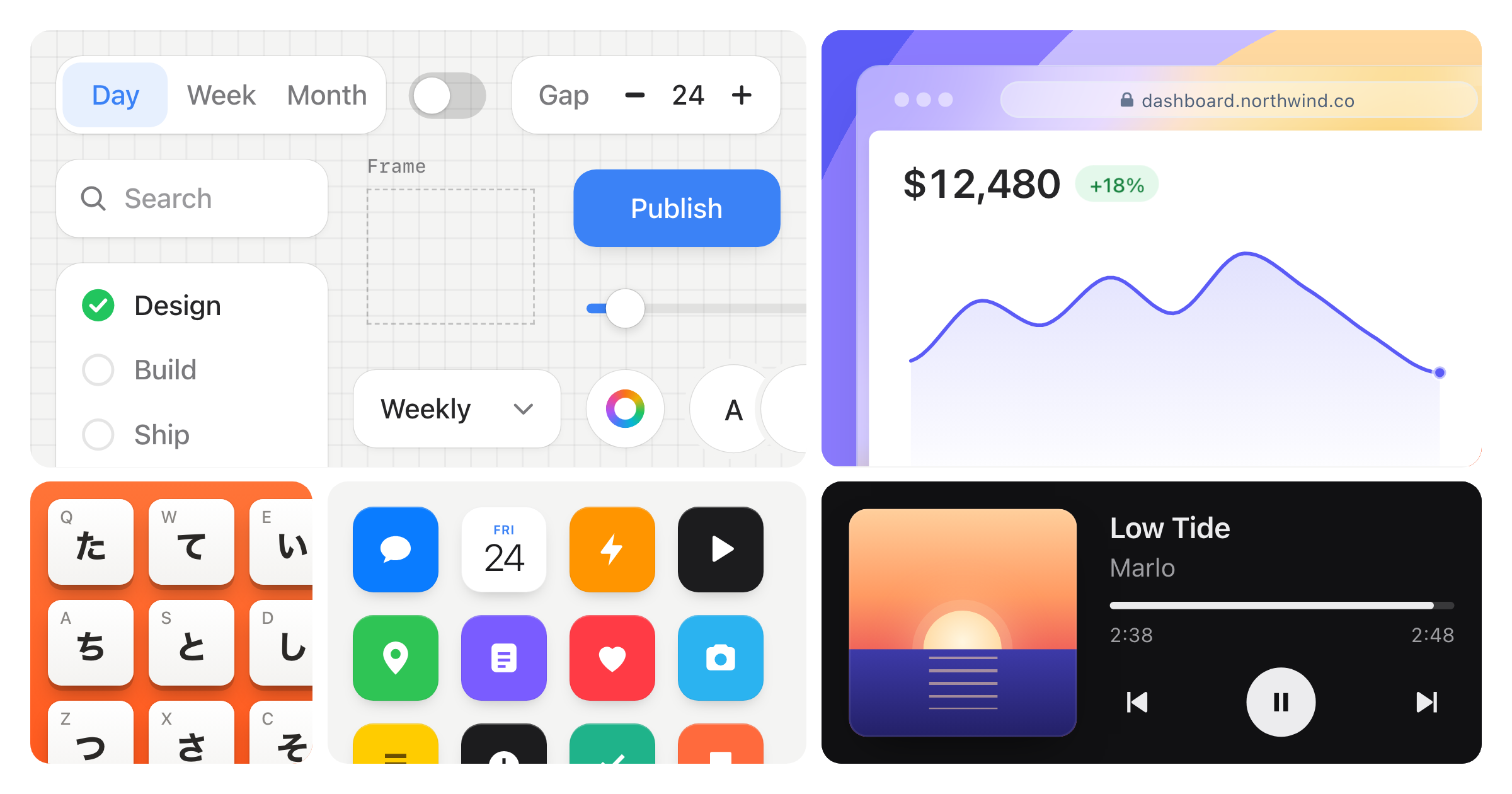
OpenUI 1.0 ships: the open-source generative-UI standard adds custom actions and functions; its own benchmark shows ~52% fewer tokens than JSON render formats

On 2026-10-15 Thesys shipped OpenUI 1.0 (MIT, ~11K GitHub stars). OpenUI Lang 1.0 adds custom actions (defineAction), custom functions (defineFunction), library.extend and a stored-message format, so agents can stream interactive cards, forms and charts instead of walls of text. In the project's tiktoken benchmark, seven UI scenarios total 4,800 tokens, 52.8% fewer than Vercel JSON-Render. The 1.0 features currently require the React renderer.

OpenUI 1.0 ships: the open-source generative-UI standard adds custom actions and functions; its own benchmark shows ~52% fewer tokens than JSON render formats

Key Takeaways

  • Token efficiency (project benchmark, tiktoken GPT-5 encoder): 7 scenarios total 4,800 tokens vs Vercel JSON-Render 10,180 (-52.8%) and Thesys C1 JSON 9,948 (-51.7%); up to -67.1% on a contact form (benchmarks)
  • New in 1.0: defineAction custom actions reach the host onAction with typed params; defineFunction adds custom @ functions whose failed calls evaluate to null instead of breaking the page
  • Compatibility: Vue/Svelte/Angular renderers stay on 0.4; 1.0 language features need the React renderer for now
  • Upgrade gotcha: bump lang-core, react-lang and the prompt-generating server together; a 1.0 prompt teaches bare action steps that 0.x clients won't run
  • Traction: ~11K stars six months after open-sourcing (MIT); the founder's launch post drew ~1.18M impressions and 1,800+ bookmarks (GitHub)
Read full story

Beyond Pure Neural Prompt Loops: ABCAgent Treats Agent Behavior as Code, Achieving Over 92% Reusability and Robust Execution

Mainstream LLM agents predominantly rely on purely neural orchestration loops (such as ReAct), generating each step, tool call, and control decision through unconstrained language token generation. This paradigm suffers from high API latency, steep operational costs, rapid error cascading, and an inability to reuse verified execution logic across recurring task instances. Researchers from Uniphore introduce ABCAgent (arXiv:2610.04824), an innovative neuro-symbolic framework treating Agent Behavior as Code. ABCAgent decouples agent design from execution: a foundation model serves as a runtime designer to author and edit explicit programmatic specifications (Python programs with embedded neural functions), while a deterministic executor handles control flow, variable bindings, and state transitions. Evaluated across GAIA, Augmented GAIA, GSM-Symbolic, τ²-bench, and WorkArena, ABCAgent matches or exceeds neural agent accuracy while demonstrating superior stability. Crucially, it solves 92.6% of GSM-Symbolic and 20.1% of Augmented GAIA task instances without code synthesis simply by rebinding parameters into existing programs, slashing latency and inference overhead.

Key Takeaways

  • ABCAgent introduces a neuro-symbolic framework specifying agent behavior as executable Python programs
  • Solves 92.6% of GSM-Symbolic tasks via parameter rebinding without LLM re-authoring, drastically cutting cost and latency
  • Exhibits superior stability on τ²-bench and WorkArena over neural loops, eliminating error compounding in loops
Read full story

NVIDIA NeMo Study: Agentic Retrieval Boosts Complex Search nDCG@10 by 8.7 Points but Incurs 107s Latency and 764K Tokens per Query

Dense retrieval serves as the default paradigm for searching unstructured enterprise corpora in modern RAG systems. However, dense retrieval is fundamentally bound to surface-level semantic similarity, failing when queries require multi-hop exploration, dynamic hypothesis reformulation, and causal synthesis. Researchers from NVIDIA NeMo-Retriever present an in-depth investigation into Agentic Retrieval (arXiv:2610.05750), coupling LLM ReAct loops with dense and lexical retrievers. Evaluating across challenging benchmarks including ViDoRe v3 and BRIGHT, agentic retrieval improves nDCG@10 by 8.7 points using the identical underlying embedding model. Crucially, NVIDIA transparently quantifies the operational trade-offs: agentic searches average 107.4 seconds per query (versus 0.67 seconds for conventional retrieval) and consume an average of 764.1K input tokens and 5.8K output tokens per query. This landmark study provides critical empirical benchmarks for enterprise architectures balancing retrieval depth against inference budgets (github.com/NVIDIA/NeMo-Retriever).

Key Takeaways

  • NVIDIA NeMo-Retriever evaluates Agentic Retrieval coupling ReAct loops with dense retrievers for complex multi-hop search
  • Improves nDCG@10 by 8.7 points using the identical base embedding model across ViDoRe v3 and BRIGHT benchmarks
  • Transparently quantifies operational costs: average query latency reaches 107.4 seconds (vs 0.67s) consuming 764.1K input and 5.8K output tokens
Read full story
Linked Models & Agents:

Foundations of Proactive Agents: 3T Principles and Proactivity-Gym Benchmark Reveal Trust Erosion from Uncalibrated Interventions

Contemporary LLM agents operate overwhelmingly in a reactive posture, awakening only when commanded by explicit user prompts. As continuous ambient compute becomes cost-effective, proactive agents that exploit idle cycles to anticipate needs and execute support before users ask represent the next frontier of intelligent personal assistants. However, proactivity is a double-edged sword: even flawlessly completed autonomous tasks can disrupt user focus, impose heavy cognitive verification overhead, and destroy human trust if initiated at misaligned moments. Researchers from KAIST and the University of Minnesota establish foundational theory for proactive agents in arXiv:2609.37267, framing design around three joint principles (3T): Task Capability, Temporal Allocation (aligning compute with cognitive availability), and Trust. They introduce PROACTIVITY-GYM, a stateful multi-day evaluation testbed with persona-conditioned simulated users. Evaluating 23 model-harness configurations alongside a 30-participant human study, the authors show that poorly timed interventions trigger severe trust collapse despite perfect task outcomes, whereas asynchronous assistance during user downtime (e.g., sleep-time compute) preserves deep user engagement.

Key Takeaways

  • Establishes foundational theory for proactive agents around joint 3T principles: Task Capability, Temporal Allocation, and Trust
  • Releases PROACTIVITY-GYM, a stateful multi-day evaluation testbed featuring persona-conditioned simulated users across continuous scenarios
  • A 30-participant human study demonstrates that untimely interventions cause severe trust collapse despite correct outputs, validating sleep-time assistance as the optimal interaction paradigm
Read full story
L
LangChain@langchain-ai·
👀73
🔥90

LangGraph.js SDK 1.12.0: useStream enqueue can use durable server-side run queues across reloads/sessions

LangGraph.js shipped @langchain/[email protected] on 2026-09-25 (with @langchain/[email protected] and Vue/Svelte twins). useStream's "enqueue" multitask strategy can set queue: "server" so queued runs hit backend Runs REST instead of an in-memory client queue—surviving reloads, visible across sessions, with server-side cancelQueued/clearQueue. Default remains queue: "local"; custom AgentServerAdapter transports are unsupported. For frontends that need durable, collaborative agent queues.

LangGraph.js SDK 1.12.0: useStream enqueue can use durable server-side run queues across reloads/sessions

Key Takeaways

  • Shipped: langgraph-sdk 1.12.0 + react/vue/svelte 1.2.0
  • Opt in with queue: "server" on useStream enqueue; local remains default
  • Backend must implement Runs REST create/list/cancel endpoints
  • Docs: useStream React howto + npm package
  • Not supported with custom AgentServerAdapter transports
Read full story

CopilotKit 1.74.0: consume learned skills across SDK containers; Web Inspector targeted What's New + HUD telemetry

CopilotKit shipped v1.74.0 on 2026-09-25 (npm @copilotkit/react-core 1.74.0): SDKs can consume learned skills from multiple containers, expanding skill assets beyond a single runtime; Web Inspector gains targeted What's New notifications and launcher HUD impression/action tracking. Fixes: threads drawer no longer locks on unresolved entitlements, stop refreshing realtime credentials for sockets that never open, stop per-message state cloning / virtual-scroll tug-of-war in React, and a Memory policy that grants nothing no longer fails the run.

CopilotKit 1.74.0: consume learned skills across SDK containers; Web Inspector targeted What's New + HUD telemetry

Key Takeaways

  • Shipped: v1.74.0 / @copilotkit/[email protected]
  • Skills: consume learned skills from multiple containers across SDKs (#7384)
  • Inspector: targeted What's New (#6956) + launcher HUD impression/action tracking (#7376)
  • Stability: no realtime credential refresh for never-open sockets; empty-grant Memory policy no longer fails runs
  • React: stop per-message state cloning and virtual-scroll tug-of-war on long threads
Read full story
Linked Models & Agents:
ADSponsored

DSPy 3.4.0: Jev via TypeSafe (Noul/Choice/Score), ReAnchor calibration, native lm15 engines

DSPy 3.4.0 (2026-09-25) integrates Jev through TypeSafe with experimental Noul/Choice/Score decision types and ReAnchor calibration; the LM layer prefers native lm15 engines, adds LocalInterpreter and async ReActV2. 3.4 is the LM transition release; 3.5 is the migration deadline.

DSPy 3.4.0: Jev via TypeSafe (Noul/Choice/Score), ReAnchor calibration, native lm15 engines

Key Takeaways

  • Jev via TypeSafe: Noul/Choice/Score with probability evidence (#10463)
  • ReAnchor fits thresholds/cuts/weights against your metric (#10475)
  • engine=auto prefers native lm15; register_provider for compatible HTTP
  • LocalInterpreter for trusted CPython (not a security sandbox); RLM interpreter_factory= kw-only
  • 3.4 transition → 3.5 migration deadline; see LM migration guide
Read full story
Linked Models & Agents:

Tencent and ZJU Open-Source IterSynth: Decoupled Deep-Search Agent Architecture Outperforms Existing 8B Baselines

Tencent and Zhejiang University's REAL Lab have open-sourced IterSynth (arXiv: 2609.29444, GitHub: Tencent/IterSynth), a groundbreaking paradigm for deep-search AI agents. Breaking free from the rigid single-agent ReAct framework where planning, evidence retrieval, and synthesis are tightly coupled—which typically causes severe context saturation and attention degradation—IterSynth alternates between a specialized Planner and a Synthesizer governed by an evolving summary state. Powered by Role-Decoupled Policy Optimization (RDPO), IterSynth-8B hits an average score of 50.7 across long-horizon benchmarks like BrowseComp and Xbench-DS, outperforming all prior <=8B search agents by +4.2%.

Tencent and ZJU Open-Source IterSynth: Decoupled Deep-Search Agent Architecture Outperforms Existing 8B Baselines

Key Takeaways

  • Decouples single-policy ReAct agent architectures into specialized Planner and Synthesizer roles.
  • Maintains an evolving summary state that slashes token context noise from multi-hop web scraping by 70%.
  • Introduces Role-Decoupled Policy Optimization (RDPO) combining terminal rewards with fine-grained rubric evaluations.
  • IterSynth-8B achieves a record 50.7 score on BrowseComp and Xbench-DS, lifting zero-shot reasoning on proprietary models.
  • Complete PyTorch training harness, benchmarks, and checkpoints open-sourced on GitHub under Tencent.
Read full story

Builder.io open-sources Agent-Native: shared defineAction layer over HTTP, MCP, and CLI

@Terminalchai covered Builder.io's open-source Agent-Native (github.com/BuilderIO/agent-native): define an action once with Zod, expose it as a typed agent tool and React useActionQuery hook, auto-publish HTTP/MCP/CLI endpoints, and share live UI state—no pixel computer-use. Quick start via npx @agent-native/core create.

Key Takeaways

  • defineAction once for both agent tools and React UI.
  • Auto-exposes HTTP, MCP, and CLI endpoints.
  • Shared live UI state without pixel-level computer-use.
Read full story

Safari 27 ships built-in MCP server: Claude Code and Codex can drive a real Safari window

Sebastien Lorber notes Safari 27’s built-in MCP server is out of beta for coding agents. WebKit documents that the Safari MCP connects an agent to a live Safari window with DOM, network, and screenshot access for more autonomous WebKit debugging; data stays local and is not sent to Apple. Agents no longer have to approximate Safari bugs via Chromium-only harnesses.

Key Takeaways

  • Safari 27 MCP is out of beta for Claude Code, Codex, and other MCP clients.
  • Agents can inspect DOM, network, and screenshots in a live Safari window.
  • Runs locally; no AutoFill/passwords/history; captured data goes to your chosen agent, not Apple.
Read full story

Agent Conf 2026 Warsaw: Industry Consensus Pivots from Prompt Hacking to Resilient Orchestration

At Agent Conf 2026 in Warsaw, top systems engineers established a decisive consensus: single prompts and rudimentary ReAct loops are obsolete for mission-critical software. The field is adopting deterministic state machines, topological DAG orchestrators, and dual-sandbox rollback guards.

Key Takeaways

  • Marks transition from chat helpers to deterministic, stateful multi-agent systems
  • Spotlights rollback snapshots and auto-healing sandboxes to prevent catastrophic drift
  • Releases multi-framework open benchmarks to standardize long-horizon task verification
Read full story
Linked Models & Agents: