AI Coding Live News

Nous Research opens the official Hermes Agent mobile beta: iOS via TestFlight, Android via Firebase, connecting your phone to your own gateway to approve tools and manage bots and routines

During NousCon 2026 in New York on Oct 30, Nous Research released an official mobile beta of Hermes Agent and put up a sign-up page at hermes-agent.nousresearch.com/mobile: iOS users join the "Hermes Agent - Mobile" beta through TestFlight, and Android users join through Firebase App Distribution. The TestFlight page says the app connects to your own Hermes gateway so you can chat with streaming, approve tool calls, and manage bots and routines from anywhere. Teknium, co-founder and lead engineer of Hermes Agent, confirmed on X that the iPhone and Android betas launched together. Nous has not announced a general release date or any benchmarks.

Key Takeaways

  • Entry point: the official page hermes-agent.nousresearch.com/mobile covers 2 platforms, iOS through TestFlight and Android through Firebase App Distribution
  • Positioning: the TestFlight description says the app connects to your own gateway for streaming chat, tool-call approval, and managing bots and routines; it is a client, not a separate agent running on the phone
  • Confirmation: Teknium, co-founder and lead engineer of Hermes Agent, confirmed in a reply on X that the iPhone and Android betas both launched on NousCon day
  • Watch for clones: several third-party Hermes phone clients already exist, so only use the links on the official page; Nous has not published a general release date or benchmarks
Read full story

X-Tree Tokenizes Reusable Agent Experience: Unsupervised Tree Induction Boosts WebArena Success by 4.5%

Conventional LLM agents treat multi-step trajectories as flat token sequences, applying uniform loss weights and ignoring the hierarchical sub-routines that humans reuse across complex tasks. While prompt-based skills retrieve procedures in-context, they leave model weights unaltered. Inspired by text tokenizers that construct vocabularies through frequency statistics without LLM calls, researchers from Waterloo and UIUC introduce X-Tree. By scoring action-span reusability and merging recurring steps into an eXperience tree, X-Tree integrates into offline RL, online RLVR, and on-policy self-distillation, improving task success by up to 4.5% on WebArena, 5.8% on ScienceWorld, and 4.1% on WebShop.

X-Tree Tokenizes Reusable Agent Experience: Unsupervised Tree Induction Boosts WebArena Success by 4.5%

Key Takeaways

  • Introduces tokenizer-inspired action-stream experience tree induction without any expensive LLM prompting calls
  • Boosts task success rates by 4.5% on WebArena, 5.8% on ScienceWorld, and 4.1% on WebShop at matched compute budgets
  • Seamlessly integrates across offline RL, online RLVR adaptive reward shaping, and on-policy self-distillation
Read full story

Grok Bot proactive suggestions: offers help unprompted, asks before acting

Official @bot (2026-10-01): Grok Bot can now suggest ways to help without you needing to ask. Fits the Chief of Staff pattern plus cloud computer, skills, and routines; consequential actions stay behind Approvals/Auto Review. Get the app at x.ai/bot.

Grok Bot proactive suggestions: offers help unprompted, asks before acting

Key Takeaways

  • Official: @bot 2026-10-01 — proactive help suggestions; CN brief: Tim @nft_chen/status/2105724531428233546
  • Stack: persistent Bots, shared cloud computer, skills & routines — cursor.com/docs/grok-bot + x.ai/news/introducing-grok-bot
  • Chief of Staff use case: calendar/Slack/inbox digest with source links; no send/reschedule without approval
  • Trust: Approvals + Auto Review for consequential actions (cursor.com/docs/grok-bot/security)
  • Install: x.ai/bot; included with paid Cursor / SuperGrok link; no public SWE-bench numbers
Read full story

Can Agents Design Libraries for Agents? Stanford & UW-Madison Release LibraryDesignBench to Fix Downstream Code Reusability

As autonomous software engineering agents increasingly build upon artifacts generated by peer agents, they exhibit a destructive tendency to reimplement capabilities from scratch rather than reuse existing modules, causing codebase bloat. Researchers from UW-Madison and Stanford introduce LibraryDesignBench, the first two-phase benchmark measuring how effectively agents architect reusable libraries for downstream agents. Across 242 expert-validated programming problems, 15 library tasks, and four languages, agent architects successfully reproduce human-engineered abstractions on 11 of 15 tasks. However, downstream consumer agents systematically underutilize these libraries, reimplementing existing routines. Detailed failure audits reveal that downstream agents reimplement functions not due to missing features, but because agent-written libraries are structurally rigid and difficult to invoke. Equipping agent designers with subagent-testing harnesses dramatically improves API ergonomics and downstream reuse.

Can Agents Design Libraries for Agents? Stanford & UW-Madison Release LibraryDesignBench to Fix Downstream Code Reusability

Key Takeaways

  • First Benchmark for Agent-Authored Libraries: LibraryDesignBench evaluates agent-designed libraries across 242 expert-validated tasks in 4 languages, establishing how agents build for other agents.
  • Diagnosing Reimplementation Traps: Downstream agents avoid agent-written libraries not due to missing features, but because agent-designed APIs suffer from interface rigidity and poor developer ergonomics.
  • Subagent Co-Testing Boosts Reuse: Directing designer agents to test their libraries with consumer subagents iteratively refines API signatures, dramatically improving downstream code simplicity and reuse rates.
Read full story
ADSponsored

LLMs are General Asynchronous Agents: Non-Blocking Coroutine Runtimes Enable Concurrent Execution on Qwen 3.x Without Retraining

Mainstream LLM agents strictly follow sequential interaction loops: read, think, reply, call tools, and block until completion. Real-world applications—including full-duplex voice assistants, robotic manipulation, and continuous infrastructure monitoring—are inherently asynchronous, receiving incoming observations while the agent is actively deliberating or waiting on tool I/O. Researchers introduce a general asynchronous LLM framework that abstracts model inference into non-blocking coroutines with overlapping memory states. Without requiring task-specific fine-tuning or architectural alterations, foundation models like Qwen 3.x exhibit native asynchronous competency, effortlessly handling live video feeds, real-time gaming, and continuous systems monitoring.

LLMs are General Asynchronous Agents: Non-Blocking Coroutine Runtimes Enable Concurrent Execution on Qwen 3.x Without Retraining

Key Takeaways

  • Transition from Sequential Blocking to Asynchronous Coroutines: Establishes an inference runtime treating LLM reasoning as concurrent coroutines with overlapping memory states, breaking sequential execution limits.
  • Zero-Finetuning Asynchronous Competency: Empirical evaluations demonstrate that off-the-shelf Qwen 3.x models natively handle concurrent state synchronization and interrupts without bespoke fine-tuning.
  • Versatile Streaming & Real-Time Performance: Proves robust non-blocking adaptability across live video analysis, real-time game control, and concurrent infrastructure monitoring.
Read full story

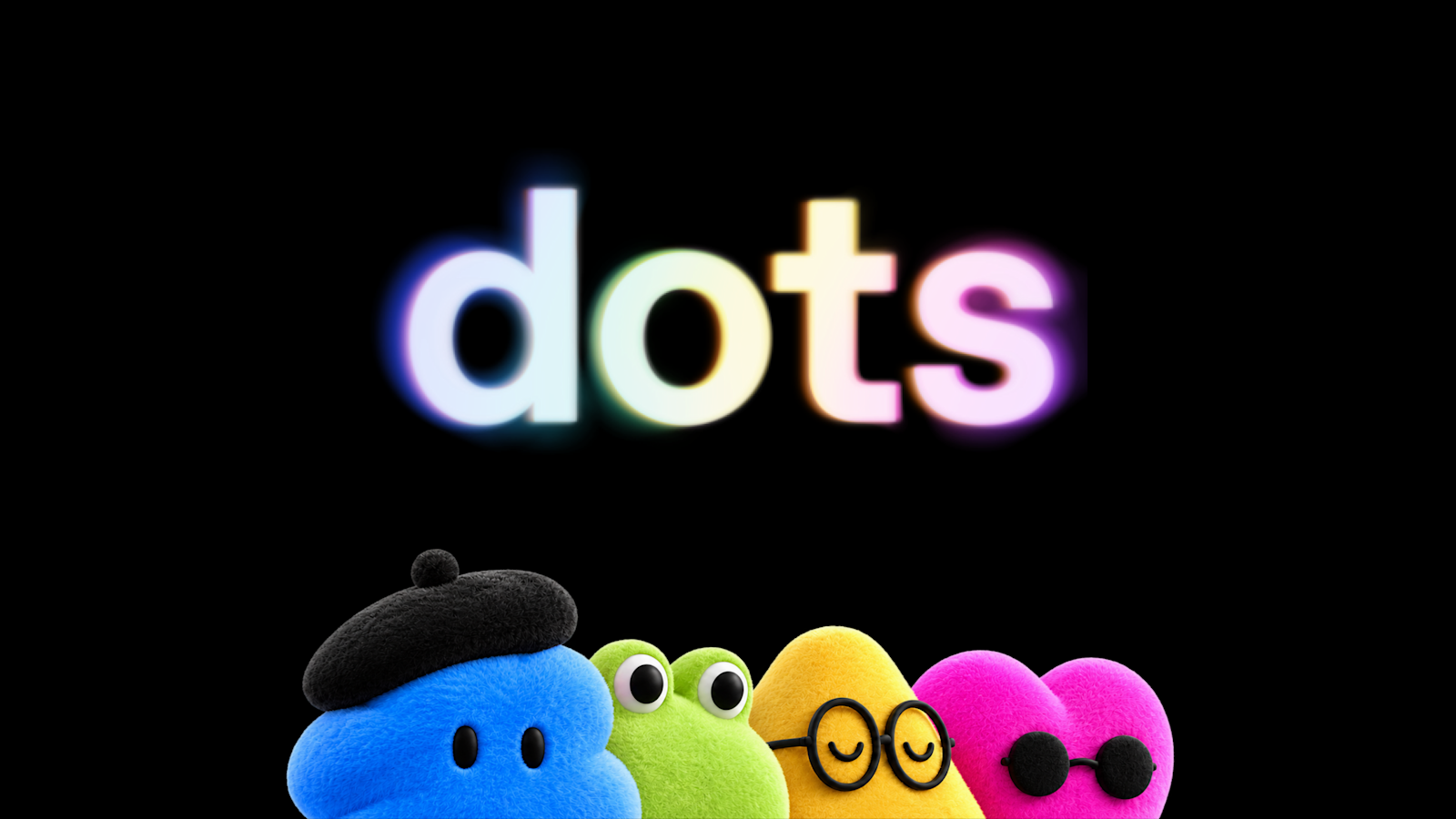
Personal desktop agents compared: Grok Bot vs Meta Muse vs OpenAI Dots

After OpenAI launched Dots (GPT-6 Astra, per-dot cloud computer, 4000+ plugins) at DevDay, the personal/desktop agent space has three clear poles: Cursor/xAI Grok Bot (developer teammates + routines), Meta Muse (Secure VM consumer agent; often misheard as “Mate Muse”), and OpenAI Dots (always-on primary Dot). Feature comparison from official docs only—no invented benchmarks.

Personal desktop agents compared: Grok Bot vs Meta Muse vs OpenAI Dots

Key Takeaways

  • “Mate Muse” verifies as Meta Muse (2026-09-08): Meta news + How We Designed Muse; Muse Secure VM + Muse Spark; consumer life/goals agent.
  • OpenAI Dots (DevDay 2026-09-29): Introducing dots; GPT-6 Astra; own cloud computer; 4000+ plugins; ChatGPT Pro / Business Premium; one primary Dot at launch.
  • Grok Bot: Cursor docs — persistent cloud computer, plugins/MCP, skills/routines, multi-Bot; included with paid Cursor plans or SuperGrok / X Premium+ link (Plans).
  • No public three-way official SWE-Bench/Agent Arena bake-off; pick by job: coding/routines/multi-Bot → Grok Bot; consumer life agent → Muse; ChatGPT ecosystem always-on → Dots.
  • Shared pattern: isolated cloud computer + approval for sensitive acts; differ on developer routines/local exec (Grok Bot), WhatsApp/consumer connectors (Muse), plugin breadth + Pro bundling (Dots).
Read full story

ai-employees open-sources an MIT kit of eight roles (~60 routines) for existing agent harnesses

@AverageAiBro covered ai-employees (github.com/markfulton/ai-employees), an MIT kit of about eight business roles (~60 routines) you drop into an existing agent harness via npx ai-employees hire <role> --to <path> (gtm-engineer, seo-aeo, web-dev, chief-of-staff, and more), including schedule and morning-brief patterns. The open kits are free; any marketing-site club upsell is separate.

Key Takeaways

  • npx hire drops a role folder into your existing harness without building roles from scratch.
  • About eight roles and sixty routines, including schedule and morning-brief patterns.
  • MIT open kits are free; review drafts before any send or spend.
Read full story
Linked Models & Agents:

Claude Code 2.1.274: 108 CLI changes, tool_use_id loop fix, MCP and memory warnings

The unofficial-but-tolerated Claude Code Changelog bot (@ClaudeCodeLog) posted 2.1.274 with 108 CLI changes. Highlights: a visible critical-memory warning with safe free/restart steps; sessions no longer loop forever on unexpected tool_use_id 400s (transcripts self-heal when possible, else a clear /rewind error ends the loop); MCP 403 insufficient_scope now names missing permissions and points to /mcp re-auth; CLAUDE_CODE_MCP_STARTUP_WAIT_MS bounds how long the first non-interactive turn waits for MCP servers. Many more MCP/stream, /goal resume, self-hosted runner 401, VS Code, and cloud session/routine fixes. Source: anthropics/claude-code CHANGELOG #21274.

Key Takeaways

  • 2.1.274 ships 108 CLI changes: critical-memory warning with safe restart steps
  • Stops unexpected tool_use_id 400 retry loops; transcripts self-heal or show /rewind
  • MCP 403 names missing scopes and points to /mcp; CLAUDE_CODE_MCP_STARTUP_WAIT_MS added
Read full story

Replit Routines: schedule agents hourly/daily/weekly — deterministic first, Agent only when needed

Replit launched Routines for recurring AI automation on hourly, daily, or weekly schedules. Each run starts with deterministic code and invokes the Agent only when reasoning is required, cutting token burn from always-on agents.

Key Takeaways

  • Schedule recurring work hourly, daily, or weekly.
  • Deterministic code first; Agent only when reasoning is needed.
  • Targets token cost of always-on agents.
Read full story
Linked Models & Agents: