AI Coding Live News

Stripe Opens Agent Data Analysis to All Users via MCP, Queries and Reports APIs; Queries Free Through Jan 31, 2027

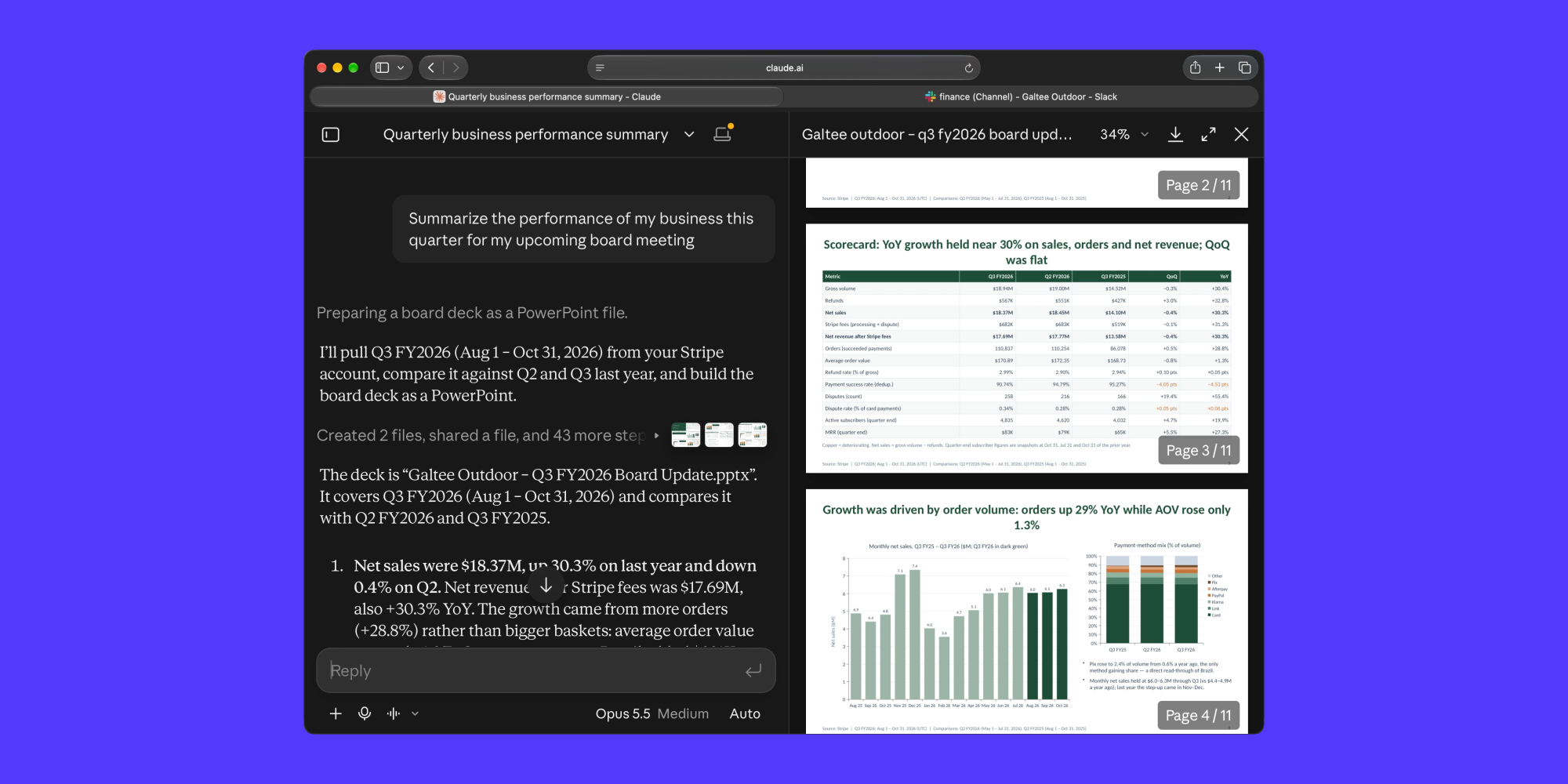
On November 5 Stripe made agent access to Stripe analytics available to all users via the Stripe MCP or the Queries and Reports APIs directly. Compatible agents such as Claude and Cursor can answer natural-language questions about MRR, churn, fraud and reconciliation. The Reports API ships a modeled schema of 300+ tables with built-in guidance; Queries API is free through January 31, 2027 then usage-based, while Reports API stays free. Every analysis exposes the underlying SQL for verification.
Stripe Opens Agent Data Analysis to All Users via MCP, Queries and Reports APIs; Queries Free Through Jan 31, 2027

Key Takeaways

  • Availability: all Stripe users; connect via Stripe MCP or Queries/Reports APIs to Claude, Cursor and other compatible agents
  • Capabilities: natural-language MRR, expansion/contraction/churn, fraud, reconciliation and payments performance; can combine with tools like PostHog
  • Data model: Reports API includes 300+ modeled tables with usage guidance; every analysis exposes editable underlying SQL
  • Pricing (vendor): Queries API free through Jan 31, 2027 then per-credit with no monthly fee; Reports API remains free
  • Safety: read-only Data Metrics/Queries/Reports; do not paste secret keys into chat—use agent API keys or OAuth
Read full story

X discussion: Stripe CEO Patrick Collison adds an agent-powered "improvements" box to his vibecoded apps and calls it liquid software

A widely discussed idea on X: on Oct 31 Stripe CEO Patrick Collison (@patrickc) posted that he is building an "improvements" feature into all of his personal vibecoded applications, a freeform text input hooked up to an agent that implements whatever is submitted. He says another person who uses one of the apps has already implemented 150 improvements in a few days, and he floats the name "liquid software" for the pattern. He is also candid that he does not know whether it scales: whether it becomes unmaintainable, how collaborative software works this way, and whether it can be secure and reliable. The post drew about 2,130 likes, 1,900 bookmarks and 147K views. This is a write-up of a personal opinion and the discussion around it, not an official Stripe product announcement.

X discussion: Stripe CEO Patrick Collison adds an agent-powered "improvements" box to his vibecoded apps and calls it liquid software

Key Takeaways

  • Buzz: about 2,133 likes, 1,896 bookmarks, 217 replies, 76 quotes and 147K views (public X metrics as of Nov 1, 12:15 SGT)
  • Pattern: every personal app gets a freeform text box wired to an agent that yolo implements whatever is submitted, which makes sanding a small rough edge almost free
  • Data point: Collison says another person using one of his apps implemented 150 improvements in a few days (self-reported; the app itself is not public)
  • His own open questions: does it become unmaintainable, can model gains outpace feature appetite, how does collaborative software work, and can it be secure and reliable
  • Debate: supporters say it will become standard and could even ship bespoke per-user features behind flags; skeptics note conflicts start once a second user asks for the opposite change, and maintenance and security remain unsolved; Collison himself compares it to the user-modifiable visions of Lisp machines, Smalltalk and HyperCard
Read full story
Linked Models & Agents:

X discussion: Sam Altman calls DRAM sitting in personal PCs "quite terrible", and local-inference fans push back

On the Cheeky Pint podcast with Stripe co-founder John Collison, published October 29, Sam Altman discussed the memory shortage. He said many people assume open-source models and local inference solve the compute crunch, but from a global allocation perspective it is "quite terrible" for everyone to have scarce DRAM sitting in their own computer and being used about 5% of the time, and that a supply-constrained world wants maximum utilization in the cloud. A pubity post quoting him drew more than 26,000 likes and over 8 million views, and many users pushed back that PC memory is not only for AI and that local models matter for privacy and offline use. This is a summary of an X discussion, not a verified conclusion.

X discussion: Sam Altman calls DRAM sitting in personal PCs "quite terrible", and local-inference fans push back

Key Takeaways

  • Source: Sam Altman on the Cheeky Pint podcast, published October 29, with an official transcript that includes "being used 5% of the time"
  • Altman's argument: with DRAM supply tight, memory in personal computers sits mostly idle, while cloud data centers can serve many users continuously, so utilization should be maximized there
  • Engagement (X API, read Oct 31 13:06 SGT): the pubity post had 26,124 likes, 8,557 quotes, 5,210 replies and about 8.06 million views
  • Main pushback: PC memory also runs the OS, browsers and games; local models keep data on the device; some note the view matches OpenAI's cloud business model
  • Altman did not explain the 5% figure, and coverage suggests treating it as a rough estimate, not a measurement
Read full story
Linked Models & Agents:

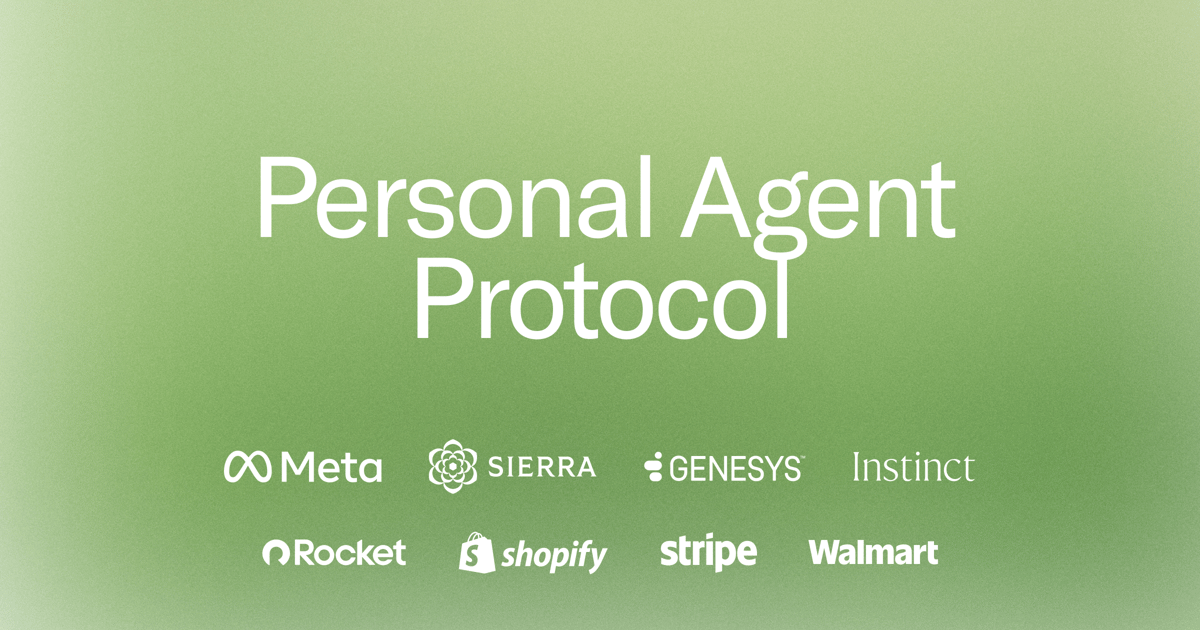
Sierra and Meta announce Personal Agent Protocol, an open OAuth-based standard (with Shopify, Stripe, Walmart and more) for how personal AI agents work with businesses

On 2026-10-06 Sierra co-founders Bret Taylor and Clay Bavor announced Personal Agent Protocol, an open standard Meta and Sierra are developing with Genesys, Instinct, Rocket, Shopify, Stripe and Walmart. Built on OAuth, it lets a personal agent discover what a business offers, start a guest session, then act with user-granted read-only or write access via the company's website, APIs (MCP/OpenAPI) or its own agent. A v0.1 spec, design workshops and a reference implementation are planned for later in October; payments are a future extension.

Sierra and Meta announce Personal Agent Protocol, an open OAuth-based standard (with Shopify, Stripe, Walmart and more) for how personal AI agents work with businesses

Key Takeaways

  • 8 parties: Meta and Sierra co-develop; Genesys, Instinct, Rocket, Shopify, Stripe and Walmart are partners (announcement)
  • 3 access tiers: guest session, user-granted read-only, user-granted write, all on an OAuth session that carries across channels
  • 3 integration routes chosen by the business: website, APIs (MCP / OpenAPI), or the company's own agent
  • Timeline: v0.1 spec, design workshops and a reference implementation planned for October 2026; payments, finer permissions and push notifications are future extensions
  • No spec text or benchmarks are public yet
Read full story
ADSponsored

xAI's Grok Bot Can Now Buy Things on the Internet

Grok Bot can now complete online purchases after users connect Stripe Link and approve each spend; the bot receives a secure, single-use card per payment. The feature is live for US users and rolling out to mobile. Combined with always-on cloud compute and new Microsoft 365 plugins, it is positioning itself as an AI teammate that does real work.

Key Takeaways

  • Connects Stripe Link to shop on the user's behalf with per-spend approval
  • Issues a secure, single-use card for each payment; US-first, mobile next
  • Adds Outlook, Calendar, and OneDrive plugins and runs 24/7 in the cloud
Read full story
Linked Models & Agents:

Grok Bot adds Microsoft plugins for Outlook, Calendar, and OneDrive

Grok Bot, xAI's agent product, launched plugins that let bots read, write, and act across Microsoft accounts. After connecting Outlook, Calendar, and OneDrive, a bot can operate on mail, scheduling, and files instead of stopping at chat. The official @bot account posted the rollout, and Elon Musk quote-posted it as a Grok Bot upgrade, giving the feature unusually high visibility on the same day. For developers, this is a step from coding-only agents toward workplace actuators that can file attachments, schedule reviews, and pull docs into a task without a human copy-paste loop. The security model is plugin-scoped access rather than a fully open desktop, but teams will still need to treat mailbox and drive write access as production credentials. The launch sits alongside other late-August Grok Bot actuators such as template sharing and Stripe Link purchases, pointing to a broader bet that agents should hold tools, not just tokens.

Key Takeaways

  • New Grok Bot plugins give direct read/write access to Outlook, Calendar, and OneDrive.
  • The official @bot launch was amplified by Elon Musk as a core Grok Bot upgrade.
  • Coding agents can now join repo work to mail, calendar, and files, making permission audit a deployment requirement.
Read full story

Grok Bot can buy on the web via Stripe Link with per-purchase single-use cards

Grok Bot can now complete purchases on the internet. Users connect Stripe Link, send a bot shopping, and approve each spend request; the bot then receives a secure, single-use card for that payment. The feature is currently available to users in the United States, with mobile rollout next. Combined with Elon Musk's follow-up that Grok Bot will not only purchase but also find and negotiate the best deal, the product is moving from research-and-code agent toward an economic actor with a wallet. For developers, the interesting primitive is not the demo checkout, it is the approval-gated, single-use card model: spend is an explicit tool call rather than a stored card on an unbounded session. That design is closer to how coding agents should handle cloud spend, API keys, and SaaS seats. It also raises product and compliance questions about refunds, merchant disputes, and what happens when an agent follows a phishing checkout.

Key Takeaways

  • Grok Bot completes web purchases through Stripe Link after per-spend user approval and a single-use card.
  • The feature is live for US users, with mobile rolling out next.
  • Musk says the bot will also find and negotiate deals, turning the agent into a gated wallet.
Read full story
Linked Models & Agents: