AI Coding Live News

OpenAI's Tibo Says Dots Will Expand Its Model Family to Include GPT-6.1 Terra for Speed and Wider Reach

At 15:50 UTC on Nov 2, Tibo (@thsottiaux), whose X bio reads "Codex & ChatGPT @OpenAI", posted that OpenAI is working on expanding the family of frontier models that power dots, including GPT-6 Astra and GPT-6.1 Terra, with others to come. He said Terra brings speed and "a nice personality upgrade" and will help bring dots to more people. Dots are the always-on agents in ChatGPT with their own cloud computer, launched on GPT-6 Astra. This is a first-hand post by an OpenAI employee, not a formal company announcement; no timing or plan details have been published.

OpenAI's Tibo Says Dots Will Expand Its Model Family to Include GPT-6.1 Terra for Speed and Wider Reach

Key Takeaways

  • Source: an original post by Tibo (@thsottiaux, X bio "Codex & ChatGPT @OpenAI"), which drew about 2,475 likes, 622 replies and 127K views within roughly 20 minutes.
  • Key point: dots will no longer run only on GPT-6 Astra; GPT-6.1 Terra is being added, with more models later. It is described as work in progress with no launch date.
  • Terra per OpenAI: standard API pricing of $1 input and $5 output per million tokens, 50% below GPT-5.6 Terra and GPT-6.1 Sol, and over 3x faster task completion than GPT-6 Astra (OpenAI).
  • Current access: dots are rolling out to Pro users 18+ outside the EEA, Switzerland and the UK and to Business Premium; Enterprise needs an admin to enable the beta (Help Center).
Read full story

Codex 28-day run, day 27: OpenAI's Tibo posts "Banked 1/2" as the first of two saved usage resets lands

At 00:43 UTC on Nov 1, Tibo (@thsottiaux), who works on Codex and ChatGPT at OpenAI, posted "Banked 1/2" on X; the post has about 6,860 likes and 660K views. In his day 26 post the day before he had teased that "next two days will be resets… banked…", so this is day 27 of his 28-day run: the first of two Codex usage resets you can save and use when you choose. According to OpenAI's Help Center, a banked reset does not refresh usage on arrival; you redeem it in desktop Settings > Usage & billing, web Usage settings, or /usage in the CLI. Eligible plans and the expiry for this particular offer have not been published.

Key Takeaways

  • Source: Tibo's own X post "Banked 1/2" (00:43 UTC, Nov 1), with about 6,860 likes, 1,066 replies and 660K views as of 15:10 SGT
  • Context: his day 26 post (about 14K likes) teased "next two days will be resets… banked…", so a second one is expected on day 28
  • Where to redeem: desktop Settings > Usage & billing, web Usage settings, or /usage then Redeem reset in Codex CLI; not available in the mobile app (OpenAI Help Center)
  • Rule: at least one covered allowance must be below 80% remaining; Plus and Business Standard get the 5-hour and weekly allowances back, Pro 100/200/500 the weekly allowance, and Go the monthly allowance
  • Caveat: using one restarts the usage period from that day; eligible plans and the expiry for this offer have not been published, so check your account
Read full story
Linked Models & Agents:

Benji Taylor, head of design at X and SpaceXSI, open-sources Stageshow, an agent skill for realistic faux product UI and animated demos

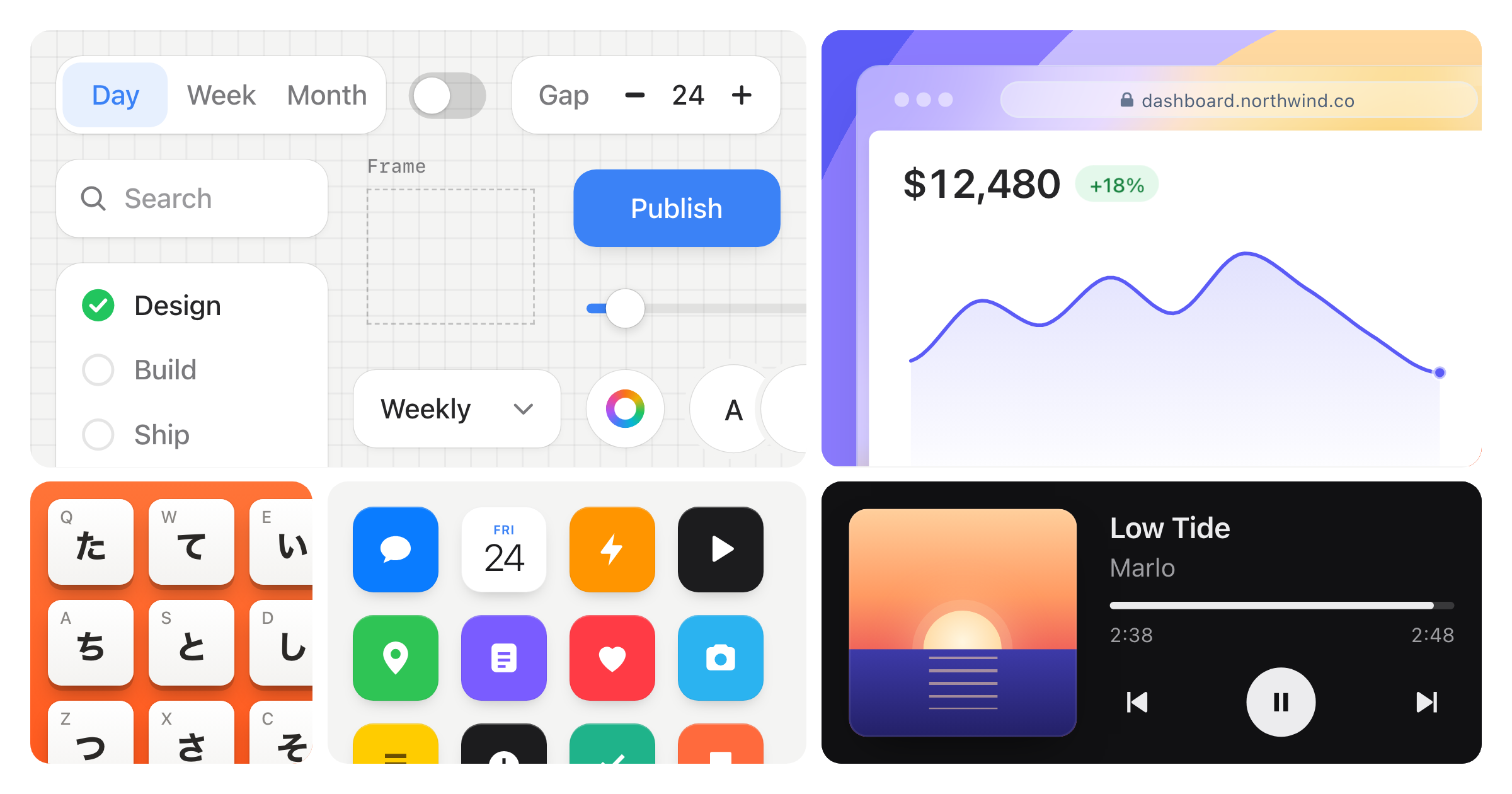
On Oct 31, Benji Taylor, head of design at X and SpaceXSI, released Stageshow on X: an open-source skill (MIT license) for coding agents that helps them produce faux product UI that looks real, including stills, cursor demo animations, and bento grids, delivered as ordinary React components. It installs with one command, and he says it works with Grok Build, Claude Code, Codex, Gemini, and others. The launch post drew about 4,500 likes and 6,500 bookmarks. He notes it rarely nails a demo in one shot and most still take a few rounds of feedback.

Benji Taylor, head of design at X and SpaceXSI, open-sources Stageshow, an agent skill for realistic faux product UI and animated demos

Key Takeaways

  • Install: npx skills add benjitaylor/skills --skill stageshow; the author says it works with Grok Build, Claude Code, Codex, Gemini, and other agents (author's post)
  • Contents: a seven-step workflow in SKILL.md, reference rule docs, dozens of gold examples, a React kit, and self-check scripts such as film.mjs (GitHub)
  • License: the stageshow folder is MIT licensed; the repo was created Oct 26 and had about 61 stars at writing time
  • Reach: the launch post had about 4,521 likes, 6,561 bookmarks, and 213k views as of Nov 1, 08:00 SGT
  • Quality claims are the author's own: the same prompts did better with the skill, but no quantitative evaluation was published
Read full story

OpenCode team ships Hex 3.0 stable: local voice dictation for Mac, Windows and Linux, built for talking to coding agents

Anomaly, the company behind open-source coding agent OpenCode, shipped Hex 3.0 stable: hold a shortcut, speak, and the text is pasted at your cursor. Recognition runs on-device, local model memory drops from about 900 MB to about 160 MB, and it adds vocabulary hints, a hex CLI and optional OpenCode rewriting.

OpenCode team ships Hex 3.0 stable: local voice dictation for Mac, Windows and Linux, built for talking to coding agents

Key Takeaways

  • Hex v3.0.0 was released on GitHub at 00:38 UTC on Oct 31; it is MIT-licensed, written in Rust, and the repo has about 1,557 stars (release notes)
  • Vendor figures: local model memory drops from about 900 MB to about 160 MB; since 2.3.0 it streams, so a 2-minute dictation finishes about 0.1 s after release on an RTX 5070 Ti
  • Runs on macOS 15+ (Apple silicon), Windows x64/ARM64 and Linux x64/ARM64, with new .deb and .rpm packages on Linux
  • 3.0 does not auto-update from 2.3.1 and starts fresh, so settings, History and models must be set up again; Voice Action and spoken commands are removed
  • The @opencode launch post drew about 2,400 likes, 1,600 bookmarks and 100k+ views (post)
Read full story
Linked Models & Agents:
⚡ Parakeet⚡ Whisper🤖 OpenCode🤖 Hex🌐 Anomaly
ADSponsored

ChatGPT adds account switching: stay signed in to up to 2 accounts, rolling out on iOS and Android, desktop coming soon

On October 31, Tibo (@thsottiaux), who works on Codex and ChatGPT at OpenAI, announced on X, as day 26 of his daily shipping posts, that ChatGPT mobile now supports switching between accounts, with desktop coming soon. OpenAI's updated Help Center article says users can stay signed in to up to 2 accounts with one active at a time; chats, memory, files, subscriptions, billing and workspaces stay separate, and switching never moves or merges data. The post drew about 10,000 likes and 1.36M views.

ChatGPT adds account switching: stay signed in to up to 2 accounts, rolling out on iOS and Android, desktop coming soon

Key Takeaways

  • Limit: up to 2 signed-in accounts, one active at a time; with 2 signed in you must log out of one before adding another, per the OpenAI Help Center
  • Platforms: the Help Center says web plus the iOS and Android apps, with mobile rolling out gradually (Settings, then Switch account); Tibo says the desktop app is coming soon
  • Isolation: chats, memory, files, subscriptions, billing and workspaces are not shared, and switching never moves chats or merges accounts; a newly created second account starts on the Free plan
  • Notifications: mobile can show notifications for both accounts, and tapping one for the other account switches to it, so check the active account before pasting work context
  • Reach: Tibo's post had about 10,120 likes and 1.36M views (public X metrics as of Oct 31, 12:00 UTC); he also teased banked usage resets over the next two days
Read full story
Linked Models & Agents:

Vercel Labs launches agent-desktop: computer use for any coding agent via OS accessibility trees, not pixels, on macOS, Windows and Linux

On October 31, Chris Tate of Vercel Labs, creator of agent-browser, announced agent-desktop on X as "agent-browser, for your whole computer". It is an Apache-2.0 Rust CLI and C library that reads a desktop app's OS accessibility tree and returns every actionable element as a JSON ref; the agent clicks or types on a ref and snapshots again to verify, with no pixel matching, headless by default. Version 1.0.0 shipped on October 27 and added Linux support; the current npm release is 1.0.2.

Vercel Labs launches agent-desktop: computer use for any coding agent via OS accessibility trees, not pixels, on macOS, Windows and Linux

Key Takeaways

  • Install: npm install -g agent-desktop, one package with native x64/ARM64 binaries; 1.0.0 (Oct 27) added Linux (glibc 2.35+, via AT-SPI), and the latest npm release is 1.0.2 (Oct 30)
  • Loop: snapshot prints a JSON tree with refs, click @<snapshot_id>:eN acts, then snapshot again to verify; a changed UI returns STALE_REF, and errors say whether a retry is safe
  • Scope: the README lists 60 command names, 56 of them operational, spanning windows, keyboard and mouse, notifications, clipboard, waits and session traces
  • Headless by default: ref actions go through accessibility APIs without moving the pointer or stealing focus, with --headed for physical input; Chris Tate says multiple agents can use the computer in parallel, each with its own cursor
  • Benchmarks: no official success-rate or speed numbers; it is a tool with no model inside, and web pages stay with agent-browser
Read full story

OpenAI raises Work and Codex usage on ChatGPT Pro and Business Premium: Pro 100 and Pro 500 doubled, Pro 200 cut canceled

On Oct 29, OpenAI's Codex and ChatGPT lead Tibo announced on X that usage for Pro 100/200/500 and Business Premium doubles effective today. OpenAI's Help Center confirms that Pro 100 and Pro 500 now get twice their previous Work and Codex allowance, the Pro 200 reduction announced in a Sept 29 email is canceled, and Pro 200 subscribers on the lower allowance are doubled up to the higher one. Plus is unchanged.

Key Takeaways

  • Pro 100 ($100/mo) and Pro 500 ($500/mo) now get twice their previous Work and Codex allowance, applied automatically to existing subscriptions without waiting for renewal (Help Center)
  • The Pro 200 reduction announced in a Sept 29 email is canceled; Pro 200 users on the lower allowance are doubled to the higher one, still at $200/mo
  • Weekly GPT-6 Pro chat message limits stay the same on Pro 100 and Pro 500; Pro 200's lower weekly limit is raised to the higher one
  • Business Premium Work and Codex usage also goes up (the official release notes give no multiplier; Tibo's post says doubled); Plus is unchanged
  • Tibo says extended limits for dots continue and stay separate from default usage
Read full story

Amp launches macOS Satellites beta: agents boot a cloud Mac with Xcode in ~30 seconds to build, test and run iOS and Mac apps, from $2/hour

On Oct 29 Amp shipped macOS Satellites: threads keep running on a Linux orb, and when work needs macOS Amp boots a fresh cloud Mac with Xcode and simulators, uses it only to build, run and test, and returns screenshots, logs and screen recordings to the thread. mac.medium costs $2/hour and mac.large $4/hour; the beta is waitlisted. CEO Quinn Slack says agents need a Mac only about 35% of the time even for macOS-heavy work.

Amp launches macOS Satellites beta: agents boot a cloud Mac with Xcode in ~30 seconds to build, test and run iOS and Mac apps, from $2/hour

Key Takeaways

  • Amp says the cloud Mac is ready in about 30 seconds with Xcode, iOS simulators and Homebrew preinstalled
  • Two sizes: mac.medium (6 CPUs, 14 GB) at $2/hour and mac.large (12 CPUs, 28 GB) at $4/hour, drawn first from plan orb usage, then Amp credits
  • A Mac stays up 20 minutes after use so follow-ups reuse its build cache, then it is deleted and nothing is saved
  • CEO Quinn Slack posted on X that even macOS-heavy agent work needs a Mac only ~35% of the time (company figure)
  • Beta only: join the waitlist under Settings > Experimental Features
Read full story
Linked Models & Agents:

X discussion: screenshots of ChatGPT merging Chat and Work go viral, and OpenAI's Tibo says it is not rolling out yet

This is an X discussion, not an official launch. On Oct 28, X user Angel (@Angaisb_) posted a screenshot saying ChatGPT is unifying Chat and Work and asked how that would change usage limits; the post drew about 440,000 views. About an hour and a half later, Tibo (@thsottiaux), whose X bio reads Codex & ChatGPT @OpenAI, quoted it: the team is working on this but it is not rolling out yet, the plan is to bring the best of Chat and Work together at some point this year, and they will proceed carefully and take their time. His reply drew about 2,800 likes and more than 900 replies.

X discussion: screenshots of ChatGPT merging Chat and Work go viral, and OpenAI's Tibo says it is not rolling out yet

Key Takeaways

  • The original screenshot post came from Angel (@Angaisb_) at 22:05 UTC on Oct 28, with about 1,400 likes and 440,000 views at crawl time
  • OpenAI's Tibo (@thsottiaux, bio Codex & ChatGPT @OpenAI) quoted it at 23:35 UTC: the team is working on it, but it is not rolling out yet
  • Tibo's stated direction: combine Chat and Work capabilities at some point this year, carefully and without rushing; timing and usage-limit rules have not been announced
  • Tibo's reply drew about 2,800 likes, 940+ replies and 390,000 views, with discussion centered on how usage limits would work after a merge
Read full story

Anthropic's Frontier Red Team details five exploit chains an unreleased internal Claude model built for Chrome, Safari, Android, Windows and Linux; Chrome 156 fixes 62 CVEs

Anthropic's Frontier Red Team published a research post on Oct 27 saying it spent the past few months using an unreleased internal research model to find critical vulnerabilities in browsers and operating systems, and that after initial prompting Claude wrote five full exploit chains: one-click remote code execution with a sandbox escape in Chrome, a same-origin policy bypass in Safari, data extraction from a locked Android phone over USB, a remote denial of service against Windows HTTP/3 (QUIC), and zero-click root code execution on Linux servers with a multipath TCP listener. Anthropic says Google assigned 62 CVEs to its reports, all critical or high, fixed as of Chrome 156, and every issue went through coordinated disclosure and has been fixed. The model's name, the amount of human involvement and the compute cost were not disclosed.

Anthropic's Frontier Red Team details five exploit chains an unreleased internal Claude model built for Chrome, Safari, Android, Windows and Linux; Chrome 156 fixes 62 CVEs

Key Takeaways

  • The Chrome chain links 4 bugs: V8 heap corruption, a V8 sandbox escape that defeats ASLR, a CacheStorage race condition and a FedCM use-after-free; the PoC launches Calculator within seconds of a page loading in default Chrome on macOS
  • Per Anthropic, Google assigned 62 CVEs to its reports, all critical or high, including 13 sandbox escapes and 21 renderer-compromise bugs, fixed as of Chrome 156
  • The Windows kernel QUIC out-of-bounds read is CVE-2026-33096, with likely several million exposed servers by Anthropic's estimate; the Linux MPTCP zero-click root bug is CVE-2026-98432, where the PoC leaks a kernel pointer in about 48 minutes and reaches root command execution about 5 minutes later
  • Method: many parallel scanning agents scored by the extra vulnerabilities they add, with coverage tracking and automated variant analysis on every confirmed finding; Anthropic recommends scanning at PR time and has released a Claude Code security plugin
  • The model is an unnamed internal research model; Anthropic did not publish the share of human work, failed attempts or compute cost
Read full story
Linked Models & Agents:
⚡ Claude (unreleased internal research model)🤖 Claude Code🌐 Anthropic🌐 Google🌐 Apple🌐 Microsoft
ADSponsored

X discussion: OpenAI Codex/ChatGPT lead Tibo posts a hiring call to "scale dots to 1B users", and Meta chief AI officer Alexandr Wang replies with a Muse jab

At 19:21 UTC on 2026-10-24, Tibo (@thsottiaux), whose X bio reads "Codex & ChatGPT @OpenAI", posted: "DM if you want to help scale dots to 1B users and have done similar things in the past" (post); it had about 5,524 likes, 1,506 replies and 710K views when we pulled it. Alexandr Wang (@alexandr_wang), whose X bio says he is chief AI officer at Meta, replied "oops you misspelled muse" (about 1,935 likes), and Tibo shot back with "Celebrate your 12 users" (about 1,845 likes). The public back-and-forth between the two companies' executives became one of the most talked-about AI threads of the past half day. It is a hiring post and banter between executives, not a user count or product plan published by OpenAI.

Key Takeaways

  • Main post: Tibo's post, about 5,524 likes, 126 reposts, 131 quotes, 1,506 replies, 515 bookmarks and 710K views when we pulled it
  • Alexandr Wang replied "oops you misspelled muse" (post), about 1,935 likes and 240K views; Muse is the Meta model and product name he has been promoting lately
  • Tibo fired back: "Step 1: Quit posting butts and go buy containers / Step 2: ??? / Step 3: Celebrate your 12 users" (post), about 1,845 likes and 185K views
  • Wang answered "is the implication you have under 12 users?" (post), about 222 likes
  • "1B users" is a goal stated in a hiring post; OpenAI has not published Dots' actual user count, so this entry is treated as an X discussion
Read full story
Linked Models & Agents:

Anthropic donates the Agent Skills open standard to the Linux Foundation’s Agentic AI Foundation, after 70+ agent platforms adopted it with 1M skills published and nearly 280M installs

On 2026-10-22 Anthropic said it is donating Agent Skills, the open standard that teaches agents a task through a folder with a SKILL.md file, to the Agentic AI Foundation (AAIF) under the Linux Foundation, the same neutral home it gave MCP. The donation covers the Agent Skills name and logo, the GitHub organization and the agentskills.io domain. Anthropic says more than 70 agent platforms, including ChatGPT, Cursor, GitHub Copilot and VS Code, have integrated the standard since December 2025, with 1 million skills published and nearly 280 million installs. Engineers from Anthropic, Google, OpenAI and others will maintain it as individuals.

Anthropic donates the Agent Skills open standard to the Linux Foundation’s Agentic AI Foundation, after 70+ agent platforms adopted it with 1M skills published and nearly 280M installs

Key Takeaways

  • Official figure: 70+ agent platforms have integrated Agent Skills, including ChatGPT, Cursor, GitHub Copilot and VS Code
  • 1 million skills published and nearly 280 million installs so far (Anthropic figures)
  • Donated: the Agent Skills name and logo, the GitHub organization and the agentskills.io domain; you can keep using or contributing without joining AAIF
  • Lead Maintainers are David Soria Parra and Mahesh Murag, with engineers from Anthropic, Google, OpenAI and others maintaining it as individuals
  • Proposed first roadmap: versioned releases, a formal proposal process and security guidance for people who write and install skills
Read full story

Google previews Gemini API CLI (gemini-api), a zero-dependency Go binary that lets Claude Code, Codex, Cursor and other coding agents generate media, transcribe and run managed agents from the shell

The Google AI Studio team released an experimental preview of the Gemini API CLI (command name gemini-api). It is a stateless, zero-dependency Go binary for macOS, Linux and Windows, open source under Apache 2.0. Any coding agent with shell access and a GEMINI_API_KEY can call text reasoning, image, video, music and speech generation, file and YouTube analysis, audio and video transcription, and managed agents such as Deep Research with one command. Media is written straight to disk and only the file path goes to stdout, so base64 payloads never land in the context window. Google labels it experimental and not a supported Google product.

Google previews Gemini API CLI (gemini-api), a zero-dependency Go binary that lets Claude Code, Codex, Cursor and other coding agents generate media, transcribe and run managed agents from the shell

Key Takeaways

  • Default models (official README): gemini-3.8-flash for generate, analyze and transcribe; gemini-nano-banana-2.1 for image; gemini-omni-1.1-flash for video; lyria-3.5 for music; gemini-3.8-flash-tts for speech
  • Install with a one-line curl script on macOS/Linux, a PowerShell script on Windows, or go install; the latest GitHub release is v0.4.3 (published 2026-10-19)
  • Built for agents: --usage prints the command tree as KDL, --schema prints JSON Schema, --dry-run validates offline with credentials redacted, plus --output-format json/toon and inline --jq
  • Exit codes separate 4 cases: 0 success, 1 runtime/API failure, 2 usage or validation error, 3 auth failure; --agent-mode emits structured JSON errors
  • It also manages sandbox environments, server-side credentials, webhooks and cron triggers for managed agents; files uploaded via the Files API are kept for 48 hours
Read full story
Linked Models & Agents:
⚡ Gemini 3.8 Flash⚡ Gemini Nano Banana 2.1⚡ Gemini Omni 1.1 Flash⚡ Lyria 3.5⚡ Gemini 3.8 Flash TTS🤖 Gemini API CLI🤖 Claude Code🤖 Codex🤖 Cursor🤖 Antigravity🤖 Deep Research🌐 Google

OverSeer: Multi-Agent World Models Beyond What Agents See via Joint Auxiliary Streaming

Researchers introduced OverSeer in arXiv:2610.28554, pioneering a new class of multi-agent world models operating beyond the field of view of individual agents. Standard video world models collapse in multi-agent environments because individual agents operate under partial observability; naive frameworks feeding external global map inputs suffer severe spatial inconsistency and state hallucination. OverSeer resolves this by jointly predicting auxiliary spatial representation streams alongside the agents' first-person camera streams. In comprehensive Minecraft benchmarks, OverSeer achieves decisive state-of-the-art results across physical grounding, long-horizon spatial memory, and cross-view consistency.

OverSeer: Multi-Agent World Models Beyond What Agents See via Joint Auxiliary Streaming

Key Takeaways

  • OverSeer introduced in arXiv:2610.28554, establishing the first scalable multi-agent video world model framework
  • Replaces external static map inputs with auxiliary spatial streams jointly predicted alongside agents' egocentric perspectives
  • Achieves state-of-the-art performance across spatial grounding, long-horizon memory, and multi-view consistency in Minecraft
  • Provides an ungrounded simulation backbone for multi-robot swarm collaboration, multiplayer game AI, and embodied multi-agent fleets
Read full story
Linked Models & Agents:

VS Code Preview Introduces Canvases: Shared Workspaces for Developers and Coding Agents

The Microsoft VS Code team announced Canvases in VS Code Preview (v1.142), introducing dedicated shared visual workspaces connecting developers with autonomous coding agents. Addressing the severe UX limitations of cramped sidebar chat windows—where complex multi-file architectural modifications and agent diffs become hard to track—Canvases provides an expansive, interactive infinite-canvas whiteboard. Developers and agents (such as GitHub Copilot, Claude Code, and Cline) can collaboratively organize system flowcharts, live interactive code diffs, execution traces, and unit test rollouts side by side.

VS Code Preview Introduces Canvases: Shared Workspaces for Developers and Coding Agents

Key Takeaways

  • Microsoft VS Code Preview v1.142 introduced Canvases, pioneering a spatial human-agent collaborative interface
  • Transceives beyond claustrophobic sidebar chats to an expansive, pan-and-zoom whiteboard mapping concurrent multi-file agent diffs
  • Embeds code files, architecture diagrams, interactive git diffs, terminal outputs, and test runners as unified interactive cards
  • Natively bridges GitHub Copilot, Claude Code, and third-party coding agent harnesses, accelerating IDE spatial development
Read full story