AI Coding Live News

South Korea Nearly Doubles 2027 AI and Chip Spending to 21.3 Trillion Won, With 4.7 Trillion for a Sovereign Frontier Model and 10,000 Vera Rubin GPUs

In his 2027 budget address to the National Assembly on November 2, South Korean President Lee Jae Myung proposed a record 820.9 trillion won budget (+12.8%), with 21.3 trillion won (about $16B) for semiconductors, physical AI, AI data centers and AI, nearly double the 10.8 trillion won in 2026. The Ministry of Planning and Budget document allocates 4.7 trillion won to a sovereign AI model aiming for world-leading performance, including the purchase of 10,000 Vera Rubin GPUs. Parliament still has to pass the budget.

South Korea Nearly Doubles 2027 AI and Chip Spending to 21.3 Trillion Won, With 4.7 Trillion for a Sovereign Frontier Model and 10,000 Vera Rubin GPUs

Key Takeaways

  • The three mega-projects plus AI rise from 10.8 to 21.3 trillion won, up 97.2%; the total budget is 820.9 trillion won, up 12.8% (official budget document).
  • The 4.7 trillion won frontier AI program buys 10,000 Vera Rubin GPUs (3.9T won), training data (0.8T won), and recruits 20 top overseas researchers (25B won).
  • Until then, about 7,000 government-owned GPUs go first, plus about 8,000 leased from industry and academia; companies are picked by open competition and the state invests as an equity holder.
  • A new 0.25 trillion won AI for All program builds public AI agents on the domestic model that can handle ID documents, KTX train bookings and passport renewals; AI education gets 2.1T won for 3.9 million people.
  • Another 70B won funds a dedicated AI security model and 50B won subsidizes AI security subscriptions for 10,000 SMEs; physical AI rises from 0.9T to 3.1T won.
Read full story

NVIDIA launches OpenShell Reference Architecture at GTC Berlin: Vera Rubin, Vera CPUs and BlueField-4 Sentry for hardware-enforced safe AI agents

At GTC Berlin on Oct 21, NVIDIA announced the OpenShell Reference Architecture: building on the open-source OpenShell secure runtime, it pairs Vera Rubin for inference, Vera CPUs for agent harnesses, and BlueField-4 DPUs running NVIDIA Sentry for in-silicon policy enforcement, so enterprises can build, contain, observe and govern agents on-prem and at the edge. NVIDIA says it is available now; partners named include Anthropic, OpenAI, Meta, Microsoft and ServiceNow. The software is Apache 2.0.

NVIDIA launches OpenShell Reference Architecture at GTC Berlin: Vera Rubin, Vera CPUs and BlueField-4 Sentry for hardware-enforced safe AI agents

Key Takeaways

  • Full stack: Vera Rubin for model inference, Vera CPUs for agent harnesses/tool use, BlueField-4 + Sentry for in-silicon policy and quarantine (vendor claims)
  • Vendor claims: Vera Rubin NVL72 about 30x throughput per megawatt on agentic workloads; Sentry can quarantine a boundary-breaking agent in milliseconds and boost agent capacity by up to 20%
  • Runtime: deny-by-default, enforcement outside the agent process; sandboxes have no direct network, syscalls are filtered in-kernel, credentials are injected only onto allowed requests
  • Stated agent paths include Claude Code, Codex, GitHub Copilot CLI, OpenCode, OpenClaw, LangChain Deep Agents; deploy with Docker, Podman or Kubernetes via Helm
  • Start: curl install script then openshell sandbox create; docs at docs.nvidia.com/openshell; GitHub NVIDIA/OpenShell (Apache 2.0) and PyPI package openshell
Read full story

Meta details Prometheus, the gigawatt-scale supercluster that trained Muse Wonder: 85%+ pretraining goodput, 90%+ for RL, scaling toward ~1M GPUs

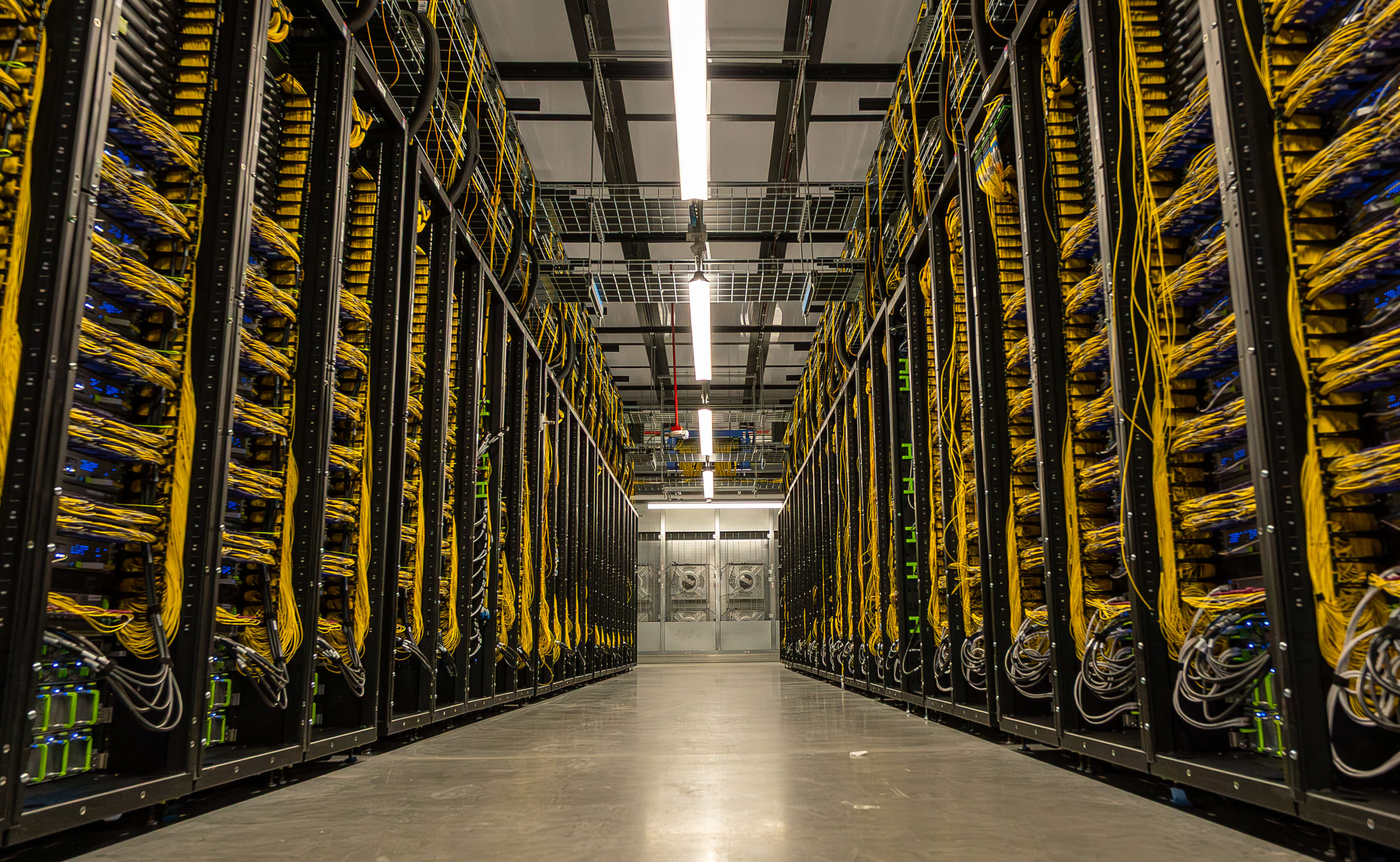
Meta's engineering blog on October 19 gave the first detailed look at Prometheus, the New Albany, Ohio supercluster that trained the Muse family, including Muse Wonder. Phase one is complete with hundreds of thousands of GPUs, and the full build targets about 1 million. Muse Wonder training reached more than 85% goodput in pretraining and more than 90% in reinforcement learning, with a mean time between interruptions of about 47K GPU hours, since raised above 54K by firmware fixes. It runs GB200 NVL72 and GB300 NVL72 platforms, with Vera Rubin NVL72 arriving soon.

Meta details Prometheus, the gigawatt-scale supercluster that trained Muse Wonder: 85%+ pretraining goodput, 90%+ for RL, scaling toward ~1M GPUs

Key Takeaways

  • Scale: phase one trained the Muse family; it has hundreds of thousands of GPUs today, targets about 1 million, and runs across buildings as a single machine.
  • Reliability: Muse Wonder hit 85%+ pretraining goodput and 90%+ for RL; MTBI was about 47K GPU hours and is now above 54K.
  • Interruptions: a mid-2025 peak of nearly 1,000 events per 8K GPUs per day was cut by 99% over a year of engineering.
  • Sparing: each NVL72 rack runs a 64-GPU slice with 8 in-rack spares, plus about 2% spare racks; a 32,768-GPU job needs 523 racks or 37,656 GPUs, about 13% extra.
  • Network: each building fabric links up to 20,736 GPUs, and the aggregation network spans 2 km to over 100 km.
Read full story

vLLM adds NVIDIA Vera Rubin NVL72 support: up to 7.84x per-GPU throughput over GB200 on AgentX with MiniMax M3

On Oct 9 the vLLM team, with Inferact, Red Hat and NVIDIA, shipped early Vera Rubin NVL72 support: CUDA 13.4 nightly images already serve DeepSeek, Kimi, GLM and MiniMax. Vendor-reported results: up to 7.84x per-GPU throughput vs GB200 on SemiAnalysis AgentX (MiniMax M3, matched interactivity) and up to 3.7x vs GB300 NVL72 on the MLPerf Inference v6.1 VLM benchmark (Qwen3-VL-235B-A22B).

vLLM adds NVIDIA Vera Rubin NVL72 support: up to 7.84x per-GPU throughput over GB200 on AgentX with MiniMax M3

Key Takeaways

  • Versus GB200 NVL72: 5x NVFP4 FLOPS, ~2.4x HBM4 bandwidth, 1.7x bidirectional NVLink, 2–4x faster softmax exponentials (vLLM blog)
  • AgentX with MiniMax M3: up to 7.84x per-GPU throughput at matched interactivity, 5.18x under a 150 TPS cap (vendor-reported, early)
  • MLPerf Inference v6.1: Qwen3-VL-235B-A22B on vLLM + Dynamo, up to 3.7x vs GB300 NVL72
  • CUDA 13.4 locality domains split MoE weights for ~1.2x average MoE-layer speedup in small-token decode
  • Image: vllm/vllm-openai:cu134-nightly (CUDA 13.4 + PyTorch 2.15)
Read full story
ADSponsored

NVIDIA Vera Rubin Posts First On-Silicon Agentic Numbers: Up to 30x Throughput per MW vs GB300

NVIDIA published the first on-silicon benchmark metrics for its Vera Rubin architecture on long-horizon agent workloads, demonstrating up to 30x throughput per megawatt and 35x lower token cost versus GB300 NVL72.

Key Takeaways

  • Inference benchmarks rebased from short chat to multi-step agent coding workloads with deep context expansion;
  • Benchmarked against DeepSeek V4 Pro on SemiAnalysis AgentX real coding traces as the reference workload;
  • Delivers up to 30x throughput per megawatt and 35x lower token cost compared to GB300 NVL72.
Read full story
Linked Models & Agents:
⚡ DeepSeek-V4-Pro⚡ Nvidia Rubin

Groq Deploys NVIDIA Groq 3 LPX Alongside Vera Rubin NVL72 for Production Agent Inference

Groq announced early cloud deployment of NVIDIA Groq 3 LPX systems paired with Vera Rubin NVL72 in partnership with Dell, creating a multi-architecture ultra-low latency inference fleet for enterprise agents.

Key Takeaways

  • Groq evolves into a hybrid inference cloud operating custom LPX chips alongside NVIDIA Vera Rubin NVL72;
  • Partnership with Dell accelerates enterprise-grade low-latency data center deployments;
  • Engineered for high-concurrency autonomous coding agents requiring sub-second multi-step iterations.
Read full story
Linked Models & Agents: