AI Coding Live News

BoxWorks 2026: Box and NVIDIA Unveil Box Context Retrieval, Permission-Aware Retrieval for Enterprise Agents Built on Nemotron Retriever, Plus Box Architect and Box Mount

At BoxWorks 2026 on November 5, Box announced an expanded NVIDIA collaboration: Box Context Retrieval, a new engine built on NVIDIA Nemotron Retriever embedding models, combines keyword and semantic search to return the most relevant passages to AI agents while honoring existing file permissions, with general availability for Enterprise Advanced customers planned for early next year. Box's press release claims 20% better search accuracy (Recall@5), 90% fewer tokens and 4x faster answers. Open-weight Nemotron models, starting with Nemotron 3 Ultra, are available in Box AI now. Box also unveiled Box Architect, which designs workflows from a stated goal; Box Mount, which mounts Box folders inside agent sandboxes and works with NVIDIA OpenShell; and agent security controls including MCP Guardrails.
BoxWorks 2026: Box and NVIDIA Unveil Box Context Retrieval, Permission-Aware Retrieval for Enterprise Agents Built on Nemotron Retriever, Plus Box Architect and Box Mount

Key Takeaways

  • Box Context Retrieval uses NVIDIA Nemotron Retriever with hybrid keyword and semantic search, honoring existing file permissions
  • Vendor claims: +20% Recall@5 accuracy, 90% fewer tokens, 4x faster answers; GA for Enterprise Advanced early next year
  • Open-weight Nemotron models, starting with Nemotron 3 Ultra, are available in Box AI now
  • Box Mount puts Box folders inside agent sandboxes and works with the NVIDIA OpenShell secure runtime
  • New agent security controls include MCP Guardrails, classification-based access policies and audit trails
Read full story
Linked Models & Agents:
⚡ Nemotron 3 Ultra⚡ Nemotron Retriever🌐 box🌐 Nvidia (NIM)

Epic Confirms Unreal Engine 5.9: Preview Next Week With Improved AI Workflows and Web Back as a Target Platform

On November 3, the official Unreal Engine account said UE 5.9 is happening, with a Preview build next week that includes improved AI workflows, web as a target platform, and rendering and animation updates; changes are already landing in the 5.9 branch on GitHub, with more details to come. This reverses Epic's June State of Unreal stance that 5.8 was the last planned major UE5 release, with 5.9 kept only as an option. UE 5.8 shipped the Experimental Unreal MCP plugin, which lets MCP clients such as Claude Code and Cursor drive the editor; the 5.9 AI workflow changes likely build on it, but Epic has not published a feature list yet.

Key Takeaways

  • Timing: the official post went out at 13:05 UTC on November 3 and says the 5.9 Preview arrives next week; the exact date and the final release date are not announced
  • Scope (per Epic): improved AI workflows, web as a target platform, and rendering and animation updates; changes are already landing in the 5.9 branch on GitHub
  • Context: in June, State of Unreal called 5.8 the last planned major UE5 release; UE6 targets Early Access at the end of 2027, with the full release 12 to 18 months later
  • AI groundwork: the Experimental Unreal MCP plugin in 5.8 embeds an MCP server in the editor at http://127.0.0.1:8000/mcp by default, loopback only and with no authentication
  • Reach: about 2,552 likes, 251 reposts, 114 quotes and 215K views at fetch time
Read full story

Sarvam Releases Prism, an Open-Weight Decision Model Built on Sarvam 105B That Returns Calibrated Option Probabilities in About 44 ms, Apache 2.0

Indian AI company Sarvam released Sarvam Prism on November 3, a "System One" decision model for enterprise workflows: given a context and questions with fixed answer options, it returns a probability for every option in a single forward pass instead of generating text. Sarvam says that across the 25 decision models it tested, Prism averages 71.8 over three indices with a median response time of 44 ms on one B200, the highest score under 100 ms, and scores 82.5 on its Indian-language benchmark. Weights are on Hugging Face under Apache 2.0, with a hosted API as well. All scores are Sarvam's own measurements.

Sarvam Releases Prism, an Open-Weight Decision Model Built on Sarvam 105B That Returns Calibrated Option Probabilities in About 44 ms, Apache 2.0

Key Takeaways

  • Trained on the Sarvam 105B (105B-10B MoE) base; it only outputs option probabilities, so the answer is always one of the given options.
  • Vendor-reported indices: Jev Decision Index 67.0, Sarvam's recreation of the Artificial Analysis decision index 65.9, internal Indian-language benchmark 82.5, average 71.8; Perplexity Decider v1.2 averages 68.0 at about 117 ms.
  • Calibration: on English answers at 90%+ confidence it expects 3.3% errors and makes 2.2%; in Indian languages 5.4% expected vs 4.4% actual, while rivals underestimate errors by 1.5x to 4.8x.
  • By sorting options into a fixed order before scoring, it changed 0 of 2,000 answers across four shuffled option orders.
  • On 700 recorded agent runs it judges correctly 78.5% of the time overall, vs 70.7% for Claude Haiku 5.5.
  • Self-hosting needs one FP8-capable GPU with about 120 GB free memory (such as B200 or H200) and about 106 GB of disk for weights.
Read full story
Linked Models & Agents:
⚡ Sarvam Prism⚡ Sarvam 105B⚡ Perplexity Decider v1.2⚡ Jev 1.14⚡ Microsoft-Decision-1⚡ Claude Haiku 5.5🌐 Sarvam

Claude Code lead Boris Cherny on faster usage drain: every shared session reviewed, no regression found, fixes for a few smaller issues rolling out

Since Oct 21 many developers on X have complained that Claude Code was draining usage limits much faster. On Oct 28 (UTC) Boris Cherny, who leads Claude Code at Anthropic, replied on X that the team reviewed every session ID users shared, found no single root cause and no regression in Claude Code, and is rolling out fixes for a few smaller issues that made some sessions burn tokens faster. Most fast-drain cases traced back to one or two heavy sessions using xhigh effort, /goal, Workflows, Agent Teams or long SDK jobs.

Key Takeaways

  • The complaint post that started it said usage was draining 5x faster and drew about 1,660 likes and 240+ replies (a user claim, not official data)
  • Boris Cherny: the team checked every shared session ID, found no single root cause or Claude Code regression, and is rolling out fixes for a few smaller issues
  • Heavy features were the main driver: xhigh effort, /goal, Workflows, Agent Teams and long SDK jobs
  • Subagents inherit the session effort level by default, which adds up fast; /usage shows where tokens went
  • The official docs say Agent Teams use about 7x more tokens than standard sessions when teammates run in plan mode
Read full story
Linked Models & Agents:
ADSponsored

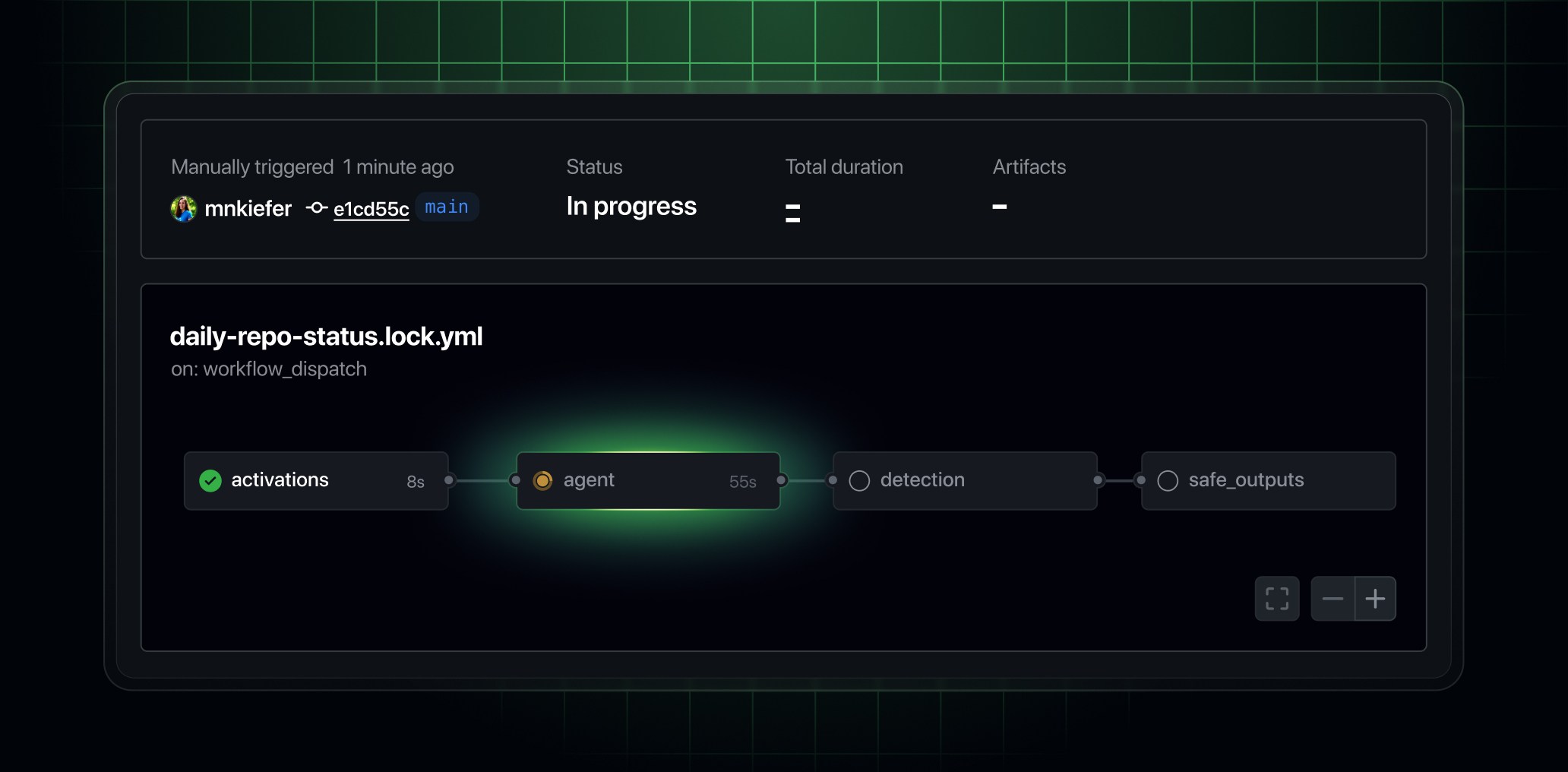
GitHub Agentic Workflows is generally available: write automation in Markdown, compile it to Actions YAML, run Copilot or your own coding agent, now with ARC self-hosting and micro-VM isolation

At Universe 2026 on Oct 28, GitHub made GitHub Agentic Workflows, an open source GitHub Next project, generally available on GitHub Free, Team and Enterprise. Developers describe tasks such as issue triage, CI failure analysis, documentation updates and test writing in natural-language Markdown, and gh aw compiles them into standard Actions YAML run by Copilot or a coding agent of their choice. GA adds self-hosted ARC runners with Docker-in-Docker, a non-experimental gh aw forecast cost estimate, per-workflow model providers and model routing, and Cloud Hypervisor or NVX micro-VM isolation.

GitHub Agentic Workflows is generally available: write automation in Markdown, compile it to Actions YAML, run Copilot or your own coding agent, now with ARC self-hosting and micro-VM isolation

Key Takeaways

  • Availability: GitHub Free, Team and Enterprise on github.com; using the default Copilot CLI engine requires a Copilot license
  • How it works: requirements in Markdown, compiled to standard Actions YAML that reuses existing runner groups and policies; run with Copilot or your own coding agent
  • Safe defaults: read-only permissions, a sandboxed container behind the Agent Workflow Firewall, safe-outputs validation, and a threat detection job before changes are applied
  • New at GA: self-hosted ARC runners with Docker-in-Docker, gh aw forecast out of experimental (with threat detection credits and monthly ranges), per-workflow model providers, model routing, micro-VM isolation and cross-repo enclaves
  • Customer story (Accenture's figures): one lead saved about 29 hours a week, AI authors 91% of the team's commits, and production errors fell from about 11,000 a day to under 1,000
Read full story

X discussion: Box CEO Aaron Levie says under 1% of enterprise workflows really use AI agents, echoing Sarah Guo's "early Claude Code era" take

Conviction founder Sarah Guo posted on Oct 27 that enterprise workflow automation is "in the autocomplete / early claude code era", "but not for long", drawing about 80K views and nearly 500 likes. Box CEO Aaron Levie quoted it the next day and argued that most enterprise workflows have not had agents applied in any meaningful way, putting deployment at probably under 1%, mainly because of AI capability itself; he says computer use, long-running agents and agent swarms are changing that. His post has about 635 likes, 486 bookmarks, 63K views and 150+ replies. These are opinions and rough estimates, not measured statistics.

Key Takeaways

  • Sarah Guo (Conviction founder): enterprise workflow automation is still in the "autocomplete / early claude code era", but not for long
  • Aaron Levie (Box CEO): most enterprise workflows have not had agents applied meaningfully, and deployment across the economy is "probably < 1%", which is his estimate
  • Levie says the main bottleneck is AI capability itself, with enterprise adoption speed a smaller factor
  • He points to computer use, long-running agents, harness improvements and agent swarms as what now makes more complex workflows workable for agents
  • His view: the shift is less about users prompting agents and more about organizations re-engineering workflows, with the biggest impact in finance, life sciences, healthcare and other information-heavy fields
Read full story

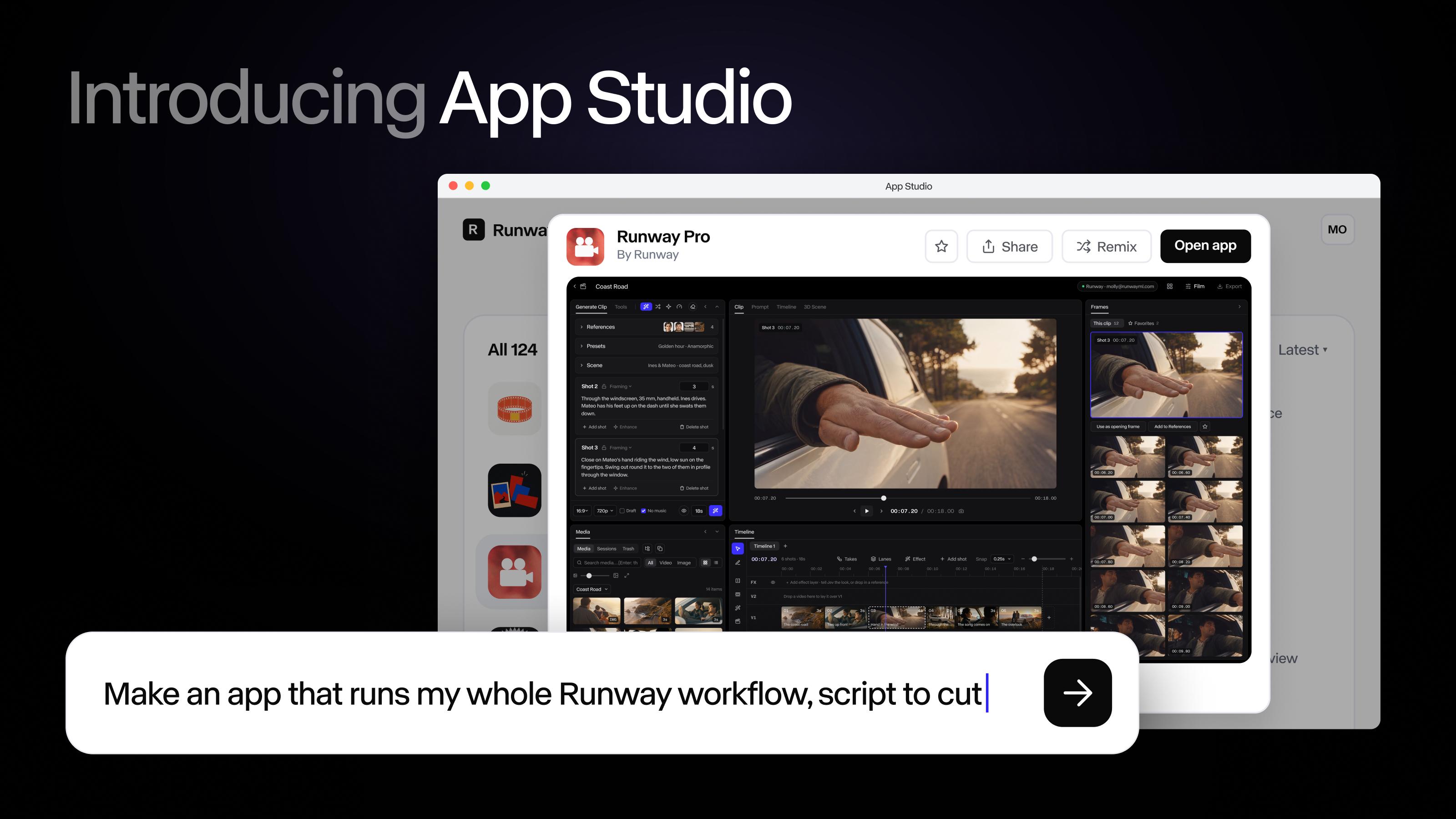
Runway launches App Studio: describe a creative tool in plain language and get a custom app that runs Runway's image, video and audio models on your Brand Kits

In an Oct 26 post on its blog, Runway launched App Studio: describe the tool you want in plain language and App Studio writes, tests and deploys an app with its own interface that generates images, video and audio with Runway's models, using your team's Brand Kits, Workflows and Assets. An existing Agent session or Workflow can be turned into an app in one click. Apps are private by default and can be shared with a team or published as a public link that visitors run on their own credits. Built-in apps at launch include Character Swap, AutoComp and 3D Camera Control. It is available now on every paid plan at no extra charge, drawing on existing Runway credits.

Runway launches App Studio: describe a creative tool in plain language and get a custom app that runs Runway's image, video and audio models on your Brand Kits

Key Takeaways

  • Pricing: available now on every paid plan with no add-on; building, running and hosting draw on existing Runway credits, and visitors to a public link pay for their own generations
  • Six built-in apps at launch: Character Swap, AutoComp (swap a product into footage while keeping packaging accurate), Product Portfolio, 3D Camera Control, Precise Edit and a customizable Runway Pro, each usable as is or remixable
  • One-click conversion: an existing Agent session or Workflow can lock in its prompt, model chain and settings and become an app that exposes only the inputs teammates need; the code stays visible, with preview and rollback
  • Enterprise controls: apps inherit the account's model controls, admins can turn App Studio off per workspace, block public links and see usage across all apps; Enterprise app links require a Runway sign-in
  • Early access (per Runway): architecture firm KPF built an app that turns design renderings into directed camera-move video, and design partners built dozens of custom apps
Read full story
Linked Models & Agents:

Oracle unveils the Fusion Claw runtime with 25 agentic apps at AI World, and Fusion Companion lets employees run ERP and HCM work from ChatGPT

At Oracle AI World in Las Vegas on Oct 26, Oracle announced Oracle Fusion Claw, a new execution runtime for agents, and 25 Claw-powered Agentic Applications now available across ERP, HCM, supply chain (SCM) and customer experience (CX). It also introduced Fusion Companion and Fusion Agentic Home: employees describe a goal in natural language in supported AI tools such as ChatGPT or in the native Fusion interface, and the system picks and coordinates the transactions, workflows, approvals and AI agents needed, within existing identity, permission and approval controls. Oracle has not published pricing, benchmarks or a detailed rollout schedule.

Oracle unveils the Fusion Claw runtime with 25 agentic apps at AI World, and Fusion Companion lets employees run ERP and HCM work from ChatGPT

Key Takeaways

  • Runtime: Fusion Claw is a new agent execution runtime that Oracle says supports larger-scale and longer-running work, continuous replanning, deterministic execution and governed autonomy (press release)
  • Scale: 25 Claw-powered Agentic Applications are available now across the ERP, HCM, SCM and CX suites, including Ledger, Workforce Orchestration, Payroll Activity Workspace and Procurement Spend
  • Access: Fusion Companion works through supported AI tools such as ChatGPT and customer- or partner-built interfaces, with Fusion Agentic Home as the native entry point (Fusion Companion release)
  • Governance: all execution stays within existing identity, permissions, policies and approval controls, and decisions needing human judgment are escalated
  • Not disclosed: Oracle has not published pricing, benchmarks or a per-app rollout schedule
Read full story

OpenAI frontier models and Codex are coming to Google Cloud: Model Garden access, bought via Marketplace against existing GCP commitments

On Oct 21, OpenAI and Google Cloud announced a partnership bringing OpenAI frontier models and Codex agentic workflows into Google Cloud Model Garden, transacted through Google Cloud Marketplace so enterprises can draw down existing GCP commitments. OpenAI models will also come to Google Antigravity and Gemini Agent soon. General availability is planned in the coming weeks, and Microsoft remains OpenAI's primary cloud partner. After AWS, this puts OpenAI models on all three major US clouds.

OpenAI frontier models and Codex are coming to Google Cloud: Model Garden access, bought via Marketplace against existing GCP commitments

Key Takeaways

  • Channel: OpenAI frontier models and Codex come to Google Cloud Model Garden, transacted through Google Cloud Marketplace (official)
  • Procurement: enterprises can draw down existing GCP commitments, no separate OpenAI contract or invoice
  • Ecosystem: OpenAI models are coming soon to Google Antigravity and Gemini Agent, selectable alongside Gemini
  • Timing: GA planned in the coming weeks, access requests open now; Microsoft remains the primary cloud partner
  • Landscape: after Microsoft exclusivity ended in April and AWS added OpenAI models, OpenAI is now on all three major US clouds (per Reuters/CNBC)
Read full story

Perplexity Computer Launches Natively on macOS: Full On-Device Model and Agent Execution Without Cloud Roundtrips

Perplexity officially unveiled that Perplexity Computer now operates 100% locally on macOS through the native desktop application. Breaking away from cloud-dependent computer-use paradigms that ship continuous video feeds across the internet, Perplexity Computer executes both the underlying inference model and the agent orchestration runtime directly on local Mac silicon. By interfacing natively with macOS Accessibility APIs, the system eliminates network latency, guarantees complete screen privacy, and empowers autonomous desktop copilots to orchestrate multi-application workflows entirely offline.

Perplexity Computer Launches Natively on macOS: Full On-Device Model and Agent Execution Without Cloud Roundtrips

Key Takeaways

  • Perplexity launched Perplexity Computer inside the native macOS app, hosting both model inference and agent loops locally
  • Eliminates privacy vulnerabilities of cloud-based GUI agents by keeping all screen frames and keystrokes strictly on-device
  • Achieves near-instantaneous interaction latency leveraging Apple Silicon unified memory and the Neural Engine
  • Seamlessly interfaces with native macOS Accessibility APIs and app sandboxes for cross-application workflow automation
Read full story
ADSponsored

Self-Evolving Agent Harness (Harness-RSI): Formalizing Fixed-Weight Agent Scaffolding Evolution with Continual PAC-Learning Bounds

Can AI agents recursively self-improve while keeping underlying model weights completely fixed? Researchers introduce the Self-Evolving Agent Harness (Harness-RSI) framework, formalizing feedback-driven revisions across prompts, memory, workflows, executable tools, and repository-level control logic. Backed by continual PAC-learning generalization bounds, historical regression budgets, and high-probability admission rules, the 66-page treatise and codebase are open-sourced on GitHub.

Self-Evolving Agent Harness (Harness-RSI): Formalizing Fixed-Weight Agent Scaffolding Evolution with Continual PAC-Learning Bounds

Key Takeaways

  • Formalizes fixed-weight agent evolution (Harness-RSI): evolves prompts, memory, workflows, executable tools, and repo-level control logic without updating model weights
  • Continual PAC-learning guarantees: derives expected generalization bounds, historical regression retention bounds, and high-probability admission rules
  • Open-source 66-page treatise and framework: provides actionable safeguards for model-harness co-design, distributed execution, and plugin reuse
Read full story

Tencent Hunyuan Releases LifeSearch: The First Real-World Life & Productivity Benchmark for Deep Research Agents, 4,500 Hours of Human Annotation Shows Frontier SOTA at Just 63.4%

While deep research (DR) agents excel on synthetic and academic queries, their reliability in realistic personal life and professional workflows remains uncharted. Tencent Hunyuan introduces LifeSearch, a rigorous benchmark featuring 203 real-user tasks across 7 domains backed by 4,500+ hours of expert annotation and 4,000+ fine-grained rubrics. Evaluating 12 leading DR agents reveals that the strongest frontier agent scores only 63.4%, unmasking persistent bottlenecks in multi-step information synthesis and constraint verification.

Tencent Hunyuan Releases LifeSearch: The First Real-World Life & Productivity Benchmark for Deep Research Agents, 4,500 Hours of Human Annotation Shows Frontier SOTA at Just 63.4%

Key Takeaways

  • Pioneering real-world life & productivity testbed: spans 203 bilingual tasks across 7 realistic domains including travel itinerary synthesis, procurement, and healthcare analysis
  • 4,500 hours and 4,000+ expert rubrics: evaluates both synthesized report depth and concrete attributes (exact values, units, dates, and live URLs) with Spearman rank correlation of 0.89
  • Revealing severe frontier agent limits: the highest-performing deep research agent scores a modest 63.4%, exposing widespread failures in temporal conflict resolution and deep search navigation
Read full story

Last Secure Code Benchmark: Vibe Coding Under Fire as Top Agents Produce Secure Code on Only 25.1% of Tasks

While AI coding agents and 'vibe coding' workflows synthesize an unprecedented volume of production software, code security remains highly fragile. Researchers from NUS and Monash University introduced the Last Secure Code Benchmark, evaluating 450 tasks derived from 150 real CVE vulnerabilities across 7 languages (Java, C, C++, JS, Python, PHP, Go) and 24 CWE categories (including 21 of the 2025 CWE Top 25 and 8 of the Top 10 KEVs). While frontier agents achieve 73.6% to 91.3% functional completion rates, even the strongest model (Claude Fable 5) produces code that is both functional and secure on only 25.1% of tasks, exposing acute supply-chain risks in autonomous vibe coding.

Last Secure Code Benchmark: Vibe Coding Under Fire as Top Agents Produce Secure Code on Only 25.1% of Tasks

Key Takeaways

  • First comprehensive vibe-coding security benchmark: 450 tasks based on 150 CVEs spanning 7 languages, covering 21 of the 2025 CWE Top 25 and 8 Top 10 KEVs
  • The functionality illusion: while agents pass functional specs at 73.6%–91.3%, dual functional-and-secure pass rates collapse to 16.4%–25.1%
  • Vulnerability defense crisis: across full-repository and file generation scenarios, top models resolve only 12% of vulnerability environments securely
Read full story

TerminalHorizon Released: Automated Data Synthesis Engine for Long-Horizon Terminal Agents Powers 27B Model to 55.8% on Terminal-Bench 2.0

As autonomous software engineering agents and command-line assistants evolve from single-turn tool invocation toward complex, multi-stage delivery, the scarcity of high-quality, long-horizon terminal interaction data has emerged as a fundamental bottleneck. Researchers from USTC, Alibaba Group (AMAP), and SUSTech introduce TerminalHorizon (arXiv:2610.13166), a fully automated data synthesis engine for training long-horizon terminal agents. Addressing standard pitfalls where synthetic environments oversimplify core challenges and eliminate the need for exploration, TerminalHorizon extracts workflows from real-world tasks, pinpoints omitted steps through independent execution loops, dynamically reconstructs environments based on observed evidence, and organically scales task complexity across multiple stages under unified objectives. Synthesizing 1.5K environments and 2,852 trajectories averaging 52.8 turns, the authors train TerminalHorizon-27B (fine-tuned on Qwen3.5-27B). The model achieves 55.8% on Terminal-Bench 2.0 (+14.2 points over base Qwen3.5-27B), sweeping 12 benchmarks across coding agents, production environments, and reasoning with project datasets open-sourced.

TerminalHorizon Released: Automated Data Synthesis Engine for Long-Horizon Terminal Agents Powers 27B Model to 55.8% on Terminal-Bench 2.0

Key Takeaways

  • TerminalHorizon automated synthesis engine releases 1.5K environments and 2,852 trajectories averaging 52.8 interaction turns
  • TerminalHorizon-27B attains 55.8% on Terminal-Bench 2.0, delivering a 14.2-point leap over base Qwen3.5-27B
  • Outperforms massive synthetic datasets on 12 benchmarks covering coding agents, terminal operations, and multi-step reasoning
Read full story
Linked Models & Agents:

JetBrains Unveils SWE-TaskFlow: Aligning Coding Agent Benchmarks with Real Developer IDE Workflows

Mainstream coding agent benchmarks like SWE-bench frame evaluation around issue-derived tasks: feeding an agent a bug description and expecting an end-to-end patch. But does this reflect genuine developer practices? JetBrains Research analyzes 4,782 production sessions of professional software engineers inside JetBrains IDEs (arXiv:2610.09633). For long interactive sessions (>=3 turns, comprising 33% of production traffic), user requests span a diverse mix of intent types—project codebase Q&A, strategic planning, code review, refactoring, and test execution—with users frequently transitioning between types mid-session. To align benchmarks with real developer task flows, JetBrains introduces SWE-TaskFlow, an approach that transforms issue-based benchmarks via prompt-splitting and verifiable repository QA into calibrated multi-stage workflows guided by a TaskFlow Alignment Score (TFAS). A pilot study across 700 SWE-Bench Pro tasks demonstrates that sequential multi-step interaction protocols nearly double agent inference expenditure without stable improvements in resolve rates, proving that the interaction protocol itself is a critical, previously unmeasured dimension of agent evaluation.

JetBrains Unveils SWE-TaskFlow: Aligning Coding Agent Benchmarks with Real Developer IDE Workflows

Key Takeaways

  • JetBrains analyzes 4,782 production IDE sessions, proving real software engineers navigate dynamic multi-intent task flows
  • Introduces SWE-TaskFlow and TFAS to transform issue benchmarks into realistic multi-turn developer interaction protocols
  • Pilot across 700 SWE-Bench Pro tasks reveals multi-turn protocols double token costs without stable success gains
Read full story
Linked Models & Agents: