AI Coding Live News

X Discussion: Vercel CEO Guillermo Rauch Says "Own Your Intelligence," Urging Local Models to Keep Spreading and Developers to Own Their Agent Harness and Data

Vercel CEO Guillermo Rauch posted on X on November 1: "Own your intelligence. Anyone that opposes this has something to sell you (perhaps your own intelligence back to you.)" He argued that local models need to keep proliferating; since the biggest models may be out of reach locally for now, the best option is to keep your options open: own your harness, data, connections and runtime, meaning your agents, and embrace open source. Within about 12 hours the post drew about 2,500 likes, 128K views and over 100 quote posts, with debate centered on how to balance local and cloud AI.

Key Takeaways

  • This is Rauch's personal opinion post, not an official Vercel announcement or product release.
  • The original post (2026-11-01 21:08 UTC) had about 2,533 likes, 255 reposts, 266 replies, 107 quotes, 128K views and 581 bookmarks at fetch time.
  • Core claim: local models should keep spreading; until the biggest models can run locally, keep your options open by owning your harness, data, connections, runtime and agents, and embrace open source.
  • Mark (@marksuman), co-founder and CEO of Maple AI, replied in a quote post that it will be hybrid: cloud will always be more powerful, so local-first AI should be paired with private cloud.
  • Engineer Shantanu Goel (@shantanugoel) quoted it saying "Guillermo says the truth that most others won't!", drawing about 37 likes.
Read full story
Linked Models & Agents:

X discussion: Sam Altman calls DRAM sitting in personal PCs "quite terrible", and local-inference fans push back

On the Cheeky Pint podcast with Stripe co-founder John Collison, published October 29, Sam Altman discussed the memory shortage. He said many people assume open-source models and local inference solve the compute crunch, but from a global allocation perspective it is "quite terrible" for everyone to have scarce DRAM sitting in their own computer and being used about 5% of the time, and that a supply-constrained world wants maximum utilization in the cloud. A pubity post quoting him drew more than 26,000 likes and over 8 million views, and many users pushed back that PC memory is not only for AI and that local models matter for privacy and offline use. This is a summary of an X discussion, not a verified conclusion.

X discussion: Sam Altman calls DRAM sitting in personal PCs "quite terrible", and local-inference fans push back

Key Takeaways

  • Source: Sam Altman on the Cheeky Pint podcast, published October 29, with an official transcript that includes "being used 5% of the time"
  • Altman's argument: with DRAM supply tight, memory in personal computers sits mostly idle, while cloud data centers can serve many users continuously, so utilization should be maximized there
  • Engagement (X API, read Oct 31 13:06 SGT): the pubity post had 26,124 likes, 8,557 quotes, 5,210 replies and about 8.06 million views
  • Main pushback: PC memory also runs the OS, browsers and games; local models keep data on the device; some note the view matches OpenAI's cloud business model
  • Altman did not explain the 5% figure, and coverage suggests treating it as a rough estimate, not a measurement
Read full story
Linked Models & Agents:

LM Studio Bionic 1.1.10 adds the oMLX engine, bringing RAM-plus-SSD KV caching and MLX speculative decoding to local models on Macs

LM Studio posted on X at 15:32 UTC on Oct 29 that users can now download a new oMLX engine inside LM Studio and run it with MLX models they already have. The official changelog lists it in Bionic 1.1.10, alongside speculative decoding for MLX models and an in-app terminal. oMLX is an open-source Apple Silicon inference server maintained by developer jundot (Apache 2.0, about 23,000 GitHub stars) built around continuous batching and a two-tier RAM and SSD KV cache. LM Studio has not published speed comparisons for the engine.

LM Studio Bionic 1.1.10 adds the oMLX engine, bringing RAM-plus-SSD KV caching and MLX speculative decoding to local models on Macs

Key Takeaways

  • LM Studio says the oMLX engine can now be downloaded inside the app and used with existing MLX models; the post has about 540 likes (post)
  • The Bionic 1.1.10 changelog (Oct 29) also lists speculative decoding for MLX models, a public in-app terminal and llama.cpp 2.66.0 extension packs (changelog)
  • oMLX is Apache 2.0 open source with about 23,000 GitHub stars and needs macOS 15+ on Apple Silicon M1 to M5 (GitHub)
  • Its core is a two-tier KV cache: hot blocks stay in RAM, overflow is written to SSD as safetensors, and matching prefixes are restored from disk even after a restart
  • LM Studio has published no speed comparison with its existing MLX engine; one user reported that restart-to-update failed after launch and LM Studio is investigating
Read full story

Ollama Natively Supports Recursive Flint 40B: 2.5B Active MoE Coding Agent Delivering 125+ tok/s on MacBook Pro

Recursive, founded by Richard Socher, has officially open-sourced Flint (RecursiveSI/flint), a 39.8B Mixture-of-Experts (MoE) coding agent model under Apache 2.0 with day-zero Ollama support (ollama run flint). Activating just 2.5B parameters per token across 47 MoE layers with a 262K context window, Flint hits 125+ tokens/sec on an M4 Pro MacBook Pro. It sets new benchmarks for sub-50B local models, scoring 74.2% on SWE-bench Verified and 89.7% on SWE-bench Pro v2.

Ollama Natively Supports Recursive Flint 40B: 2.5B Active MoE Coding Agent Delivering 125+ tok/s on MacBook Pro

Key Takeaways

  • Flint employs a 49-layer architecture (2 dense + 47 MoE layers) with 39.8B total and 2.5B active parameters per token
  • Native 262,144-token (256K) context window supports end-to-end repository indexing and cross-file debugging
  • Blazing local inference speed: 125+ tokens/sec on M4 Pro MacBook Pro and 150+ tokens/sec on RTX Spark
  • Scores 74.2% on SWE-bench Verified, 89.7% on SWE-bench Pro v2, and 80.3% on LiveCodeBench v6 with instant 'ollama run flint' execution
Read full story
Linked Models & Agents:
ADSponsored

Hermes Agent v0.22.0: keyless guided onboarding, one-click local llama.cpp models, Gmail/Linear/Notion connectors and a 600-plugin catalog

Nous Research shipped Hermes Agent v0.22.0, "The Threshold Release", on Oct 14 (UTC). Fresh desktop installs open a guided setup chat on a free trial model (nous/welcome) with no API key, connectors reach Gmail, Linear and Notion through the Nous tool gateway, a one-click llama.cpp runtime runs local models, installs now follow tested SemVer stable releases, and desktop builds are signed (including the Microsoft Store). The source tree shrank from about 1.06M to 698K lines (−34%).

Hermes Agent v0.22.0: keyless guided onboarding, one-click local llama.cpp models, Gmail/Linear/Notion connectors and a 600-plugin catalog

Key Takeaways

  • Scale since v0.21.0: ~24,200 commits, ~6,080 merged PRs, ~7,180 issues closed, ~2,520 contributors, about 2.5x the v0.21.0 cycle
  • Leaner: source went from ~1.06M to 698K lines (−34%); gateway/run.py from 34,847 to 5,512 lines; ~19 rarely used tools now load on demand, roughly halving the desktop tool schema, and ~2.1k tokens came off the fixed prompt
  • Local models: installs llama.cpp b11370 for CPU/CUDA/Metal/Vulkan/ROCm, recommends only models that fit fully in GPU memory; catalog includes Qwen3.8 27B, Qwen3.6 35B-A3B, DeepSeek V4 Flash and any Hugging Face GGUF
  • 600-plugin catalog, each pinned to a reviewed commit; memory providers (Honcho, Mem0, Supermemory and others) moved out of core
  • Faster updates that rebuild only what changed: 16.5 s vs 32.5 s on macOS (vendor figure)
Read full story

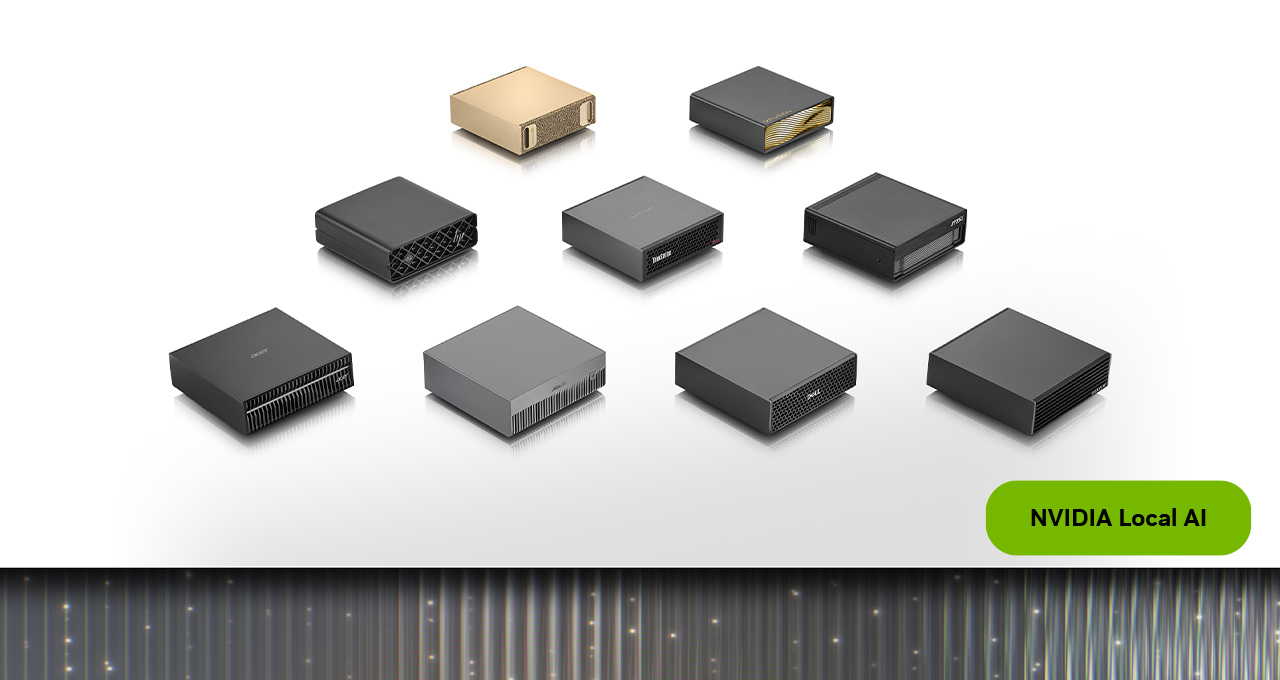
NVIDIA DGX Spark 64GB: OEM sale from Oct 23 at $4,999; dual-node up to ~1.7×, local models to ~100B

On 2 Oct 2026 NVIDIA blogged DGX Spark 64GB: on sale Friday 23 Oct via Acer/ASUS/Dell/Gigabyte/HP/MSI from $4,999. Same GB10 Grace Blackwell, DGX OS, and full NVIDIA AI stack; 64GB unified memory for local agents up to ~100B params. Two units cluster over ConnectX-7+QSFP to 128GB (~200B); Qwen 3.8 27B test showed up to ~1.7× vs one node.

NVIDIA DGX Spark 64GB: OEM sale from Oct 23 at $4,999; dual-node up to ~1.7×, local models to ~100B

Key Takeaways

  • Official blog by Allen Bourgoyne dated 2026-10-02
  • OEM availability Friday 2026-10-23 from Acer/ASUS/Dell/Gigabyte/HP/MSI; starting at $4,999; 64GB OEM-only
  • Same GB10 + DGX OS + CUDA AI stack; Agent Toolkit, Ollama, vLLM, PyTorch, Nemotron OOTB
  • Dual-node via ConnectX-7+QSFP pools 128GB / ~200B params; Qwen 3.8 27B up to ~1.7× vs single
  • Later this month: Sync Model Launcher for Qwen3.8 27B + OpenCode local wiring
Read full story

Cline Desktop v0.0.35: official Linux x64 .deb/.rpm, working plugin slash commands, Diagnostics export

On 2026-09-24 Cline shipped Desktop v0.0.35 with first-party Linux x64 .deb/.rpm beside macOS/Windows (no AppImage yet), GTK folder picker, background updates applied on Restart now, real plugin slash-command handlers, redacted Diagnostics export, and compact-and-retry when local models hit output-token limits.

Cline Desktop v0.0.35: official Linux x64 .deb/.rpm, working plugin slash commands, Diagnostics export

Key Takeaways

  • Linux packages: amd64 .deb and x86_64 .rpm on the desktop-v0.0.35 release; no AppImage yet
  • Plugin slash commands run real handlers; a broken plugin no longer breaks every slash prompt
  • Diagnostics Export strips keys, credential-shaped values, prompts, and home path for safe issue reports
  • Local open-weight replies that hit output-token caps compact once and retry instead of failing the run
  • Catalog at 6,386 models; 19 provider defaults move, 11 of them to Claude Opus 5.5
Read full story

GitHub Next opens LocalJev: local Jev-compatible decision API on oMLX

GitHub Next open-sourced LocalJev (github.com/githubnext/localjev): a morning build of a “poor man’s Jev” for teammates without TypeSafe Jev access. It exposes a Jev-compatible POST /v1/systemone API in Bun/TypeScript, defaults to oMLX-backed local models such as DiffusionGemma, and reports evals across DiffusionGemma, Qwen MoE, Gemma 4 MoE, and Gemma 4 e4b/e2b (benchmark report in-repo). The LocalJev server works with normal Jev client wrappers, but probabilities are model-reported rather than logit reads—calibrate before consequential use.

Key Takeaways

  • Open-sources LocalJev: a local Jev-compatible POST /v1/systemone decision API (Bun/TypeScript).
  • Defaults to oMLX-backed local models such as DiffusionGemma, with multi-model evals in-repo.
  • Works with normal Jev client wrappers; probabilities are model-reported, not logit reads—calibrate first.
Read full story
Linked Models & Agents:
⚡ diffusiongemma⚡ qwen⚡ Gemma 4🌐 github

Magnitude open-source local inference server: hardware-fit models for Codex / Claude Code / Cline / Hermes

Open-source magnitudedev/magnitude (Apache-2.0, ~3.1k stars) is a local inference server that profiles your hardware, recommends fitting local models, then downloads, tunes, and runs them — plugged into Codex, Claude Code, Cline, and Hermes. Models load on demand and unload when memory is tight, so coding agents can use local models without a separate stack.

Key Takeaways

  • Open source: magnitudedev/magnitude, Apache-2.0, ~3.1k stars.
  • Features: hardware profiling, local model picks, on-demand load/unload.
  • Integrations: Codex, Claude Code, Cline, Hermes.
Read full story
Linked Models & Agents: