AI Coding Live News

OpenAI Details Pando, Its In-House Git Backend: Median Push Latency Down Nearly 5x, Nearly 1 PB Served Daily, Built With Codex in 10 Weeks

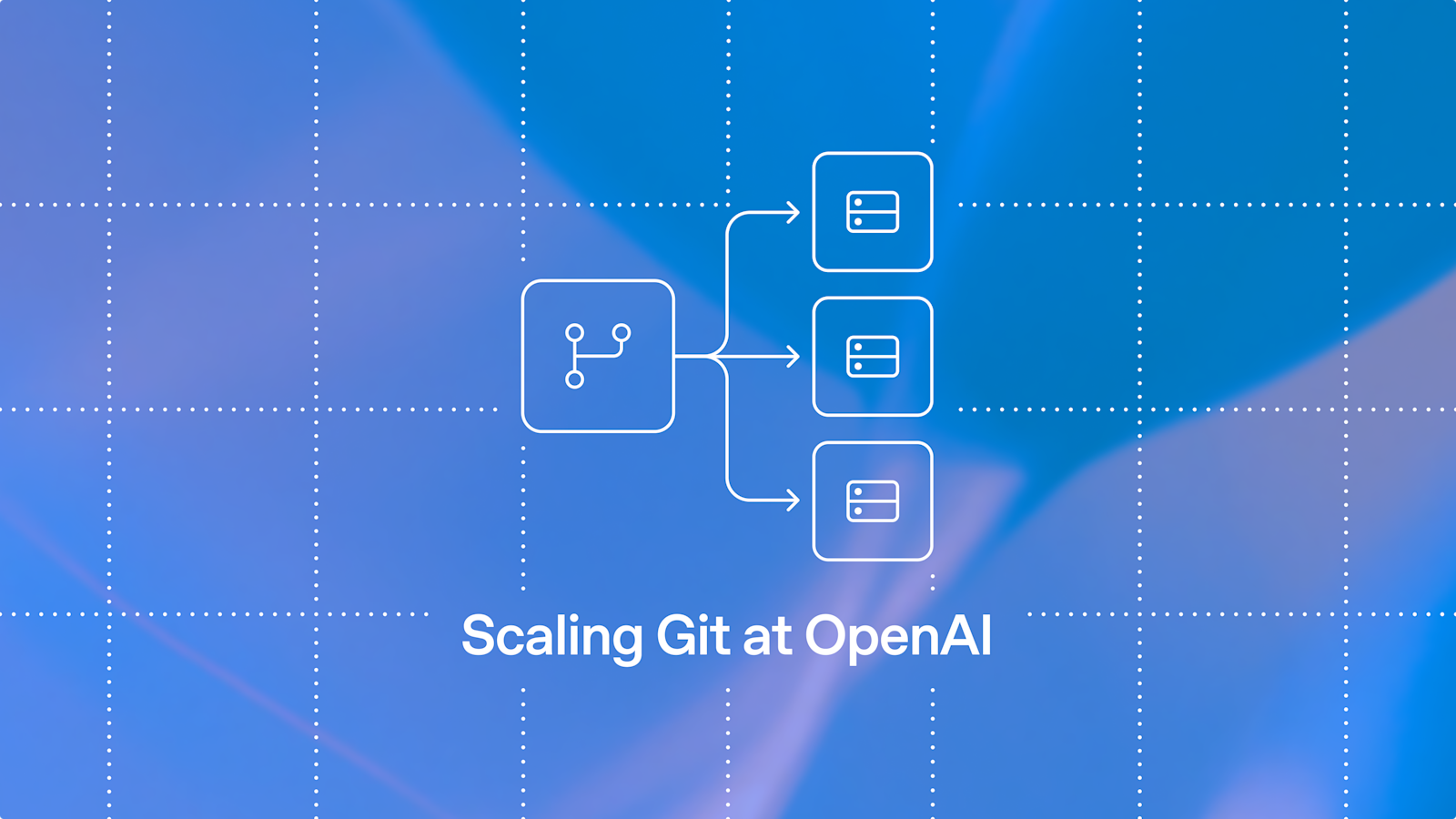
On November 2 OpenAI published "Scaling Git at OpenAI", describing Pando, a Git-compatible backend it built for its monorepo. Per OpenAI, Pando cut median push latency by nearly 5x (about 80%), now delivers nearly a petabyte of Git data per day, and has served more than 57 TB in a single hour. It is written in Rust, its core was designed by one engineer and implemented by teams of Codex agents, and it went from kick-off to production in 10 weeks, serving production traffic since April. The trigger: Codex multiplied parallel branches and pushes, and the old system's reliability at times fell below 90%.
OpenAI Details Pando, Its In-House Git Backend: Median Push Latency Down Nearly 5x, Nearly 1 PB Served Daily, Built With Codex in 10 Weeks

Key Takeaways

  • Per OpenAI: median push latency down nearly 5x (about 80%), nearly 1 PB of Git data delivered per day, and a peak of more than 57 TB in one hour, with over 99% of bytes from local disk cache.
  • The trigger: Codex let engineers run far more branches and CI jobs in parallel; the old system struggled from late last year, with reliability at times below 90%.
  • The key trade-off: Pando drops repository-wide consistency for per-branch causal consistency and reuses pushed packfiles, stored as immutable blobs, to serve later fetches.
  • Written in Rust, core designed by one engineer and implemented by teams of Codex agents in 10 weeks; agents using GPT-6 Astra also wrote Lean and TLA+ specs to find bugs and prove properties.
  • Several improvements, such as packfile-uri fixes, are already in upstream Git, and OpenAI says it is exploring ways to share the technology with users.
Read full story

Anthropic's Amended S-1 Says Future Models May Imminently Meet Its RSP Threshold for Dramatically Accelerated AI Progress

On November 2 Anthropic filed Amendment No. 1 to its S-1 with the SEC, adding a risk disclosure: based on internal estimates and expectations about future models, not current ones, the company may imminently meet its Responsible Scaling Policy definition of dramatically accelerated progress attributable to AI. No current model has been designated as exceeding the threshold. Anthropic says it is evaluating the implications of meeting the AI R&D capability threshold, is considering RSP updates that would require human review and approval of certain R&D decisions, and does not expect to safely let Claude fully autonomously design and build successive frontier models without meaningful human supervision.

Key Takeaways

  • Filing: Anthropic, PBC's Amendment No. 1 to Form S-1, filed November 2, 2026 (SEC filing), Registration No. 333-299633.
  • Key line: based on internal estimates for future models, the company may imminently meet the RSP definition of dramatically accelerated progress attributable to AI; no current model has been designated as exceeding it.
  • Proposed measures: possible RSP updates requiring human review and approval of certain R&D decisions; Anthropic also says it recently delayed pre-training a new frontier base model by more than a month to strengthen safeguards such as preventing weight exfiltration.
  • Same filing (company figures): over 90% of contributions to Anthropic's codebase in September 2026 were written by Claude, and revenue for the three months ended September 30, 2026 was $17.0 billion.
Read full story
Linked Models & Agents:

SemiAnalysis releases GDPx, an agentic benchmark of 206 tasks across 11 high-value domains where the top model, Claude Opus 5.5, scores just 12%

On Nov 2, semiconductor and AI research firm SemiAnalysis released GDPx, a benchmark of agentic capability across 11 domains: chip design, cybersecurity, biology, finance, legal, quant trading, recursive self-improvement (RSI), hardware design, materials science, alignment and software engineering. Its 206 tasks were built by 14 specialist data partners, with SemiAnalysis doing final QA. On the official leaderboard Claude Opus 5.5 leads at 12.0%, followed by Gemini 4 Carbon at 10.9% and GPT-6 Astra at 9.6%; nearly every model scores 0 on finance and legal. SemiAnalysis says safety classifiers drag down Opus 5.5 and GPT-6 Astra, and plans a new version every 3–6 months. All scores are as reported by SemiAnalysis.

SemiAnalysis releases GDPx, an agentic benchmark of 206 tasks across 11 high-value domains where the top model, Claude Opus 5.5, scores just 12%

Key Takeaways

  • Scale: 11 domains, 14 data partners and 206 tasks, with a default time limit of 8 hours per task (GDPx site)
  • Leaderboard (as reported by SemiAnalysis): Claude Opus 5.5 12.0%, Gemini 4 Carbon 10.9%, GPT-6 Astra 9.6%, Muse Wonder Full 9.0%, Claude Fable 5.1 8.5%, GPT 6.1 Sol 8.4%, Claude Sonnet 5.5 8.2%
  • Lower tier and open weights: DeepSeek 4.1 Flash 1017 5.4%, GPT-6 Luna 5.1%, Grok 4.7 3.9%, GLM 5.3 2.7%; almost every model scores 0 on finance and legal
  • Method: each model runs in its native harness where one exists (Claude Code for Opus, Codex for Astra, Antigravity for Carbon), otherwise OpenCode; the headline is pass@1 over three attempts with all domains weighted equally (SemiAnalysis blog)
  • By domain: Opus 5.5 wins quant trading, hardware and chip design; Gemini 4 Carbon wins biology and software engineering; GPT-6 Astra wins RSI and materials science; Muse Wonder Full is the strongest cyber model
Read full story

X discussion: Microsoft AI CEO Mustafa Suleyman posts "Don't build conscious superintelligence", saying AI development should stop if consciousness emerges in training

Microsoft AI CEO Mustafa Suleyman published an X article on November 1 titled "Don't build conscious superintelligence", responding to reactions to his September essay on model welfare. He clarified that his line "AIs are not conscious" was deliberately in the present tense: they are not today, and that is how they must remain. If consciousness started to emerge in training, he would call for everyone to stop AI development until those properties could be designed out. He argued that AI developers have no right to bring a new conscious species into the world and that welfare concerns should focus on humans, animals and the natural environment. He also credited Anthropic for publishing its constitution and research, while saying he disagrees with its approach. The post drew about 353 likes, 251 bookmarks and 290K views, with ethicists and practitioners on both sides. This is a personal opinion piece, not a Microsoft product or policy announcement.

X discussion: Microsoft AI CEO Mustafa Suleyman posts "Don't build conscious superintelligence", saying AI development should stop if consciousness emerges in training

Key Takeaways

  • Original post: @mustafasuleyman X article, Nov 1, 15:22 UTC, about 353 likes, 56 reposts, 79 replies, 251 bookmarks and 290K views at fetch time
  • It responds to reactions to his Sept 16 essay "It's time to talk about model welfare" (about 1,013 likes); his X bio lists CEO of Microsoft AI, author of The Coming Wave, and co-founder of DeepMind and Inflection
  • Core claim: "AIs are not conscious" describes today and that is how it must remain; any evidence of AI consciousness should be disclosed publicly at once; if consciousness emerges in training, development should stop
  • He credits Anthropic for publishing its constitution and a stream of papers and posts, says he disagrees with its approach, and calls for labs to research this together and share safety information
  • In quote posts, UMass Amherst economics and ethics scholar Itai Sher called it "very well put"; UCL professor Tim Colbourn agreed but doubted safety can be engineered by default; others noted there is no accepted theory or test of consciousness
Read full story
Linked Models & Agents:
ADSponsored

Benji Taylor, head of design at X and SpaceXSI, open-sources Stageshow, an agent skill for realistic faux product UI and animated demos

On Oct 31, Benji Taylor, head of design at X and SpaceXSI, released Stageshow on X: an open-source skill (MIT license) for coding agents that helps them produce faux product UI that looks real, including stills, cursor demo animations, and bento grids, delivered as ordinary React components. It installs with one command, and he says it works with Grok Build, Claude Code, Codex, Gemini, and others. The launch post drew about 4,500 likes and 6,500 bookmarks. He notes it rarely nails a demo in one shot and most still take a few rounds of feedback.

Benji Taylor, head of design at X and SpaceXSI, open-sources Stageshow, an agent skill for realistic faux product UI and animated demos

Key Takeaways

  • Install: npx skills add benjitaylor/skills --skill stageshow; the author says it works with Grok Build, Claude Code, Codex, Gemini, and other agents (author's post)
  • Contents: a seven-step workflow in SKILL.md, reference rule docs, dozens of gold examples, a React kit, and self-check scripts such as film.mjs (GitHub)
  • License: the stageshow folder is MIT licensed; the repo was created Oct 26 and had about 61 stars at writing time
  • Reach: the launch post had about 4,521 likes, 6,561 bookmarks, and 213k views as of Nov 1, 08:00 SGT
  • Quality claims are the author's own: the same prompts did better with the skill, but no quantitative evaluation was published
Read full story

Anthropic adds two sentences to Claude Code's Opus 5.5 prompt to steer it away from recreating specific existing games; original and genre games still allowed

Around Oct 27, users noticed Claude Code receiving a new server-side rule (flag name tengu_heron_brook): build original games, games in a genre, and games from the user's own designs and assets, but do not build a recreation of a specific existing game, even if it is renamed or called original. The post that surfaced it drew about 8,700 likes and nearly 2 million views on Oct 30. The same day, Addy Osmani, who works on Claude Code at Anthropic, confirmed on X that the team added two sentences to Claude Code's prompt on Opus 5.5 because using Claude to infringe IP is against Anthropic's usage policy. He said original games, genre games, and games built from your own designs and assets should keep working, that the team will keep iterating, and that users can send him wrongly refused requests.

Key Takeaways

  • Scope: the change is just 2 sentences in Claude Code's system prompt for Opus 5.5, pushed from the server with no user-side toggle (Addy Osmani's post)
  • Rule text (per the flag tengu_heron_brook users captured): original games, genre games, and games from the user's own designs and assets are allowed; a recreation of a specific existing game is not, "even if it is renamed or called original" (original report, about 8,700 likes and nearly 2M views)
  • Basis: Anthropic's Usage Policy prohibits using its products to infringe, misappropriate, or violate a third party's intellectual property rights
  • Feedback path: Osmani says the team will keep tuning the line and asked users to send him wrongly refused requests; there is no separate Anthropic blog post yet, and benchmarks do not apply
Read full story

DeepSeek Harness team open-sources dsh-superagent, a proactive coding agent prototype for a single GitHub repo, alongside its Super-agent architecture article

On Oct 31, deepseek-ai open-sourced dsh-superagent-prototype on GitHub under the MIT license: a proactive coding agent that runs as a DeepSeek Harness bundle, lives on one GitHub repository and can optionally listen to Feishu. When an allowed person asks for work, it opens a work item, works in its own session and directory, and answers in the original conversation, for example with a pull request. The README states it is a research prototype, not an official DeepSeek product. The companion article, Exploring Super-agent Design, proposes a two-layer Router-Worker architecture; the team test, as reproduced by media, reports a p95 completion time of 15.7 minutes versus 29.5 minutes for a single-session setup.

Key Takeaways

  • Open source: deepseek-ai/dsh-superagent-prototype went public on Oct 31 under MIT, written in TypeScript, with about 1,800 stars at the time of writing
  • Scope: each deployment serves 1 GitHub repository, with optional Feishu; it acts only when an allowed person addresses it or a team-written rule allows it
  • Delivery: by default it only allows auto-merge for an approved pull request opened for a ticket with fewer than 200 changed lines, and never enables auto-merge as the agent account
  • Team test (as reproduced by media, vendor-reported): in a simulation with about 300 messages and 20 requests, p50 / p95 completion was 12.4 / 15.7 minutes versus 20.4 / 29.5 for a single session with a subagent tool
  • Risk: worker sessions run commands without approval as the operator's OS user, and the README asks users to review and adapt the code first
Read full story

X discussion: Anthropic's head of platform engineering says a team with no Rust developers had Claude port the whole Messages API to Rust, cutting CPU by roughly 40-50%

Katelyn Lesse, Anthropic's head of platform engineering, said on the Latent Space podcast (published Oct 27) that a Rust version of the Messages API fully rolled out the previous week. The old system was a CPU-hungry Python monolith, the team started with "not a single Rust developer", humans designed and verified the system, Claude wrote the implementation, and shadow traffic compared outputs between the old and new versions. Her ballpark figures are roughly 40-50% less CPU and 10-20% better time to first token. A clip posted by Somi (@somi_ai) drew 1,000+ likes and about 140K views on X and was quoted by swyx and others, with the debate centered on whether "never do the big rewrite" is now outdated advice. These are X discussion views and spoken estimates; Anthropic has not published a written engineering report.

X discussion: Anthropic's head of platform engineering says a team with no Rust developers had Claude port the whole Messages API to Rust, cutting CPU by roughly 40-50%

Key Takeaways

  • The first-hand source is Katelyn Lesse speaking on the Latent Space episode "How Anthropic ships Claude with Claude", in the "56:05 Rebuilding the Messages API in Rust" segment
  • Lesse said the move was driven by CPU becoming a bottleneck as usage surged; CPU now has to be capacity-planned in advance, and research sandboxes, product sandboxes and CI all draw from the same pool inside Anthropic
  • The team forked the entire API in Rust in one go, ran shadow traffic to confirm the Python and Rust outputs matched, then turned it on gradually, deliberately adding no new features during the port
  • Her ballpark is about 40-50% CPU savings and 10-20% better time to first token, with larger gains on longer-running workloads; these are spoken estimates from the podcast, not a formal benchmark
  • On X, Somi called "never do the big rewrite" dead advice and swyx said Anthropic "vibecoded their entire backend to Rust"; the latter is an exaggeration, since Lesse only discussed the Messages API
Read full story
Linked Models & Agents:

Canva launches Brush, a vision-language model for design editing that is up to 69% faster and 46% cheaper per task

On Oct 29 Canva launched Brush, Canva Research's first vision-language model for design. It reads a design's layout, layers and style, edits anything from one line of copy to a whole deck, and iterates through an agent loop that writes code and then inspects the page. Canva says it is up to 69% faster and 46% cheaper per task than its previous design agent (vendor figures). It now powers supported design edits in Canva AI for Canva Pro subscribers.

Canva launches Brush, a vision-language model for design editing that is up to 69% faster and 46% cheaper per task

Key Takeaways

  • Canva says Brush is up to 69% faster on general design editing tasks and 46% cheaper per edit task than its previous design agent (vendor figures from internal testing; sample size and conditions not published)
  • Brush was post-trained from a leading open-weights model and then refined with large-scale reinforcement learning, with rewards for visual quality, layout that follows design principles, and task completion
  • Built by Canva Research, a lab of about 160 people, one week after Canva shipped its first image model, Canva Craft
  • From Oct 29 it powers supported design edits in Canva AI for Canva Pro subscribers, selected from a Brush dropdown; wider availability is coming soon
  • The official post had about 276K views, 618 likes and 452 bookmarks when this was written
Read full story
Linked Models & Agents:
⚡ Canva Brush⚡ Canva Craft🌐 Canva

Cursor Design Mode adds Annotate: point, draw and edit text on your running app to send visual prompts to agents

On Oct 27 Cursor announced Annotate for Design Mode: in the Agents Window browser you can click elements, box an area, draw markup, edit text in place or tweak CSS, and each note is sent to the agent with element details and a screenshot so it can edit the code. The post says you can also review designs at different screen sizes. It needs Cursor 3.24.18 or later, and the shortcut is Cmd+Shift+D.

Cursor Design Mode adds Annotate: point, draw and edit text on your running app to send visual prompts to agents

Key Takeaways

  • Requires Cursor 3.24.18 or later; click Annotate in the Agents Window browser toolbar or press Cmd+Shift+D
  • Each note carries the element tag, id, classes, selector path, first 200 visible characters, size and position, six computed styles and a cropped screenshot (official docs)
  • React, Vue and Svelte apps also send the component name and component stack so the agent can find the source
  • Batch edits switch: off sends each note on Return, on collects numbered pins and sends them as one message
  • Cursor recommends a fast model that is strong at interface work, such as Composer 2.5
Read full story
ADSponsored

Cadence launches Maestro, a domain-specialized AI model portfolio for agentic chip and system design built in part on NVIDIA Nemotron, claiming up to 30% better results and 5x token efficiency

EDA leader Cadence announced the Maestro AI Model Portfolio on October 26: domain post-trained LLMs, trained decision models and self-improving agent skills that power its AuraStack, ChipStack, InnoStack and ViraStack AI Super Agents as they drive Cadence EDA and SDA tools. Cadence solvers score outputs against engineering constraints to close a reinforcement learning loop. Initial results per Cadence show up to 30% higher quality and up to 5x token efficiency versus a general-purpose foundation model. NVIDIA contributes Nemotron and OpenShell, and the stack runs on Cadence cloud, public cloud or on-premises. The first models reach select early access customers in Q4 2026.

Key Takeaways

  • Maestro is a portfolio, not one model: domain post-trained LLMs, decision models and self-improving agent skills, mixed with frontier and open-weight models per task
  • Deterministic solvers and EDA tools score outputs against engineering objectives and constraints, feeding a verified reinforcement learning loop
  • Per Cadence: up to 30% higher quality of results and up to 5x token efficiency versus a general-purpose foundation model; no third-party evaluation yet
  • NVIDIA supplies Nemotron models and the OpenShell sandbox reference architecture; customers can post-train on their own designs and run on-premises
  • First models go only to select early access customers in Q4 2026; Socionext expects up to 5x productivity from deploying InnoStack
Read full story

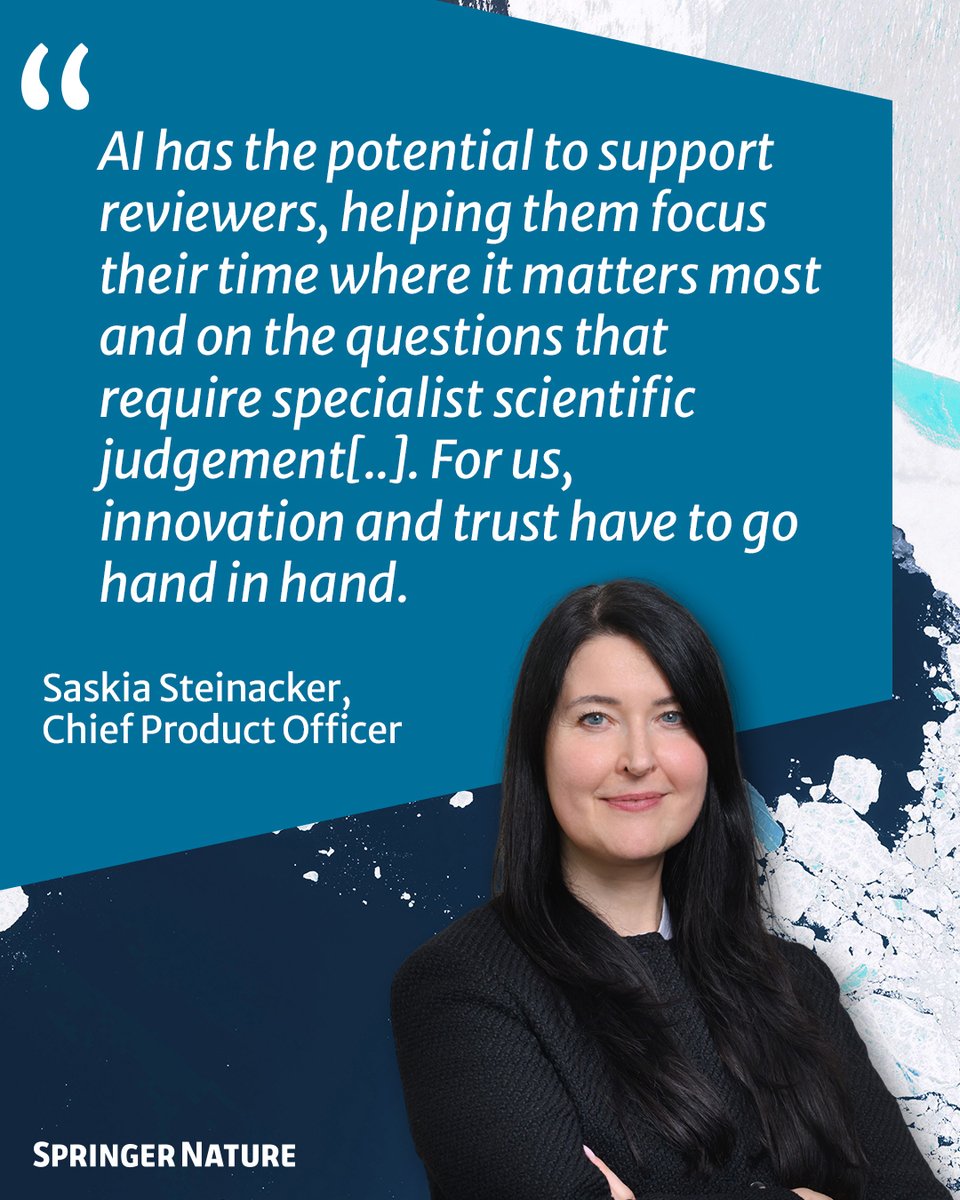
Springer Nature and Google DeepMind partner on an AI peer review assistant built on Gemini and the open-source ADK; a prototype is in testing and human reviewers keep final judgment

On Oct 26 Springer Nature, one of the world's largest research publishers, announced a research partnership with Google DeepMind to co-design an AI peer review assistant. It uses DeepMind's frontier Gemini models and builds on Google's earlier agentic research tools ScholarPeer and Deep Review to help reviewers navigate manuscripts, analyse large amounts of text, charts and figures, and flag areas that may need closer attention. The system is built with Google's open-source Agent Development Kit (ADK) and runs only inside Springer Nature's private Gemini Enterprise environment, so manuscript content stays in its secure environment. A prototype is being tested; the publisher stresses 'human first, AI second' and has not given a launch date or any performance data.

Springer Nature and Google DeepMind partner on an AI peer review assistant built on Gemini and the open-source ADK; a prototype is in testing and human reviewers keep final judgment

Key Takeaways

  • Partners: Springer Nature (publisher of the largest number of journals and books) and Google DeepMind, announced 2026-10-26 from London, Berlin and New York (press release)
  • Stack: frontier Gemini models plus Google's open-source Agent Development Kit (ADK), building on the ScholarPeer and Deep Review agentic research tools
  • Data isolation: runs only on Springer Nature's private Gemini Enterprise platform, keeping author and reviewer confidentiality
  • Status: prototype in testing; no launch date, journal coverage or accuracy figures have been published
  • Role: helps reviewers find areas needing attention, while final scientific judgment stays with human experts
Read full story

Canva launches Canva Craft, its first in-house image model: plans the layout before rendering, outputs up to 2K, renders text in 55 languages, and is open to all users and the public API

On Oct 22 Canva released Canva Craft, the first image-generation foundation model trained from scratch by its in-house lab, Canva Research. It works in two stages: a planning model writes out the composition (elements, spatial relationships, hierarchy and any text), then a rendering model produces the image at up to 2K across more than 30 aspect ratios. Training leaned heavily on millions of human-made templates from Canva's library, such as posters, social posts, slides and infographics. Canva says it debuted 4th overall on the crowdsourced DesignArena leaderboard and 1st in the People & Portraits and Landscapes & Nature categories. It is available now to all Canva users in Dream Lab and to developers through the Connect API as craft_v1_2k, with Canva MCP access coming soon.

Canva launches Canva Craft, its first in-house image model: plans the layout before rendering, outputs up to 2K, renders text in 55 languages, and is open to all users and the public API

Key Takeaways

  • Two-stage design: a planning model writes the composition (elements, relative scale, hierarchy, text), then a rendering model outputs up to 2K across 30+ aspect ratios (announcement)
  • Vendor-reported ranking: 4th overall on DesignArena, 1st in People & Portraits (of 87 models) and Landscapes & Nature (of 85), 2nd in Abstract & Patterns and 4th in Products
  • Training emphasized millions of human-made Canva templates; designers judged more than 25,000 head-to-head image pairs against leading models
  • For developers: POST /v1/image-generations on the Connect API with model set to craft_v1_2k, which spends the user's AI credits (API docs)
  • Prompts work in any language and in-image text covers 55 languages; the faster, cheaper Craft-fast and Craft-ultrafast variants and MCP access are not out yet
Read full story
Linked Models & Agents:
⚡ Canva Craft⚡ Craft-1 2K🌐 Canva

X discussion: Matt Pocock sketches the ideal "language for agents" (Rust speed, Go-sized design space, strictest verification) and names Bend; Chris Lattner replies with Mojo

At 17:23 UTC on 2026-10-25, TypeScript educator Matt Pocock (@mattpocockuk, author of Total TypeScript and AI Hero) posted (post) that the next great "language for agents" should be as fast as Rust, have as little design space as Go, and have the strictest type/verification system ever written, calling Bend "an interesting first effort". When we pulled it, the post had about 3,130 likes, 84 reposts, 264 replies, 786 bookmarks and 220K views, and it reached X's trending stories. Mojo creator Chris Lattner replied (reply) recommending Mojo and suggesting "can target all hardware" be added to the list. This is an opinion debate, not a verified conclusion.

Key Takeaways

  • Main post: post, published 17:23 UTC on 10-25, with about 3,130 likes, 84 reposts, 264 replies, 786 bookmarks and 220K views when we pulled it
  • Three criteria: Rust-level speed, a Go-sized design space (few ways to write the same thing), and the strictest type/verification system ever written, so the compiler rather than a human catches agent mistakes
  • Chris Lattner replied recommending Mojo, citing advanced type features such as linear types and symbolic constraints, and suggested adding "can target all hardware" (reply, about 40 likes when pulled)
  • Bend creator Victor Taelin (@VictorTaelin) also joined the thread, saying Bend blocking an agent from breaking an app is "working as intended"
  • No benchmarks or controlled comparisons were shared; whether Bend or Mojo suits agent coding remains personal opinion
Read full story
Linked Models & Agents:

Anthropic guide: fold most subagents back into one main agent loop with on-demand skills and tools; one customer ran about 2x faster

On 2026-10-22, Anthropic's Applied AI team published "Building agents: When to fold subagents into your main agent loop" on claude.com, along with an open-source reference implementation, anthropics/single-agent-loop-kit. The article says that across several enterprise deployments, a single agent with skills frequently beat both the one-big-prompt design and the subagent design on quality, often at lower cost and latency per task; one customer that swapped its multi-agent harness for a single loop saw roughly 2x faster runtime. Anthropic also says it cut Claude Code's system prompt for more advanced models by over 80%. Subagents still make sense in three cases: measurable context bloat, parallel tasks with disposable context, or trouble selecting tools and conflicting instructions. The piece has drawn wide discussion on X over the past two days.

Anthropic guide: fold most subagents back into one main agent loop with on-demand skills and tools; one customer ran about 2x faster

Key Takeaways

  • Original article: Building agents: When to fold subagents into your main agent loop, dated 2026-10-22 on the page
  • Customer result (vendor-reported): one customer comparing its multi-agent harness with a single agent loop saw roughly 2x faster runtime with the single loop
  • Anthropic says it cut Claude Code's system prompt for more advanced models by over 80%, partly by progressively disclosing skills and tools
  • Keep subagents in only 3 cases: measurable degradation from context bloat, parallel tasks with disposable fresh context, or difficulty choosing tools and conflicting system-prompt instructions
  • Companion open-source single-agent-loop-kit migrates in three steps (measure, combine, fold); Anthropic suggests starting with an end-to-end eval of as few as 10 golden examples
Read full story