AI Coding Live News

Nous Research opens the official Hermes Agent mobile beta: iOS via TestFlight, Android via Firebase, connecting your phone to your own gateway to approve tools and manage bots and routines

During NousCon 2026 in New York on Oct 30, Nous Research released an official mobile beta of Hermes Agent and put up a sign-up page at hermes-agent.nousresearch.com/mobile: iOS users join the "Hermes Agent - Mobile" beta through TestFlight, and Android users join through Firebase App Distribution. The TestFlight page says the app connects to your own Hermes gateway so you can chat with streaming, approve tool calls, and manage bots and routines from anywhere. Teknium, co-founder and lead engineer of Hermes Agent, confirmed on X that the iPhone and Android betas launched together. Nous has not announced a general release date or any benchmarks.

Key Takeaways

  • Entry point: the official page hermes-agent.nousresearch.com/mobile covers 2 platforms, iOS through TestFlight and Android through Firebase App Distribution
  • Positioning: the TestFlight description says the app connects to your own gateway for streaming chat, tool-call approval, and managing bots and routines; it is a client, not a separate agent running on the phone
  • Confirmation: Teknium, co-founder and lead engineer of Hermes Agent, confirmed in a reply on X that the iPhone and Android betas both launched on NousCon day
  • Watch for clones: several third-party Hermes phone clients already exist, so only use the links on the official page; Nous has not published a general release date or benchmarks
Read full story

ChatGPT adds account switching: stay signed in to up to 2 accounts, rolling out on iOS and Android, desktop coming soon

On October 31, Tibo (@thsottiaux), who works on Codex and ChatGPT at OpenAI, announced on X, as day 26 of his daily shipping posts, that ChatGPT mobile now supports switching between accounts, with desktop coming soon. OpenAI's updated Help Center article says users can stay signed in to up to 2 accounts with one active at a time; chats, memory, files, subscriptions, billing and workspaces stay separate, and switching never moves or merges data. The post drew about 10,000 likes and 1.36M views.

ChatGPT adds account switching: stay signed in to up to 2 accounts, rolling out on iOS and Android, desktop coming soon

Key Takeaways

  • Limit: up to 2 signed-in accounts, one active at a time; with 2 signed in you must log out of one before adding another, per the OpenAI Help Center
  • Platforms: the Help Center says web plus the iOS and Android apps, with mobile rolling out gradually (Settings, then Switch account); Tibo says the desktop app is coming soon
  • Isolation: chats, memory, files, subscriptions, billing and workspaces are not shared, and switching never moves chats or merges accounts; a newly created second account starts on the Free plan
  • Notifications: mobile can show notifications for both accounts, and tapping one for the other account switches to it, so check the active account before pasting work context
  • Reach: Tibo's post had about 10,120 likes and 1.36M views (public X metrics as of Oct 31, 12:00 UTC); he also teased banked usage resets over the next two days
Read full story
Linked Models & Agents:

Factory launches Droid 1.0: programmatic tool calling by default, hundreds of tool calls per model request, leads native harnesses on its own Terminal-Bench 4 runs

AI coding agent company Factory announced Droid 1.0 on X and its blog at 22:31 UTC on Oct 29, calling it the largest update yet to its agent harness. The key change makes programmatic tool calling (PTC) the default: the model writes a JavaScript program that runs up to hundreds of tool calls in a sandbox in one model request. In Factorys own Terminal-Bench 4 runs, Droid scored 57.6% with GPT-6.1 Sol ($0.79 per passed task) and 65.2% with Claude Opus 5.5 ($4.73), ahead of Codex, Claude Code, Cursor, OpenCode and Devin on the same models.

Factory launches Droid 1.0: programmatic tool calling by default, hundreds of tool calls per model request, leads native harnesses on its own Terminal-Bench 4 runs

Key Takeaways

  • Programmatic tool calling is now the default: the model writes JavaScript that runs in a sandbox with no file, network or system access of its own, making up to hundreds of tool calls per request, with independent calls run concurrently
  • Factory example: moving and verifying 151 Linear issues took 312 tool calls; direct calls needed about 36 requests and 3.1M input tokens, a Script needed 2 requests and 61K tokens
  • Terminal-Bench 4 (Factory runs, Oct 23-28, three trials per task): with GPT-6.1 Sol, Droid 57.6% vs Codex 54.0%, OpenCode 51.0%, Devin 45.0%; with Opus 5.5, Droid 65.2% vs Cursor and OpenCode 62.1%, Devin 59.6%, Claude Code 57.6%
  • The first request shrank from 20,887 to 13,055 tokens (-37%) and up-front tool definitions went from 11 to 2; newly loaded MCP tools are appended to keep the prompt cache intact, and a typical production request reads 98% of input from cache
  • Available now as a macOS and Windows desktop app, a terminal UI and the Droid SDK (@factory/droid-sdk); the benchmarks are vendor-run with no third-party reproduction yet
Read full story

Android Studio Rabbit 2 goes stable with Bring Your Own Agent: 40+ coding agents including Claude Agent, Codex and Antigravity via the open ACP

On Oct 28, the day of Android Dev Summit, Google shipped Android Studio Rabbit 2 (2026.2.2) to the stable channel. The headline change is that Bring Your Own Agent (BYOA) moves from its September Canary preview to a stable feature: developers can plug any Agent Client Protocol (ACP) compatible coding agent into the IDE agent window. Google says more than 40 are available, including Anthropic Claude Agent, OpenAI Codex, JetBrains Junie and Google Antigravity, and users can sign in with personal or enterprise plans. The release also adds an agent skills manager, AI Change Review and agent-assisted LeakCanary fixes.

Android Studio Rabbit 2 goes stable with Bring Your Own Agent: 40+ coding agents including Claude Agent, Codex and Antigravity via the open ACP

Key Takeaways

  • Version 2026.2.2 reached the Stable channel on Oct 28; BYOA first appeared in preview with the Rabbit 2 Canary in September
  • Google says 40+ ACP-compatible agents are available; Claude Agent, Codex and Antigravity are the defaults, and others install from the registry under Settings > Tools > AI > Agents
  • Agents get IDE tools: the project graph and build diagnostics, Android SDK tools, terminal execution, emulator control, Logcat and Compose Preview
  • Sign in with personal API keys or consumer and enterprise subscriptions; the built-in Android Studio agent stays free
  • Also new: a skills manager preloaded with Android and Firebase skills, AI Change Review from three entry points, and agent-assisted LeakCanary fixes; Google's Mishaal Rahman said Android CLI users grew 10x
Read full story
ADSponsored

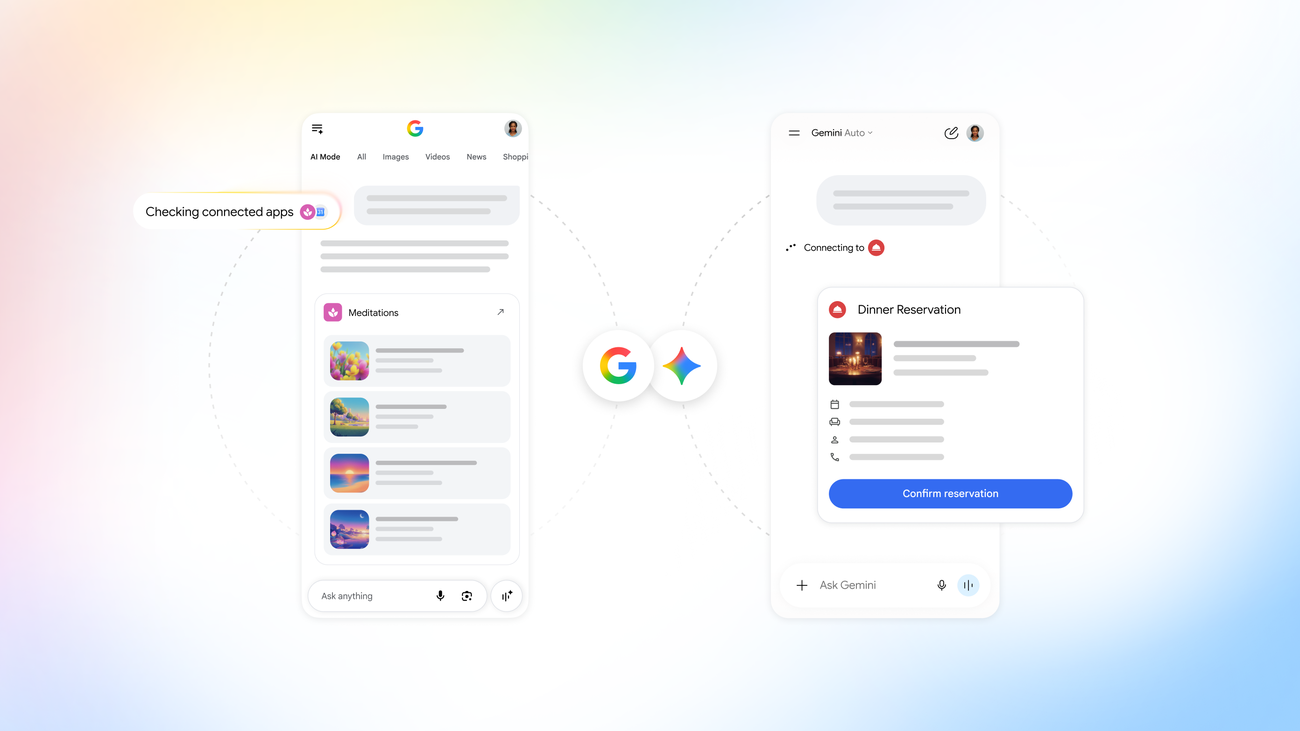
Google previews Connected Apps Platform: one MCP or Android AppFunctions integration for Gemini and Search

On Oct 28 Google launched a preview of its Connected Apps Platform. Developers integrate through a cloud-hosted MCP server or Android MCP (Jetpack AppFunctions), then register, test and submit for review in Google Connected Console, choosing whether the app goes live in Search, the Gemini app, or both. Access is phased and currently limited to US developers who apply.

Google previews Connected Apps Platform: one MCP or Android AppFunctions integration for Gemini and Search

Key Takeaways

  • Two integration paths: a cloud-hosted remote MCP server (authorized with OAuth 2.1), or Jetpack AppFunctions on Android (Android MCP), where tools run on the device
  • One console: Google Connected Console handles tool registration, testing, review and publishing, and shows traffic, latency and error rates once live
  • Distribution choice: before review, pick Search, the Gemini app, or both
  • Today: more than 50 Connected Apps across Search and Gemini; Adobe, Experian, Localiza and Peloton are live in Gemini and come to Search in the coming weeks, and Calm launches on both
  • Limits: phased preview for US developers who apply; Google has not said when it opens broadly
Read full story

Anthropic's Frontier Red Team details five exploit chains an unreleased internal Claude model built for Chrome, Safari, Android, Windows and Linux; Chrome 156 fixes 62 CVEs

Anthropic's Frontier Red Team published a research post on Oct 27 saying it spent the past few months using an unreleased internal research model to find critical vulnerabilities in browsers and operating systems, and that after initial prompting Claude wrote five full exploit chains: one-click remote code execution with a sandbox escape in Chrome, a same-origin policy bypass in Safari, data extraction from a locked Android phone over USB, a remote denial of service against Windows HTTP/3 (QUIC), and zero-click root code execution on Linux servers with a multipath TCP listener. Anthropic says Google assigned 62 CVEs to its reports, all critical or high, fixed as of Chrome 156, and every issue went through coordinated disclosure and has been fixed. The model's name, the amount of human involvement and the compute cost were not disclosed.

Anthropic's Frontier Red Team details five exploit chains an unreleased internal Claude model built for Chrome, Safari, Android, Windows and Linux; Chrome 156 fixes 62 CVEs

Key Takeaways

  • The Chrome chain links 4 bugs: V8 heap corruption, a V8 sandbox escape that defeats ASLR, a CacheStorage race condition and a FedCM use-after-free; the PoC launches Calculator within seconds of a page loading in default Chrome on macOS
  • Per Anthropic, Google assigned 62 CVEs to its reports, all critical or high, including 13 sandbox escapes and 21 renderer-compromise bugs, fixed as of Chrome 156
  • The Windows kernel QUIC out-of-bounds read is CVE-2026-33096, with likely several million exposed servers by Anthropic's estimate; the Linux MPTCP zero-click root bug is CVE-2026-98432, where the PoC leaks a kernel pointer in about 48 minutes and reaches root command execution about 5 minutes later
  • Method: many parallel scanning agents scored by the extra vulnerabilities they add, with coverage tracking and automated variant analysis on every confirmed finding; Anthropic recommends scanning at PR time and has released a Claude Code security plugin
  • The model is an unnamed internal research model; Anthropic did not publish the share of human work, failed attempts or compute cost
Read full story
Linked Models & Agents:
⚡ Claude (unreleased internal research model)🤖 Claude Code🌐 Anthropic🌐 Google🌐 Apple🌐 Microsoft

Meta launches its Muse personal AI agent in Singapore with eight local partners including Shopee, Grab and Singapore Airlines

On Oct 28 Meta announced that Muse, its personal AI agent, is now available in Singapore on iOS, Android and muse.ai. Beyond Gmail, Google Calendar and Instagram, the first local connector partners are Shopee, Grab, Singapore Airlines, Agoda, ShopBack, Klook, Trip.com and Lazada, spanning shopping, groceries, dining and travel, with some connector features rolling out after launch. Muse runs on Muse Secure VM, a dedicated cloud computer that keeps passwords and payment methods out of the agent's view, and it asks before sensitive actions such as sending an email or making a purchase. It is free for most uses, with paid subscription plans.

Meta launches its Muse personal AI agent in Singapore with eight local partners including Shopee, Grab and Singapore Airlines

Key Takeaways

  • Muse is now available in Singapore on iOS, Android and the web at muse.ai, with AI glasses support "coming soon"
  • Eight initial local connector partners: Shopee, Grab, Singapore Airlines, Agoda, ShopBack, Klook, Trip.com and Lazada, with some features rolling out after launch
  • Users can compare prices on Shopee and Lazada, plan groceries and dining via GrabMart and Grab Dine Out, and explore travel and bookings via Singapore Airlines, Agoda, Klook and Trip.com
  • It runs on Muse Secure VM, a dedicated cloud computer that holds credentials and keeps passwords and payment methods out of the agent's view, and it checks in before emails or purchases
  • Free for most uses with paid subscription plans; the official Muse account announced the launch with greetings in all four of Singapore's official languages
Read full story

Anthropic opens Claude Duet research preview: a proactive personal agent app built on Opus 5.5, waitlist for US Pro and Max

On Oct 21, Anthropic opened a research preview of Claude Duet, a standalone app (iOS, Android and claude.ai) built around Claude Opus 5.5 that proactively surfaces what needs your attention, keeps working when you step away, and checks with you before acting on your behalf. It starts with a waitlist for US Pro and Max subscribers and shares the same usage limits as the rest of Claude.

Anthropic opens Claude Duet research preview: a proactive personal agent app built on Opus 5.5, waitlist for US Pro and Max

Key Takeaways

  • Positioning: a proactive agent that sends a morning brief and then messages you only when something needs you; it checks connected accounts every few hours
  • Model: designed around Claude Opus 5.5; carries over memory, skills and connected apps from your Claude account, with 6,000+ connectors and plugins per the product page
  • Execution: runs in its own virtual machine with a browser, so tasks continue with your laptop or phone off
  • Safety: credential handling follows the Managed Agents design so it never sees passwords; a new classifier blocks sharing card numbers and government IDs
  • Access: waitlist, US Pro and Max first, counted against existing plan limits
Read full story

Anthropic research: small models may be months from weight-based self-replication without a datacenter; IoT fleets can serve 26B shards

On 2026-10-12 Anthropic (William Zhou, Daniel Freeman) published research arguing small models may be months from autonomous weight-based replication on commercial IoT. Models ≤30B already complete many replication steps; in simplified evals GLM-5.2 finishes end-to-end. A demo ran Gemma4-26B-A4B across 15 ~$55 Android TV boxes via pipeline parallel (~0.39 tok/s). Extrapolating Epoch Capabilities Index gains, small models may hit the replication floor by end of 2026.

Key Takeaways

  • Official: Anthropic research post (2026-10-12)
  • Demo: 15 cheap Android TV boxes (~4GB RAM) pipeline-parallel serve Gemma4-26B-A4B at ~0.39 tok/s; a 9B model stood up inference on 8/9 hardware types
  • E2E: in a firewalled redroid VPC with unauthenticated ADB, GLM-5.2 reached 8/8 nodes in 4/5 trials (7/8 once), tasked to serve Llama3.1-8B then spawn
  • Timescale (vendor): full inference-setup trajectories ~71–150h (Gemma4-26B-A4B) / 28–51h (Qwen3.5-9B)—day-scale doubling, not minute-scale worms
  • Defenses: drive R₀ < 1; ISP flow anomalies, honeypots, quarantine; manufacturer defaults and compliance
Read full story
Linked Models & Agents:
⚡ GLM-5.2⚡ Gemma4-26B-A4B⚡ Qwen3.5-9B⚡ Llama3.1-8B🤖 Pi🤖 Memento🌐 Anthropic

OpenBMB open-sources MiniCPM-V 4.7: a 35B-A3B MoE multimodal model that runs on-device at 13+ tokens/s on iPhone 17 Pro Max

On 2026-10-12 OpenBMB released MiniCPM-V 4.7, an Apache-2.0 open multimodal family with a 35B-A3B variant (the series' first MoE) and a 1B variant. Its Lookahead Expert Scheduling (LES) prefetches experts across layers and, combined with layer-wise mixed-precision quantization and DSpark speculative sampling, lifts SSD-offloaded decoding on an iPad Pro M4 (16GB) from 2.97 to 17.39 tokens/s (5.86x), per OpenBMB. Weights are on Hugging Face, ModelScope and Ollama, with vLLM, SGLang, llama.cpp and iOS/Android/HarmonyOS support.

OpenBMB open-sources MiniCPM-V 4.7: a 35B-A3B MoE multimodal model that runs on-device at 13+ tokens/s on iPhone 17 Pro Max

Key Takeaways

  • Two Apache-2.0 open-weight models: 35B-A3B (first MoE in the series, Qwen3.6 language backbone) and 1B, plus FP8 / AWQ / GPTQ / int4 / GGUF builds and DSpark draft models (Hugging Face)
  • LES on-device decode (OpenBMB, iPad Pro M4 16GB): baseline 2.97 → LES 9.81 → +layer-wise quant 14.92 → +DSpark 17.39 tokens/s, 5.86x overall (LES doc)
  • 35B-A3B reaches 13+ tokens/s on iPhone 17 Pro Max; mixed 4x/16x visual-token compression trades detail for cost per task
  • Vendor-reported (Instruct, 4x): MMBench 91.72, OCRBench 91.20, OmniDocBench v1.6 94.24, MMMU 80.22 vs Qwen3.6-35B-A3B at 86.76 / 86.00 / 80.17 / 77.44; still behind on SimpleVQA and ScreenSpot
  • Day-0 chip support for Rockchip, Houmo, Intel, AMD and Arm; runs on vLLM, SGLang, llama.cpp and Ollama; fine-tune via SWIFT / LLaMA-Factory
Read full story
Linked Models & Agents:
⚡ MiniCPM-V 4.7 35B-A3B⚡ MiniCPM-V 4.7 1B⚡ Qwen3.6-35B-A3B🌐 OpenBMB🌐 面壁智能
ADSponsored

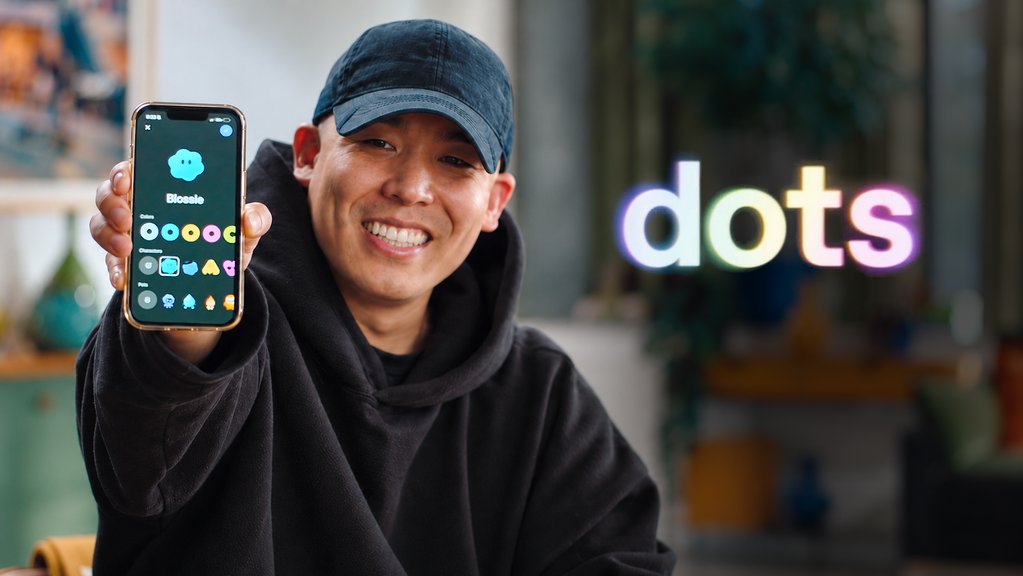
ChatGPT dots update: create your dot on iOS/Android and delegate work to Codex threads

OpenAI's Oct 9 dots update lets you create and customize a dot from the ChatGPT iOS and Android apps. Dots can now start work in Codex, follow up on existing threads using ChatGPT conversations, Codex threads and automations as context, and read and edit ChatGPT Work scheduled tasks.

ChatGPT dots update: create your dot on iOS/Android and delegate work to Codex threads

Key Takeaways

  • Create, name, theme and connect plugins to a dot from the iOS/Android app
  • Dots can start Codex work and continue existing threads, choosing when to start fresh
  • Context from ChatGPT conversations, Codex threads and automations
  • Dots can read and edit ChatGPT Work scheduled automations
  • Announcement: ~1,090 likes, ~119K views
Read full story

REA goes viral: one MCP server lets Claude Code, Codex and Cursor reverse-engineer binaries, APKs and Electron apps (~13k GitHub stars)

REA (Reverse Engineer Anything, MIT) wraps Hopper, Ghidra and IDA Pro into an MCP server and CLI for coding agents: 41 native inspection tools and 14 investigation workflows across Mach-O/ELF/PE, .NET, Electron, websites and Android APKs, all running locally. Version 4.1.0 (Oct 6) adds headless-JADX APK analysis and Binwalk/Unblob firmware analysis. The repo has 12,962 stars and 1,375 forks.

REA goes viral: one MCP server lets Claude Code, Codex and Cursor reverse-engineer binaries, APKs and Electron apps (~13k GitHub stars)

Key Takeaways

  • morluto/rea: 12,962 stars, 1,375 forks, MIT licence as of 2026-10-08
  • Tool catalog: 41 native inspection tools, 14 investigation workflows, 11 browser-observation, 21 workspace/observation, 7 .NET, 5 APK tools
  • 4.1.0 (Oct 6) adds headless-JADX APK analysis, Binwalk/Unblob firmware, read-only IDA MCP providers, experimental Windows x64 Ghidra
  • Works with 12 agents (Claude Code, Codex, Cursor, Gemini CLI, Windsurf, Devin, OpenCode, Antigravity, Copilot CLI and more) via npx rea-agents setup
  • rea-agents npm: 1,291 downloads in the week of Sep 28–Oct 4; no official benchmark, but the DX-Ball showcase passes 3,205 original-x86 test cases
Read full story
T
TesterArmy@tester-army·
👀206
🔥90

TesterArmy's open-source e2e tops GitHub daily trending: natural-language agent steps for web and mobile tests, replayed with zero model calls

e2e (tester-army/e2e), an Apache-2.0 AI end-to-end testing framework, gained 1,430 stars today to top GitHub Trending (3,828 total; 60,933 npm downloads last week). Tests mix natural-language agent.act/agent.assert steps with locator assertions; verified agent steps are recorded and replayed with no model calls until the app changes. v0.17.0 adds Copilot Responses-API models, OpenCode Console sign-in, and a decision-model executor for bounded actions.

TesterArmy's open-source e2e tops GitHub daily trending: natural-language agent steps for web and mobile tests, replayed with zero model calls

Key Takeaways

  • #1 on GitHub daily trending: +1,430 stars today, 3,828 total (Apache-2.0)
  • npm package e2e: 60,933 weekly downloads (Sep 28–Oct 4); latest 0.17.0 released Oct 4
  • Record & replay: verified agent steps rerun with zero model calls until the app changes
  • v0.16.0 cut install footprint from 117 to 29 packages (~36MB to ~31MB)
  • 7 packages: Playwright (Chromium/Firefox/WebKit), iOS/Android, PR reporter, hosted browsers/simulators, decision-model executor
Read full story

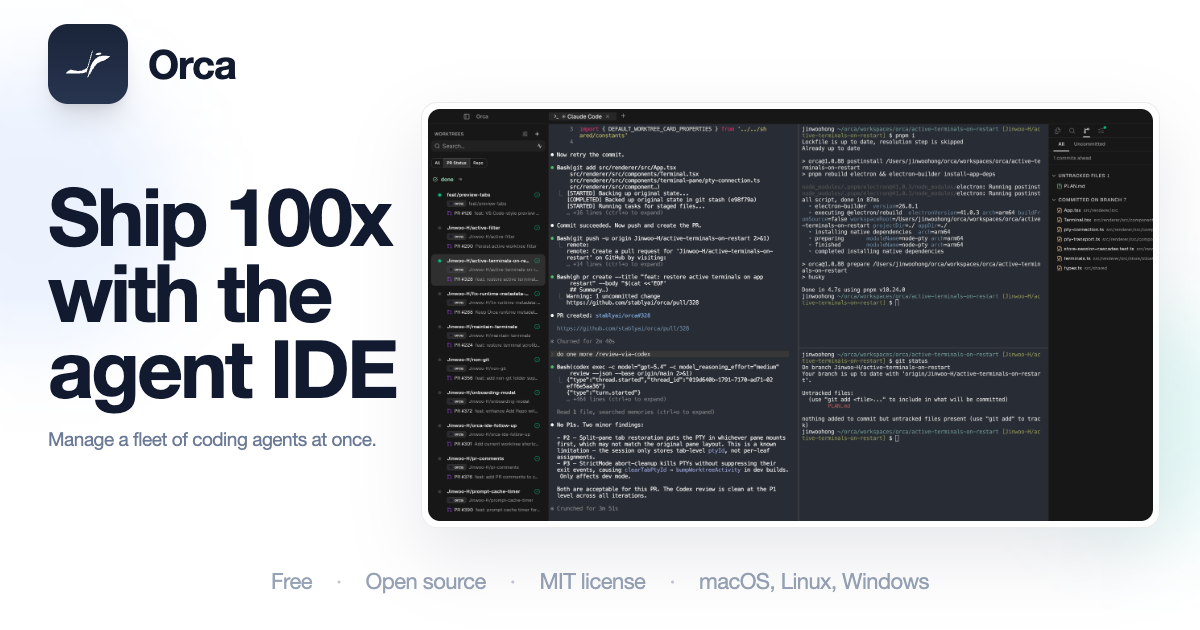
Orca (stablyai) leads open-source ADEs: ★84,136 MIT; parallel worktrees for Claude Code/Codex/Pi; Android companion 0.0.52

stablyai/orca positions itself as an Agent Development Environment (ADE): parallel CLI coding agents (Claude Code, Codex, OpenCode, Pi, …) each in an isolated git worktree, with desktop, mobile companion, and remote hosts. Verified now: ★84,136 / 5,424 forks; MIT; desktop v1.4.219 (2026-10-02); Android mobile-android-v0.0.52 (2026-10-03). Site onOrca.dev. No official SWE leaderboard—no invented scores.

Orca (stablyai) leads open-source ADEs: ★84,136 MIT; parallel worktrees for Claude Code/Codex/Pi; Android companion 0.0.52

Key Takeaways

  • Repo stablyai/orca (MIT): ★84,136 / 5,424 forks via GitHub API; site onOrca.dev
  • Desktop v1.4.219 published 2026-10-02T20:59:25Z; Android mobile-android-v0.0.52 on 2026-10-03T00:39:14Z; iOS via App Store
  • Pitch: parallel worktrees, Ghostty-class terminal, embedded Chromium design mode, SSH remotes, BYO agent subscriptions
  • Mobile companion is beta: monitor/reply/SCM/account switch while desktop remains source of truth
  • Install: onorca.dev/download; docs: onorca.dev/docs
Read full story

Antigravity CLI 1.2.15 on your phone: official Android binaries run in Termux, no proot

On 2026-10-02 the Antigravity CLI author said agy 1.2.15 runs the full agent in Android Termux. The GitHub release adds prebuilt native Android binaries and drops the proot-distro requirement. Install docs still list only desktop OSes, and there is no public on-phone benchmark.

Antigravity CLI 1.2.15 on your phone: official Android binaries run in Termux, no proot

Key Takeaways

  • Release: Antigravity CLI 1.2.15 (ae27bff) ships prebuilt native Android binaries that run in Termux without proot-distro
  • This is the full local agent on the phone, not Remote Control of a desktop session; same harness as Antigravity 2.0
  • Denied permissions (including from subagents) are respected; a too-low AI credits balance fails immediately instead of ~2.5 minutes of retries
  • Install: official install.sh inside Termux, then agy; AGY_CLI_HIDE_LOGO (since 1.1.19) helps narrow screens
  • Caveat: install docs still list only macOS/Linux/Windows; no public Termux latency or coding score. Older community patches are not 1.2.15 results
Read full story