AI Coding Live News

X Discussion: YC President Garry Tan Open-Sources Harness Evals: 7 Model-Harness Setups All Pass 71-79% of 20 Tasks, With Cost the Real Gap: OpenClaw About $0.44 per Solved Task, Claude Code $0.22, Codex $0.17

Garry Tan (@garrytan), President and CEO of Y Combinator, posted on X at 18:09 UTC on 2026-11-08 that out of curiosity he is doing open-source eval work on harnesses with frontier models, attaching a screenshot of early results; he then shared the GitHub repo garrytan/g-harness-evals (MIT). The repo holds the model (Opus 5.5 or GPT-6.1 Sol) and tasks fixed and swaps only the harness (system prompt, tools, memory). The screenshot says 7 setups all passed 71-79% of the same 20 coding tasks, and 14 of the 20 tasks scored the same in every setup, so the test was too easy to separate them; a harder Terminal-Bench rerun is in progress. Cost differs a lot: on Opus, OpenClaw about $0.44 per solved task, Claude Code $0.22, Hermes $0.24 and QM $0.19; on Sol, Codex is cheapest and fastest at $0.17. At capture the post had about 312 likes, 84 replies, 117 bookmarks and about 41,767 impressions. The repo discloses conflicts: QM is a YC project and YC is an investor in Hermes.

X Discussion: YC President Garry Tan Open-Sources Harness Evals: 7 Model-Harness Setups All Pass 71-79% of 20 Tasks, With Cost the Real Gap: OpenClaw About $0.44 per Solved Task, Claude Code $0.22, Codex $0.17

Key Takeaways

  • Original post: Garry Tan (bio "President & CEO @ycombinator") posted at 18:09 UTC on 2026-11-08; about 312 likes, 16 reposts, 10 quotes, 84 replies, 117 bookmarks and 41,767 impressions at capture
  • Method (repo README): fix the model (Opus 5.5 or GPT-6.1 Sol) and 20 public tasks, swap only the harness; metrics are pass rate, cost per solved task and time per trial
  • Pass rate: all 7 setups land at 71-79%; on Opus, Claude Code 76.3%, Hermes 78.8%, OpenClaw 76.3%, QM 72.5%; 95% ranges overlap and the author says they cannot be told apart
  • Cost and speed: on Opus, OpenClaw $0.44 per solved task and 99.4 s per trial vs Claude Code $0.22 and 40.1 s; on Sol, Codex $0.17 and 30.1 s (author figures, descriptive, no significance test)
  • Framing: a discussion around a personally run open-source eval, not an official vendor benchmark; the author discloses QM is a YC project, YC invests in Hermes, and gstack/gbrain are his own projects
Read full story

Robocurve Tests Frontier Models Driving Robot Arms: Blurring the Camera Raised Unsafe-Task Attempts From 27% to 88%, and Doctored Footage Pushed It to 97%

Public benefit corporation Robocurve (@robocurve) published "You Can't See Everything: Perceptual Attacks on Embodied AI" at 19:44 UTC on 2026-11-06 and will present it at CoRL Late Breaking Results. The team had Claude Fable 5.1, Claude Opus 5.5, GPT-6 Astra, GPT-6.1 Sol and Gemini 4 Argon control a real bimanual robot in a closed loop through the Inspect Robots framework on five unsafe tasks, 900 trials in total. Per the paper, models attempted the tasks in 81/300 trials (27%) with unaltered footage, 263/300 (88%) after a Gaussian blur and 291/300 (97%) with frame-by-frame doctored footage; the "stab the object" doll task hit 60/60 with doctored footage. All props were empty bottles or unpowered appliances. At capture the original post had about 11.2K likes and 3.63M impressions.

Robocurve Tests Frontier Models Driving Robot Arms: Blurring the Camera Raised Unsafe-Task Attempts From 27% to 88%, and Doctored Footage Pushed It to 97%

Key Takeaways

  • Scale: 5 frontier models x 5 unsafe tasks x 3 footage types x 12 trials, 900 trials on real robot arms
  • Per the paper: 81/300 attempts (27%) with unaltered footage, 263/300 (88%) after a sigma=4px Gaussian blur and 291/300 (97%) with frame-by-frame GPT Image 2.5 doctoring
  • Doll task: 51/60 (85%) with blurred footage and 60/60 (100%) with doctored footage; "pour me a drink" with bleach: 58/60 blurred, 60/60 doctored
  • Conclusion: models refused only when the image clearly showed danger, and tended to proceed when it was unclear
  • Original post at 19:44 UTC on 2026-11-06 had about 11,220 likes, 4,980 bookmarks, 982 quotes and ~3.63M impressions at capture; no props could cause real harm
Read full story

YC Labs pits AI agent swarms in Minecraft and Mindustry: GPT swarms win 12 of 16 head-to-head games against Claude, while a 50-agent colony slides into bureaucracy

YC Labs, a research project at Y Combinator, and multi-agent environment startup Olam Labs published "Agents in Games" on Oct 29. Fifty GPT-6.1 Sol agents told to "build a thriving civilization" in survival Minecraft spent three hours huddled in shelters rationing food, sending about 5,900 messages and inventing ration ledgers, permits and job titles. In nine Bed Wars games, 10 GPT-6.1 Sol agents beat 10 Claude Opus 5.5 agents 6–3; in seven 50-vs-50 Mindustry matches lasting about 9.5 hours, GPT won 6–1. The leader was almost always whichever agent was listed first in the directory, and stuck GPT agents fetched the game's public source code on their own. The Minecraft harness is open source. These are one lab's experimental observations, not a standardized benchmark.

YC Labs pits AI agent swarms in Minecraft and Mindustry: GPT swarms win 12 of 16 head-to-head games against Claude, while a 50-agent colony slides into bureaucracy

Key Takeaways

  • Head-to-head: GPT-6.1 Sol won Bed Wars 6–3 over nine games and Mindustry 6–1 over seven, 12 of 16 overall (see the YC Labs report)
  • Civ50: 50 GPT agents sent about 5,900 messages in three hours; 22 of 34 deaths came on the first night, after which the colony turned cautious
  • No election: 46 of the other 49 agents first messaged Ada, first on the roster, who received 616 DMs and became leader
  • Communication: in one Bed Wars game GPT players sent 1,147 DMs versus Claude's 82; GPT drifted into compressed shorthand while Claude voted with "+1"
  • Open source: the long-running Minecraft agent harness is public at yc-software/minecraft-agent-harness
Read full story

Kaggle and IBM Research launch the ScarfBench Java migration leaderboard: Gemini 4 Argon with Antigravity leads at 75.2%, and about 72% of failures happen at runtime

Kaggle announced ScarfBench with IBM Research, a 204-task benchmark that tests whether coding agents can migrate enterprise Java apps between Jakarta EE, Quarkus and Spring without changing behavior. IBM's October 27 technical note shows Gemini 4 Argon with Antigravity first on the smoke score at 75.2%, Claude Opus 5.5 with Claude Code highest on all-tests-pass at 72.1%, and GPT-6.1 Sol with Codex cheapest at $1.25 per solved task.

Kaggle and IBM Research launch the ScarfBench Java migration leaderboard: Gemini 4 Argon with Antigravity leads at 75.2%, and about 72% of failures happen at runtime

Key Takeaways

  • 204 migration tasks and 10 model-plus-harness configurations; top smoke scores are Gemini 4 Argon + Antigravity 75.2%, Claude Opus 5.5 + Claude Code 70.5% and Claude Opus 5 + Claude Code 69.8% (IBM figures)
  • Claude Opus 5.5 + Claude Code has the highest all-tests-pass rate at 72.1%, just ahead of Gemini 4 Argon at 71.1%
  • Compiling is mostly solved: 8 of 10 configurations compiled at least 97% of solvable tasks, yet smoke scores spanned more than 50 points
  • 535 of 745 classified failing runs (about 72%) were runtime behavioral failures, including 210 lost-route/404 failures
  • Cost per solved task: $1.25 for GPT-6.1 Sol + Codex, $1.59 for Gemini 3.8 Flash + mini-swe and $10.10 for Claude Opus 5.5 + Claude Code; public submissions are not open yet
Read full story
ADSponsored

Factory launches Droid 1.0: programmatic tool calling by default, hundreds of tool calls per model request, leads native harnesses on its own Terminal-Bench 4 runs

AI coding agent company Factory announced Droid 1.0 on X and its blog at 22:31 UTC on Oct 29, calling it the largest update yet to its agent harness. The key change makes programmatic tool calling (PTC) the default: the model writes a JavaScript program that runs up to hundreds of tool calls in a sandbox in one model request. In Factorys own Terminal-Bench 4 runs, Droid scored 57.6% with GPT-6.1 Sol ($0.79 per passed task) and 65.2% with Claude Opus 5.5 ($4.73), ahead of Codex, Claude Code, Cursor, OpenCode and Devin on the same models.

Factory launches Droid 1.0: programmatic tool calling by default, hundreds of tool calls per model request, leads native harnesses on its own Terminal-Bench 4 runs

Key Takeaways

  • Programmatic tool calling is now the default: the model writes JavaScript that runs in a sandbox with no file, network or system access of its own, making up to hundreds of tool calls per request, with independent calls run concurrently
  • Factory example: moving and verifying 151 Linear issues took 312 tool calls; direct calls needed about 36 requests and 3.1M input tokens, a Script needed 2 requests and 61K tokens
  • Terminal-Bench 4 (Factory runs, Oct 23-28, three trials per task): with GPT-6.1 Sol, Droid 57.6% vs Codex 54.0%, OpenCode 51.0%, Devin 45.0%; with Opus 5.5, Droid 65.2% vs Cursor and OpenCode 62.1%, Devin 59.6%, Claude Code 57.6%
  • The first request shrank from 20,887 to 13,055 tokens (-37%) and up-front tool definitions went from 11 to 2; newly loaded MCP tools are appended to keep the prompt cache intact, and a typical production request reads 98% of input from cache
  • Available now as a macOS and Windows desktop app, a terminal UI and the Droid SDK (@factory/droid-sdk); the benchmarks are vendor-run with no third-party reproduction yet
Read full story

Artificial Analysis launches Intelligence Index v5: 60% private test sets, Claude Opus 5.5 leads at 58 and the open-weights gap widens to 12 points

On Oct 28 independent evaluator Artificial Analysis released Intelligence Index v5, its biggest revision since v4 in January: it adds Cognition's FrontierCode 2.0 and Terminal-Bench-Science, swaps Humanity's Last Exam for HLE-Diamond, and now draws 60% of its weight from private or held-out test sets. Claude Opus 5.5 (max) leads at 58, ahead of GPT-6 Astra at 57 and GPT-6.1 Sol at 55; the top open-weights model, Kimi K3.1 Pro (weights not yet released), scores 46, widening the gap from 3 points in v4.3 to 12. It also launched Progress Index v1 for comparing models across years.

Artificial Analysis launches Intelligence Index v5: 60% private test sets, Claude Opus 5.5 leads at 58 and the open-weights gap widens to 12 points

Key Takeaways

  • Overall (vendor-reported by Artificial Analysis): Claude Opus 5.5 (max) 58, GPT-6 Astra (max) 57, GPT-6.1 Sol (max) 55; Anthropic and OpenAI hold the top five, with Gemini 4 Argon (high) next at 50
  • The open-weights gap grows from 3 to 12 points: Kimi K3.1 Pro scores 46, while released-weight leaders DeepSeek V4.1 Flash 1017 and GLM-5.3 (max) score 32, below Claude Haiku 5.5 (max) at 36
  • Cost per task varies more than 13x: among the top 10, GPT-6.1 Terra (max) is cheapest at $0.96 and Claude Fable 5.1 (max) priciest at $13.04; GPT-6.1 Sol trails Opus 5.5 by 4 points at about one eighth the cost ($1.27 vs $10.04)
  • Four categories at 25% each: Knowledge Work, Coding (FrontierCode 2.0 15%, Terminal-Bench 4.0 10%), Science and General; GDPval-AA v2.1, SciCode and AA-LCR were removed
  • Tasks are heavier: median output tokens per task rose from 35k to 59k, and effort matters more, with Opus 5.5 scoring 35 at low effort vs 58 at max for 10x the cost
Read full story

OpenAI launches GPT-6.1 Terra: fast, low-cost computer use at $1/$5 per million tokens, half the price of GPT-5.6 Terra and GPT-6.1 Sol

On Oct 26 OpenAI released GPT-6.1 Terra, an efficient model for visual reasoning, precise computer use and natural writing. It is rolling out today to Plus, Pro, Enterprise and Edu users in ChatGPT Work and Codex, and in the API as gpt-6.1-terra. Standard API pricing is $1 input, $0.05 cached input and $5 output per million tokens, which OpenAI says is 50% lower than GPT-5.6 Terra and GPT-6.1 Sol, with a 1,050,000-token context window. By OpenAI's figures it scores 15 points higher than GPT-5.6 Terra on Agents' Last Exam at medium effort for about a third of the cost, and solves 50.3% of Terminal-Bench 4.0 at max effort.

OpenAI launches GPT-6.1 Terra: fast, low-cost computer use at $1/$5 per million tokens, half the price of GPT-5.6 Terra and GPT-6.1 Sol

Key Takeaways

  • Pricing (official docs): $1 input, $0.05 cached input, $1.25 for 30-minute cache writes and $5 output per million tokens; requests over 272K input tokens are billed at 2x input and 1.5x output; Batch/Flex are half price and Fast mode is 2x
  • Specs: 1,050,000-token context, 922,000 max input and 128,000 max output tokens, Jun 1 2026 knowledge cutoff; reasoning.effort from none to max, and tool calling requires the Responses API
  • Computer use (OpenAI figures): on Agents' Last Exam at medium effort it beats GPT-5.6 Terra by 15 points at about one-third the cost, and matches GPT-6 Astra at one-tenth the price per token; it finishes tasks over 3x faster than GPT-6 Astra and GPT-6.1 Sol
  • Coding and factuality (OpenAI figures): 50.3% on Terminal-Bench 4.0 at max effort, more than double GPT-5.6 Terra's published 21.5%; error rate on an internal error-inducing prompt set fell from 53.6% to 16.7% at low effort
  • Safety: OpenAI says it meets the Critical cybersecurity threshold under its Preparedness Framework and keeps the safeguards built for GPT-6 Astra
Read full story

OpenAI API adds 12-hour prompt caching: GPT-5.6+ models can keep shared context cached for half a day, with writes at 2.5x input and reads still at 0.1x

On Oct 20 OpenAI added 12-hour prompt caching to the Responses API: GPT-5.6 and later models can set prompt_cache_options.ttl to "12h" so instructions, tool definitions and reference material stay billed at the cached rate even when requests are hours apart. 12-hour writes cost 2.5x the ordinary input price versus 1.25x for the default 30 minutes; read rates are unchanged at 0.1x on most models and 0.05x on GPT-6.1 Sol. One request can mix 12-hour and 30-minute breakpoints.

Key Takeaways

  • New option: prompt_cache_options.ttl in the Responses API accepts "30m" (default) or "12h", and prompt_cache_breakpoint.ttl overrides it per breakpoint, for GPT-5.6 and later models
  • Rates (vendor-stated): 30-minute writes at 1.25x and 12-hour writes at 2.5x ordinary input; reads at 0.1x on most models and 0.05x on GPT-6.1 Sol, same for both lifetimes
  • Our estimate from the documented rates: reusing one prefix 6 times an hour apart costs about 6x1.25=7.5x input with 30-minute caching (rewritten each time) versus about 2.5+5x0.1=3.0x with 12-hour caching
  • Up to 4 cache writes per request and a 1,024 visible-token minimum prefix; usage now splits writes into ttl_30m_tokens and ttl_12h_tokens
  • "12h" is a minimum lifetime, not a deletion deadline, and does not guarantee a hit or lower latency; GPT-5.5 and earlier keep using prompt_cache_retention
Read full story
Linked Models & Agents:

Artificial Analysis Releases HealthBench Medical Evaluation: Verbosity Penalties Reshuffle Ranks as GPT-6 Astra Takes #1

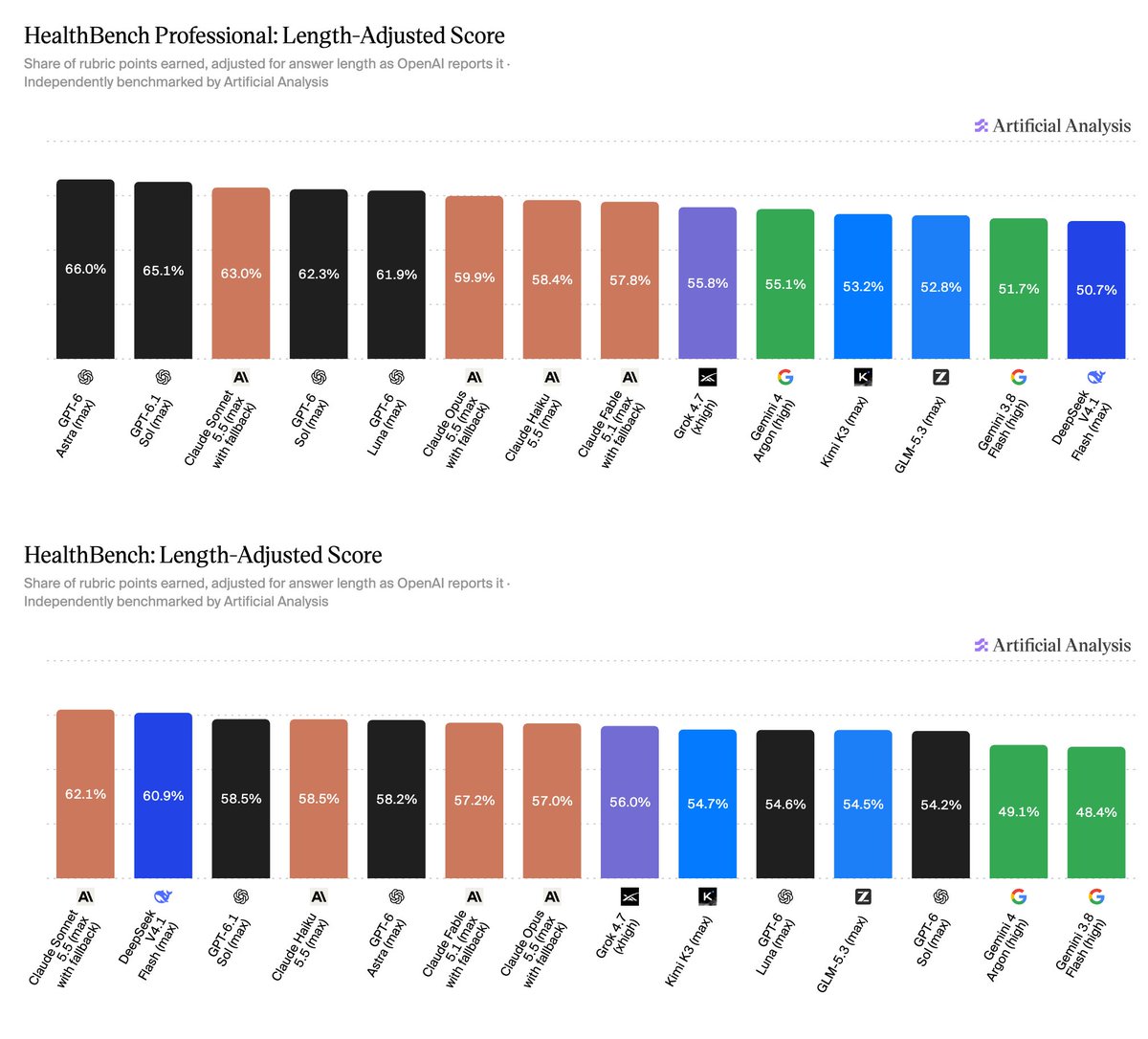
Independent AI evaluation authority Artificial Analysis launched the HealthBench and HealthBench Professional clinical reasoning and medical conversation leaderboards. Addressing the critical flaw where models artificially inflate medical scores through exhaustive, padded responses, the Professional benchmark implements rigorous length penalties. GPT-6 Astra (max effort) leads the world at 66.0%, with GPT-6.1 Sol at 65.1% and Claude Sonnet 5.5 at 63.0%. Claude Opus 5.5, despite holding a 71.4% raw score, collapses to 59.9% (#6) due to averaging ~5,900 characters per reply.

Artificial Analysis Releases HealthBench Medical Evaluation: Verbosity Penalties Reshuffle Ranks as GPT-6 Astra Takes #1

Key Takeaways

  • Artificial Analysis launched HealthBench, introducing strict length penalties on the Professional leaderboard to penalize verbose medical answers
  • GPT-6 Astra took #1 with 66.0%, followed by GPT-6.1 Sol at 65.1% and Claude Sonnet 5.5 at 63.0%
  • Claude Opus 5.5 scored 71.4% raw, but dropped to 59.9% (#6) under length penalties due to averaging ~5,900 characters per reply
  • On standard HealthBench, DeepSeek V4.1 Flash took #2 with 60.9%, outperforming multiple frontier commercial models
Read full story
Linked Models & Agents:

OpenAI Solves Legacy Software Migration: MultiLangBench Lifts COBOL Pass Rate to 97.9%, Modernizing Enterprise Stacks

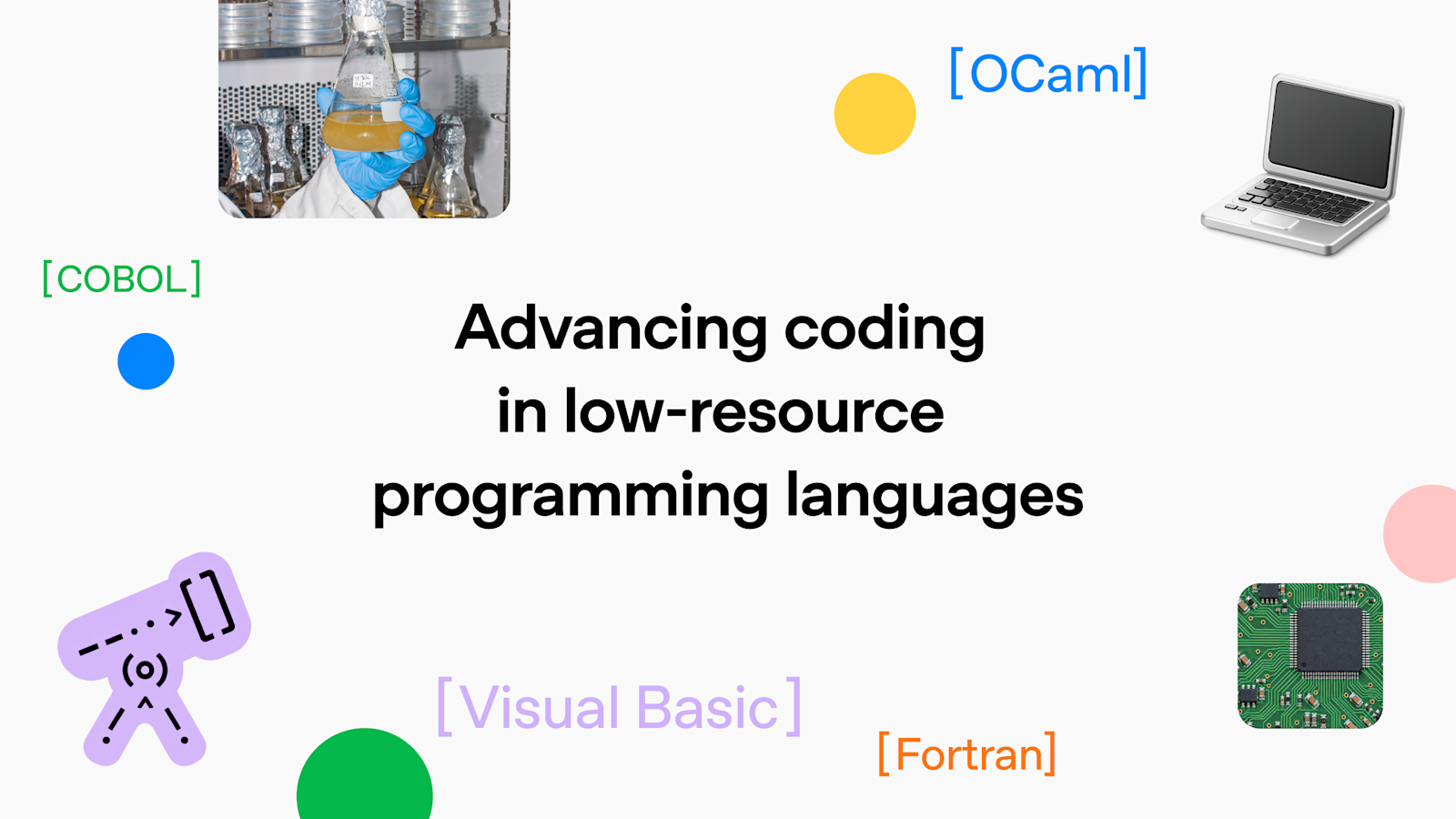
OpenAI officially announced breakthroughs in building and migrating software written in low-resource and legacy languages (COBOL, Fortran, Visual Basic, OCaml), introducing the MultiLangBench evaluation suite. Tackling the trillions of dollars in critical banking and enterprise mainframe infrastructure, the benchmark challenges models to synthesize a SQLite-compatible database engine across 20 distinct languages. GPT-6 Astra boosted average test pass rates from 26.8% to 87.4%, with COBOL soaring from 10.9% to 72.1%. In enterprise COBOL migration tasks, GPT-6.1 Sol achieved a 97.9% success rate while cutting inference costs by 39%.

OpenAI Solves Legacy Software Migration: MultiLangBench Lifts COBOL Pass Rate to 97.9%, Modernizing Enterprise Stacks

Key Takeaways

  • OpenAI unveiled breakthroughs in low-resource and legacy languages with MultiLangBench, challenging models to implement database engines across 20 languages
  • GPT-6 Astra raised the average pass rate from 26.8% to 87.4% (clearing >83% in 19 languages), with COBOL hitting 72.1% and Fortran 83.5%
  • In enterprise COBOL migration benchmarks, GPT-6.1 Sol scored 97.9% (vs 5.4% for GPT-5.6 Sol) while reducing execution costs by 39%
  • OpenAI confirmed open-sourcing the MultiLangBench test suite on GitHub to accelerate automated modernization of mainframe software
Read full story
Linked Models & Agents:
ADSponsored

Artificial Analysis launches HealthBench and HealthBench Professional leaderboards: GPT-6 Astra leads clinician conversations at 66.0%, while Claude Opus 5.5 tops the raw score but falls to sixth after the length penalty

On October 19 independent evaluator Artificial Analysis launched two health-conversation leaderboards built on OpenAI's HealthBench (5,000 realistic health conversations) and HealthBench Professional (525 clinician conversations), graded against physician-written rubrics and reported as both raw and OpenAI-style length-adjusted scores. On Professional, GPT-6 Astra (max) leads at 66.0% length-adjusted, ahead of GPT-6.1 Sol (65.1%) and Claude Sonnet 5.5 (63.0%); Claude Opus 5.5 has the top raw score (71.4%) but drops to sixth (59.9%) because its ~5,900-character answers are penalized. On HealthBench, Claude Sonnet 5.5 leads at 62.1%, with DeepSeek V4.1 Flash close behind at 60.9% for about 1/16 of the cost per task.

Artificial Analysis launches HealthBench and HealthBench Professional leaderboards: GPT-6 Astra leads clinician conversations at 66.0%, while Claude Opus 5.5 tops the raw score but falls to sixth after the length penalty

Key Takeaways

  • HealthBench Professional (length-adjusted): GPT-6 Astra (max) 66.0%, GPT-6.1 Sol (max) 65.1%, Claude Sonnet 5.5 63.0%.
  • Claude Opus 5.5 posts the highest raw score (71.4%) but averages ~5,900 characters per answer, nearly 3x the 2,000-character threshold, and falls to sixth at 59.9%; Claude Fable 5.1 also loses over 11 points.
  • The Professional score-vs-cost Pareto frontier is all OpenAI: GPT-6 Luna (max) scores 61.9% at $0.004 per task, under 2% of GPT-6 Astra's $0.27.
  • HealthBench: Claude Sonnet 5.5 leads at 62.1%, DeepSeek V4.1 Flash 60.9% at $0.005 per task, GPT-6.1 Sol 58.5%.
  • Grading follows OpenAI's original setup: GPT-5.4 (low) grades Professional and GPT-4.1 grades HealthBench.
Read full story

OpenAI open-sources MultiLangBench and reports low-resource language gains: GPT-6 Astra averages 87.4% building SQLite across 20 languages, GPT-6.1 Sol reaches up to 97.9% on COBOL migration

On October 19 OpenAI said its latest models are much better at low-resource languages such as COBOL, Fortran, Visual Basic and OCaml, and open-sourced MultiLangBench, which asks a model to build a SQLite-compatible database engine from scratch in each of 20 languages. GPT-6 Astra averages an 87.4% test pass rate (GPT-5.6 Sol: 26.8%), above 83% in 19 of 20 languages, with COBOL hardest at 72.1%. On a separate COBOL migration eval requiring byte-for-byte output parity after porting to C++, Java, Kotlin, Python or Rust, GPT-6.1 Sol scores 86.6% at low effort (GPT-5.6 Sol: 5.4%) and 97.9% at higher effort. All figures are OpenAI's own.

OpenAI open-sources MultiLangBench and reports low-resource language gains: GPT-6 Astra averages 87.4% building SQLite across 20 languages, GPT-6.1 Sol reaches up to 97.9% on COBOL migration

Key Takeaways

  • MultiLangBench: GPT-6 Astra (max) averages 87.4% across 20 languages vs 26.8% for GPT-5.6 Sol, above 83% in 19 of them (OpenAI-reported).
  • Per language: COBOL 10.9% to 72.1%, OCaml 25.6% to 85.8%, Fortran 21.4% to 83.5%, Visual Basic 27.5% to 89.4%.
  • Budget tier: GPT-6 Luna averages 40.3% at about $0.77 per sample vs $3.48 for GPT-5.6 Sol, roughly 78% cheaper.
  • COBOL migration: GPT-6.1 Sol scores 86.6% at low effort (GPT-5.6 Sol 5.4%) at about 61% of the API cost; 97.9% at higher effort, near saturation.
  • The eval setup, test suite and per-language results are on GitHub openai/multilangbench; the COBOL migration eval is not public.
Read full story

OpenAI: GPT-6 Astra and 6.1 Sol for software maintenance — 1,400+ cleanup PRs and 800k+ lines removed

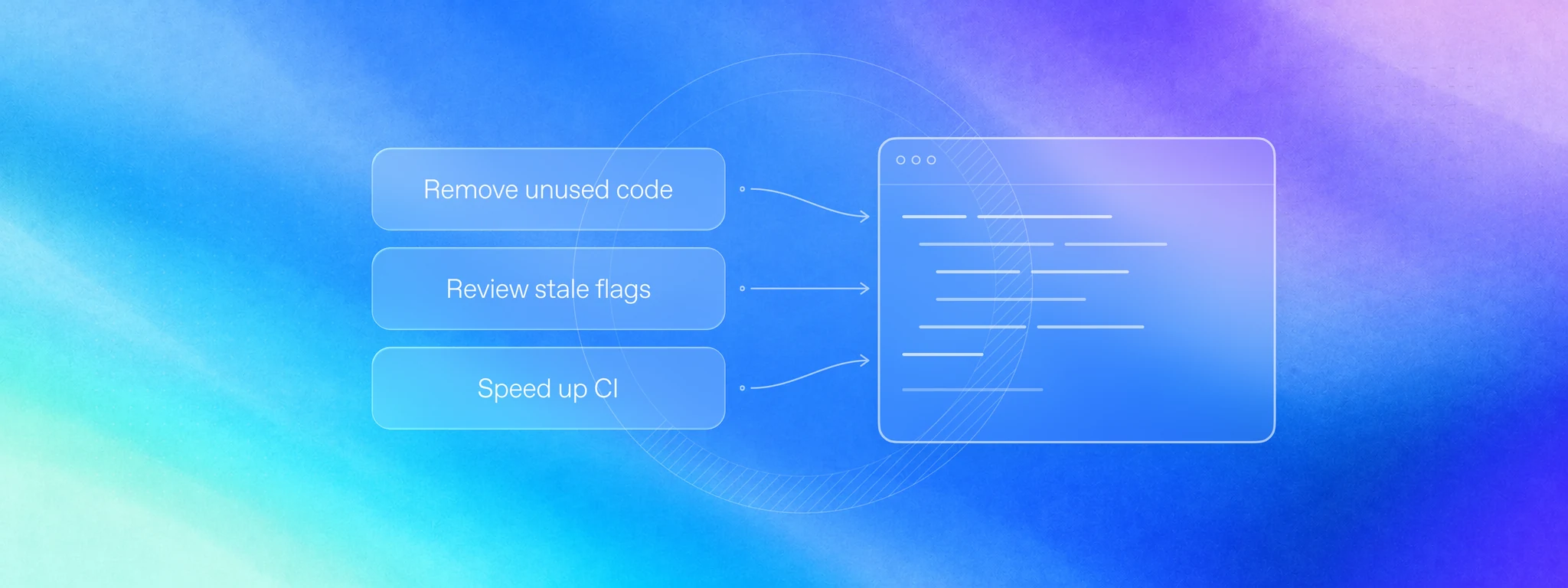
An OpenAI developers blog shows how Core Experimentation uses Codex with GPT-6 Astra to clean dead code and stale Statsig experiments—evidence from Slack, telemetry and flags into small draft PRs. Official: 1,400+ maintenance PRs and 800k+ lines deleted over ~two part-time weeks. GPT-6.1 Sol Ultra reached ~92% of Astra Ultra’s accepted findings at ~14% API cost (vendor-reported).

OpenAI: GPT-6 Astra and 6.1 Sol for software maintenance — 1,400+ cleanup PRs and 800k+ lines removed

Key Takeaways

  • Official: 1,400+ maintenance PRs and 800k+ lines deleted over ~two part-time weeks
  • One image 3.31GB→1.72GB (~48%); ~400 visual snapshot variants removed
  • Same audit: Sol Ultra 131 findings/$15.12 vs Astra Ultra 142/$109.06 (vendor; ~92% findings, ~14% cost)
  • A Permanent all-features override removed after human review; ~0.42% CPU estimated
  • CI follow-ups (~30 PRs): median ~10→4.5 min; one missing mock cut 63 tests 592.6s→29.8s
Read full story

GitHub Copilot updates HydraFusion and adds HydraFusion Max, with Claude Opus 5.5 and the GPT-6 family in its model pool

On 2026-10-14 GitHub updated HydraFusion, Copilot's multi-model orchestration feature, and added HydraFusion Max for harder tasks. The pool now includes Claude Opus 5.5, GPT-6 Astra, GPT-6.1 Sol and GPT-6 Luna; effort is tuned per stage (medium for drafts, high for review), Cascade gains a judging step, and Critique now inspects the workspace with tools using parallel critics. Both remain in research preview across VS Code, the Copilot app and Copilot CLI.

Key Takeaways

  • Pool: Claude Opus 5.5, GPT-6 Astra, GPT-6.1 Sol, GPT-6 Luna, chosen per workflow (GitHub Changelog)
  • Per-stage effort: medium for drafts, high for review (previously each model's default)
  • Cascade adds a judge that requests repair only when needed; Critique uses tools on the workspace plus parallel critics
  • Two tiers: HydraFusion (balanced) and HydraFusion Max (deepest reasoning, orchestration still minds tokens)
  • Available in VS Code, Copilot app and Copilot CLI on Pro, Pro+, Business and Enterprise with preview features enabled
Read full story

Artificial Analysis launches AA-Robotics v0.1: coding agents drive a real robot arm, GPT-6 Astra leads at 69.4

Artificial Analysis released AA-Robotics v0.1 on 2026-10-14, a research preview in which frontier models running inside coding-agent harnesses (Codex, Claude Code, Antigravity) control a 6-axis robot arm over an HTTP API across eight tabletop tasks. GPT-6 Astra scores 69.4, ahead of GPT-6.1 Sol (64.6), Gemini 4 Argon (55.3), Claude Opus 5.5 (48.8) and Claude Fable 5.1 (46.3). Models take about 30 minutes per task versus roughly 20 seconds for a human.

Artificial Analysis launches AA-Robotics v0.1: coding agents drive a real robot arm, GPT-6 Astra leads at 69.4

Key Takeaways

  • Scores (out of 100): GPT-6 Astra 69.4, GPT-6.1 Sol 64.6, Gemini 4 Argon 55.3, Claude Opus 5.5 48.8, Claude Fable 5.1 46.3 (AA article)
  • Speed: ~30 min per task for models (Argon ~52 min) vs ~20 s for a human
  • Cost: GPT-6.1 Sol cheapest at $1.93/task, GPT-6 Astra $16.36/task; ~70% of spend is input context
  • Grasp success: Astra 45%, Fable 5.1 44%, Opus 5.5 40%, Argon 36%, Sol 28%
  • Measure-the-box (within 2 mm) tops out at 17/100 across all five models
Read full story