Anomaly, the company behind open-source coding agent OpenCode, shipped Hex 3.0 stable: hold a shortcut, speak, and the text is pasted at your cursor. Recognition runs on-device, local model memory drops from about 900 MB to about 160 MB, and it adds vocabulary hints, a hex CLI and optional OpenCode rewriting.
Zoom
Key Takeaways
Hex v3.0.0 was released on GitHub at 00:38 UTC on Oct 31; it is MIT-licensed, written in Rust, and the repo has about 1,557 stars (release notes)
Vendor figures: local model memory drops from about 900 MB to about 160 MB; since 2.3.0 it streams, so a 2-minute dictation finishes about 0.1 s after release on an RTX 5070 Ti
Runs on macOS 15+ (Apple silicon), Windows x64/ARM64 and Linux x64/ARM64, with new .deb and .rpm packages on Linux
3.0 does not auto-update from 2.3.1 and starts fresh, so settings, History and models must be set up again; Voice Action and spoken commands are removed
The @opencode launch post drew about 2,400 likes, 1,600 bookmarks and 100k+ views (post)
On October 31, Chris Tate of Vercel Labs, creator of agent-browser, announced agent-desktop on X as "agent-browser, for your whole computer". It is an Apache-2.0 Rust CLI and C library that reads a desktop app's OS accessibility tree and returns every actionable element as a JSON ref; the agent clicks or types on a ref and snapshots again to verify, with no pixel matching, headless by default. Version 1.0.0 shipped on October 27 and added Linux support; the current npm release is 1.0.2.
Zoom
Key Takeaways
Install: npm install -g agent-desktop, one package with native x64/ARM64 binaries; 1.0.0 (Oct 27) added Linux (glibc 2.35+, via AT-SPI), and the latest npm release is 1.0.2 (Oct 30)
Loop: snapshot prints a JSON tree with refs, click @<snapshot_id>:eN acts, then snapshot again to verify; a changed UI returns STALE_REF, and errors say whether a retry is safe
Scope: the README lists 60 command names, 56 of them operational, spanning windows, keyboard and mouse, notifications, clipboard, waits and session traces
Headless by default: ref actions go through accessibility APIs without moving the pointer or stealing focus, with --headed for physical input; Chris Tate says multiple agents can use the computer in parallel, each with its own cursor
Benchmarks: no official success-rate or speed numbers; it is a tool with no model inside, and web pages stay with agent-browser
On Oct 29 Amp shipped macOS Satellites: threads keep running on a Linux orb, and when work needs macOS Amp boots a fresh cloud Mac with Xcode and simulators, uses it only to build, run and test, and returns screenshots, logs and screen recordings to the thread. mac.medium costs $2/hour and mac.large $4/hour; the beta is waitlisted. CEO Quinn Slack says agents need a Mac only about 35% of the time even for macOS-heavy work.
Zoom
Key Takeaways
Amp says the cloud Mac is ready in about 30 seconds with Xcode, iOS simulators and Homebrew preinstalled
Two sizes: mac.medium (6 CPUs, 14 GB) at $2/hour and mac.large (12 CPUs, 28 GB) at $4/hour, drawn first from plan orb usage, then Amp credits
A Mac stays up 20 minutes after use so follow-ups reuse its build cache, then it is deleted and nothing is saved
CEO Quinn Slack posted on X that even macOS-heavy agent work needs a Mac only ~35% of the time (company figure)
Beta only: join the waitlist under Settings > Experimental Features
Anthropic's Frontier Red Team published a research post on Oct 27 saying it spent the past few months using an unreleased internal research model to find critical vulnerabilities in browsers and operating systems, and that after initial prompting Claude wrote five full exploit chains: one-click remote code execution with a sandbox escape in Chrome, a same-origin policy bypass in Safari, data extraction from a locked Android phone over USB, a remote denial of service against Windows HTTP/3 (QUIC), and zero-click root code execution on Linux servers with a multipath TCP listener. Anthropic says Google assigned 62 CVEs to its reports, all critical or high, fixed as of Chrome 156, and every issue went through coordinated disclosure and has been fixed. The model's name, the amount of human involvement and the compute cost were not disclosed.
Zoom
Key Takeaways
The Chrome chain links 4 bugs: V8 heap corruption, a V8 sandbox escape that defeats ASLR, a CacheStorage race condition and a FedCM use-after-free; the PoC launches Calculator within seconds of a page loading in default Chrome on macOS
Per Anthropic, Google assigned 62 CVEs to its reports, all critical or high, including 13 sandbox escapes and 21 renderer-compromise bugs, fixed as of Chrome 156
The Windows kernel QUIC out-of-bounds read is CVE-2026-33096, with likely several million exposed servers by Anthropic's estimate; the Linux MPTCP zero-click root bug is CVE-2026-98432, where the PoC leaks a kernel pointer in about 48 minutes and reaches root command execution about 5 minutes later
Method: many parallel scanning agents scored by the extra vulnerabilities they add, with coverage tracking and automated variant analysis on every confirmed finding; Anthropic recommends scanning at PR time and has released a Claude Code security plugin
The model is an unnamed internal research model; Anthropic did not publish the share of human work, failed attempts or compute cost
On 2026-10-22 Anthropic said it is donating Agent Skills, the open standard that teaches agents a task through a folder with a SKILL.md file, to the Agentic AI Foundation (AAIF) under the Linux Foundation, the same neutral home it gave MCP. The donation covers the Agent Skills name and logo, the GitHub organization and the agentskills.io domain. Anthropic says more than 70 agent platforms, including ChatGPT, Cursor, GitHub Copilot and VS Code, have integrated the standard since December 2025, with 1 million skills published and nearly 280 million installs. Engineers from Anthropic, Google, OpenAI and others will maintain it as individuals.
Zoom
Key Takeaways
Official figure: 70+ agent platforms have integrated Agent Skills, including ChatGPT, Cursor, GitHub Copilot and VS Code
1 million skills published and nearly 280 million installs so far (Anthropic figures)
Donated: the Agent Skills name and logo, the GitHub organization and the agentskills.io domain; you can keep using or contributing without joining AAIF
Lead Maintainers are David Soria Parra and Mahesh Murag, with engineers from Anthropic, Google, OpenAI and others maintaining it as individuals
Proposed first roadmap: versioned releases, a formal proposal process and security guidance for people who write and install skills
The Google AI Studio team released an experimental preview of the Gemini API CLI (command name gemini-api). It is a stateless, zero-dependency Go binary for macOS, Linux and Windows, open source under Apache 2.0. Any coding agent with shell access and a GEMINI_API_KEY can call text reasoning, image, video, music and speech generation, file and YouTube analysis, audio and video transcription, and managed agents such as Deep Research with one command. Media is written straight to disk and only the file path goes to stdout, so base64 payloads never land in the context window. Google labels it experimental and not a supported Google product.
Zoom
Key Takeaways
Default models (official README): gemini-3.8-flash for generate, analyze and transcribe; gemini-nano-banana-2.1 for image; gemini-omni-1.1-flash for video; lyria-3.5 for music; gemini-3.8-flash-tts for speech
Install with a one-line curl script on macOS/Linux, a PowerShell script on Windows, or go install; the latest GitHub release is v0.4.3 (published 2026-10-19)
Built for agents: --usage prints the command tree as KDL, --schema prints JSON Schema, --dry-run validates offline with credentials redacted, plus --output-format json/toon and inline --jq
It also manages sandbox environments, server-side credentials, webhooks and cron triggers for managed agents; files uploaded via the Files API are kept for 48 hours
Google Antigravity CLI shipped 1.3.5 on 2026-10-14 (UTC). Release notes add Auto mode: it auto-approves file edits and safe commands, still prompts before irreversible actions, and sends commands that would leave the terminal sandbox to a separate agent for review first. Enable with --mode auto, Agent Mode in /config, or Shift+Tab; Linux and macOS now, Windows later. The same cut adds on-demand /compact and upgrades /diff with syntax highlighting, folding, and viewport rendering for large files. Official modes docs still listed only default / accept-edits / plan at fetch time—treat the GitHub release as source of truth.
Zoom
Key Takeaways
Release: Antigravity CLI 1.3.5 (89081f7, 2026-10-14T03:16:53Z) leads with Auto mode
Auto: auto-approves file edits and safe commands; still prompts before irreversible actions; sandbox-leaving commands are reviewed by a separate agent first (per GitHub release)
Enable via --mode auto, Agent Mode in /config, or Shift+Tab; Linux/macOS now, Windows later
/compact on demand: alone summarizes and ends the turn; with a follow-up it summarizes then answers; Esc cancels; finish shows steps summarized and context shrinkage
/diff: syntax highlighting, hunk folding (Ctrl+O / f), viewport rendering; expand-all disabled over 100k lines or 10 MB
On 2026-10-09 developer t4t5 open-sourced omdrop-owl, a radio backend for the Omarchy plugin omdrop that gives two-way AirDrop with an iPhone on the Framework 13's MediaTek MT7925 while Wi-Fi stays connected. It builds on Seemoo Lab's 2019 OWL/OpenDrop reverse engineering rather than a from-scratch effort. README self-tests: ~1.3 MB/s receive, ~490 kB/s send; the AP must be on channel 6/44/149.
Zoom
Key Takeaways
Project: omdrop-owl, repo created 2026-10-08; 416 stars / 24 forks at ingest (GitHub API); no license declared
Hardware: only MediaTek MT7925 (Framework 13) tested; two-way transfer with Wi-Fi staying connected
Speed (author's README self-test): ~1.3 MB/s receive, ~490 kB/s send; start/stop about 2 s
Limits: AP must be on channel 6/44/149; station may stop receiving 3–165 s after monitor teardown, so it reconnects
Lineage: builds on Seemoo Lab's 2019 OWL/OpenDrop; omdrop PR #25 still open
On Oct 7 AWS released Strands Box v0.1.0, an open-source (Rust, Apache 2.0) sandbox for AI agents. It pairs OS-level isolation with the Dogwood policy language: shell, Python, outbound HTTP and MCP calls all pass through one default-deny policy engine with a shared event history, so rules can depend on earlier actions and elapsed time. A gateway injects credentials so the agent never sees the secrets. Preview supports macOS on Apple silicon only; Linux is in development.
Zoom
Key Takeaways
Release: v0.1.0 shipped 2026-10-07 17:24 UTC, written in Rust, Apache 2.0 (GitHub)
Default deny: engine-checked operations need a matching permit, and forbid overrides it (Dogwood)
Temporal rule example: an agent may post Slack status updates at most 3 times per 10 minutes; git push timing and API spend caps work the same way (The Register)
Platforms: macOS 15+ on Apple silicon only for now; Linux in development, Windows on the radar, AgentCore / ECS / Kubernetes planned
Benchmarks: AWS has not published performance or security benchmark numbers
Open-source Louis-CFM/coucou (MIT, ★3146) parks Claude Code/Codex/Cursor/Gemini CLI/Antigravity sessions in the Mac notch (top-edge island on Windows/Linux), with in-island Allow/Deny/Always approvals, live diffs, file drop, and service pills. macOS v0.1.3 shipped 2026-10-03; Linux 0.1.1 beta is out; Windows installer is paused for a Defender false positive.
Large language models are rapidly deployed across cybersecurity workflows to translate analysts' intent into command-line interface (CLI) executions. However, existing benchmarks emphasize either high-level knowledge QA or unconstrained agent rollouts, failing to measure precise parameter binding across real-world security tooling where minor syntax glitches invalidate execution. Researchers from MBZUAI introduce KaliBench, a fine-grained natural-language-to-CLI benchmark on Kali Linux spanning 8,504 query-command pairs across 1,642 tools, 23 capability dimensions, and 5 security phases. Auditing reveals no open-weight model surpasses 42% exact accuracy without tool hints. Furthermore, reinforcement learning with KaliBench's runtime-free verifiable rewards elevates an 8B model to rival a 685B MoE frontier model.
Zoom
Key Takeaways
First fine-grained cybersecurity CLI benchmark spanning 1,642 Kali Linux tools and 8,504 verified query-command pairs
Reveals open-weight models fail to exceed 42% exact CLI accuracy in unconstrained real-world settings
Introduces runtime-free verifiable rewards, empowering an 8B model to match a 685B parameter MoE architecture
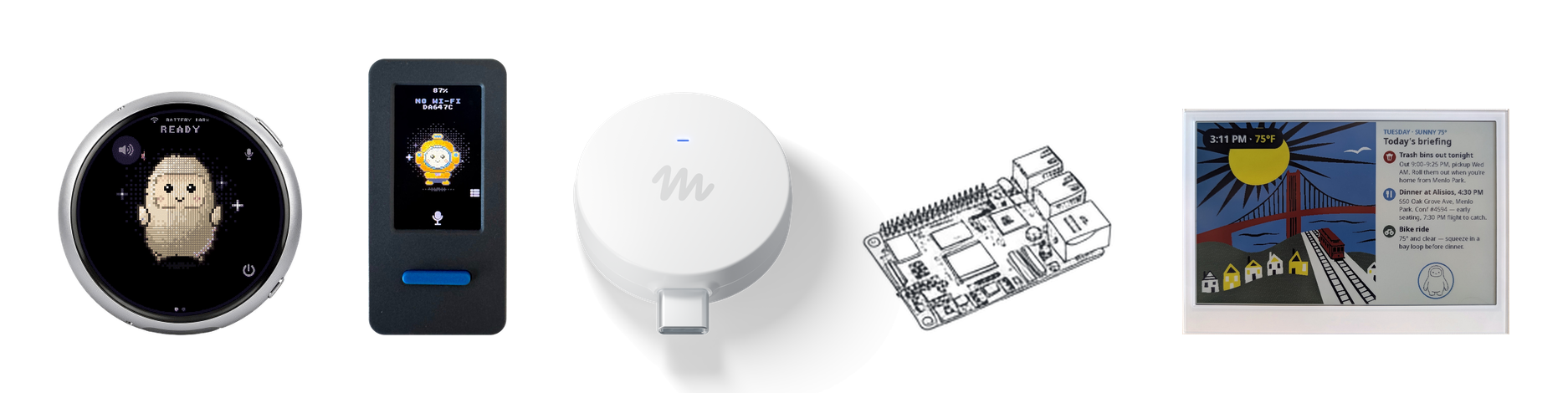
Around 2026-10-02 Meta open-sourced facebookincubator/muse-gadget-sdk (Apache-2.0): ESP32 firmware + a Linux Device SDK so builders can wire Muse to displays, buttons, sensors, and local HTTP devices. Meta’s own Muse Home Link (USB-C) is free for U.S. Muse subscribers (batch of 5,000). Pairing needs an SDK token; Muse Code + AGENTS.md is the recommended flash path.
Zoom
Key Takeaways
Repo: facebookincubator/muse-gadget-sdk Apache-2.0; created 2026-10-02T18:21Z; ~128★ / 12 forks at ingest
Stacks: ESP32 SDK on ESP-IDF v6.0.1 + Linux SDK (musegadget → /opt/musegadget)
Home Link: USB-C dongle; 5,000 free for U.S. Muse subscribers; ships October
Linux Muse runs as the install account (sudo if that account has sudo); community pairing has no manufacturer attestation
Start: SDK token → Muse Code/idf.py on esp32/ or bash install.sh --sdk-token … then App Developer mode pairing
Unsloth AI released version v0.1.815-beta alongside official prebuilt Linux x86_64 CUDA 13 wheels for Flash-Attention 2.8.4, Causal-Conv1D 1.7.0, and Mamba-SSM 2.3.2.post1 targeting PyTorch 2.13/2.14 on Python 3.13. The release enables fast local deployment of Alibaba's Qwen-Image-2.1 across both consumer and datacenter GPUs using Fast FP8 and GGUF quantization (defaulting to Q4_K_M) for combined image generation and precise image editing. Crucially, the Unsloth workspace introduces custom Agent Skills compatible with Claude Code and .agents formats, featuring @skill tagging in chat and 2x faster reasoning blocks (boosting UI rendering from 30 FPS to 60 FPS).
Zoom
Key Takeaways
Official CUDA 13 prebuilt wheels: instant binaries for Flash-Attention 2.8.4 and Mamba-SSM on PyTorch 2.13/2.14, eliminating compilation errors
Local Qwen-Image-2.1 execution: Fast FP8 and GGUF Q4_K_M support for both high-fidelity image generation and interactive image editing
Claude Code skill interoperability: native support for importing and executing custom skills from .agents and Claude Code folders with @skill
60 FPS reasoning blocks: doubled chain-of-thought rendering performance from 30 FPS to 60 FPS with reworked UX
Expanded platform support: in-app Debian upgrades and a dedicated installer for Ubuntu 24.04+ on ARM64 architectures
On 2026-09-24 Cline shipped Desktop v0.0.35 with first-party Linux x64 .deb/.rpm beside macOS/Windows (no AppImage yet), GTK folder picker, background updates applied on Restart now, real plugin slash-command handlers, redacted Diagnostics export, and compact-and-retry when local models hit output-token limits.
Zoom
Key Takeaways
Linux packages: amd64 .deb and x86_64 .rpm on the desktop-v0.0.35 release; no AppImage yet
Plugin slash commands run real handlers; a broken plugin no longer breaks every slash prompt
Diagnostics Export strips keys, credential-shaped values, prompts, and home path for safe issue reports
Local open-weight replies that hit output-token caps compact once and retry instead of failing the run
Catalog at 6,386 models; 19 provider defaults move, 11 of them to Claude Opus 5.5