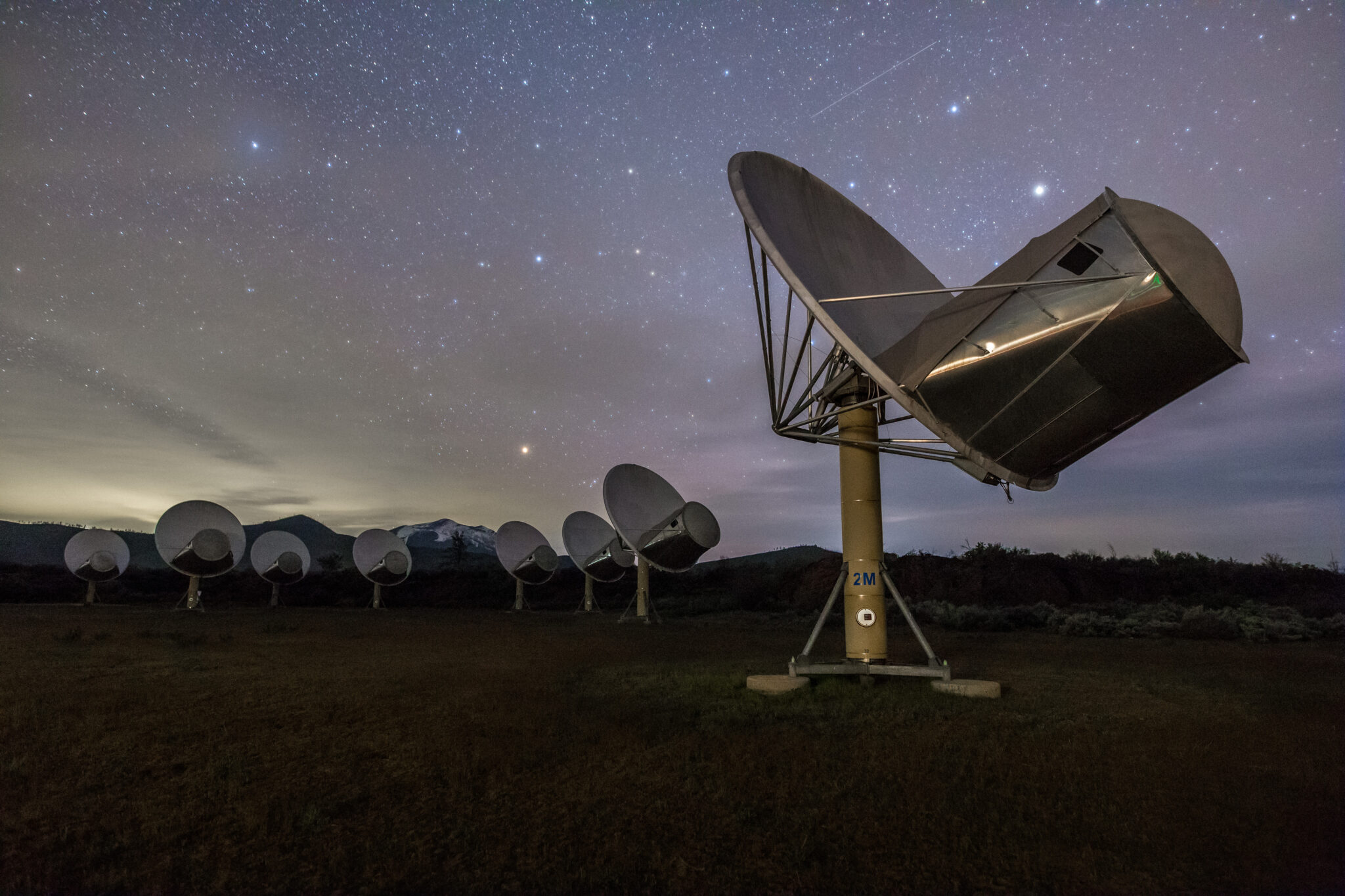
An Oct 30 NVIDIA blog post says Breakthrough Listen and the SETI Institute have brought agents into daily SETI work at the Allen Telescope Array (ATA, 42 dishes of 6 m each) in Northern California: from a single natural-language request, agents can steer the antennas, calibrate and focus, fix data errors, and run AI models on the live stream. Holoscan's DAQIRI library pulls sensor data straight into GPU memory, the SETI Institute's CyberEther handles signal processing, and the web-based orchestrator Nexus acts as the agent harness, handling up to 2.4 Tbps on premises on RTX PRO 6000 Blackwell GPUs. The pipeline has made the first real-time AI detection of a pulsar in the Crab Nebula, and the team is evaluating open models such as Nemotron. The @NVIDIAAI Halloween post on Oct 31 drew about 274 likes.
Zoom
Key Takeaways
Throughput: up to 2.4 Tbps of radio data on NVIDIA RTX PRO 6000 Blackwell GPUs, with inference running on premises next to the instrument (NVIDIA blog, vendor-reported)
Three layers: DAQIRI moves sensor data straight into GPU memory, CyberEther does the signal math with cuFFT and cuBLAS, and Nexus serves as the agent harness for instrument state, compute, and pipelines
Capability: one plain-language request can steer the ATA's 42 six-meter dishes, calibrate and focus, fix data errors, and plot results; NVIDIA says this compresses weeks or years of human work into hours
Milestone: the first real-time AI detection of a pulsar in the Crab Nebula; no false-positive rates or other metrics were published, and no extraterrestrial signal has been found
Next: evaluating open models such as Nemotron for observatories where data locality matters, possibly one day running offline on the far side of the Moon
Anomaly, the company behind open-source coding agent OpenCode, shipped Hex 3.0 stable: hold a shortcut, speak, and the text is pasted at your cursor. Recognition runs on-device, local model memory drops from about 900 MB to about 160 MB, and it adds vocabulary hints, a hex CLI and optional OpenCode rewriting.
Zoom
Key Takeaways
Hex v3.0.0 was released on GitHub at 00:38 UTC on Oct 31; it is MIT-licensed, written in Rust, and the repo has about 1,557 stars (release notes)
Vendor figures: local model memory drops from about 900 MB to about 160 MB; since 2.3.0 it streams, so a 2-minute dictation finishes about 0.1 s after release on an RTX 5070 Ti
Runs on macOS 15+ (Apple silicon), Windows x64/ARM64 and Linux x64/ARM64, with new .deb and .rpm packages on Linux
3.0 does not auto-update from 2.3.1 and starts fresh, so settings, History and models must be set up again; Voice Action and spoken commands are removed
The @opencode launch post drew about 2,400 likes, 1,600 bookmarks and 100k+ views (post)
On October 31, Tibo (@thsottiaux), who works on Codex and ChatGPT at OpenAI, announced on X, as day 26 of his daily shipping posts, that ChatGPT mobile now supports switching between accounts, with desktop coming soon. OpenAI's updated Help Center article says users can stay signed in to up to 2 accounts with one active at a time; chats, memory, files, subscriptions, billing and workspaces stay separate, and switching never moves or merges data. The post drew about 10,000 likes and 1.36M views.
Zoom
Key Takeaways
Limit: up to 2 signed-in accounts, one active at a time; with 2 signed in you must log out of one before adding another, per the OpenAI Help Center
Platforms: the Help Center says web plus the iOS and Android apps, with mobile rolling out gradually (Settings, then Switch account); Tibo says the desktop app is coming soon
Isolation: chats, memory, files, subscriptions, billing and workspaces are not shared, and switching never moves chats or merges accounts; a newly created second account starts on the Free plan
Notifications: mobile can show notifications for both accounts, and tapping one for the other account switches to it, so check the active account before pasting work context
Reach: Tibo's post had about 10,120 likes and 1.36M views (public X metrics as of Oct 31, 12:00 UTC); he also teased banked usage resets over the next two days
On the Cheeky Pint podcast with Stripe co-founder John Collison, published October 29, Sam Altman discussed the memory shortage. He said many people assume open-source models and local inference solve the compute crunch, but from a global allocation perspective it is "quite terrible" for everyone to have scarce DRAM sitting in their own computer and being used about 5% of the time, and that a supply-constrained world wants maximum utilization in the cloud. A pubity post quoting him drew more than 26,000 likes and over 8 million views, and many users pushed back that PC memory is not only for AI and that local models matter for privacy and offline use. This is a summary of an X discussion, not a verified conclusion.
Zoom
Key Takeaways
Source: Sam Altman on the Cheeky Pint podcast, published October 29, with an official transcript that includes "being used 5% of the time"
Altman's argument: with DRAM supply tight, memory in personal computers sits mostly idle, while cloud data centers can serve many users continuously, so utilization should be maximized there
Engagement (X API, read Oct 31 13:06 SGT): the pubity post had 26,124 likes, 8,557 quotes, 5,210 replies and about 8.06 million views
Main pushback: PC memory also runs the OS, browsers and games; local models keep data on the device; some note the view matches OpenAI's cloud business model
Altman did not explain the 5% figure, and coverage suggests treating it as a rough estimate, not a measurement
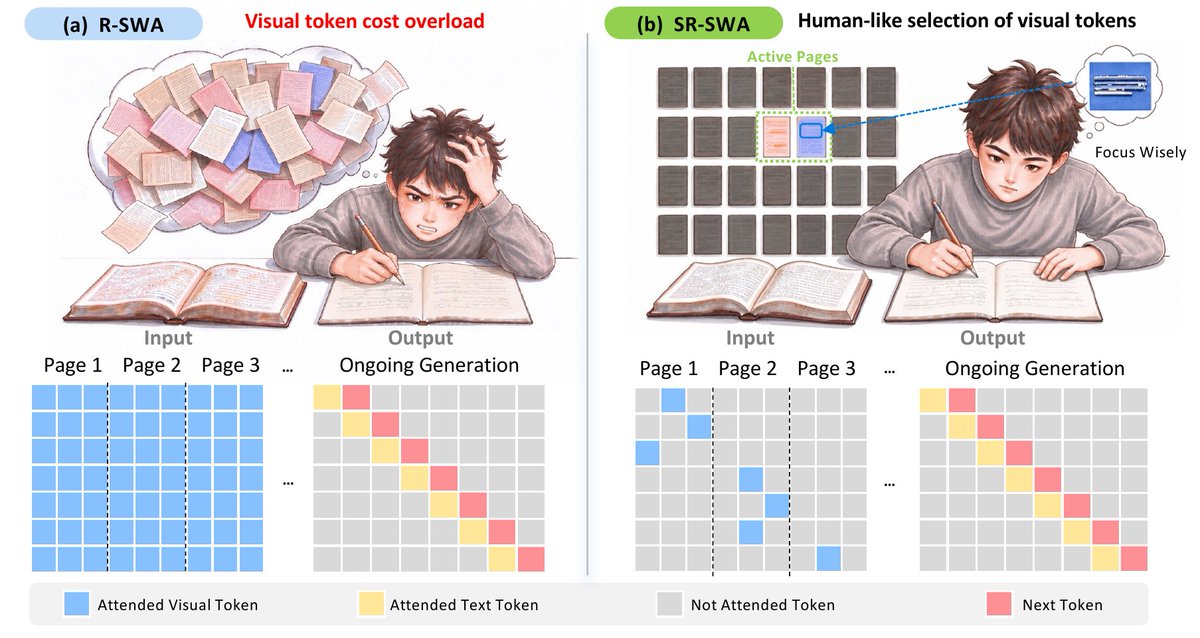
On Oct 27, Baidu's official @Baidu_Inc account announced the open-source release of Unlimited OCR 2 on Hugging Face under the MIT license. Its new SR-SWA attention compresses text-visual interactions into a fixed-size reference set, which Baidu says lets it parse documents of any length within a finite context window. Baidu reports 84.6 on MPDocBench (dozens of pages) and 77.1 on MarathonDocBench (hundreds of pages), both self-reported.
Zoom
Key Takeaways
SR-SWA compresses text-visual attention over very long sequences into a fixed-size reference set (e.g. 512 tokens), which Baidu says keeps per-step decode latency and memory nearly flat as page count grows
Per Baidu: 84.6 overall on MPDocBench, 6.3 points above the next best, Qwen3.8-Max (78.3)
Per Baidu: 77.1 overall on MarathonDocBench, 43.3 points above the next best, Kimi-K3 (33.7); the first Unlimited-OCR scores 0 there
Weights are on Hugging Face under MIT, about 3.3B parameters by the HF weight count, with Transformers and a customized SGLang build for serving
All scores are Baidu's own measurements with no third-party reproduction yet
On Oct 26, Entire co-founder and CEO Thomas Dohmke announced on X and the company blog that Entire is live as "the Git forge for agent-human collaboration." It has three parts: Trails, which replace diff-based review with eval scores computed on every push; Git-compatible distributed hosting that can replicate across regions or mirror from GitHub; and Continuous Memory, which stores agent sessions in the repo. Buildkite and Depot are the first CI integrations, and it is open to any developer today.
Zoom
Key Takeaways
Push speed (vendor-reported, open-source benchmark): Entire 418 pushes/s vs Cursor Origin 65, Pierre 15, GitLab 10, GitHub 4.7, i.e. up to 89x faster than GitHub and 6x faster than Cursor Origin
Trails: on every push, several review agents score the change independently in cloud sandboxes (defaults include Security, Slop and Human Review Required), showing the last 5 runs plus the current one; per-repo Gates can require human approval and passing CI before merge
Continuous Memory: two open-source, local-first plugins, entire-graph and entire-brain; entire-graph saved up to 71% of tokens in Entire's testing
Regions at launch: US, EU, Australia and India; repos can be mirrored from GitHub with GitHub kept as the source of truth
On October 21 Letta released FrontierMemory 1.0. Instead of quizzing agents on facts such as birthdays or hobbies, it gives an agent a set of past trajectories, has it write memory or skills, and scores that memory by how many coding and knowledge-work tasks a task agent then solves. Version 1.0 has 15 tasks adapted from public benchmarks such as DeepSWE, SkillsBench and APEX-Agents. On the model board (memory written in Letta Dream, tasks run in Letta Code) Opus 5.5 and GLM-5.3 both score 73.3% and Grok 4.7 scores 33.3%; on the harness board Letta's own Letta Dream ranks first. All numbers are Letta's own.
Zoom
Key Takeaways
Model board (vendor-run, top effort): Opus 5.5 73.3% (about $2.80 per task), GLM-5.3 73.3% ($3.58), Kimi K3 66.7%, GPT-6.1 Sol 60.0% ($0.77, cheapest), Gemini 4 Argon 60.0%, Muse Wonder 46.7%, Grok 4.7 33.3%
Harness board: Letta Dream 73.3%, Prime Agent 60.0%, OpenAI Agents SDK 40.0%, Claude Managed Agents 33.3%, Hermes Agent 26.7%
Version 1.0 has 15 tasks; only 219 of 665 source trajectories are relevant, so the agent has to find the useful experience itself
Letta says 53% of the source tasks it kept had broken verifiers, which it repaired; memory generation is capped at 6 hours with no web access
Memory comes in three kinds (task conventions, user preferences, environment facts); outside models and harnesses can be submitted
Researchers introduced OverSeer in arXiv:2610.28554, pioneering a new class of multi-agent world models operating beyond the field of view of individual agents. Standard video world models collapse in multi-agent environments because individual agents operate under partial observability; naive frameworks feeding external global map inputs suffer severe spatial inconsistency and state hallucination. OverSeer resolves this by jointly predicting auxiliary spatial representation streams alongside the agents' first-person camera streams. In comprehensive Minecraft benchmarks, OverSeer achieves decisive state-of-the-art results across physical grounding, long-horizon spatial memory, and cross-view consistency.
Zoom
Key Takeaways
OverSeer introduced in arXiv:2610.28554, establishing the first scalable multi-agent video world model framework
Researchers introduced EdgeKernelBench and the LEKA agent architecture in arXiv:2610.24648, establishing the first unified framework for evaluating and generating low-level high-performance kernels across heterogeneous edge backends. While LLM-driven kernel generation has demonstrated success on datacenter GPUs, edge deployments remain plagued by hardware diversity, fragmented compiler toolchains (CUDA, OpenCL, TileLang, Triton), and strict memory-compute constraints. EdgeKernelBench bridges this gap through a unified intermediate representation (IR) suite spanning 331 canonical workloads. The companion Layered Edge Kernel Agent (LEKA) hierarchically decomposes optimization decisions, unlocking efficient automated kernel synthesis on edge silicon.
Zoom
Key Takeaways
EdgeKernelBench released in arXiv:2610.24648, establishing the premier unified evaluation harness for edge kernel generation
Spans CPU/LLVM, GPU/CUDA, and GPU/OpenCL stacks with 331 canonical compute patterns across 650 concrete benchmark workloads
Introduces LEKA (Layered Edge Kernel Agent), hierarchically decoupling compilation and schedule decisions across IR abstraction tiers
Solves single-shot generation failures (where models achieved only 25.5% [email protected]), paving the way for automated edge NPU acceleration
OpenAI officially rolled out 'Locked Chats' across all ChatGPT subscription tiers, including Free, Plus, Team, Enterprise, and Edu. Users can now safeguard sensitive individual conversation threads behind a device PIN, Face ID, or Touch ID biometric lock. Crucially, locked chats feature strict memory isolation: interactions inside locked sessions are physically barred from updating ChatGPT's persistent user memory bank. Confidential corporate discussions, sensitive health queries, or proprietary code audits remain strictly ephemeral to the local lockbox without contaminating future general chat contexts.
Zoom
Key Takeaways
OpenAI officially released Locked Chats, rolling out globally across Free, Plus, Team, Enterprise, and Edu subscriptions
Enables hardware-level protection via device PIN, Face ID, and Touch ID, shielding sensitive threads from physical shoulder surfing
Guarantees complete memory isolation: queries, uploaded documents, and confidential context are strictly prohibited from updating user memory
Eliminates context contamination risks when conducting proprietary code reviews, compliance audits, or medical inquiries
Researchers introduced MemT-1.0 (arXiv:2610.26825), a groundbreaking architecture internalizing memory as an intrinsic component of foundation model computation. Moving beyond exploding KV caches and lossy Vector RAG pipelines, MemT-1.0 employs Gated DeltaNet-2 with stable within-turn token-level updates alongside a novel Mixture-of-Storage mechanism. Trained across a two-stage 34B-token pipeline, the released MemT-1.0-Nano model achieves a 1.86x end-to-end inference speedup and a staggering 66x reduction in persistent storage at 128K tokens relative to full-context KV caching, dramatically elevating procedural task execution in autonomous agents.
Zoom
Key Takeaways
MemT-1.0 introduced on arXiv:2610.26825, pioneering memory-native evolution by internalizing memory directly into model computation
Combines Gated DeltaNet-2 with stable token-level memory updates and Mixture-of-Storage to scale memory capacity intrinsically
At 128K context length, delivers a 1.86x inference speedup and slashes persistent storage by 66x compared to standard KV cache
Researchers introduced MemPilot (arXiv:2610.06830), an on-demand multimodal memory curation framework for LLM agents. Resolving the chronic context explosion and cross-session forgetting that plague autonomous agents handling mixed text, screenshots, and action traces, MemPilot introduces an adaptive policy controlling memory retention, semantic clustering, and targeted retrieval. Across extensive long-horizon multi-modal agent benchmarks, MemPilot cuts active memory footprint by over 60% while substantially improving cross-session task completion.
Zoom
Key Takeaways
Researchers introduced MemPilot (arXiv:2610.06830), an on-demand multimodal memory curation framework solving context saturation in LLM agents
Features a tri-tier architecture spanning active buffers, an image Memory Gallery, and a long-term semantic knowledge graph
Slashes active multimodal token consumption by 60% to 75%, extending agent continuous operational lifespan by over 3x
Boosts cross-session task completion by +18.5% over text-only RAG, providing a scalable blueprint for persistent computer-use agents
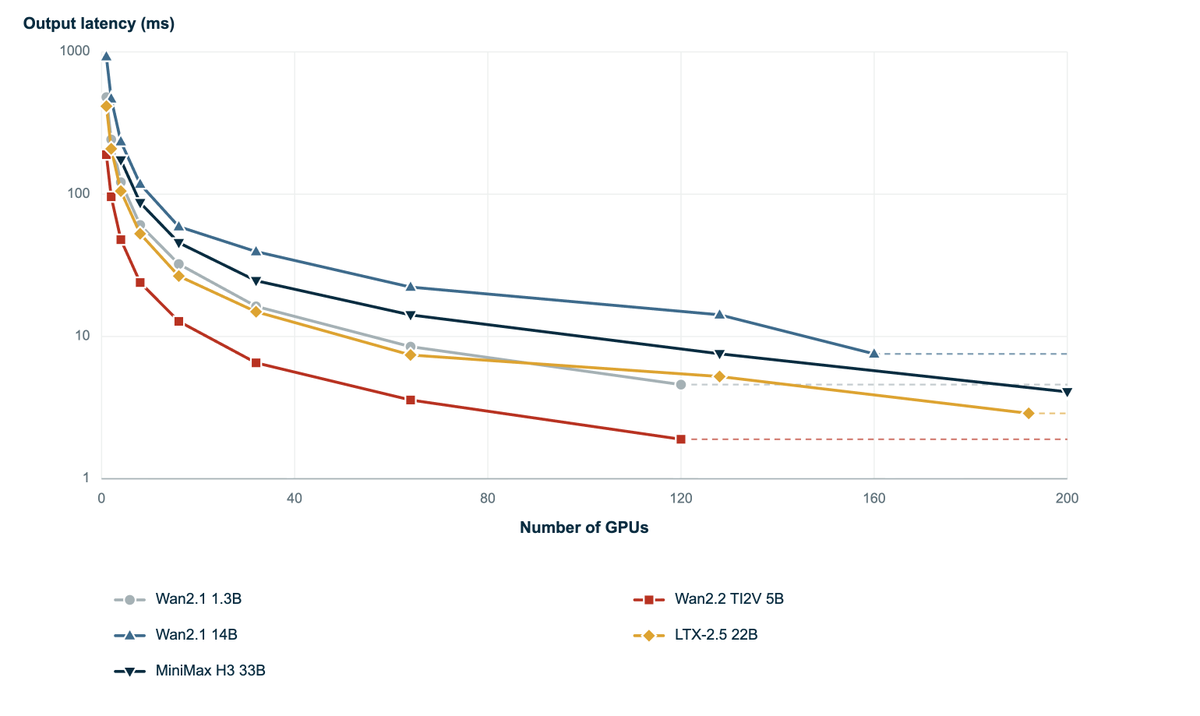
The vLLM Project officially announced that PhysisServe's core physical-world serving techniques are being integrated into vLLM-Omni. Addressing the severe memory bottlenecks and latency spikes of multi-step video diffusion and physical AI generation, PhysisServe introduces cross-denoising-step pipeline parallelism across Transformer blocks, time-shared batching, and virtual-rank joint scheduling. Benchmarked on MiniMax H3 33B across 200 GPUs, it generates a chunk every 4.1 ms (~1,000 FPS without VAE decoding), while cutting single-GPU latency for Wan2.2 5B from 173 ms down to 98 ms.
Zoom
Key Takeaways
The vLLM project announced the upstream integration of PhysisServe's serving architecture into vLLM-Omni for physical AI and video models
Introduces cross-timestep block pipelining and time-shared batching to eliminate GPU communication bubbles in multi-step diffusion
Generates a video chunk every 4.1 ms on MiniMax H3 33B across 200 GPUs (~1,000 FPS), cutting Wan2.2 5B single-card latency to 98 ms
Expands 24-GPU serving concurrency by 1.7x to 3.3x, with full open-source code merging into the vLLM-Omni mainline
Current memory benchmarks for video world models conflate whether an action was carried out with whether the model remembered its outcome, incorrectly attributing action execution failures to cognitive memory loss. Researchers from HKU and Tsinghua introduced MIST (arXiv:2610.23542, 12 upvotes on Hugging Face). By decoupling physical execution from temporal memory, MIST reveals that up to 70% of apparent memory failures in leading models are actually execution failures. Correcting for execution raises true scene memory accuracy by +11.8 to +29.6 percentage points.
Zoom
Key Takeaways
HKU-MMLab and Tsinghua introduced MIST (arXiv:2610.23542, 12 upvotes on Hugging Face Papers)
Reveals that over 70% of apparent memory failures in video world models are actually action execution failures in intermediate frames
Proposes a decoupled three-stage causal pipeline separating scene establishment, action execution, and temporal memory retention
Improves true long-horizon memory consistency scores by +11.8 to +29.6 points across standard WRBench and MBench suites
Two new 3D vision and generative compression frameworks solve long-standing efficiency and quality bottlenecks: Zhejiang University's InfiniSplat v2 (arXiv:2610.20341, 118 upvotes on HF) decouples geometry and Gaussian attribute prediction with a frozen geometry branch and large-angle supervision, slashing mean LPIPS by 25.8% and DISTS by 32.9% across six 3D datasets. Meanwhile, Technion's H-DDCM (arXiv:2610.18125) replaces dense Gaussian codebooks in training-free diffusion compression with implicit Walsh-Hadamard dictionaries—requiring O(d log d) compute and O(d) memory—to enable near-real-time streaming video compression on a single GPU.
Zoom
Key Takeaways
Zhejiang University's InfiniSplat v2 (118 HF upvotes) freezes the geometry branch and applies large-angle supervision to cut pose-conditioned mean LPIPS by 25.8% (0.2472) and DISTS by 32.9% (0.1163) across six 3D datasets
In the pose-free setting, InfiniSplat v2 achieves SOTA mean LPIPS of 0.3026 and DISTS of 0.1341, outperforming WorldMirror 2.0 (0.3757 / 0.1935) and AnySplat
Technion's H-DDCM replaces dense Gaussian codebooks with implicit Walsh-Hadamard dictionaries (O(d log d) compute, O(d) memory) and periodic KV-cache prefix re-encoding for single-GPU streaming video compression