AI Coding Live News

X Discussion: Sam Altman Says People Should Always Control the Future and That This Should Ultimately Constrain AI Progress

At 01:40 UTC on November 4, OpenAI CEO Sam Altman (@sama) posted on X that "people should always be in control of the future," saying OpenAI is against the idea of people being relegated to doing things that "AI systems think makes sense to reward in humans," and that people should not cede control of the future to superintelligence, a requirement that "should ultimately constrain AI progress." Within about 25 minutes it drew roughly 1,360 likes, 337 replies and nearly 100K views; Francois Chollet and others voiced support while many replies pushed back. This is Altman's stated view, not a new OpenAI policy or product announcement.

Key Takeaways

  • Engagement: about 1,360 likes, 337 replies, 89 reposts, 74 quotes and roughly 99K views within about 25 minutes (per the X API); the high reply ratio signals a contested post
  • Three core lines: people should always be in control of the future; OpenAI rejects people being relegated to doing what "AI systems think makes sense to reward in humans"; people should not cede the future to superintelligence, and that requirement "should ultimately constrain AI progress"
  • Support: Francois Chollet (@fchollet) posted "Co-sign," saying the only future worth building is one where AI remains a tool in human hands; Matthew Berman said Altman made the same point in their interview last week
  • Pushback: replies asked "which people?", argued that AI systems "don't think anything," or contrasted the post with Altman's recent comments on RAM and concentrating compute in data centers
  • The post does not say where the quoted phrase comes from and names no concrete policy or timeline; online links to a GPT-6.2 Astra release date are speculation
Read full story
Linked Models & Agents:

X Discussion: Wharton Finance Professor Sylvain Catherine Says His $200/Month Claude Plan Is Worth It, Yet Calls for AI Regulation and No Race to Superintelligence

Wharton associate finance professor Sylvain Catherine posted on X that his views on AI have "radically shifted": he loves the tools and pays $200/month for Claude, but thinks the industry should be far more regulated and that frontier labs need not race toward superintelligence. The post drew about 48K views and 389 likes and is being shared in AI policy circles.

Key Takeaways

  • He pays $200 a month for Claude and calls it "worth every penny, probably even more", and believes current tools can significantly raise future GDP.
  • He cannot see why the industry is not more regulated when its own leaders and employees ask for it, and urges readers to spend an hour on the full chain of events of the Hugging Face incident.
  • He argues large gains are available by deploying current technology in economic and scientific organizations, without pursuing superintelligence.
  • His median scenario matches many economists: slow diffusion, roughly one extra percentage point of GDP growth, disruption along the way, and new jobs in the end.
  • This is an opinion discussion, not a factual report; he says he is not trying to convince anyone, only urging people to get informed and vote accordingly.
Read full story
Linked Models & Agents:

X discussion: Microsoft AI CEO Mustafa Suleyman posts "Don't build conscious superintelligence", saying AI development should stop if consciousness emerges in training

Microsoft AI CEO Mustafa Suleyman published an X article on November 1 titled "Don't build conscious superintelligence", responding to reactions to his September essay on model welfare. He clarified that his line "AIs are not conscious" was deliberately in the present tense: they are not today, and that is how they must remain. If consciousness started to emerge in training, he would call for everyone to stop AI development until those properties could be designed out. He argued that AI developers have no right to bring a new conscious species into the world and that welfare concerns should focus on humans, animals and the natural environment. He also credited Anthropic for publishing its constitution and research, while saying he disagrees with its approach. The post drew about 353 likes, 251 bookmarks and 290K views, with ethicists and practitioners on both sides. This is a personal opinion piece, not a Microsoft product or policy announcement.

X discussion: Microsoft AI CEO Mustafa Suleyman posts "Don't build conscious superintelligence", saying AI development should stop if consciousness emerges in training

Key Takeaways

  • Original post: @mustafasuleyman X article, Nov 1, 15:22 UTC, about 353 likes, 56 reposts, 79 replies, 251 bookmarks and 290K views at fetch time
  • It responds to reactions to his Sept 16 essay "It's time to talk about model welfare" (about 1,013 likes); his X bio lists CEO of Microsoft AI, author of The Coming Wave, and co-founder of DeepMind and Inflection
  • Core claim: "AIs are not conscious" describes today and that is how it must remain; any evidence of AI consciousness should be disclosed publicly at once; if consciousness emerges in training, development should stop
  • He credits Anthropic for publishing its constitution and a stream of papers and posts, says he disagrees with its approach, and calls for labs to research this together and share safety information
  • In quote posts, UMass Amherst economics and ethics scholar Itai Sher called it "very well put"; UCL professor Tim Colbourn agreed but doubted safety can be engineered by default; others noted there is no accepted theory or test of consciousness
Read full story
Linked Models & Agents:

Meta open-sources Muse Spark Open: 816B-total / 42B-active MoE with 1M context, billed as the most capable US open-weight model to date

On 2026-10-15 Meta released weights for Muse Spark Open, a natively multimodal MoE (~816B total / ~42B active per token, 1M context) aimed at long-horizon coding and agents. Weights are on Hugging Face and peers; hosted APIs include Together, Fireworks, Groq and OpenRouter. Reported figures include DeepSWE 60%, MCP-Atlas 89.2% and JobBench 61.8% (see Meta’s evaluation methodology).

Meta open-sources Muse Spark Open: 816B-total / 42B-active MoE with 1M context, billed as the most capable US open-weight model to date

Key Takeaways

  • Scale: ~816B total / ~42B active per token; 256 experts/layer with top-8 routing; 62 layers, hidden 8192; context up to 1,048,576 (HF blog)
  • Coding/agents (Meta scorecard / AA, xhigh): DeepSWE 60.0%; SWE-Atlas Codebase QnA 58.0%; MCP-Atlas 89.2%; JobBench 61.8%; Toolathlon-Verified 72.8% (eval methodology)
  • Throughput (NVIDIA tech blog, agentic on GB300 NVL72): up to ~50K tok/s/GPU and ~600 tok/s/user; NVFP4 checkpoints published (NVIDIA blog)
  • Deploy: Muse Model License with limited commercial terms; SGLang / vLLM / TensorRT-LLM / MLX / llama.cpp; Meta demos two Apple M5 Ultra Mac Studios for on-desk local run
  • Third-party index: Artificial Analysis Intelligence Index ~38.9–39 (xhigh, as of 2026-10-07)—behind closed frontier, but a key open-weight reference (AA)
Read full story
Linked Models & Agents:
⚡ Muse Spark Open⚡ Muse Spark Open 816B-A42B🤖 Muse Code🌐 Meta🌐 NVIDIA🌐 Hugging Face🌐 Apple
ADSponsored

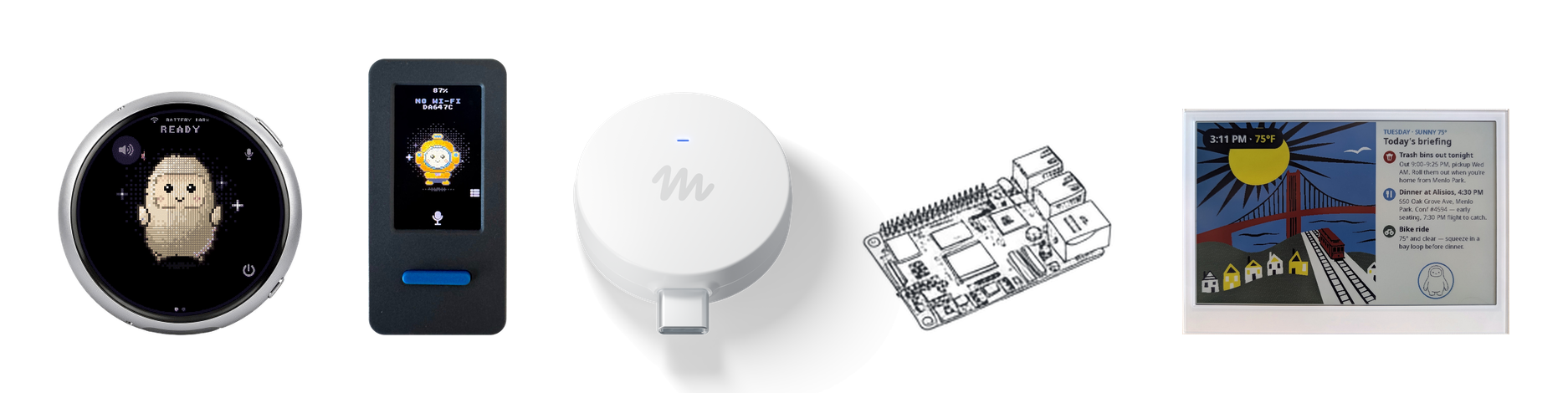
Meta open-sources Muse Gadgets: ESP32 & Linux SDKs to put Muse on DIY hardware; 5,000 Home Links for subscribers

Around 2026-10-02 Meta open-sourced facebookincubator/muse-gadget-sdk (Apache-2.0): ESP32 firmware + a Linux Device SDK so builders can wire Muse to displays, buttons, sensors, and local HTTP devices. Meta’s own Muse Home Link (USB-C) is free for U.S. Muse subscribers (batch of 5,000). Pairing needs an SDK token; Muse Code + AGENTS.md is the recommended flash path.

Meta open-sources Muse Gadgets: ESP32 & Linux SDKs to put Muse on DIY hardware; 5,000 Home Links for subscribers

Key Takeaways

  • Repo: facebookincubator/muse-gadget-sdk Apache-2.0; created 2026-10-02T18:21Z; ~128★ / 12 forks at ingest
  • Stacks: ESP32 SDK on ESP-IDF v6.0.1 + Linux SDK (musegadget → /opt/musegadget)
  • Home Link: USB-C dongle; 5,000 free for U.S. Muse subscribers; ships October
  • Linux Muse runs as the install account (sudo if that account has sudo); community pairing has no manufacturer attestation
  • Start: SDK token → Muse Code/idf.py on esp32/ or bash install.sh --sdk-token … then App Developer mode pairing
Read full story

Meta Rolls Out Muse Spark 1.3 With Frontier Coding Performance Almost Too Cheap to Meter

Mark Zuckerberg announced Muse Spark 1.3 in Muse Code and the Meta Model API, calling it Meta’s biggest jump yet on coding and agentic work, with frontier performance almost too cheap to meter. Meta Superintelligence Labs followed with a 1.3 max reasoning tier for even stronger coding agents, and teased upcoming open-weight releases.

Key Takeaways

  • Positioned as Meta’s most capable model yet, with the largest gain so far on coding and agentic workloads
  • Available now in Muse Code and the Meta Model API, and already a top-3 model by OpenCode usage
  • Muse Spark 1.3 max adds a higher-reasoning coding tier; a larger 🍉 model and open weights are next
Read full story

Meta Releases Muse Spark 1.3 Max with Stronger Coding and Agents

Meta Superintelligence Labs chief Alexandr Wang publicly released Muse Spark 1.3 max reasoning. Meta reports significantly stronger coding and agentic performance versus 1.3 high and xhigh, after completing safety testing. It is available on Muse Code and the Meta Model API; users can set reasoning to max or install Muse Code from the terminal.

Key Takeaways

  • Max reasoning clearly outperforms 1.3 high and xhigh on coding and agent tasks
  • Released after safety testing on Muse Code and the Meta Model API
  • Try it by setting reasoning to max or installing Muse Code from the terminal
Read full story
Linked Models & Agents:
⚡ Muse Spark 1.3 Max🤖 Muse Code🌐 Meta

Meta ships Muse Voice Transcribe: real-time multilingual ASR with 20+ speaker diarization

Meta Superintelligence Labs launched Muse Voice Transcribe on September 1, its first real-time audio perception model: streaming ASR, diarization for 20+ speakers, and endpointing, with native code-switching, 70+ training languages (25 validated at launch), and hour-plus sessions. Meta says it ranks first on Artificial Analysis streaming speech-to-text as of September 1. It already powers Meta AI for Mac (hold Fn to dictate anywhere) and Muse Code, and is on the Meta Model API at $3 per 1,000 audio-minutes (~$0.18/hour).

Key Takeaways

  • Streaming ASR, diarization, and endpointing ship as one model without a post-process chain
  • Already live for system-wide Mac dictation and Muse Code; developers use the Meta Model API
  • API pricing is about $0.18/hour; adaptive delay trades latency for harder words
Read full story
Linked Models & Agents:
⚡ Muse Voice Transcribe⚡ Muse Spark🤖 muse-code🌐 Meta AI