AI Coding Live News

X discussion: Scott Alexander's "Against SURA" criticizes the "stop unilaterally and raise awareness" line, as AI safety is accused of acting like a mass political movement

On October 31, Scott Alexander published "Against SURA" on LessWrong. He uses SURA (Stop Unilaterally + Raise Awareness) for the view that AI companies, their employees and countries should halt AI work on their own and focus on raising awareness, and argues it would hand the lead to companies that do not prioritize alignment and cost the US its bargaining chip with China. He cites AI Futures Project members' survival estimates for scenarios without a global pause, mostly in the 25%-50% range, to push back on 90%+ doom estimates. Blogger jessicat quoted it and said parts of AI safety now behave like a mass political movement with bad epistemics (about 359 likes, 63K views); Bloomberg Odd Lots co-host Joe Weisenthal summed it up as people competing to out-doom each other (about 287 likes, 38K views). This is an opinion debate, not a policy announcement from any organization.

X discussion: Scott Alexander's "Against SURA" criticizes the "stop unilaterally and raise awareness" line, as AI safety is accused of acting like a mass political movement

Key Takeaways

  • Source: Scott Alexander's "Against SURA" on LessWrong, posted 2026-10-31 19:32 UTC; SURA stands for Stop Unilaterally + Raise Awareness
  • AI Futures Project members' survival estimates for three no-global-pause scenarios (C+ / C / D), as cited: Daniel Kokotajlo 40%/20%/10%, Ryan Greenblatt 60%/63%/55%, Eli Lifland 50%/45%/32%, Thomas Larsen 45%/35%/20%, Romeo Dean 40%/35%/20%; the AI forecaster FutureSearch gave 44%
  • He says that if the US unilaterally passed Sanders' "Ban Artificial Superintelligence Act" (endorsed by MIRI), the AI forecaster he asked put the chance of China agreeing to a pause within a year at only 7%, up from 1%
  • jessicat's quote post (Oct 31, 23:01 UTC) has about 359 likes, 28 reposts and 63K views; Joe Weisenthal's quote (Nov 1, 14:57 UTC) has about 287 likes, 33 replies and 38K views
  • Note: the "10-40%" in Weisenthal's post is his paraphrase; the estimates in the essay's table range from 10% to 63%
Read full story
Linked Models & Agents:

Nous Research opens the official Hermes Agent mobile beta: iOS via TestFlight, Android via Firebase, connecting your phone to your own gateway to approve tools and manage bots and routines

During NousCon 2026 in New York on Oct 30, Nous Research released an official mobile beta of Hermes Agent and put up a sign-up page at hermes-agent.nousresearch.com/mobile: iOS users join the "Hermes Agent - Mobile" beta through TestFlight, and Android users join through Firebase App Distribution. The TestFlight page says the app connects to your own Hermes gateway so you can chat with streaming, approve tool calls, and manage bots and routines from anywhere. Teknium, co-founder and lead engineer of Hermes Agent, confirmed on X that the iPhone and Android betas launched together. Nous has not announced a general release date or any benchmarks.

Key Takeaways

  • Entry point: the official page hermes-agent.nousresearch.com/mobile covers 2 platforms, iOS through TestFlight and Android through Firebase App Distribution
  • Positioning: the TestFlight description says the app connects to your own gateway for streaming chat, tool-call approval, and managing bots and routines; it is a client, not a separate agent running on the phone
  • Confirmation: Teknium, co-founder and lead engineer of Hermes Agent, confirmed in a reply on X that the iPhone and Android betas both launched on NousCon day
  • Watch for clones: several third-party Hermes phone clients already exist, so only use the links on the official page; Nous has not published a general release date or benchmarks
Read full story

ChatGPT adds account switching: stay signed in to up to 2 accounts, rolling out on iOS and Android, desktop coming soon

On October 31, Tibo (@thsottiaux), who works on Codex and ChatGPT at OpenAI, announced on X, as day 26 of his daily shipping posts, that ChatGPT mobile now supports switching between accounts, with desktop coming soon. OpenAI's updated Help Center article says users can stay signed in to up to 2 accounts with one active at a time; chats, memory, files, subscriptions, billing and workspaces stay separate, and switching never moves or merges data. The post drew about 10,000 likes and 1.36M views.

ChatGPT adds account switching: stay signed in to up to 2 accounts, rolling out on iOS and Android, desktop coming soon

Key Takeaways

  • Limit: up to 2 signed-in accounts, one active at a time; with 2 signed in you must log out of one before adding another, per the OpenAI Help Center
  • Platforms: the Help Center says web plus the iOS and Android apps, with mobile rolling out gradually (Settings, then Switch account); Tibo says the desktop app is coming soon
  • Isolation: chats, memory, files, subscriptions, billing and workspaces are not shared, and switching never moves chats or merges accounts; a newly created second account starts on the Free plan
  • Notifications: mobile can show notifications for both accounts, and tapping one for the other account switches to it, so check the active account before pasting work context
  • Reach: Tibo's post had about 10,120 likes and 1.36M views (public X metrics as of Oct 31, 12:00 UTC); he also teased banked usage resets over the next two days
Read full story
Linked Models & Agents:

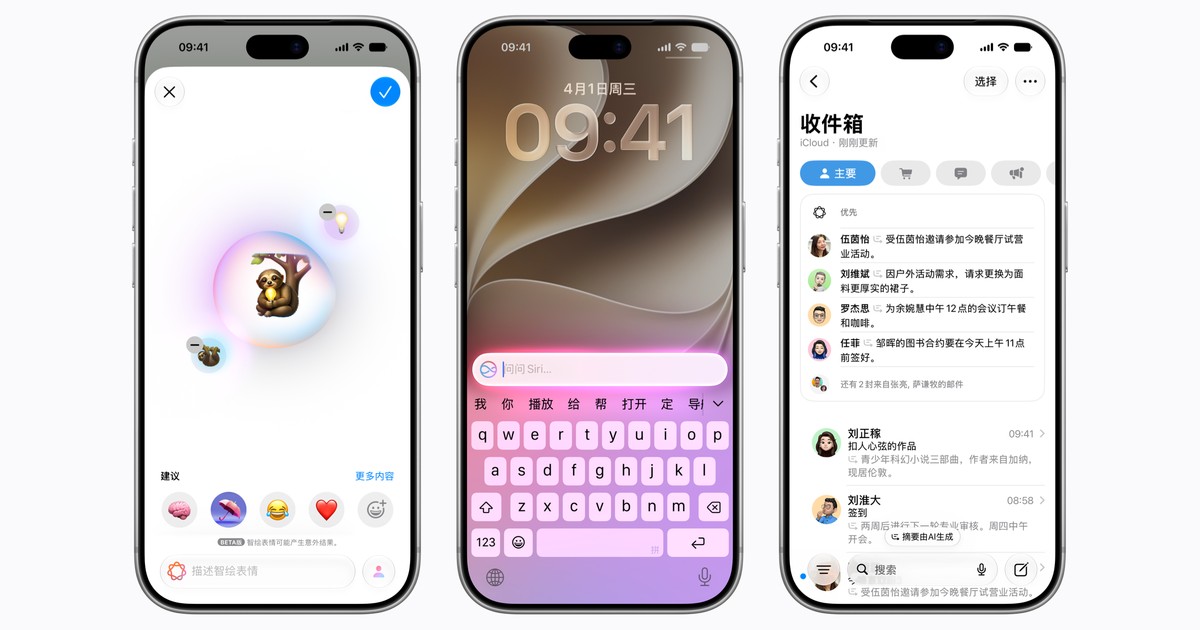
Apple Intelligence is coming to China: iOS 27.3 developer beta starts Nov 4, public release in December, with Alibaba Qwen inside Siri, Writing Tools and Visual Intelligence

In a press release on its China newsroom, Apple said the first Apple Intelligence features will open for testing in the latest iOS developer beta starting November 4 and reach users in China with the iOS 27.3 release in December. The features run on Apple-built generative models and include Live Translation, Writing Tools, Visual Intelligence, Clean Up, Genmoji, notification and Mail summaries, and Type to Siri; Apple also partnered with Alibaba to bring Qwen into Siri, Writing Tools and Visual Intelligence. The first wave covers iPhone 15 Pro and newer only; Siri AI and the other next-generation features announced at WWDC 2026, plus Image Playground, are not included, and Mac, iPad and other platforms wait on further approvals.

Apple Intelligence is coming to China: iOS 27.3 developer beta starts Nov 4, public release in December, with Alibaba Qwen inside Siri, Writing Tools and Visual Intelligence

Key Takeaways

  • Timeline (Apple): testing in the latest iOS developer beta from November 4, public rollout with iOS 27.3 in December, no exact date given
  • First-wave features include Live Translation (Messages, FaceTime, Phone and AirPods), Writing Tools, Visual Intelligence, Clean Up, Genmoji, natural-language photo search, Priority Mail, notification summaries and Type to Siri
  • Alibaba Qwen is built into Siri, Writing Tools and Visual Intelligence: users can ask about photos, PDFs and presentations and use Qwen to compose original text, signing in with a Qwen account or Sign in with Apple
  • Supported devices: iPhone 16 and later, iPhone Duo, iPhone 15 Pro/Pro Max and iPhone Air, with Siri and device language set to English and Simplified Chinese
  • Siri AI and other next-generation WWDC 2026 features are excluded, MacRumors says Image Playground is also missing, and other platforms follow after the necessary approvals
Read full story
Linked Models & Agents:
⚡ Qwen⚡ Apple Foundation Models🤖 Siri🌐 Apple🌐 Alibaba
ADSponsored

Amp launches macOS Satellites beta: agents boot a cloud Mac with Xcode in ~30 seconds to build, test and run iOS and Mac apps, from $2/hour

On Oct 29 Amp shipped macOS Satellites: threads keep running on a Linux orb, and when work needs macOS Amp boots a fresh cloud Mac with Xcode and simulators, uses it only to build, run and test, and returns screenshots, logs and screen recordings to the thread. mac.medium costs $2/hour and mac.large $4/hour; the beta is waitlisted. CEO Quinn Slack says agents need a Mac only about 35% of the time even for macOS-heavy work.

Amp launches macOS Satellites beta: agents boot a cloud Mac with Xcode in ~30 seconds to build, test and run iOS and Mac apps, from $2/hour

Key Takeaways

  • Amp says the cloud Mac is ready in about 30 seconds with Xcode, iOS simulators and Homebrew preinstalled
  • Two sizes: mac.medium (6 CPUs, 14 GB) at $2/hour and mac.large (12 CPUs, 28 GB) at $4/hour, drawn first from plan orb usage, then Amp credits
  • A Mac stays up 20 minutes after use so follow-ups reuse its build cache, then it is deleted and nothing is saved
  • CEO Quinn Slack posted on X that even macOS-heavy agent work needs a Mac only ~35% of the time (company figure)
  • Beta only: join the waitlist under Settings > Experimental Features
Read full story
Linked Models & Agents:

Meta launches its Muse personal AI agent in Singapore with eight local partners including Shopee, Grab and Singapore Airlines

On Oct 28 Meta announced that Muse, its personal AI agent, is now available in Singapore on iOS, Android and muse.ai. Beyond Gmail, Google Calendar and Instagram, the first local connector partners are Shopee, Grab, Singapore Airlines, Agoda, ShopBack, Klook, Trip.com and Lazada, spanning shopping, groceries, dining and travel, with some connector features rolling out after launch. Muse runs on Muse Secure VM, a dedicated cloud computer that keeps passwords and payment methods out of the agent's view, and it asks before sensitive actions such as sending an email or making a purchase. It is free for most uses, with paid subscription plans.

Meta launches its Muse personal AI agent in Singapore with eight local partners including Shopee, Grab and Singapore Airlines

Key Takeaways

  • Muse is now available in Singapore on iOS, Android and the web at muse.ai, with AI glasses support "coming soon"
  • Eight initial local connector partners: Shopee, Grab, Singapore Airlines, Agoda, ShopBack, Klook, Trip.com and Lazada, with some features rolling out after launch
  • Users can compare prices on Shopee and Lazada, plan groceries and dining via GrabMart and Grab Dine Out, and explore travel and bookings via Singapore Airlines, Agoda, Klook and Trip.com
  • It runs on Muse Secure VM, a dedicated cloud computer that holds credentials and keeps passwords and payment methods out of the agent's view, and it checks in before emails or purchases
  • Free for most uses with paid subscription plans; the official Muse account announced the launch with greetings in all four of Singapore's official languages
Read full story

ChatGPT adds iCloud Mail and iCloud Calendar plugins on all plans, connected with an Apple app-specific password

On Oct 27 the official ChatGPT account announced that iCloud Mail and iCloud Calendar plugins are available in ChatGPT on all plans across web, desktop and iOS, rolling out globally. Users can ask ChatGPT to find an email, catch up on their inbox, check what is next or update a calendar event. The two plugins are installed separately, both connect with an Apple app-specific password, and both include read-only contact lookup; standalone Contacts and Reminders plugins are not part of this launch.

ChatGPT adds iCloud Mail and iCloud Calendar plugins on all plans, connected with an Apple app-specific password

Key Takeaways

  • Available on every ChatGPT plan, including Free, on web, desktop and iOS, rolling out globally and subject to workspace app controls
  • Found under Settings > Plugins; iCloud Mail and iCloud Calendar are installed and connected separately
  • Both connect with an Apple app-specific password, which requires two-factor authentication; never use the main Apple password or paste it into a chat
  • Mail only works with @icloud.com, @me.com and @mac.com addresses, while Calendar uses the primary Apple Account email, which may differ
  • Disconnecting in ChatGPT does not revoke the app-specific password at Apple; that has to be done separately at account.apple.com
Read full story
Linked Models & Agents:

Apple ships 27.2 updates: Siri AI adds French, Japanese, Korean, Portuguese and Spanish, and can now recall past conversations

On Oct 26 Apple released iOS, iPadOS, macOS, watchOS and visionOS 27.2, and Siri AI (beta), the assistant rebuilt on Apple Intelligence, now supports French, Japanese, Korean, Portuguese and Spanish in addition to English. Apple says Traditional Chinese, Norwegian, Turkish and Vietnamese will follow by the end of the year. Per the iOS 27.2 release notes, Siri AI can now recall past conversations and draw on more sources such as photos in Messages, Calendar attendees and voicemails. Siri AI is still unavailable in the EU on iOS, iPadOS and watchOS and in mainland China, and server-side features have daily usage limits; Apple says expanded access will be offered for a fee in the future.

Apple ships 27.2 updates: Siri AI adds French, Japanese, Korean, Portuguese and Spanish, and can now recall past conversations

Key Takeaways

  • Languages: Siri AI grows from English-only to 6 languages, adding French, Japanese, Korean, Portuguese and Spanish; Apple says Traditional Chinese, Norwegian, Turkish and Vietnamese arrive by year end
  • 5 platforms: iOS, iPadOS, macOS, watchOS and visionOS 27.2 shipped the same day, with Siri AI still labeled beta
  • New abilities (per iOS 27.2 release notes): recall of past conversations, more sources including photos in Messages, Calendar attendees and voicemails, plus one Excluded Apps setting
  • Limits: unavailable on iOS/iPadOS/watchOS in the EU, for mainland China accounts and for users under 13; server-side features have daily caps, and Apple says paid expanded access is coming
  • Devices: Apple Intelligence hardware such as iPhone 15 Pro and later and M1-or-later iPad and Mac, with device and Siri language set to the same supported language
Read full story
Linked Models & Agents:
⚡ Apple Intelligence⚡ AFM 3🤖 Siri AI🌐 Apple

Canva launches Canva Craft, its first in-house image model: plans the layout before rendering, outputs up to 2K, renders text in 55 languages, and is open to all users and the public API

On Oct 22 Canva released Canva Craft, the first image-generation foundation model trained from scratch by its in-house lab, Canva Research. It works in two stages: a planning model writes out the composition (elements, spatial relationships, hierarchy and any text), then a rendering model produces the image at up to 2K across more than 30 aspect ratios. Training leaned heavily on millions of human-made templates from Canva's library, such as posters, social posts, slides and infographics. Canva says it debuted 4th overall on the crowdsourced DesignArena leaderboard and 1st in the People & Portraits and Landscapes & Nature categories. It is available now to all Canva users in Dream Lab and to developers through the Connect API as craft_v1_2k, with Canva MCP access coming soon.

Canva launches Canva Craft, its first in-house image model: plans the layout before rendering, outputs up to 2K, renders text in 55 languages, and is open to all users and the public API

Key Takeaways

  • Two-stage design: a planning model writes the composition (elements, relative scale, hierarchy, text), then a rendering model outputs up to 2K across 30+ aspect ratios (announcement)
  • Vendor-reported ranking: 4th overall on DesignArena, 1st in People & Portraits (of 87 models) and Landscapes & Nature (of 85), 2nd in Abstract & Patterns and 4th in Products
  • Training emphasized millions of human-made Canva templates; designers judged more than 25,000 head-to-head image pairs against leading models
  • For developers: POST /v1/image-generations on the Connect API with model set to craft_v1_2k, which spends the user's AI credits (API docs)
  • Prompts work in any language and in-image text covers 55 languages; the faster, cheaper Craft-fast and Craft-ultrafast variants and MCP access are not out yet
Read full story
Linked Models & Agents:
⚡ Canva Craft⚡ Craft-1 2K🌐 Canva

X discussion: Grok Imagine's official account posts Episode 1 of an AI-made Odyssey series (about 7 minutes, 4K), drawing 2.4M views and a debate over whether AI video can carry a long story

At 19:23 UTC on 2026-10-23, the official Grok Imagine account (@imagine) posted Episode 1 of its Odyssey series (post), saying it was made with Grok Imagine in a creative collaboration with Wonder Studios (@WonderStudiosX) and director Dev Walker (@glumlot_). The video runs about 7 minutes 12 seconds and is served in a 3840x2160 version. When we pulled it, the post had about 12,055 likes, 1,275 reposts, 433 quotes, 974 replies and 2.4M views, and the account asked whether people want a full breakdown of how it was made. Discussion on X kept growing over the past half day: supporters see it as AI video moving from short clips to whole episodes, while critics point to uneven acting and visible AI artifacts. This is an X discussion presented as opinions, not a verdict on the film's quality.

Key Takeaways

  • Main post: official Grok Imagine post, published 19:23 UTC on 10-23, with about 12,055 likes, 1,275 reposts, 433 quotes, 974 replies, 6,361 bookmarks and 2.4M views when we pulled it
  • What the account says: made with Grok Imagine, in collaboration with Wonder Studios and director Dev Walker; the video is about 7 minutes 12 seconds and comes in a 4K (3840x2160) version
  • The account asked whether people want a full breakdown of how it was made; no workflow, clip count or cost has been published yet
  • Opinions are split: some say AI video can now ship by the episode and that directing and storyboarding matter more than the model; others criticize uneven acting and visual artifacts
  • Treated as an X discussion; production-day and asset counts circulating online are not confirmed by the official account, so we do not use them
Read full story
Linked Models & Agents:
ADSponsored

Cursor launches Computer Use: agents can control your computer and drive desktop apps like the iOS Simulator to test what they build

On 2026-10-23 (15:59 UTC) the official Cursor account @cursor_ai announced "Cursor can now control your computer": agents can drive desktop apps such as the iOS Simulator to test the features they build. A follow-up post says Computer Use lets agents click and type across any app on your computer, not just the browser. Cursor turns it on by itself when a task needs it, and you can also request it by @-mentioning Computer Use in your prompt; updating Cursor is enough to try it. A community changelog in September mentioned Computer Use on Mac in version 3.20.21, and this is the official launch. Supported platforms, the permission model and benchmarks were not published.

Cursor launches Computer Use: agents can control your computer and drive desktop apps like the iOS Simulator to test what they build

Key Takeaways

  • Cursor officially says its agents can now control your computer and drive desktop apps like the iOS Simulator to test the features they build
  • Computer Use lets agents click and type across any app, not just the browser
  • Cursor uses it automatically when a task needs it, and you can request it by @-mentioning Computer Use in a prompt
  • Update Cursor to try it; supported platforms, the permission model and benchmarks were not published
Read full story

Anthropic opens Claude Duet research preview: a proactive personal agent app built on Opus 5.5, waitlist for US Pro and Max

On Oct 21, Anthropic opened a research preview of Claude Duet, a standalone app (iOS, Android and claude.ai) built around Claude Opus 5.5 that proactively surfaces what needs your attention, keeps working when you step away, and checks with you before acting on your behalf. It starts with a waitlist for US Pro and Max subscribers and shares the same usage limits as the rest of Claude.

Anthropic opens Claude Duet research preview: a proactive personal agent app built on Opus 5.5, waitlist for US Pro and Max

Key Takeaways

  • Positioning: a proactive agent that sends a morning brief and then messages you only when something needs you; it checks connected accounts every few hours
  • Model: designed around Claude Opus 5.5; carries over memory, skills and connected apps from your Claude account, with 6,000+ connectors and plugins per the product page
  • Execution: runs in its own virtual machine with a browser, so tasks continue with your laptop or phone off
  • Safety: credential handling follows the Managed Agents design so it never sees passwords; a new classifier blocks sharing card numbers and government IDs
  • Access: waitlist, US Pro and Max first, counted against existing plan limits
Read full story

Mosaic: Multi-Session Agentic Reinforcement Learning for Context Compaction and Subagent Forking

Standard agentic reinforcement learning assumes single-session trajectories with continuously accumulated context, clashing with production agent techniques like context compaction and subagent forking. Researchers introduce Mosaic (arXiv:2610.22174), a critic-free hierarchical optimization framework for Multi-Session Agentic RL. By incorporating session-usage signals at the trajectory level and shaping per-session advantages by marginal contribution, Mosaic outperforms trajectory-level broadcasting on BrowseComp across both compaction and subagent scenarios while using fewer sessions.

Mosaic: Multi-Session Agentic Reinforcement Learning for Context Compaction and Subagent Forking

Key Takeaways

  • Bridges single-session RL and multi-session inference: formalizes Multi-Session Agentic RL for context compaction and subagent forking workflows
  • Critic-free hierarchical advantage shaping: combines trajectory-level session-usage signals with session-level marginal contribution estimation
  • Higher accuracy with fewer sessions: outperforms trajectory-level broadcasting on BrowseComp across both compaction and subagent scenarios
Read full story

OpenUI 1.0 ships: the open-source generative-UI standard adds custom actions and functions; its own benchmark shows ~52% fewer tokens than JSON render formats

On 2026-10-15 Thesys shipped OpenUI 1.0 (MIT, ~11K GitHub stars). OpenUI Lang 1.0 adds custom actions (defineAction), custom functions (defineFunction), library.extend and a stored-message format, so agents can stream interactive cards, forms and charts instead of walls of text. In the project's tiktoken benchmark, seven UI scenarios total 4,800 tokens, 52.8% fewer than Vercel JSON-Render. The 1.0 features currently require the React renderer.

OpenUI 1.0 ships: the open-source generative-UI standard adds custom actions and functions; its own benchmark shows ~52% fewer tokens than JSON render formats

Key Takeaways

  • Token efficiency (project benchmark, tiktoken GPT-5 encoder): 7 scenarios total 4,800 tokens vs Vercel JSON-Render 10,180 (-52.8%) and Thesys C1 JSON 9,948 (-51.7%); up to -67.1% on a contact form (benchmarks)
  • New in 1.0: defineAction custom actions reach the host onAction with typed params; defineFunction adds custom @ functions whose failed calls evaluate to null instead of breaking the page
  • Compatibility: Vue/Svelte/Angular renderers stay on 0.4; 1.0 language features need the React renderer for now
  • Upgrade gotcha: bump lang-core, react-lang and the prompt-generating server together; a 1.0 prompt teaches bare action steps that 0.x clients won't run
  • Traction: ~11K stars six months after open-sourcing (MIT); the founder's launch post drew ~1.18M impressions and 1,800+ bookmarks (GitHub)
Read full story

Meta open-sources Muse Spark Open: 816B/42B natively multimodal US open-weight flagship, runs on two M5 Ultra Mac Studios

On 2026-10-15 Meta released Muse Spark Open open weights: an 816B-total / 42B-active MoE with a Perception Encoder, natively multimodal (text/image/video/audio in → text out), 1M context, aimed at coding and long-horizon agents. Weights are on Hugging Face (BF16/NVFP4), SageMaker, Model Garden and Foundry; APIs include OpenRouter, Together, Fireworks and Groq. Meta calls it the most capable US open-weight model to date and, with Apple, optimized it to run locally across two M5 Ultra Mac Studios via MLX.

Meta open-sources Muse Spark Open: 816B/42B natively multimodal US open-weight flagship, runs on two M5 Ultra Mac Studios

Key Takeaways

  • Specs: MoE 816B total / 42B active (256 experts, top-8), 62 layers, 1M context; text+image+video+audio in → text out (model card)
  • Local: NVFP4 needs ≥~700GB VRAM, BF16 ~2TB; or two Apple M5 Ultra Mac Studios via MLX (Meta blog)
  • Agentic benches (xhigh, official table): MCP-Atlas 89.2, JobBench 61.8, OSWorld Verified 80.4, Terminal-Bench 2.1 76.4, DeepSWE 1.1 60, AA Intelligence Index 39
  • Serve with SGLang / vLLM / TensorRT-LLM / Transformers / llama.cpp / Unsloth / MLX; Helion kernels claim 1.03–3.95× kernel speedups on NVIDIA/AMD
  • License: Muse Model License (display “Built with Muse Spark Open”; MaaS over $20M/yr needs a separate deal); OpenRouter ~$1.25/M in, $4.25/M out
Read full story
Linked Models & Agents: