AI Coding Live News

South Korea Nearly Doubles 2027 AI and Chip Spending to 21.3 Trillion Won, With 4.7 Trillion for a Sovereign Frontier Model and 10,000 Vera Rubin GPUs

In his 2027 budget address to the National Assembly on November 2, South Korean President Lee Jae Myung proposed a record 820.9 trillion won budget (+12.8%), with 21.3 trillion won (about $16B) for semiconductors, physical AI, AI data centers and AI, nearly double the 10.8 trillion won in 2026. The Ministry of Planning and Budget document allocates 4.7 trillion won to a sovereign AI model aiming for world-leading performance, including the purchase of 10,000 Vera Rubin GPUs. Parliament still has to pass the budget.

South Korea Nearly Doubles 2027 AI and Chip Spending to 21.3 Trillion Won, With 4.7 Trillion for a Sovereign Frontier Model and 10,000 Vera Rubin GPUs

Key Takeaways

  • The three mega-projects plus AI rise from 10.8 to 21.3 trillion won, up 97.2%; the total budget is 820.9 trillion won, up 12.8% (official budget document).
  • The 4.7 trillion won frontier AI program buys 10,000 Vera Rubin GPUs (3.9T won), training data (0.8T won), and recruits 20 top overseas researchers (25B won).
  • Until then, about 7,000 government-owned GPUs go first, plus about 8,000 leased from industry and academia; companies are picked by open competition and the state invests as an equity holder.
  • A new 0.25 trillion won AI for All program builds public AI agents on the domestic model that can handle ID documents, KTX train bookings and passport renewals; AI education gets 2.1T won for 3.9 million people.
  • Another 70B won funds a dedicated AI security model and 50B won subsidizes AI security subscriptions for 10,000 SMEs; physical AI rises from 0.9T to 3.1T won.
Read full story

NVIDIA Launches Nemotron 3.5 Open Model Family, Cosmos World Models, and 13x Faster BioNeMo RFD4-Proteina

During the GTC Berlin keynote, NVIDIA unleashed a sweeping array of open-weights domain-specific foundation models. The release highlights include the multimodal Nemotron 3.5 Super VL, the lightweight Nemotron 3.5 Bolt series, and the end-to-end Nemotron Retriever suite for embedding, reranking, and document OCR. For physical AI, NVIDIA debuted the Cosmos world models and Alpamayo 2 Edge autonomous driving models. In life sciences, NVIDIA and the Baker Lab released BioNeMo RFD4-Proteina, which establishes state-of-the-art accuracy across more than 10 protein design benchmarks while synthesizing 200-amino-acid binders roughly 13x faster than RFdiffusion3.

NVIDIA Launches Nemotron 3.5 Open Model Family, Cosmos World Models, and 13x Faster BioNeMo RFD4-Proteina

Key Takeaways

  • NVIDIA released an extensive open-weights portfolio at GTC Berlin: Nemotron 3.5 Super VL, Bolt 4GB edge variants, and Cosmos world models
  • Unveils the full Nemotron Retriever suite for embedding, reranking, and multimodal document parsing, boosting enterprise RAG fidelity
  • Co-developed BioNeMo RFD4-Proteina with the Baker Lab, leading on over 10 structural protein design benchmarks
  • Synthesizes 200-amino-acid de novo proteins 13x faster than RFdiffusion3, dramatically shortening computational drug discovery timelines
Read full story
Linked Models & Agents:
⚡ Nemotron 3.5 Super VL⚡ Nemotron 3.5 Bolt⚡ BioNeMo RFD4-Proteina⚡ Cosmos🌐 NVIDIA🌐 Baker Lab

vLLM-Omni Integrates PhysisServe: Accelerating Video Diffusion & Physical-World AI with 4.1ms Chunk Output

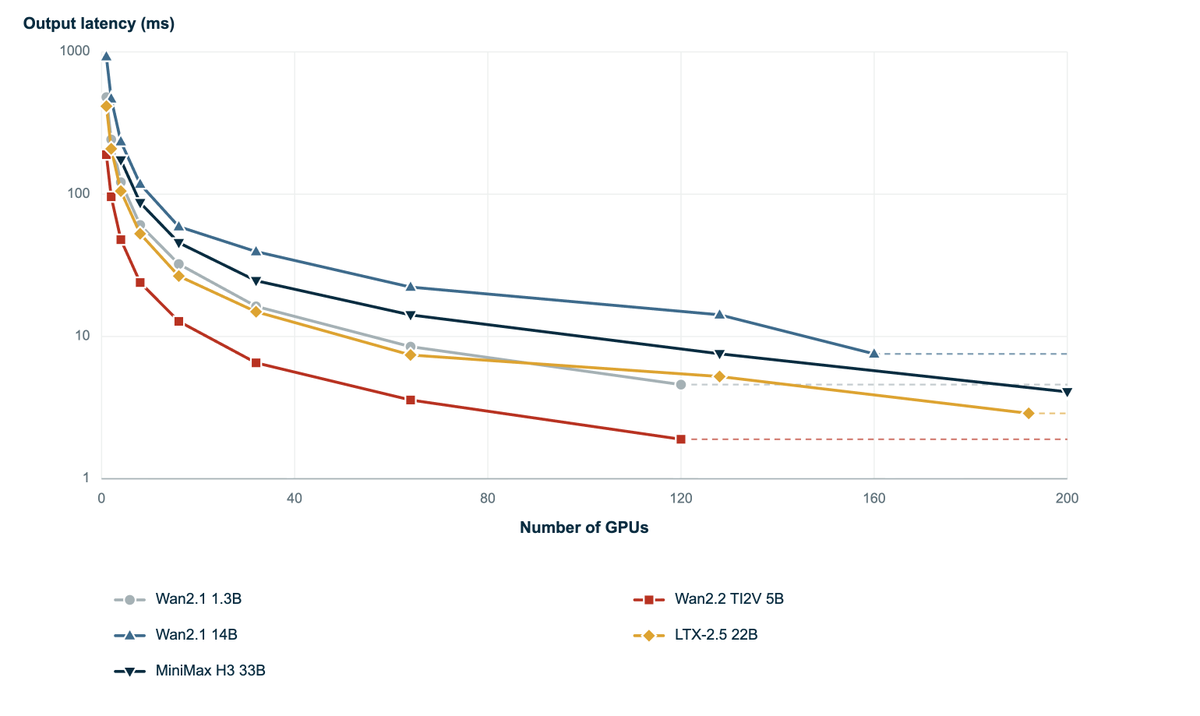
The vLLM Project officially announced that PhysisServe's core physical-world serving techniques are being integrated into vLLM-Omni. Addressing the severe memory bottlenecks and latency spikes of multi-step video diffusion and physical AI generation, PhysisServe introduces cross-denoising-step pipeline parallelism across Transformer blocks, time-shared batching, and virtual-rank joint scheduling. Benchmarked on MiniMax H3 33B across 200 GPUs, it generates a chunk every 4.1 ms (~1,000 FPS without VAE decoding), while cutting single-GPU latency for Wan2.2 5B from 173 ms down to 98 ms.

vLLM-Omni Integrates PhysisServe: Accelerating Video Diffusion & Physical-World AI with 4.1ms Chunk Output

Key Takeaways

  • The vLLM project announced the upstream integration of PhysisServe's serving architecture into vLLM-Omni for physical AI and video models
  • Introduces cross-timestep block pipelining and time-shared batching to eliminate GPU communication bubbles in multi-step diffusion
  • Generates a video chunk every 4.1 ms on MiniMax H3 33B across 200 GPUs (~1,000 FPS), cutting Wan2.2 5B single-card latency to 98 ms
  • Expands 24-GPU serving concurrency by 1.7x to 3.3x, with full open-source code merging into the vLLM-Omni mainline
Read full story
Linked Models & Agents:
N
NEURA Robotics@neura-robotics·
👀108
🔥88

NEURA Robotics launches Neuron AI, a Perception-Language-Action foundation model that fuses 3D vision, touch, audio and memory across five robot embodiments

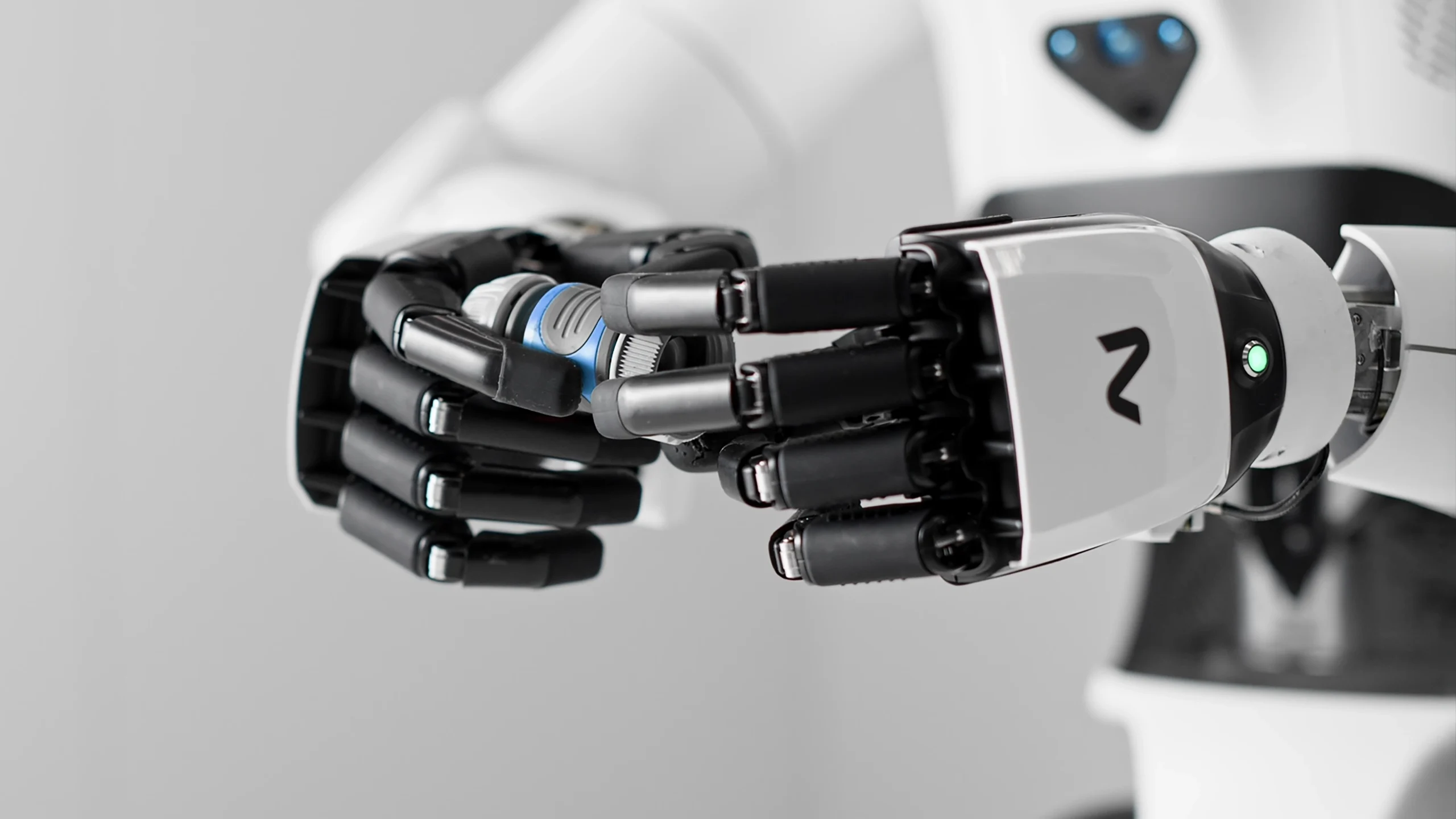
On 2026-10-14 NEURA Robotics launched Neuron AI, a Physical AI foundation model built on a Perception-Language-Action (PLA) architecture that aligns 3D vision, touch and force, audio, robot state and language in one space, adds memory, and runs on the robot itself across five NEURA embodiments. No quantitative benchmarks were published. Customers fine-tune skills and roll them out to fleets via Neuraverse; a fully autonomous 11-minute laundry task will be demoed at NVIDIA GTC Berlin on October 20–22.

NEURA Robotics launches Neuron AI, a Perception-Language-Action foundation model that fuses 3D vision, touch, audio and memory across five robot embodiments

Key Takeaways

  • Neuron AI takes 5 modalities (3D vision, touch/force, audio, robot state, language) and outputs one action stream
  • One model across 5 NEURA embodiments, including 4NE-1 Gen 3, Gen 4, a wheeled 4NE-1 and two bimanual platforms
  • Trained on 3 data pillars: real robot data from NEURA Gyms, simulation-amplified data, and human demos from sensor suits; Schaeffler and Bosch are data partners
  • Runs locally with no cloud dependency; no quantitative benchmarks published, Time-to-Skill is the headline metric (no figures given)
  • Live demo at NVIDIA GTC Berlin, Oct 20–22 (Hall 3, Booth #3031): 4NE1 completes an 11-minute laundry task autonomously
Read full story
ADSponsored

Reka AI Open-Sources RekaDaily-10k: 10,312 Hours of Raw First-Person Egocentric Video on Hugging Face

Reka released RekaDaily-10k under Apache 2.0 on Hugging Face, featuring 10,312 hours of unscripted first-person household video collected globally across real homes to power embodied and physical AI research.

Key Takeaways

  • Overcomes synthetic training limits by capturing messy, authentic, first-person egocentric home environments;
  • Broad geographic diversity spanning four continents with over 1,670 hours of native 4K high-res capture;
  • Fully open under Apache 2.0 on Hugging Face for unrestricted academic and commercial physical-AI training.
Read full story
Linked Models & Agents:
⚡ Reka Flash 3