
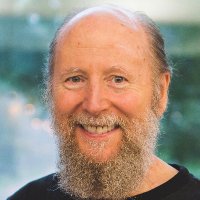
Richard Sutton, a founder of reinforcement learning and co-winner of the 2024 Turing Award, posted on X at 23:42 UTC on October 30 that he is sanguine about the technological singularity partly because he has seen it coming for over 50 years. He quoted a passage he wrote in 1975 at 17: once man creates an intelligence greater than his own, that intelligence should be able to create a still greater one, and intelligence could shoot up within years. The post drew more than 2,300 likes and about 167,000 views, and was widely shared in English and Chinese threads debating what role humans keep. This is a summary of an X discussion, not a verified conclusion.
Key Takeaways
- ✓Original post: Richard Sutton himself, 23:42 UTC on October 30, quoting a passage he wrote in 1975 at age 17 and calling it one reason he is sanguine about the singularity
- ✓Key ideas in the passage: understand the brain first; once that breakthrough comes, progress accelerates exponentially; a smarter-than-human intelligence builds an even smarter one; humans are either left behind or become that intelligence
- ✓Engagement (X API, read around 19:07 SGT on Oct 31): 2,376 likes, 232 reposts, 45 quotes, 97 replies, 882 bookmarks and about 167,000 views
- ✓Debate points: how early this anticipates todays recursive self-improvement framing; Chinese-language reposts focus on what human intelligence still means; others argue for using AI to learn faster
- ✓Sutton co-founded reinforcement learning and temporal-difference learning, and his 2019 essay The Bitter Lesson argues that general methods that scale with compute win in the long run
Key Decision Metrics at a Glance
Turn your technical choice into a development budget
Compare 40 dev plans & simulate token costs vs $20/mo subscriptions
Project Links & Resources
Direct AccessIn-Depth Technical Analysis
Background and the problem
In 2026, recursive self-improvement has moved from science fiction to roadmaps that AI company CEOs discuss in public, and developers use ever stronger coding agents every day, so "will AI soon surpass humans" is one of the most asked questions in the community. At 23:42 UTC on October 30, reinforcement learning pioneer Richard Sutton posted on X a passage he wrote in 1975 at age 17, saying it is one reason he is sanguine about the technological singularity: he has seen it coming for over 50 years.
How it works
The 1975 passage argues in four steps. To best aid his problem-solving machinery, man must first understand it, and that understanding was poor. Once a breakthrough in understanding the brain occurs, improvement comes very fast and exponentially. An intelligence greater than man''s should be able to create one greater than itself, just as man created it. So intelligence could shoot up within years, and man will either be left behind by a superior intelligence he can no longer understand or become that intelligence himself. According to ACM, Sutton and Andrew Barto received the 2024 Turing Award for the conceptual and algorithmic foundations of reinforcement learning, and their temporal-difference and policy-gradient methods still underpin techniques such as RLHF.
Benchmarks and results
This is an opinion debate, so there are no benchmarks. What can be verified is engagement: read through the X API around 19:07 SGT on October 31, the post had 2,376 likes, 232 reposts, 45 quotes, 97 replies, 882 bookmarks and about 167,000 views. Among quote posts, Chinese-language users focused on what human intelligence still means, with one Chinese explainer reposted more than 30 times, while an engineer proposed a third path: using AI to learn faster rather than choosing between merging and being left behind.
What developers can do
For developers, the thread is a good entry point into Sutton''s thinking. His 2019 essay The Bitter Lesson argues that general methods that scale with compute, namely search and learning, beat hand-coded human knowledge in the long run. In daily work, that suggests favoring agent designs that improve automatically as models get better and writing fewer prompt tricks that only work for today''s model. Note that the post is a personal look back, not a new prediction of a singularity timeline.
Benchmark side-by-side against alternatives, or calculate monthly token cost vs subscription break-even.
Discussion & Comments
0Sign in to join the discussion
Connect with AI developers to exchange benchmark insights.