AI Coding Live News

Google Cloud Launches Gemini for Healthcare in Preview: The Gemini Agent Comes to Health Systems and Health Plans, with 27 Connectors Including Read-Only Epic and Oracle Health EHR Access and HIPAA Support

On November 10, Google Cloud CEO Thomas Kurian announced Gemini for healthcare, available in preview in the U.S. starting today. It extends the universal Gemini agent introduced at Gemini at Work in October to health systems and health plans, and is built from four parts: healthcare skills, system connectors, a partner ecosystem, and one governed platform. It can assemble a patient history across care settings, prepare charts before visits, build prior-authorization packets against payer policy and draft appeals, and help payers check requests against medical policy and explain out-of-pocket costs. Google says the platform is built to support HIPAA compliance and that clinical data is never used to train its foundation models.
Google Cloud Launches Gemini for Healthcare in Preview: The Gemini Agent Comes to Health Systems and Health Plans, with 27 Connectors Including Read-Only Epic and Oracle Health EHR Access and HIPAA Support

Key Takeaways

  • Status: U.S. preview, available today, joining the existing solutions for legal, financial services, and government services (official blog)
  • Connectors: Google lists 27, spanning EHRs, eligibility and claims, terminology and coding, coverage rules, clinical guidelines, productivity, and security; Epic and Oracle Health EHR access is read-only, with no write-back to the chart
  • Pain point: Google says clinicians spend nearly 28 hours a week manually reconciling fragmented information (company figure)
  • MCP: InterSystems provides a FHIR MCP Server, and Keragon connects 400+ healthcare apps through a single MCP integration
  • Ecosystem: 16 systems integrators, including Accenture, Deloitte, KPMG, PwC, and TCS, help with deployment; model choice lets routine admin steps go to low-cost models
Read full story

Meta Brings Three Muse Models to Google Cloud: Muse Wonder, Muse Spark 1.3, and the New Muse Ember Arrive in Model Garden as Preview Partner Models on a Global OpenAI-Compatible Responses Endpoint

Meta CEO Mark Zuckerberg announced on November 9 (US time) that Muse Ember, Muse Spark 1.3, and Muse Wonder are now available on Google Cloud, and Sundar Pichai replied "welcome to the model garden." Google's official docs list all three as Preview partner models, served only on the global endpoint through a stateless OpenAI-compatible Responses API. Google's page does not list prices, so Meta's own rate card remains the reference.

Key Takeaways

  • Scope: 3 models, Muse Wonder 1.0, Muse Spark 1.3, and Muse Ember 1.0, all marked Preview in Google's partner model list (Google Cloud docs)
  • Access: a single global endpoint with the stateless OpenAI-compatible Responses API; store: true is not supported; pass the bare model ID muse-wonder-1.0, muse-ember-1.0, or muse-spark-1.3
  • Pricing reference (Meta's official rate card; Google's page lists no prices): Wonder $4 / $20, Spark 1.3 $1.25 / $4.25, Ember $0.10 / $0.50 per million input/output tokens
  • Official positioning: Wonder handles long-horizon coding and agent planning, Ember handles high-volume tool calls, routing, and extraction, and Google's docs suggest pairing Ember with Wonder or Spark 1.3; Spark 1.3 supports MCP and a 1M context window
  • Zuckerberg's post drew 5,300+ likes and about 250K views; Sundar Pichai's "welcome to the model garden" reply drew 2,100+ likes; LiteLLM already has PR #50768 adding support
Read full story

Google AI Studio Adds Google Maps Platform: Describe a Maps App in One Prompt, Get a One-Click Maps Demo Key With No Credit Card and 100 Free Calls per API per Day

Google announced on November 9 that developers can now build apps with Google Maps Platform directly inside Google AI Studio. Describe an idea, such as an interactive 3D tour of New York landmarks, and when AI Studio detects maps intent it shows a "Set up Google Maps Platform" card that provisions a Maps Demo Key in one click, stores it in the app's secrets and loads a live interactive map in the preview. The Demo Key needs no credit card or billing account and allows 100 calls per API per day; linking a Google Cloud billing account unlocks production quotas. New users get most APIs, including Maps, Places, Routes, Weather, Air Quality and Aerial View, while existing Google Cloud users prototyping for free get a common subset.

Google AI Studio Adds Google Maps Platform: Describe a Maps App in One Prompt, Get a One-Click Maps Demo Key With No Credit Card and 100 Free Calls per API per Day

Key Takeaways

  • Free tier: the Maps Demo Key allows 100 calls per API per day, resetting every 24 hours, with no credit card or Google Cloud billing account
  • New users get all Maps Platform APIs except Route Optimization, Solar and Nav Connect, including Maps JavaScript, Places, Routes, Geocoding, Weather, Air Quality, Pollen, Aerial View and Maps Experience agent tools
  • Existing Google Cloud users prototyping for free get a common subset (Places without user content such as photos and reviews), or can connect a billed project for 100% of APIs and standard quotas
  • The key is injected into app secrets as GOOGLE_MAPS_PLATFORM_KEY; linking billing to the project later keeps the same key working
  • Google also published a Codelab that builds a maps app in AI Studio Build mode and deploys it to Cloud Run
Read full story
Linked Models & Agents:

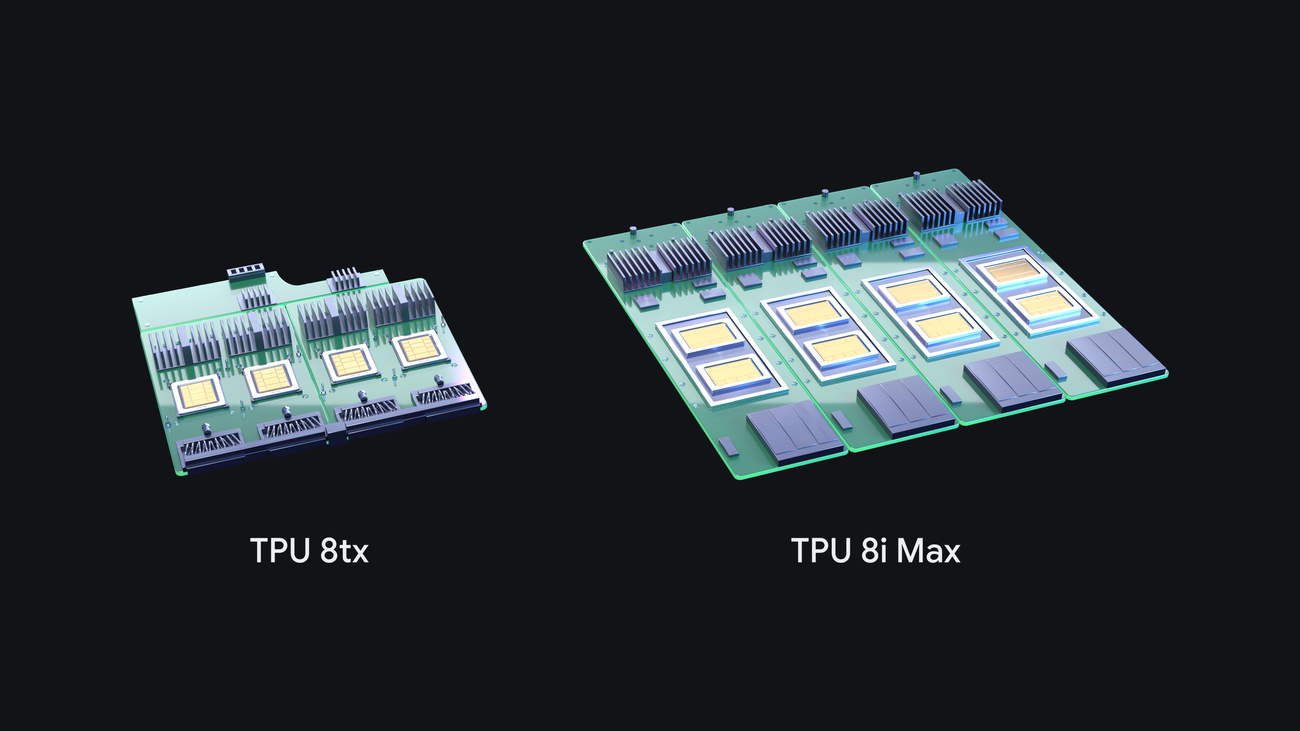
Google Adds TPU 8i Max and TPU 8tx to Its Eighth-Generation TPUs: 8i Max Packs Two Chips for Double the Compute, SRAM and HBM Bandwidth, 8tx Targets Confidential Inference, and TPU Sync Goes Open Source

On November 9, the official Google Cloud account and Amin Vahdat, Google SVP for AI and Infrastructure, announced two new eighth-generation TPU systems. TPU 8i Max packages two TPU 8i chips together; Google says it has 2x the compute, SRAM and HBM bandwidth of TPU 8i, and it targets massive context windows and the highest compute density per rack. TPU 8tx uses the same silicon as TPU 8t, pairs it with 5th Gen AMD EPYC hosts, and protects data and model weights in hardware while they are in use; Google says it has up to 2x lower latency than TPU 8t with a near-zero performance penalty. With 8t and 8i from April, this is the first time Google has introduced four TPU systems in one year. On software, Google is open-sourcing TPU Sync, which it says cuts KV transfer latency and time to first token by more than 90%, adding Agent Compute Engine and a preview TPU agent suite that plugs into Claude Code, Cursor and Antigravity, and making Cloud Pathways and GKE dynamic slicing generally available. Google has not published availability dates or pricing.

Google Adds TPU 8i Max and TPU 8tx to Its Eighth-Generation TPUs: 8i Max Packs Two Chips for Double the Compute, SRAM and HBM Bandwidth, 8tx Targets Confidential Inference, and TPU Sync Goes Open Source

Key Takeaways

  • Lineup: the eighth-generation TPU family now has 4 systems: 8t (training), 8i (low-latency reasoning), 8tx (confidential computing) and 8i Max (massive context); Google says it is the first time it has introduced 4 TPU systems in one year
  • TPU 8i Max: two 8i chips in one package; Google says compute, SRAM and HBM bandwidth are all 2x TPU 8i, with 2x the silicon in the same rack footprint
  • TPU 8tx: same silicon as 8t with 5th Gen AMD EPYC hosts, protecting data and weights in hardware even while in use; Google says latency is up to 2x lower than 8t with a near-zero performance penalty
  • Software: open-source TPU Sync (Google says KV transfer latency and TTFT drop more than 90%); GKE dynamic slicing is GA, with up to 5x faster job startup and up to 4.5x faster fault recovery
  • Developers: a preview open-source TPU agent suite plugs into Claude Code, Cursor and Antigravity; TPUs have nearly 100 customers; availability and pricing are not published
Read full story
ADSponsored

Google Open-Sources Elephant-Goldfish Model (EGM): Spec-First Plugin That Has Zero-Context Subagents Review Designs in Five Stages

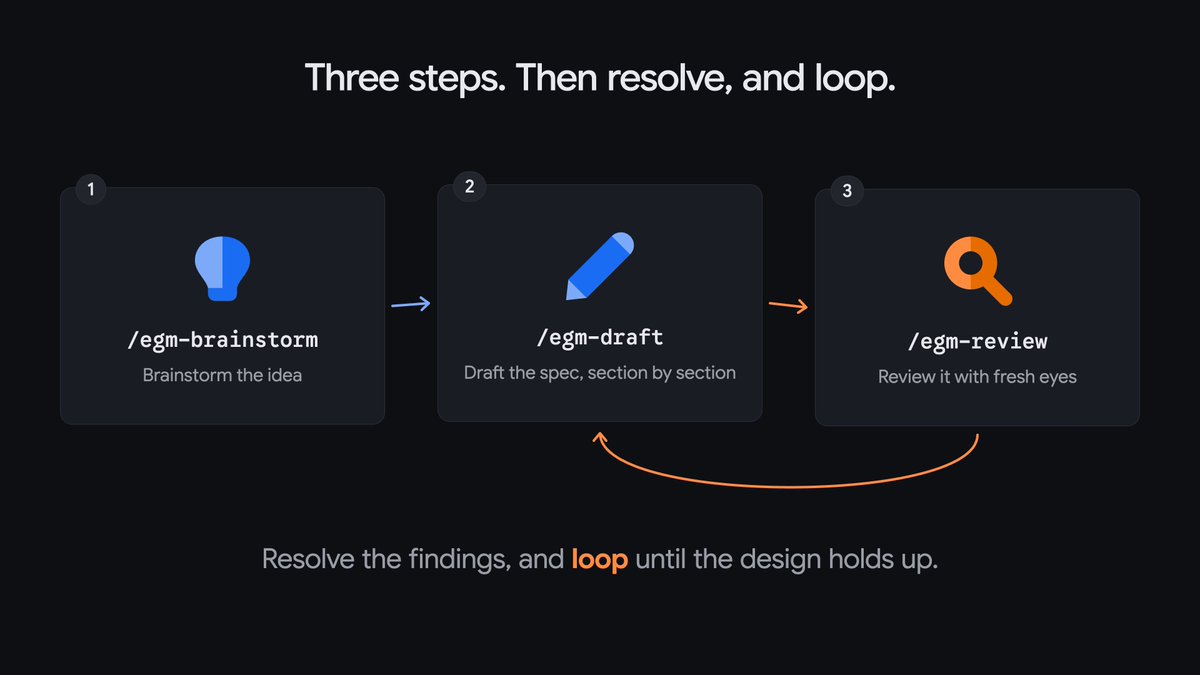
Google Cloud Tech's official account promoted Google's new open-source plugin Elephant-Goldfish Model (EGM) at 23:00 UTC on 2026-11-07 (07:00 SGT on November 8). The "Elephant" holds project context and drafts a design spec; "Goldfish" reviewers are fresh subagents that never saw the earlier conversation and look for unstated assumptions and implementation risks across five stages, and the developer approves the spec before any code is written. The repo sits in the google GitHub org under Apache-2.0, supports Claude Code, Codex, Antigravity and the ChatGPT desktop app, and is at v0.1.1. The README says it is not an officially supported Google product, and no effectiveness benchmark has been published.

Google Open-Sources Elephant-Goldfish Model (EGM): Spec-First Plugin That Has Zero-Context Subagents Review Designs in Five Stages

Key Takeaways

  • The repo google/elephant-goldfish-model is Apache-2.0 licensed; at writing it has about 14,900 GitHub stars and 1,084 forks
  • The Google Cloud Tech post had about 1,693 likes, 188 reposts, 1,707 bookmarks and 137,000 views at writing
  • egm-review runs five phases: Initial Zoom Out Review, Comprehension Review, Design Critique, Intermediate Zoom Out Review and Implementation Readiness
  • Supports Claude Code, Codex CLI, Antigravity and the ChatGPT/Codex desktop app; v0.1.1 (November 6) adds experimental Cursor, OpenCode and GitHub Copilot adapters
  • The README states it is not an officially supported Google product; no defect-detection or quality metrics have been published
Read full story

X Discussion: DeepMind VP and Google Cloud Chief Scientist Pushmeet Kohli Says Scientific Discovery Is Seeing a "Genuine Phase Transition," With a Glimpse Coming in Upcoming Releases

Pushmeet Kohli (@pushmeet), Vice President at Google DeepMind and Chief Scientist of Google Cloud (roles stated in his X bio), posted on X at 10:15 UTC on 2026-11-08 that across DeepMind projects they are witnessing a "genuine phase transition" in the pace of scientific discovery, and that "you will see a glimpse of this in our releases in the next few weeks." In a follow-up reply he added that as this AI-powered acceleration unfolds, the focus will be on empowering the broader scientific community to harness these tools responsibly. At capture the original post had about 1,996 likes, 149 reposts, 48 quotes, 71 replies, 272 bookmarks and about 72,735 impressions. The posts do not name a field, model or discovery, and this is not an announcement from the Google DeepMind official account.

Key Takeaways

  • Original post: Pushmeet Kohli (bio "Chief Scientist, Google Cloud. VP DeepMind") posted at 10:15 UTC on 2026-11-08; about 1,996 likes, 149 reposts, 48 quotes, 71 replies, 272 bookmarks and 72,735 impressions at capture
  • His wording: across DeepMind projects they are witnessing a "genuine phase transition" in the pace of scientific discovery, and "you will see a glimpse of this in our releases in the next few weeks"
  • A follow-up posted in the same minute only adds that as this AI-powered acceleration unfolds, the focus will be on empowering the broader scientific community to harness these tools responsibly
  • The posts do not name a field, model, product or any specific discovery; replies asked which discovery now takes weeks instead of years, and he did not answer that in the original thread
  • Framing: a discussion started by a DeepMind VP's personal account, not an official @GoogleDeepMind announcement, and with no new official data or a checklist of named releases
Read full story
Linked Models & Agents:

OpenAI Codex CLI 0.167.0: Agent Command Center with Unread Marks, Backend Switching that Keeps Drafts, Vertex AI Setup Wizard

On 2026-11-06 OpenAI shipped Codex CLI 0.167.0 on GitHub and the ChatGPT/Codex changelog. Open the agent command center with codex agents --no-daemon (unread results marked); switch connected backends in the terminal session picker while keeping drafts; preview local images; expand patches during approval prompts; optionally enable a Google Cloud Vertex AI setup wizard.

Key Takeaways

  • Official: GitHub rust-v0.167.0 (2026-11-06T01:40Z) and same-day ChatGPT/Codex changelog entry
  • Command center: codex agents --no-daemon; unread results marked in the center and session picker
  • Multi-backend: switch connected backends from the terminal session picker while keeping drafts
  • UX: local image previews in supported terminals; expand patch details while an approval prompt is open; network approval prompts close when requests end and serialize per endpoint
  • Auth: enable gcp_setup_wizard for Vertex AI under Sign in another way (ADC or credential file); opt into macOS/Windows system proxies from /experimental
Read full story
Linked Models & Agents:

Google Donates Agent Substrate, gVisor, and OpenRL to CNCF; Agent Substrate 1.0 GA on GKE

On 2026-11-05 Google Cloud announced donating Agent Substrate, gVisor, and OpenRL to the CNCF (Sandbox accepted) and that Agent Substrate reached 1.0 with Agent Substrate on GKE generally available. Vendor claim: idle agents snapshot and resume on any ready Worker in under 500ms at about 10x container density.

Google Donates Agent Substrate, gVisor, and OpenRL to CNCF; Agent Substrate 1.0 GA on GKE

Key Takeaways

  • Official: @GoogleOSS 2026-11-05 17:05 UTC; Google Cloud blog; VP Drew Bradstock
  • Donation: Agent Substrate, gVisor, and OpenRL enter CNCF Sandbox; gVisor on a path toward Incubation
  • GA: Agent Substrate 1.0 / Agent Substrate on GKE; managed or self-host on any Kubernetes
  • Vendor figures: resume <500ms, ~10x density, >500 suspend/resume per second; microVM or gVisor
  • Entry points: ate.dev / gvisor.dev / openrl.dev
Read full story

Google DeepMind expands Gemini-built PlanAssist to 15 English councils after pilots cut planning assessment time by up to 58%

On October 31, Google DeepMind said PlanAssist, a Gemini-built planning tool developed with the UK government, Google Cloud and Faculty, will be made available to 12 more local planning authorities in England, bringing the total to 15 for a 12-month Beta on live applications. In early pilots at Barnet, Camden and Dorset, DeepMind says the average officer time on householder assessment tasks fell by 58%, and more than 70% of the drafted reports were approved with no edits. Planning officers keep the final decision.

Google DeepMind expands Gemini-built PlanAssist to 15 English councils after pilots cut planning assessment time by up to 58%

Key Takeaways

  • Scale: from 3 pilot councils to 15; the 12 new ones join in three cohorts for a 12-month Beta (DeepMind blog)
  • Efficiency: average officer time on householder assessment tasks fell 58% in pilots (vendor-reported; DeepMind's X post says "up to 58%")
  • Quality: more than 70% of AI-drafted reports were approved by officers with no edits (vendor-reported)
  • The UK government says, together with new rules, routine householder processing can halve from eight weeks to four, and it aims to offer the tool to every council in England in 2027 (GOV.UK)
Read full story
A
Anthropic (Claude Help Center)support.claude.com·
👀32
🔥82

Anthropic Text Watermarks Reach Older Claude Models: Mythos 5, Opus 4.7 and Sonnet 4.6 Now Marked on First-Party and Cloud Surfaces, Bedrock Done by November 10, Opus 4.6 and Others Not Yet

Anthropic's help center article "How Claude marks AI-generated content" updated its support table again this week. Among models released before August 2, Claude Mythos 5, Opus 4.7 and Sonnet 4.6 are now ticked for both first-party text watermarks and cloud-partner text watermarks (AWS, Google Cloud, Microsoft Foundry), with a note that the Amazon Bedrock rollout will complete by November 10. Opus 4.6, Opus 4.5, Sonnet 4.5 and Haiku 4.5 currently carry only C2PA file credentials, with no text watermark yet. A new limitation note says Sonnet 4.6 and Opus 4.6 outputs may not reliably carry the watermark when temperature, top_p or top_k is set to a non-default value. Media earlier cited a customer email saying legacy watermarks started on November 3. The watermark is a SynthID-Text variant that adds no characters or tokens, and the detection API remains in private preview.

Anthropic Text Watermarks Reach Older Claude Models: Mythos 5, Opus 4.7 and Sonnet 4.6 Now Marked on First-Party and Cloud Surfaces, Bedrock Done by November 10, Opus 4.6 and Others Not Yet

Key Takeaways

  • Latest support table (help center, updated this week): Mythos 5, Opus 4.7 and Sonnet 4.6 are ticked for both first-party and cloud-partner text watermarks; Opus 4.6, Opus 4.5, Sonnet 4.5 and Haiku 4.5 have only C2PA, with no text watermark yet
  • Timing: Anthropic says the Amazon Bedrock rollout completes by November 10; media earlier cited a customer email putting the legacy start at November 3 (MACCUS)
  • Sampling caveat: for Sonnet 4.6 (and Opus 4.6, per the limitations list), setting temperature, top_p or top_k to a non-default value means outputs may not reliably carry the watermark
  • Cost and quality: Anthropic says the watermark adds no characters, no extra tokens and no extra cost, using a variant of SynthID-Text (see Anthropic's explainer)
  • Detection: the detection API is still in private preview for regulators, law enforcement, media, fact-checkers, researchers and obligated enterprises; marks apply worldwide on all supported surfaces
Read full story
ADSponsored

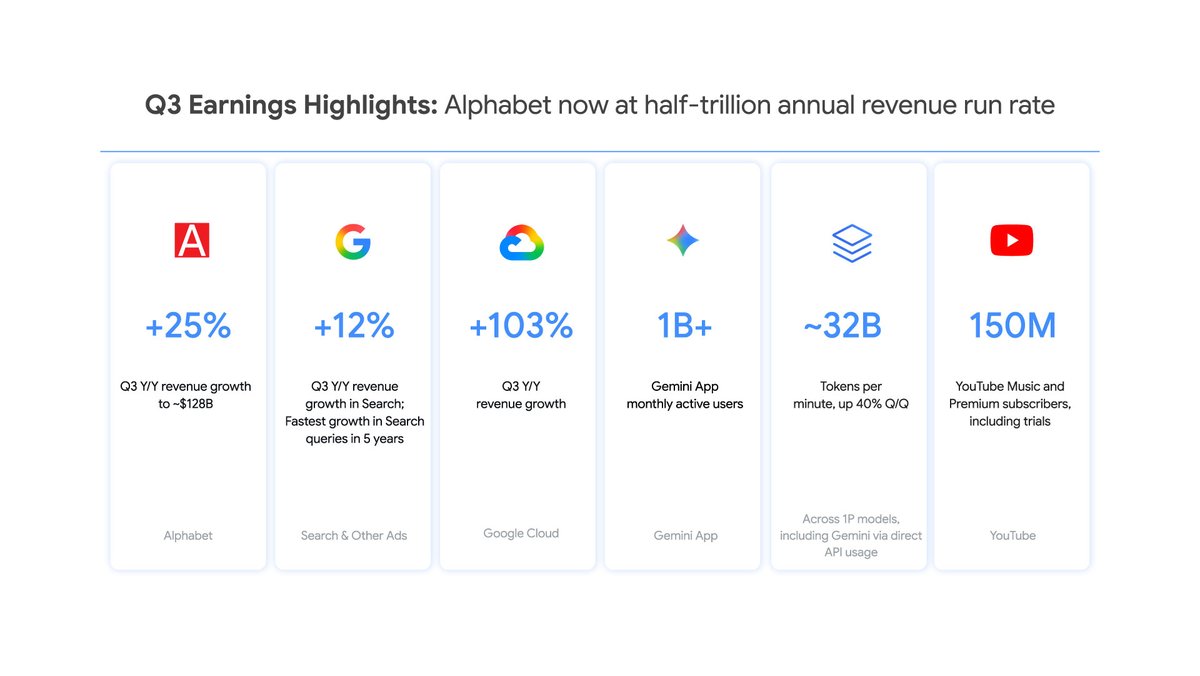
Alphabet Q3 2026: revenue up 25% to $127.6B, Google Cloud up 103%, first-party model APIs near 32B tokens per minute

After the US market close on Oct 28, Alphabet reported Q3 2026 results: revenue rose 25% to $127.6B, and Google Cloud revenue more than doubled, up 103% to $30.7B, which the company attributes to enterprise AI infrastructure, AI solutions and TPU system sales. In the release and on X, Sundar Pichai said first-party model APIs now process nearly 32B tokens per minute, more than four times a year ago, and that the Gemini app has reached one billion users. The cost: Q3 capital expenditures of $51.4B and free cash flow of negative $9.1B.

Alphabet Q3 2026: revenue up 25% to $127.6B, Google Cloud up 103%, first-party model APIs near 32B tokens per minute

Key Takeaways

  • Revenue of $127.58B, up 25% year over year and the 13th straight quarter of double-digit growth; Pichai says Alphabet is on a $500B annual revenue run rate
  • Google Cloud revenue of $30.71B versus $15.16B a year ago, up 103%; Cloud operating income of $11.12B versus $3.59B
  • First-party model APIs process nearly 32B tokens per minute, more than 4x a year ago; Pichai's X post puts quarter-over-quarter growth at 40%
  • The Gemini app reached one billion users, which Google calls the fastest-growing product in its history; Search query growth is the highest in five years
  • Q3 capex of $51.36B versus $23.95B a year ago, and free cash flow of negative $9.07B, the second negative quarter in a row
Read full story

Google brings Gemini Robotics ER 2, DeepMind's embodied reasoning model, to Google Cloud in public preview so enterprises can orchestrate VLA models and multi-robot teams

On Oct 27 Google Cloud announced that Gemini Robotics ER 2, Google DeepMind's embodied reasoning model, is in public preview on the Gemini platform via Model Garden, under the model ID gemini-robotics-er-2-preview and built on Gemini 3.5 Flash. It acts as a robot's high-level brain: it reasons over space and time in video, plans multi-step tasks, checks whether an action succeeded, and calls VLA models and navigation APIs as tools, including across teams of different robots. Google says it pinpoints key video frames with 91.3% accuracy.

Key Takeaways

  • Model ID gemini-robotics-er-2-preview, built on Gemini 3.5 Flash, takes text, image, video and audio input, with a 131,072-token input and 65,536-token output limit
  • The core pattern is declaring VLA models, navigation APIs or custom functions as tools, with ER 2 planning and orchestrating them while explaining itself and accepting redirection in natural language
  • It classifies task progress as binary, discrete or continuous scores; Google cites 91.3% accuracy and a 0.96-second mean frame distance for finding key moments in video
  • It reads values from more than 10 instrument types, including dials, sight glasses, digital displays and rulers
  • The enterprise version adds IAM, security controls and function calling; the Cloud preview supports GenerateContent but not the Live API, and Boston Dynamics and Arm are among early users
Read full story
Linked Models & Agents:

Google Cloud Open-Sources TorchTPU: Native PyTorch on Google TPU Hardware with Day-Zero vLLM and SGLang Support

Google Cloud officially open-sourced TorchTPU, enabling native, zero-compilation-barrier PyTorch execution directly on Google Cloud TPU hardware (TPU v5p and TPU v6e). Overcoming the legacy friction of PyTorch/XLA's rigid graph compilation and dynamic-shape stalls, TorchTPU supports native PyTorch eager execution and custom Triton/C++ kernels. Leading high-throughput serving engines vLLM and SGLang announced immediate Day-0 support. Concurrently, Google Cloud introduced OpenAI models and Codex into its Vertex Model Garden, becoming the first hyperscaler to offer all three top frontier closed models.

Google Cloud Open-Sources TorchTPU: Native PyTorch on Google TPU Hardware with Day-Zero vLLM and SGLang Support

Key Takeaways

  • Google Cloud open-sources TorchTPU, delivering native, compilation-free PyTorch execution on TPU v5p and TPU v6e hardware
  • Eliminates PyTorch/XLA graph-compilation overhead, natively supporting PyTorch eager mode and custom Triton/C++ kernels
  • vLLM and SGLang announce immediate Day-0 TorchTPU releases, unlocking substantial throughput boosts on TPU infrastructure
  • OpenAI frontier models and Codex join Google Cloud's Model Garden, solidifying Google Cloud as the premier multi-model hyperscaler
Read full story

OpenAI frontier models and Codex are coming to Google Cloud: Model Garden access, bought via Marketplace against existing GCP commitments

On Oct 21, OpenAI and Google Cloud announced a partnership bringing OpenAI frontier models and Codex agentic workflows into Google Cloud Model Garden, transacted through Google Cloud Marketplace so enterprises can draw down existing GCP commitments. OpenAI models will also come to Google Antigravity and Gemini Agent soon. General availability is planned in the coming weeks, and Microsoft remains OpenAI's primary cloud partner. After AWS, this puts OpenAI models on all three major US clouds.

OpenAI frontier models and Codex are coming to Google Cloud: Model Garden access, bought via Marketplace against existing GCP commitments

Key Takeaways

  • Channel: OpenAI frontier models and Codex come to Google Cloud Model Garden, transacted through Google Cloud Marketplace (official)
  • Procurement: enterprises can draw down existing GCP commitments, no separate OpenAI contract or invoice
  • Ecosystem: OpenAI models are coming soon to Google Antigravity and Gemini Agent, selectable alongside Gemini
  • Timing: GA planned in the coming weeks, access requests open now; Microsoft remains the primary cloud partner
  • Landscape: after Microsoft exclusivity ended in April and AWS added OpenAI models, OpenAI is now on all three major US clouds (per Reuters/CNBC)
Read full story

llm-d 1.0 ships: the Kubernetes-native open-source distributed inference stack led by Red Hat, IBM and Google hits production readiness, with vendors reporting 3,000 self-hosted coding agents at 5-10x lower cost than commercial APIs

At PyTorch Conference North America on Oct 20, the CNCF Sandbox project llm-d released version 1.0. It turns inference engines such as vLLM and SGLang into one coordinated serving pool, and 1.0 adds multi-tenant priority and fairness scheduling (flow control), router high availability with zero-downtime rolling upgrades (DisaggregatedSet), a v1 configuration API, and agent-aware session routing with Responses API state. Founded in 2025 by Red Hat, IBM, Google Cloud, CoreWeave and NVIDIA, the project has 500+ contributors, and JetBrains, DigitalOcean and Mistral already run it in production.

llm-d 1.0 ships: the Kubernetes-native open-source distributed inference stack led by Red Hat, IBM and Google hits production readiness, with vendors reporting 3,000 self-hosted coding agents at 5-10x lower cost than commercial APIs

Key Takeaways

  • Scale (Red Hat press release, vendor-reported): GLM 5.2, roughly 753B parameters, on NVIDIA GPUs peaked at 6.6M output tokens per minute and served up to 3,000 concurrent coding agents with zero preemptions, 5-10x cheaper per token than equivalent commercial API pricing at cloud rental rates
  • Cache reuse: IBM says the prefix-aware router captured 97% of available cache reuse on an agentic coding workload; an IBM Research quantum error correction project saw ~98% prefix hits, ~$0.11 per million tokens, and 11.5x lower cost than an all-proprietary setup
  • Google Cloud figures: on Ironwood TPU, prefix-aware routing plus host memory offload cut median time-to-first-token by more than 85% and raised throughput 2.4x on an agentic coding workload; the Gemini platform doubled its prefix cache hit rate from 35% to 70%
  • New in 1.0: flow-control multi-tenant QoS, router hot-standby HA, DisaggregatedSet for coordinated prefill/decode rollouts, a v1 config API, and previous_response_id support in the Responses API
  • Ecosystem: 500+ contributors from 25+ organizations; JetBrains' free Junie Lite, DigitalOcean Serverless Inference and Mistral's tiered commercial traffic run on it; the GitHub v1.0.0 notes admit not every tracked goal shipped
Read full story