AI Coding Live News

X Discussion: Vercel CEO Guillermo Rauch Says "Own Your Intelligence," Urging Local Models to Keep Spreading and Developers to Own Their Agent Harness and Data

Vercel CEO Guillermo Rauch posted on X on November 1: "Own your intelligence. Anyone that opposes this has something to sell you (perhaps your own intelligence back to you.)" He argued that local models need to keep proliferating; since the biggest models may be out of reach locally for now, the best option is to keep your options open: own your harness, data, connections and runtime, meaning your agents, and embrace open source. Within about 12 hours the post drew about 2,500 likes, 128K views and over 100 quote posts, with debate centered on how to balance local and cloud AI.

Key Takeaways

  • This is Rauch's personal opinion post, not an official Vercel announcement or product release.
  • The original post (2026-11-01 21:08 UTC) had about 2,533 likes, 255 reposts, 266 replies, 107 quotes, 128K views and 581 bookmarks at fetch time.
  • Core claim: local models should keep spreading; until the biggest models can run locally, keep your options open by owning your harness, data, connections, runtime and agents, and embrace open source.
  • Mark (@marksuman), co-founder and CEO of Maple AI, replied in a quote post that it will be hybrid: cloud will always be more powerful, so local-first AI should be paired with private cloud.
  • Engineer Shantanu Goel (@shantanugoel) quoted it saying "Guillermo says the truth that most others won't!", drawing about 37 likes.
Read full story
Linked Models & Agents:

YC Labs pits AI agent swarms in Minecraft and Mindustry: GPT swarms win 12 of 16 head-to-head games against Claude, while a 50-agent colony slides into bureaucracy

YC Labs, a research project at Y Combinator, and multi-agent environment startup Olam Labs published "Agents in Games" on Oct 29. Fifty GPT-6.1 Sol agents told to "build a thriving civilization" in survival Minecraft spent three hours huddled in shelters rationing food, sending about 5,900 messages and inventing ration ledgers, permits and job titles. In nine Bed Wars games, 10 GPT-6.1 Sol agents beat 10 Claude Opus 5.5 agents 6–3; in seven 50-vs-50 Mindustry matches lasting about 9.5 hours, GPT won 6–1. The leader was almost always whichever agent was listed first in the directory, and stuck GPT agents fetched the game's public source code on their own. The Minecraft harness is open source. These are one lab's experimental observations, not a standardized benchmark.

YC Labs pits AI agent swarms in Minecraft and Mindustry: GPT swarms win 12 of 16 head-to-head games against Claude, while a 50-agent colony slides into bureaucracy

Key Takeaways

  • Head-to-head: GPT-6.1 Sol won Bed Wars 6–3 over nine games and Mindustry 6–1 over seven, 12 of 16 overall (see the YC Labs report)
  • Civ50: 50 GPT agents sent about 5,900 messages in three hours; 22 of 34 deaths came on the first night, after which the colony turned cautious
  • No election: 46 of the other 49 agents first messaged Ada, first on the roster, who received 616 DMs and became leader
  • Communication: in one Bed Wars game GPT players sent 1,147 DMs versus Claude's 82; GPT drifted into compressed shorthand while Claude voted with "+1"
  • Open source: the long-running Minecraft agent harness is public at yc-software/minecraft-agent-harness
Read full story

Microsoft FY27 Q1: Azure growth accelerates to 48%, Foundry revenue more than triples, and Agent 365 now governs 50M agents

On Oct 28, Microsoft reported results for its fiscal Q1 2027, the quarter ended Sep 30: revenue of $92.3B (+19%), Microsoft Cloud revenue of $63.9B (+30%), Azure growth accelerating from 42% last quarter to 48%, and commercial remaining performance obligation of $677B (+73%). CEO Satya Nadella added AI figures on X: Foundry revenue more than tripled year over year, revenue from open source models grew 10x, Copilot daily users grew nearly 50% quarter over quarter, and Agent 365 now holds over 50M agents. Separately, TechCrunch, citing Microsoft's regulatory filing, reports $10B of revenue from OpenAI-related commercial arrangements this quarter.

Microsoft FY27 Q1: Azure growth accelerates to 48%, Foundry revenue more than triples, and Agent 365 now governs 50M agents

Key Takeaways

  • Revenue of $92.3B (+19%) and operating income of $45.9B (+21%); Microsoft Cloud reached $63.9B (+30%) (earnings release)
  • Azure grew 48%, accelerating from 42% in FY26 Q4; commercial RPO reached $677B (+73%) (official investor metrics)
  • Foundry revenue more than tripled YoY, customers building with multiple models grew 5x, and open source model revenue grew 10x (per Satya Nadella on X)
  • Copilot daily users grew nearly 50% QoQ and more than 5x YoY; Agent 365 holds over 50M agents, up 30% QoQ
  • Per TechCrunch citing the 10-Q, OpenAI-related revenue was $10B, about 11% of the total; OpenAI investments added $207M to GAAP net income
Read full story

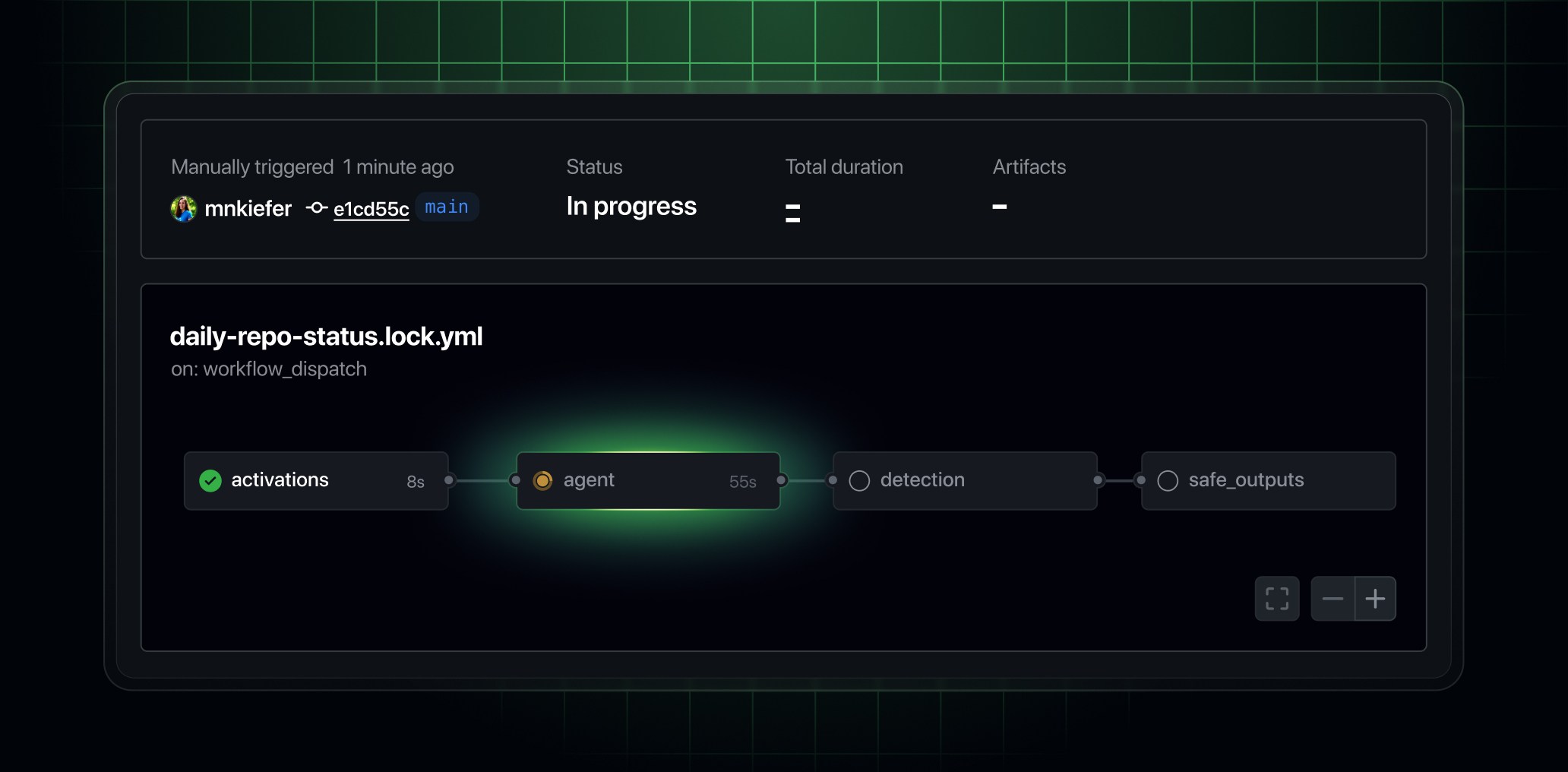
GitHub Agentic Workflows is generally available: write automation in Markdown, compile it to Actions YAML, run Copilot or your own coding agent, now with ARC self-hosting and micro-VM isolation

At Universe 2026 on Oct 28, GitHub made GitHub Agentic Workflows, an open source GitHub Next project, generally available on GitHub Free, Team and Enterprise. Developers describe tasks such as issue triage, CI failure analysis, documentation updates and test writing in natural-language Markdown, and gh aw compiles them into standard Actions YAML run by Copilot or a coding agent of their choice. GA adds self-hosted ARC runners with Docker-in-Docker, a non-experimental gh aw forecast cost estimate, per-workflow model providers and model routing, and Cloud Hypervisor or NVX micro-VM isolation.

GitHub Agentic Workflows is generally available: write automation in Markdown, compile it to Actions YAML, run Copilot or your own coding agent, now with ARC self-hosting and micro-VM isolation

Key Takeaways

  • Availability: GitHub Free, Team and Enterprise on github.com; using the default Copilot CLI engine requires a Copilot license
  • How it works: requirements in Markdown, compiled to standard Actions YAML that reuses existing runner groups and policies; run with Copilot or your own coding agent
  • Safe defaults: read-only permissions, a sandboxed container behind the Agent Workflow Firewall, safe-outputs validation, and a threat detection job before changes are applied
  • New at GA: self-hosted ARC runners with Docker-in-Docker, gh aw forecast out of experimental (with threat detection credits and monthly ranges), per-workflow model providers, model routing, micro-VM isolation and cross-repo enclaves
  • Customer story (Accenture's figures): one lead saved about 29 hours a week, AI authors 91% of the team's commits, and production errors fell from about 11,000 a day to under 1,000
Read full story
ADSponsored

Google previews Gemini API CLI (gemini-api), a zero-dependency Go binary that lets Claude Code, Codex, Cursor and other coding agents generate media, transcribe and run managed agents from the shell

The Google AI Studio team released an experimental preview of the Gemini API CLI (command name gemini-api). It is a stateless, zero-dependency Go binary for macOS, Linux and Windows, open source under Apache 2.0. Any coding agent with shell access and a GEMINI_API_KEY can call text reasoning, image, video, music and speech generation, file and YouTube analysis, audio and video transcription, and managed agents such as Deep Research with one command. Media is written straight to disk and only the file path goes to stdout, so base64 payloads never land in the context window. Google labels it experimental and not a supported Google product.

Google previews Gemini API CLI (gemini-api), a zero-dependency Go binary that lets Claude Code, Codex, Cursor and other coding agents generate media, transcribe and run managed agents from the shell

Key Takeaways

  • Default models (official README): gemini-3.8-flash for generate, analyze and transcribe; gemini-nano-banana-2.1 for image; gemini-omni-1.1-flash for video; lyria-3.5 for music; gemini-3.8-flash-tts for speech
  • Install with a one-line curl script on macOS/Linux, a PowerShell script on Windows, or go install; the latest GitHub release is v0.4.3 (published 2026-10-19)
  • Built for agents: --usage prints the command tree as KDL, --schema prints JSON Schema, --dry-run validates offline with credentials redacted, plus --output-format json/toon and inline --jq
  • Exit codes separate 4 cases: 0 success, 1 runtime/API failure, 2 usage or validation error, 3 auth failure; --agent-mode emits structured JSON errors
  • It also manages sandbox environments, server-side credentials, webhooks and cron triggers for managed agents; files uploaded via the Files API are kept for 48 hours
Read full story
Linked Models & Agents:
⚡ Gemini 3.8 Flash⚡ Gemini Nano Banana 2.1⚡ Gemini Omni 1.1 Flash⚡ Lyria 3.5⚡ Gemini 3.8 Flash TTS🤖 Gemini API CLI🤖 Claude Code🤖 Codex🤖 Cursor🤖 Antigravity🤖 Deep Research🌐 Google

Eagle releases EAGLE-4, a speculative-decoding drafter that adapts to batch size and hardware; it reports 961.6 tok/s on Qwen3.8-27B for a single request

On Oct 20, inference company Eagle released EAGLE-4, the fourth generation of the EAGLE speculative-decoding family. One drafter resizes its speculative tree for the batch size, hardware and workload while keeping the target model's output distribution. Eagle reports 961.6 tokens/s for one request on Qwen3.8-27B with 4x B300. The code ships as eagle-harness v0.1.0 with plugins for SGLang, vLLM and an experimental TokenSpeed backend. Many reposts call it open source, but the official license is source-available, not OSI open source.

Eagle releases EAGLE-4, a speculative-decoding drafter that adapts to batch size and hardware; it reports 961.6 tok/s on Qwen3.8-27B for a single request

Key Takeaways

  • Vendor figure: 961.6 tokens/s on Qwen3.8-27B with TokenSpeed, BF16, 4x B300, TP4, one request, T=0 (paper Figure 1(a))
  • Repo measurements: vLLM on 4x B300 goes from 241.6 to 722.8 tok/s at concurrency 1 (2.99x) and 1.70x at concurrency 8; SGLang gets 1.91x at concurrency 8 and 1.35x at 64
  • AMD numbers too: SGLang on one MI355X gets 2.07x at concurrency 8 and 1.56x at 32 (ROCm 7.2)
  • Design: sliding-window draft layer, low-rank candidate head and append-only draft cache; the harness calibrates verify latency offline and grows the tree while gain per cost stays high
  • License: Eagle 4 Source-Available; free for noncommercial use, commercial use only under $20M trailing 12-month revenue and outside competing offerings
Read full story
m
mofcom.gov.cnSource·
👀115
🔥82

China proposes export controls on 23 AI technologies: weights of 2T-parameter or global top-10 models restricted, open source and API services exempt

On Oct 16 China's commerce and science ministries proposed adding 40 technologies, 23 of them in AI, to the export ban and restriction catalogue. The draft restricts core technology of models with at least 10^26 training FLOPs, at least 2 trillion parameters, or a global top-10 ranking, and sets step, concurrency and tool-count thresholds for agents. Open-sourced technology is exempt, and API or SaaS services are not treated as technology exports. Temporary pre-export registration took effect the same day; comments close Nov 15.

Key Takeaways

  • 23 AI items out of 40 proposed technologies (14 prohibited, 26 restricted across AI, biomedicine and photovoltaics); comments open Oct 16 to Nov 15, 2026
  • Restricted model thresholds (any one): at least 10^26 training FLOPs, at least 2 trillion parameters, or a global top-10 ranking; covers weights, checkpoints, source code, architecture and training or inference acceleration
  • Agent thresholds include 20 or more sub-task steps with at least 90% average success, 60 or more concurrent agents, or 200 or more integrated tools
  • Open-sourced or published technology is exempt; serving via API, app or web, SaaS, or lightweight on-device deployment is not a technology export, while overseas on-premise deployment is
  • Temporary pre-export registration has applied since Oct 16, including deals already underway
Read full story
Linked Models & Agents:

Deno team joins Cloudflare: Deno runtime gets one more year of fixes, Deno Deploy shuts down in six months, celld folds into workerd for self-hosted agent infra

On Oct 9 Ryan Dahl announced the whole Deno team is joining Cloudflare. Deno runtime gets one more year of monthly bugfix/security releases, then official development ends (it stays open source); Deno Deploy runs six more months before shutting down, with migration help to Workers; JSR continues. Focus shifts to the Workers/Durable Objects model and merging self-hosted celld into workerd, pitched explicitly at agent harnesses.

Deno team joins Cloudflare: Deno runtime gets one more year of fixes, Deno Deploy shuts down in six months, celld folds into workerd for self-hosted agent infra

Key Takeaways

  • Timeline: Deno runtime gets 12 months of monthly fixes then official development ends; Deno Deploy shuts down in 6 months with migration support for paying customers
  • JSR keeps running on Cloudflare infra; rusty_v8 stays supported and heads into workerd
  • celld (Apache-2.0, ~5.3k stars, v0.6.2 beta): a 58 MB static binary for self-hosted distributed Durable Objects backed by one S3-compatible bucket
  • Vendor-reported celld numbers: 0.47 MB RAM per resident cell, 2,500 cells per 8 GB node, 0.2/0.3 ms p50/p99 stateless requests, ~20 s failover with zero lost acknowledged writes
  • 1,234 points on the Hacker News front page; Deno's announcement post drew 6.3k likes
Read full story
Linked Models & Agents:
K
Kandinsky Lab@AICoder·
👀189
🔥88

Kandinsky 6.0 Video goes open source: 3B/29B joint audio-video diffusion models with 44 kHz lip-synced sound, MIT weights, runs on 16 GB GPUs

Kandinsky Lab open-sourced Kandinsky 6.0 Video on Oct 6: Lite (3B) and Pro (29B) text/image-to-audio-video diffusion models that generate 5-second clips with synchronized 44 kHz audio including lip-sync, plus built-in super-resolution to 1080p. Dual-stream CrossDiT; code, weights and Diffusers integration under MIT. The report claims it beats open LTX 2.5 on most VABench metrics and is competitive with proprietary systems on speech quality.

Kandinsky 6.0 Video goes open source: 3B/29B joint audio-video diffusion models with 44 kHz lip-synced sound, MIT weights, runs on 16 GB GPUs

Key Takeaways

  • Scale: Lite 3B / Pro 29B; Pro = 19B video stream + 5B audio stream + 5B cross-attention (report)
  • Output: 5 s clips with synchronized 44 kHz audio incl. lip-sync, T2AV and I2AV, built-in SR to 1920×1080
  • Evals: beats open LTX 2.5 on most VABench metrics; trades wins with Veo 3.1 Fast (better artifacts/camera motion, behind on speech/sync); behind MiniMax H3 and Seedance 2.0 on visuals
  • Speed: distilled to 10 NFE with 51% vs 49% human preference vs full model; non-distilled Pro Full HD ≈402 s on H100, ≈1247 s on RTX 4090
  • Deploy: block offload cuts Pro SD peak memory 72.8 → 21.7 GiB, 16 GB preset; Diffusers, ComfyUI and vLLM-Omni support; MIT license
Read full story
Linked Models & Agents:
⚡ kandinsky-6.0-video-pro⚡ kandinsky-6.0-video-lite⚡ ltx-2.5⚡ veo-3.1-fast⚡ seedance-2.0⚡ Minimax H3🌐 kandinskylab

Google pauses product-vulnerability payouts in its OSS VRP after a flood of automated AI submissions; $500–$7,500 band zeroed, update promised in Q1 2027

Google's Open Source Software Vulnerability Reward Program stopped accepting product-vulnerability reports on October 1, 2026, citing a significant rise in automated submissions that are mostly invalid. Commit f8bf23ad8 in google/bughunters (Sept 30) replaced the product-vulnerability reward bands ($500–$7,500 for flagship projects, $101–$3,133.7 for important ones) with dashes, while supply-chain compromise rewards stay at up to $31,337. Reports filed before Oct 1 are unaffected, some Google Cloud repos can route via Cloud VRP, and Google promises an update in Q1 2027.

Key Takeaways

  • Effective 2026-10-01: OSS VRP no longer accepts product vulnerabilities (rules)
  • Zeroed bands: $500–$7,500 (flagship) and $101–$3,133.7 (important) replaced with dashes in commit f8bf23ad8
  • Unchanged: supply-chain compromises still pay $3,133.7–$31,337 (OT0) and $1,337–$13,337 (OT1)
  • Pre-Oct 1 reports unaffected; some Google Cloud repos can go via Cloud VRP; Patch Rewards remains open
  • Google commits to an update on the product-vulnerability track in Q1 2027
Read full story
Linked Models & Agents:
ADSponsored

Microsoft Research open-sources Agensh, a self-organizing harness that scales to 1,024 coding agents

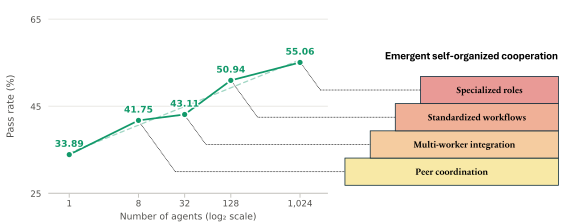
Zhihao Zhan, a Microsoft Research Asia researcher and co-first author, announced on X on Oct 24 that Agensh is now open source under MIT. It is a multi-agent coding harness with no central orchestrator: workers claim sub-tasks, verify and merge asynchronously. Per the authors, scaling from 1 to 1,024 agents lifts the final pandoc test-pass rate from 33.89% to 55.06%.

Microsoft Research open-sources Agensh, a self-organizing harness that scales to 1,024 coding agents

Key Takeaways

  • Open-sourced on Oct 24 under MIT: harness, experiment launch scripts and reproduction guide at microsoft/Agensh.
  • Authors report: on the 5 hardest ProgramBench tasks (GPT-5.6-sol high, 6h budget, no Internet), mean final test-pass rate rises from 19.31% with 1 agent to 28.78% with 128 agents, about 49% relative.
  • Authors report: on pandoc, 1 to 128 to 1,024 agents moves the pass rate from 33.89% to 50.94% to 55.06%.
  • Coordination runs through Gitea (shared workspace), Mattermost (messaging) and a shared-context board adapted from DeLM; each worker uses the Copilot harness agent loop.
  • The release ships a single-node Docker Compose team setup plus a single-agent baseline, both on native Copilot ACP sessions.
Read full story

StepFun open-sources Step Code v0.1.0: MIT CLI for the full edit-test-ship loop

StepFun (@StepFun_ai) released Step Code v0.1.0 as MIT open source. The company says one CLI covers the full loop from reading and editing code to running tests and shipping, with fast execution, high token efficiency, and long-horizon reliability. Reported scores: about 80.9% on Terminal-Bench 2.1 and 73.3% on their 150-task Multi-Frame benchmark, plus one-command static publishing via StepPage. Repo: https://github.com/stepfun-ai/Step-Code

StepFun open-sources Step Code v0.1.0: MIT CLI for the full edit-test-ship loop

Key Takeaways

  • MIT-licensed CLI covering the full read-edit-test-ship loop.
  • Reported ~80.9% on Terminal-Bench 2.1 and ~73.3% on Multi-Frame (150 tasks).
  • StepPage adds one-command static site publishing.
Read full story
Linked Models & Agents:

Hypernovum turns Obsidian project notes into a 3D city and launches coding agents

@DanKornas introduced Hypernovum, a desktop-only Obsidian plugin that maps project notes into a live 3D city using frontmatter, Git signals, and vault links. From one view you can launch Claude Code, Codex, Antigravity CLI, or a custom command, and inspect branch, commit velocity, dirty trees, stale projects, and merge conflicts. It is open source under AGPL-3.0.

Key Takeaways

  • Project notes become a 3D city with status, priority, and backlink visual signals.
  • Launch Claude Code, Codex, Antigravity CLI, or a custom command from a project.
  • Git lens shows branch, dirty trees, stale work, and merge conflicts under AGPL-3.0.
Read full story
Linked Models & Agents:

MCP Linker: open-source desktop MCP store that syncs configs across Claude Code, Cursor, and more

@mobileossfinds highlighted open-source milisp/mcp-linker: a desktop MCP server manager that adds servers from a built-in marketplace and syncs configs across Claude Code, Cursor, and other MCP clients. GitHub describes it as an mcp store / mcphub (~326 stars at fetch).

Key Takeaways

  • Desktop MCP manager with a built-in marketplace to add servers.
  • Syncs MCP configs across Claude Code, Cursor, and other clients.
  • Open-source milisp/mcp-linker; ~326 GitHub stars at fetch.
Read full story

Monid Goes Open Source: OpenRouter-Style Runtime Tool Router for Agents

The Monid team open-sourced the project (github.com/monid-ai/monid) as an OpenRouter-style layer for agent tools: discover, run, and pay-per-call across about 2,000 APIs (SEO, leads, social, search, ecommerce, markets, multimodal generation, private company data) with no subscriptions. Fork it, self-host, or plug in as a provider.

Key Takeaways

  • Open-sourced Monid as a runtime tool discovery and pay-per-call router for agents
  • One connection to about 2,000 APIs across SEO, social, search, ecommerce, multimodal gen, and more
  • Fork, self-host, or plug in as a provider—no subscriptions
Read full story
Linked Models & Agents: