
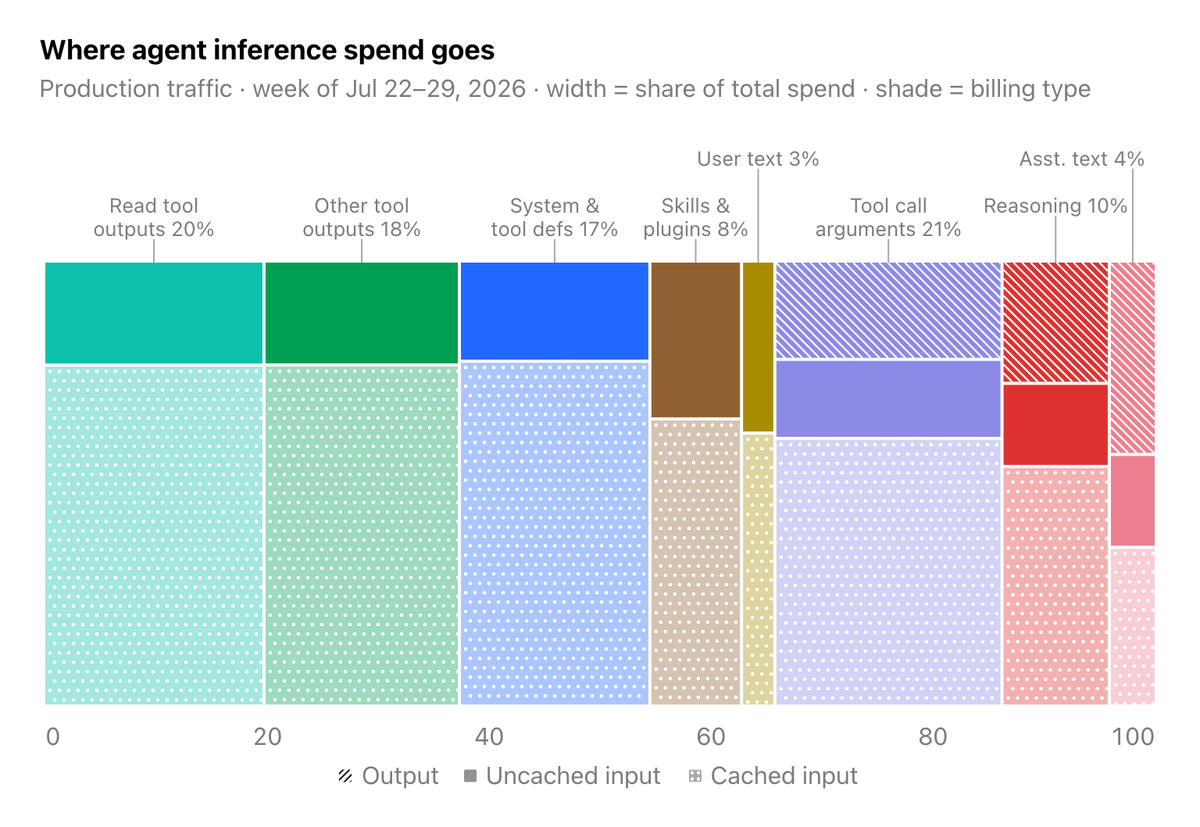
Cursor (@cursor_ai) shipped agent-harness efficiency work that cut user token costs ~7% with no quality drop: trimming the system prompt ~66%, loading built-in tools on demand (prior MCP dynamic context saved 46.9% tokens in sessions that called MCP tools), explicit cache breakpoints that cut cold-cache misses 20%, and numbering only every 10th line on file reads (−1.6% cache-read tokens).
Key Takeaways
- ✓Harness changes cut user token costs ~7% without reducing agent quality.
- ✓System prompt trimmed ~66% as stronger models need fewer DO NOT/Important guardrails.
- ✓Built-in tools load on demand; earlier MCP dynamic context saved 46.9% tokens on MCP-calling sessions.
- ✓Explicit cache breakpoints cut cold-cache misses 20%; Read numbers every 10th line (−1.6% cache-read tokens).
Project Links & Resources
Direct AccessIn-Depth Technical Analysis
Core Background & Industry Pain Points
As coding agents run longer, spend shifts to always-on system prompts, tool defs, and growing context. Cursor’s Improved token efficiency post argues the harness is the controllable cost lever for sustainable long agent runs.
Architecture Highlights & Internals
~66% shorter system prompt; keep high-frequency read/search/edit/shell tools static and load the rest on demand; explicit cache breakpoints after stable prefixes since GPT-5.6 with variable setup in a phantom user message; Read numbers every 10th line; tighter subagent prompting and model selection.
Authoritative Benchmarks & Measured Scores
Product A/B metrics: ~7% lower user token cost; historical MCP dynamic-context −46.9% tokens on MCP sessions; −20% cold-cache misses; −1.6% cache-read tokens from sparse line numbers; quality held flat per Cursor.
Developer Hands-on Guide
Update Cursor—no project config required. Watch cache-hit rate on long chats. Plan Mode still keeps create_plan. Full write-up: cursor.com/blog/improved-token-efficiency.
Discussion & Comments
0Sign in to join the discussion
Connect with AI developers to exchange benchmark insights.