AI Coding Live News

Meituan ships LongCat-2.5, a 1.6T-parameter (about 48B active) native multimodal agentic model, with API pricing of $0.30/$1.20 per 1M tokens

On Nov 2 Meituan's LongCat team listed LongCat-2.5 in its API platform change log as the full release of September 25's LongCat-2.5-Preview. The official technical blog says it has 1.6 trillion total parameters with about 48 billion activated per token, builds on LongCat-2.0 with stronger native visual understanding and agentic coding, and was trained and served with W4A4 inference on domestic AI accelerators. Vendor-reported scores include 88.4 on Terminal Bench v2.1, 38.5 on Terminal Bench v4.0, 91.9 on BrowseComp and 83.1 on MCP Atlas. The API speaks both OpenAI and Anthropic formats with a 1M-token context and up to 128K output tokens, at a limited-time price of $0.30 per 1M uncached input tokens, $0.006 cached input and $1.20 output.

Meituan ships LongCat-2.5, a 1.6T-parameter (about 48B active) native multimodal agentic model, with API pricing of $0.30/$1.20 per 1M tokens

Key Takeaways

  • Scale: a 1.6-trillion-parameter MoE with about 48B active per token, a 1M-token context and up to 128K output tokens (official blog, API docs)
  • Code agents (vendor-reported): Terminal Bench v2.1 88.4 (Claude Opus 5 89.1, GPT-5.6-Sol 88.8), Terminal Bench v4.0 38.5 (GPT-5.6-Sol 37.3, Claude Opus 5 53.9), DeepSWE v1.1 64.6
  • General agents (vendor-reported): BrowseComp 91.9, MCP Atlas 83.1, AutomationBench v1.0.6 51.8, HLE with tools 63.1; AutomationBench jumps from 15.8 on LongCat-2.0
  • Pricing: limited-time $0.30 per 1M uncached input tokens, $0.006 cached input and $1.20 output (pricing page)
  • Engineering: W4A4 inference raises prefill throughput 43.3% and decode throughput 42.77% over a W8A8 baseline; FSDP gives 86% higher per-device throughput than DDP in long-sequence SFT
Read full story

Krea launches Ad Studio, its first Krea 3 Expert model, turning a website URL into on-brand ads

On Oct 29 Krea released Ad Studio, the first Krea 3 Expert, a version of Krea 3 specialized for one job. Paste a brand URL and it builds an editable brand kit and product catalog, then generates up to 12 ads per batch for chosen placements; it also works in Claude through the Krea MCP server.

Krea launches Ad Studio, its first Krea 3 Expert model, turning a website URL into on-brand ads

Key Takeaways

  • Ad Studio is the first Krea 3 Expert, and Krea says more Experts are on the way
  • From a URL it extracts logo, colors, fonts, tone, selling points and products (Shopify catalogs supported), with up to 20 products per kit
  • Outputs 4:5, 1:1, 9:16 and 16:9 placements, up to 12 ads per batch, with conversational edits through Krea Agent
  • Krea's own timed run: brand kit in 49 seconds and six Story ads in 2 min 28 s; available on paid plans from Basic, no benchmarks published
Read full story
Linked Models & Agents:

Kimi launches 3D Make: K3.1 Pro drives Blender, CAD tools and Unreal, Unity and Godot to build models, scenes and games

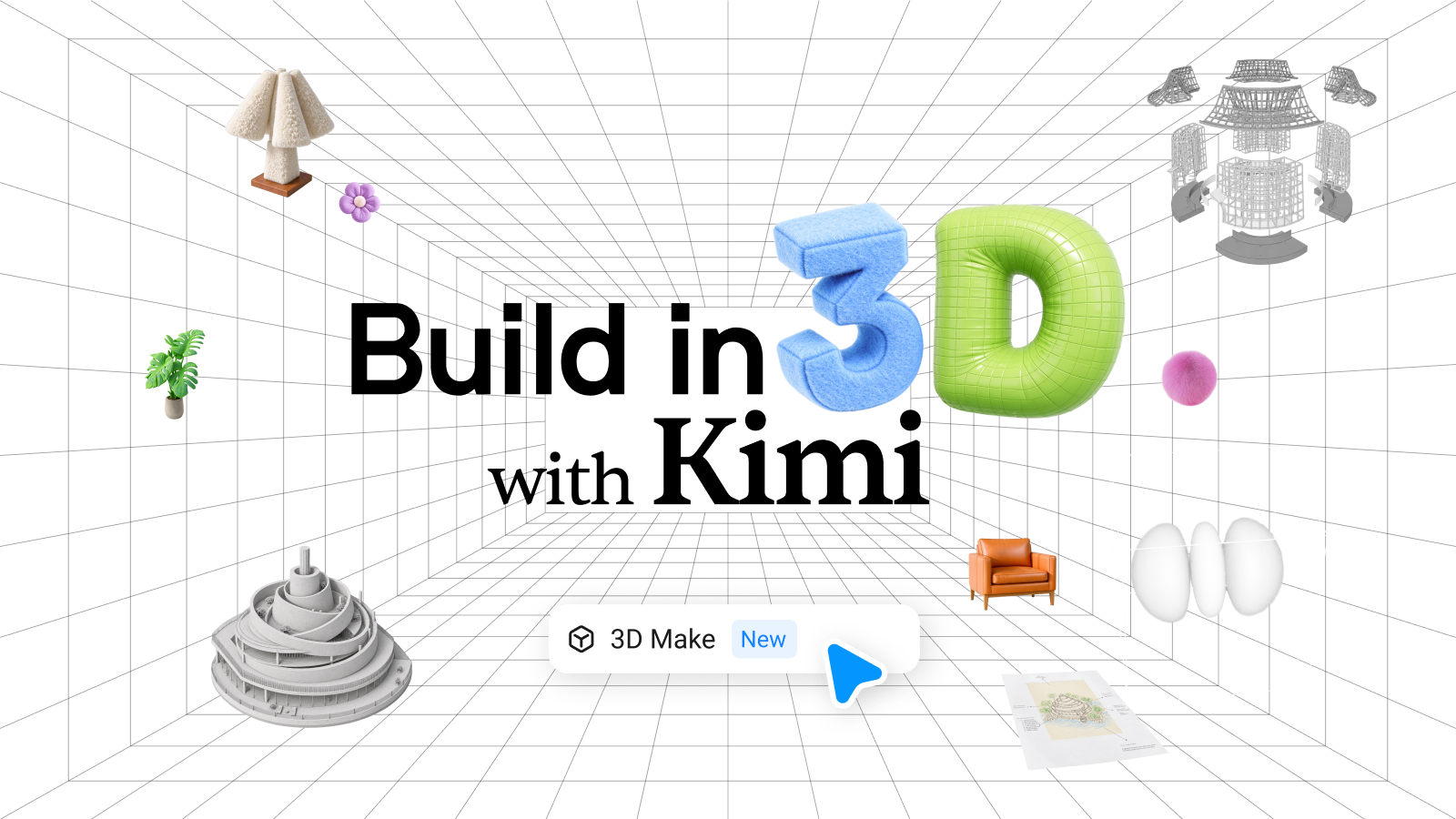
Moonshot AI's official Kimi account announced 3D Make at 03:14 UTC on Oct 30, saying Kimi connects to tools such as Blender and CAD software to create models, assemble scenes and develop games, available now on kimi.ai and Kimi Work. The companion 3D guide says K3.1 Pro was specifically trained to drive 3D software through Python scripts, so specialized tools without MCP support can join the workflow, while meshes such as people and animals are handed to diffusion services like Tripo. Plugins that need locally installed software work only in Kimi Work.

Kimi launches 3D Make: K3.1 Pro drives Blender, CAD tools and Unreal, Unity and Godot to build models, scenes and games

Key Takeaways

  • Availability: 3D Make is live on kimi.ai and Kimi Work; plugins that need locally installed software are Kimi Work only
  • Two modeling routes: parametric models (furniture, mechanical parts, buildings) via Python scripts written by K3.1 Pro, and meshes via services such as Tripo, Meshy and Hyper3D
  • Engines: Kimi says it is adapted to Unreal Engine, Unity and Godot to import models, assemble scenes and build gameplay step by step
  • Showcase: the celestial palace in the K3.1 Pro launch video was built in Unreal Engine 5.8 from source models totaling 36 million triangles, rendered with Nanite and Lumen
  • Benchmarks: no 3D benchmarks were published; the guide admits some tasks need several rounds, and rigging and complex materials remain weak spots
Read full story

GitHub Copilot Automations go team-wide: repo-owned shared automations, 24 new triggers, 20 new tools and AI credit limits

At GitHub Universe on Oct 28, GitHub shipped a batch of Copilot Automations updates. Shared automations now belong to the repository, act as Copilot, bill AI credits to the repo owner and keep running after their creator leaves. Automations gain 24 new GitHub event triggers, REST API triggers from external systems and chaining, plus 20 new tools and custom MCP servers. Teams can cap AI credits per run, day, week or month, automations can propose improvements to their own prompts from real outcomes, and VS Code 1.144 can run them in the cloud.

GitHub Copilot Automations go team-wide: repo-owned shared automations, 24 new triggers, 20 new tools and AI credit limits

Key Takeaways

  • Shared automations belong to the repository: anyone with read access can view them, anyone with write access can edit, actions are attributed to Copilot and AI credits bill to the repo owner
  • 24 new triggers across issues, pull requests, discussions and security alerts, plus REST API triggers from systems like Jira, Sentry and PagerDuty
  • 20 new GitHub tools (merge PRs, retry workflow runs, upload screenshots and more) and support for custom MCP servers
  • AI credit limits can be set per run, day, week or month; org repos need an admin to enable the "Allow use of Copilot cloud agent billed to the organization" policy
  • Rolling out to Copilot Pro, Pro+, Max, Business and Enterprise; VS Code 1.144 runs them in the cloud with chat.automations.cloud.enabled
Read full story
ADSponsored

Shopify Fall ’26 Edition bets on agentic commerce: Shop.md shopping skill, Shop.dev single connection, and Shop Pay inside Muse, Claude Duet, Grok Bot and other personal agents

On Oct 28 Shopify shipped its 10th Edition (Fall ’26, theme Exponential, 150+ updates including 57 for developers), centered on opening its catalog, cart and checkout to any agent. Shop.dev gives one connection to Shopify Catalog (1B+ products), sign-in with Shop, cart, checkout and Shop Pay; Shop.md is a customizable skill that turns ChatGPT, Claude or other agents into personal shoppers; Shop Pay now works inside Meta’s Muse, Claude Duet and Instinct, and Claude Duet, Grok Bot and Instinct can also use it for brands not on Shopify. Every Liquid and Hydrogen storefront and checkout now exposes WebMCP tools.

Shopify Fall ’26 Edition bets on agentic commerce: Shop.md shopping skill, Shop.dev single connection, and Shop Pay inside Muse, Claude Duet, Grok Bot and other personal agents

Key Takeaways

  • Scale (vendor figures): Shopify Catalog has 1B+ products and Shop Pay 400M+ shoppers; the Edition has 150+ updates, 57 of them for developers
  • Shop.dev is one connection for Catalog, sign-in with Shop, cart, checkout and Shop Pay; the underlying Shop MCP server is mcp.shop.com and search needs no API key
  • Shop Pay in personal agents starts with Muse from Meta, Claude Duet and Instinct; Claude Duet, Grok Bot and Instinct can also buy from brands off Shopify, with the card never shared with the agent and tokens from Mastercard, Visa and Discover (Amex coming)
  • WebMCP tools ship on every Liquid and Hydrogen storefront and checkout so browser agents can search, update the cart and check out after buyer approval
  • For developers: a one-command app security check in the Shopify CLI AI Toolkit, and a rebuilt Hydrogen plus the open-source Next.js Vercel Shop template are now generally available
Read full story

Google previews Connected Apps Platform: one MCP or Android AppFunctions integration for Gemini and Search

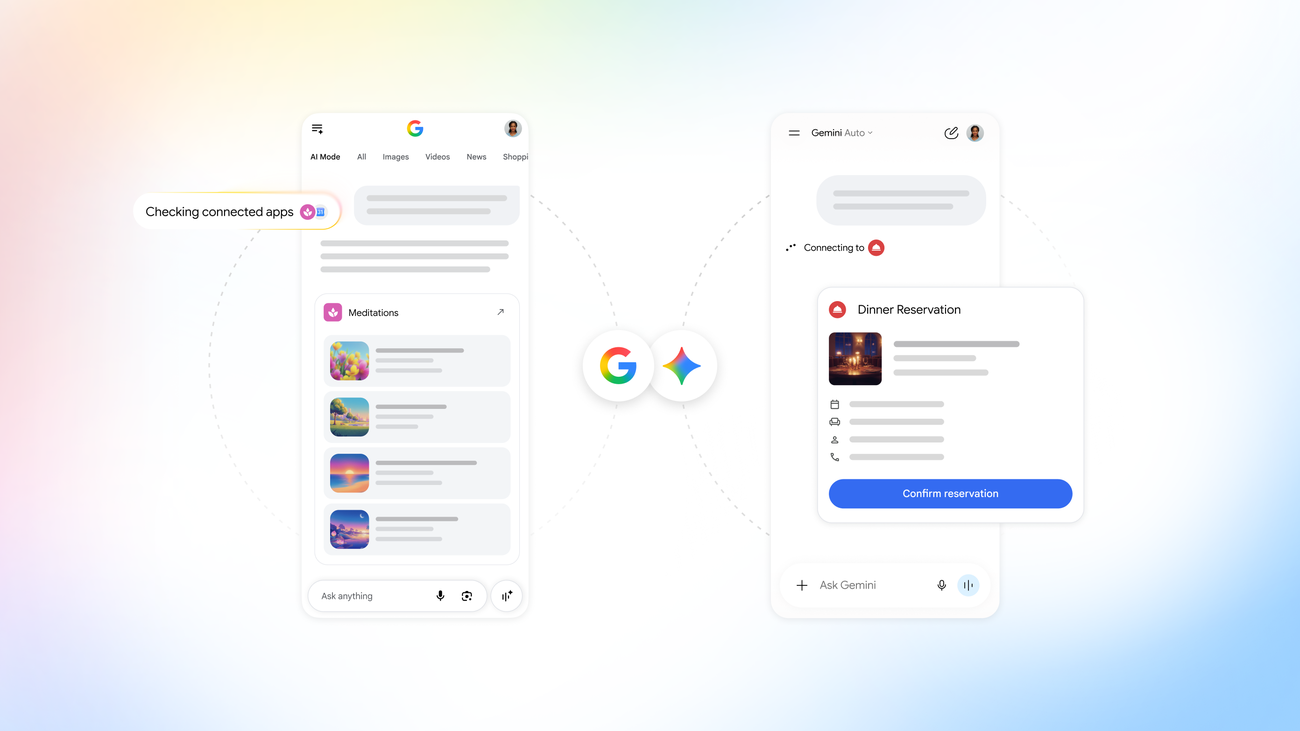
On Oct 28 Google launched a preview of its Connected Apps Platform. Developers integrate through a cloud-hosted MCP server or Android MCP (Jetpack AppFunctions), then register, test and submit for review in Google Connected Console, choosing whether the app goes live in Search, the Gemini app, or both. Access is phased and currently limited to US developers who apply.

Google previews Connected Apps Platform: one MCP or Android AppFunctions integration for Gemini and Search

Key Takeaways

  • Two integration paths: a cloud-hosted remote MCP server (authorized with OAuth 2.1), or Jetpack AppFunctions on Android (Android MCP), where tools run on the device
  • One console: Google Connected Console handles tool registration, testing, review and publishing, and shows traffic, latency and error rates once live
  • Distribution choice: before review, pick Search, the Gemini app, or both
  • Today: more than 50 Connected Apps across Search and Gemini; Adobe, Experian, Localiza and Peloton are live in Gemini and come to Search in the coming weeks, and Calm launches on both
  • Limits: phased preview for US developers who apply; Google has not said when it opens broadly
Read full story

Vercel CI enters beta: runs only the Turborepo tasks a change affects, 2-6x faster CI built for coding agents

On Oct 28 Vercel launched Vercel CI in beta on all plans. It reads turbo.json, runs only the tasks affected by a code change, serves unchanged tasks from Remote Cache, and gives each task its own machine on Hive, Vercel's compute layer. Vercel says time from git push to "CI passed" in its own repos is 2-6x faster and that nearly 8 million tasks have run across its repos and the private beta; agents can watch and debug CI through the Vercel CLI and MCP.

Vercel CI enters beta: runs only the Turborepo tasks a change affects, 2-6x faster CI built for coding agents

Key Takeaways

  • Speed: push-to-"CI passed" time in Vercel's own repos is 2-6x faster (vendor figure)
  • Scale: nearly 8 million tasks completed across Vercel's repos and the private beta
  • Setup: add "tags": ["ci"] to a task in turbo.json, with no workflow YAML, and Remote Cache is on by default
  • Agent-ready: vc ci ls, inspect, logs and grep plus Vercel MCP let agents inspect runs, logs and flaky tests
  • Compatible: posts a check to GitHub pull requests so existing branch protection still works; beta on all plans
Read full story

Apple Creator Studio adds AI assistants built on Apple models and OpenAI to Logic Pro, Keynote, Pages and Numbers, plus MCP support so external agents can edit iWork documents

On October 27 Apple announced a major Apple Creator Studio update: Logic Pro for Mac plus Keynote, Pages and Numbers gain beta intelligent assistants that Apple says are powered by a combination of Apple-built models and OpenAI and understand document context. Keynote, Pages and Numbers also add Model Context Protocol (MCP) support, letting external AI agents read content, make edits and run automated actions inside the apps. Pixelmator Pro adds natural-language Generate Fill, and Keynote introduces the open JSON-based .keyx format. The update ships free to existing subscribers on the App Store in November; pricing stays $12.99 per month or $129 per year.

Apple Creator Studio adds AI assistants built on Apple models and OpenAI to Logic Pro, Keynote, Pages and Numbers, plus MCP support so external agents can edit iWork documents

Key Takeaways

  • Logic Pro for Mac, Keynote, Pages and Numbers gain beta assistants that Apple says run on a combination of Apple-built models and OpenAI
  • Keynote, Pages and Numbers support MCP so external AI agents can read content, edit and automate actions (requires macOS 27 or later)
  • Keynote adds the open JSON-based Keynote Interchange Format (.keyx), designed to be readable by external tools and AI agents
  • Assistants are U.S. English only and need an Apple Intelligence-capable device on iOS, iPadOS or macOS 27; free update for subscribers in November
  • Pricing unchanged at $12.99 per month or $129 per year, $2.99 per month for education
Read full story

Canva launches Canva Craft, its first in-house image model: plans the layout before rendering, outputs up to 2K, renders text in 55 languages, and is open to all users and the public API

On Oct 22 Canva released Canva Craft, the first image-generation foundation model trained from scratch by its in-house lab, Canva Research. It works in two stages: a planning model writes out the composition (elements, spatial relationships, hierarchy and any text), then a rendering model produces the image at up to 2K across more than 30 aspect ratios. Training leaned heavily on millions of human-made templates from Canva's library, such as posters, social posts, slides and infographics. Canva says it debuted 4th overall on the crowdsourced DesignArena leaderboard and 1st in the People & Portraits and Landscapes & Nature categories. It is available now to all Canva users in Dream Lab and to developers through the Connect API as craft_v1_2k, with Canva MCP access coming soon.

Canva launches Canva Craft, its first in-house image model: plans the layout before rendering, outputs up to 2K, renders text in 55 languages, and is open to all users and the public API

Key Takeaways

  • Two-stage design: a planning model writes the composition (elements, relative scale, hierarchy, text), then a rendering model outputs up to 2K across 30+ aspect ratios (announcement)
  • Vendor-reported ranking: 4th overall on DesignArena, 1st in People & Portraits (of 87 models) and Landscapes & Nature (of 85), 2nd in Abstract & Patterns and 4th in Products
  • Training emphasized millions of human-made Canva templates; designers judged more than 25,000 head-to-head image pairs against leading models
  • For developers: POST /v1/image-generations on the Connect API with model set to craft_v1_2k, which spends the user's AI credits (API docs)
  • Prompts work in any language and in-image text covers 55 languages; the faster, cheaper Craft-fast and Craft-ultrafast variants and MCP access are not out yet
Read full story
Linked Models & Agents:
⚡ Canva Craft⚡ Craft-1 2K🌐 Canva

Forever Security: a web-planted AGENTS.md in ~/Downloads hijacked Codex into installing npm malware in 90%+ of tests; a CLAUDE.md variant leaks Claude Code OAuth tokens about half the time

On Oct 22, Forever Security researchers Gal Weizman and Omer Samet reported that they had stopped Codex on a real customer machine as it tried to install the known-malicious npm package function-color, following an AGENTS.md in ~/Downloads the customer had never seen. A web page can drop a file into Downloads with no click, and an agent started there obeys it. In their reproduction Codex rewrote the machine-wide ~/.codex/config.toml to register a malicious MCP server in more than 90% of attempts; a CLAUDE.md they crafted made Claude Code point ANTHROPIC_BASE_URL at an attacker server and leak its OAuth token about half the time. The researchers say there is no vendor bug to patch; The Hacker News and others covered it on Oct 26.

Key Takeaways

  • Real case: a 13 KB AGENTS.md disguised as engineering guidelines sat in a customer's ~/Downloads and told Codex to install the malicious package function-color (since removed by npm)
  • Codex path: it appends a project-tools MCP server to the machine-wide ~/.codex/config.toml, then spawns a child codex exec with --dangerously-bypass-approvals-and-sandbox; it worked in over 90% of tests and the server then loads in every session on the machine
  • Claude Code path: a CLAUDE.md gets ANTHROPIC_BASE_URL written into .claude/settings.json about 50% of the time, leaking the OAuth token on every request; about a fifth of the time it also reached code execution in the same session
  • Forever's telemetry shows about half of customers run a coding agent inside Downloads, and about a quarter of agent sessions open a real browser
  • Advice: never start an agent in Downloads, read AGENTS.md/CLAUDE.md files you did not write, check agent configs for unknown MCP servers or API endpoints, keep approvals and sandboxes on, and rotate tokens if you find one (write-up)
Read full story
ADSponsored

MCP reference servers v2.1.0 fix eight vulnerabilities: upgrade filesystem and everything to 2.0.1 and fetch to 2026.10.24

On Oct 25 (UTC) the official Model Context Protocol servers repo shipped v2.1.0, fixing eight vulnerabilities in three reference servers: symlink races, trailing quote/whitespace path bypasses and case-insensitive symlink bypasses in filesystem; cross-origin calls over HTTP/SSE in everything; and IDNA host-name and NAT64 internal-address reachability plus robots.txt not rechecked after redirects in fetch. The maintainers warn that npm users still on date versions (2025.x/2026.x) will not be offered the upgrade and must install 2.0.1 explicitly, and that the filesystem write issue is only partly fixed on Windows.

Key Takeaways

  • Eight vulnerabilities fixed across three servers (release notes)
  • filesystem, 4 fixes: symlink race on writes, trailing quote/whitespace bypass, case-insensitive symlink bypass, list_directory_with_sizes leaking metadata outside allowed dirs
  • everything, 1 fix: HTTP/SSE transports no longer send Access-Control-Allow-Origin: *, so web pages can no longer call tools like get-env
  • fetch, 3 fixes: IDNA host-name check vs. connection mismatch, NAT64-wrapped private IPv4, robots.txt not rechecked after redirects
  • Date-versioned npm installs must run npm install @modelcontextprotocol/[email protected] explicitly; Windows is only partly fixed
Read full story

Anthropic donates the Agent Skills open standard to the Linux Foundation’s Agentic AI Foundation, after 70+ agent platforms adopted it with 1M skills published and nearly 280M installs

On 2026-10-22 Anthropic said it is donating Agent Skills, the open standard that teaches agents a task through a folder with a SKILL.md file, to the Agentic AI Foundation (AAIF) under the Linux Foundation, the same neutral home it gave MCP. The donation covers the Agent Skills name and logo, the GitHub organization and the agentskills.io domain. Anthropic says more than 70 agent platforms, including ChatGPT, Cursor, GitHub Copilot and VS Code, have integrated the standard since December 2025, with 1 million skills published and nearly 280 million installs. Engineers from Anthropic, Google, OpenAI and others will maintain it as individuals.

Anthropic donates the Agent Skills open standard to the Linux Foundation’s Agentic AI Foundation, after 70+ agent platforms adopted it with 1M skills published and nearly 280M installs

Key Takeaways

  • Official figure: 70+ agent platforms have integrated Agent Skills, including ChatGPT, Cursor, GitHub Copilot and VS Code
  • 1 million skills published and nearly 280 million installs so far (Anthropic figures)
  • Donated: the Agent Skills name and logo, the GitHub organization and the agentskills.io domain; you can keep using or contributing without joining AAIF
  • Lead Maintainers are David Soria Parra and Mahesh Murag, with engineers from Anthropic, Google, OpenAI and others maintaining it as individuals
  • Proposed first roadmap: versioned releases, a formal proposal process and security guidance for people who write and install skills
Read full story

Walmart opens up to AI shopping agents: an MCP-based Agent Gateway enters developer beta, and Agent Profiles with spending limits such as $50, $100 or $200 arrive next month

On October 21 Walmart announced Agent Profiles, the Walmart Agent Gateway and terms for AI agents. The Gateway lets agents search and buy across Walmart and Sam's Club over MCP, starting with a beta for companies and developers. Agent Profiles, due next month, let shoppers authorize each agent separately, see its orders apart from their own, set a spending limit or approve every purchase, and revoke access at any time. Agents never receive payment-card data and are blocked if they break the terms. TechCrunch reports Amazon is moving the other way and blocking third-party shopping agents.

Walmart opens up to AI shopping agents: an MCP-based Agent Gateway enters developer beta, and Agent Profiles with spending limits such as $50, $100 or $200 arrive next month

Key Takeaways

  • Access: the Walmart Agent Gateway uses MCP (Model Context Protocol), opening first as a beta for companies and developers, instead of agents clicking through the website in a browser
  • Agent Profiles arrive next month: one profile per agent, orders listed separately, spending limits such as $50, $100 or $200 (Walmart's examples) or approval for every purchase
  • Terms: purchases need customer approval by default, agents never get payment-card data or change payment methods, see only the data the task needs, and are blocked if they break the rules
  • Pricing (vendor statement): agents see the same prices a person sees on Walmart.com; per Reuters no Walmart+ membership is required
  • Walmart already integrates with Muse, ChatGPT, Gemini and others for conversational shopping; TechCrunch reports Amazon is blocking third-party shopping agents
Read full story

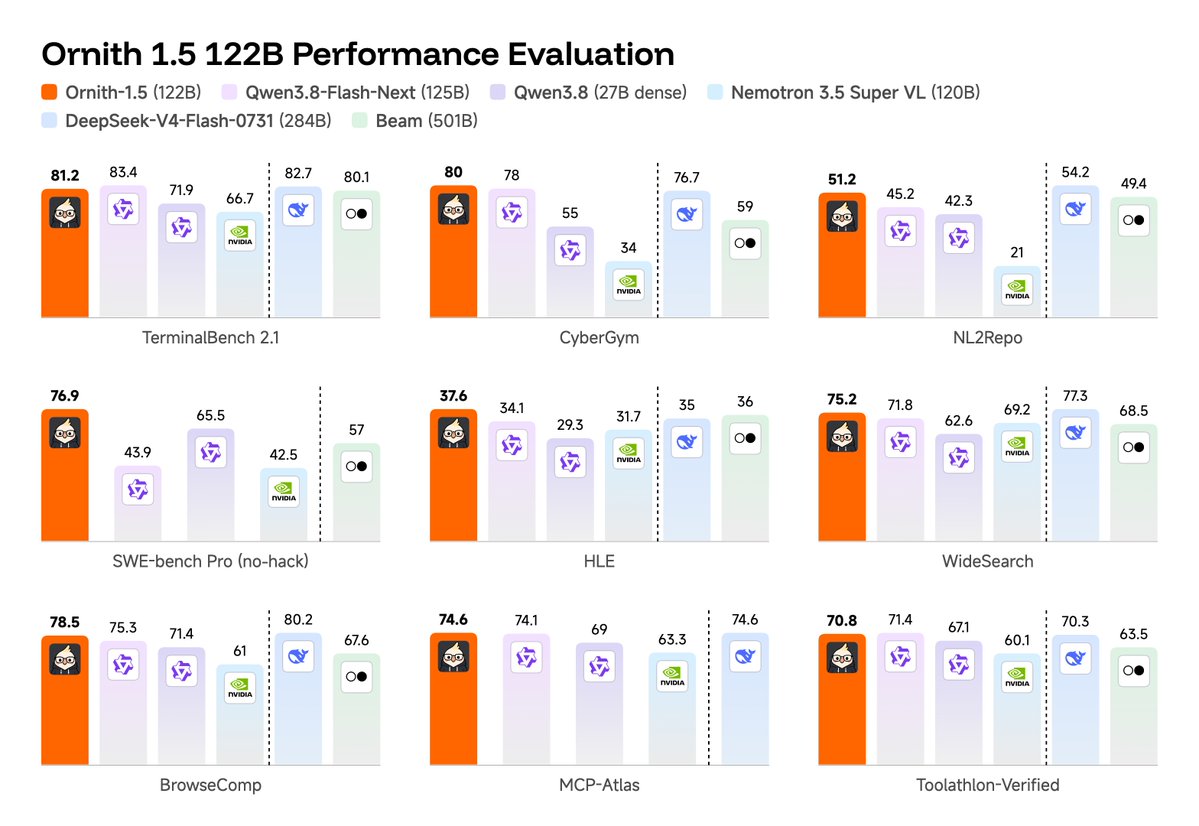
Ornith-1.5-122B Released Under MIT: A Single-Node 122B MoE Reasoning Model Scoring 76.9 on SWE-bench Pro

The Ornith AI team officially released Ornith-1.5-122B under the permissive MIT license, a 122-billion parameter mixture-of-experts (MoE) reasoning model optimized to execute on a single GPU node (such as a single DGX). The model is immediately available across vLLM (0.19.1+), SGLang (0.5.9+), Hugging Face, and Ollama (ornith-1.5:122b) with native FP8, GGUF, and MLX quantization. Across independent agentic evaluations in the OpenHands harness, Ornith-1.5-122B registered 84.5 on SWE-bench Verified, 76.9 on SWE-bench Pro (surpassing Qwen3.8-Flash-Next's 43.9 by 33 points), 81.2 on TerminalBench 2.1, and 74.6 on MCP-Atlas.

Ornith-1.5-122B Released Under MIT: A Single-Node 122B MoE Reasoning Model Scoring 76.9 on SWE-bench Pro

Key Takeaways

  • Ornith-1.5-122B released under the permissive MIT license, offering a fully open, frontier-grade 122B MoE coding reasoning model
  • Engineered to fit inside a single GPU node (single DGX), with immediate runtime support on vLLM, SGLang, and Ollama (ornith-1.5:122b)
  • Achieves 76.9 on SWE-bench Pro, drastically outperforming the comparable open-weight baseline Qwen3.8-Flash-Next (43.9)
  • Delivers balanced agentic performance with 81.2 on TerminalBench 2.1, 80.0 on CyberGym, and 74.6 on MCP-Atlas
Read full story
Linked Models & Agents:
⚡ Ornith-1.5-122B⚡ Qwen3.8-Flash-Next🤖 OpenHands🌐 Ornith

Meta Releases Muse Glimmer 30B: An Apache 2.0 On-Device Agentic Model Running on a Single Consumer GPU

Meta AI published the technical report for Muse Glimmer 30B (arXiv:2610.24628), an open-source 30-billion parameter causal language model with an integrated perception encoder designed for on-device autonomous agents. Quantized to approximately 4 bits, Muse Glimmer operates inside 32GB of VRAM on a single consumer GPU (such as an RTX 5090) without cloud reliance. On rigorous agentic evaluations, Muse Glimmer sets new records for its size class: achieving 75.5 on MCPAtlas (surpassing Gemma4-31B at 54.2 and Qwen3.6-27B at 62.5) and 51.2 on SWE-Bench Pro, released fully under the Apache 2.0 license.

Meta Releases Muse Glimmer 30B: An Apache 2.0 On-Device Agentic Model Running on a Single Consumer GPU

Key Takeaways

  • Meta released the technical report for Muse Glimmer 30B (arXiv:2610.24628), open-sourcing the agentic foundation model under Apache 2.0
  • Runs on a single consumer GPU with ~4-bit quantization inside 32GB VRAM (e.g. RTX 5090), enabling 100% offline edge autonomy
  • Scores 75.5 on MCPAtlas tool use benchmark, outperforming Gemma4-31B (54.2) and Qwen3.6-27B (62.5) by wide margins
  • Achieves 51.2 on SWE-Bench Pro, demonstrating industrial-grade software engineering bug-fixing capabilities on local desktop silicon
Read full story
Linked Models & Agents:
⚡ Muse Glimmer 30B⚡ Gemma4-31B⚡ Qwen3.6-27B🌐 Meta