On November 10, NVIDIA released Alpamayo 2 Edge, an open autonomous-driving model. It is a 2B-parameter vision-language-action (VLA) reasoning model built to run in real time inside the vehicle, targeting NVIDIA DRIVE AGX Thor. It produces Chain-of-Causation reasoning only when needed and outputs trajectories directly in routine driving to save compute. After TensorRT and DFlash2 optimization, pixel-to-trajectory latency is 160 to 190 ms. NVIDIA also open-sourced AlpaJudge, a reasoning evaluation model, on Hugging Face.
Zoom
Key Takeaways
Model: a 2B-parameter reasoning VLA built on the Nemotron-based reasoning backbone of Cosmos 3 Edge plus a diffusion action expert, offline-distilled with reasoning labels from Alpamayo 2 Super (NVIDIA Technical Blog)
Closed-loop RL: post-training with closed-loop reinforcement learning in AlpaGym improves closed-loop driving by 48.9% over the best checkpoint without it (company figure)
Comparison: NVIDIA says it achieves about 40x the distance between at-fault incidents of the 4B-parameter Qwen-Drive-1.0 in AlpaSim closed-loop evaluation, with half the parameters
Latency: after FP8 calibration and TensorRT acceleration from the Developer Hub recipe, pixel-to-trajectory latency on DRIVE AGX Thor is 160-190 ms; partner Embedl says it reached 10 Hz in under 48 hours
Open release: weights are on Hugging Face under the OpenMDW-1.1 license, and the AlpaJudge reasoning grader comes in reference-based and reference-free variants that need about 5GB of GPU memory to load
On November 10, Anthropic announced the launch of its IPO roadshow. It plans to offer 825 million Class A shares, about 801 million from the company and about 23.65 million from existing stockholders, at an expected $70 to $78 per share, and to list on the Nasdaq Global Select Market as ANT. S-1 Amendment No. 2, filed the same day, shows AMD, Broadcom, Google, Micron, Microsoft, NVIDIA, and TSMC buying a combined $26 billion of Class N stock at the IPO price. At the $74 midpoint, the company expects net proceeds of about $84.6 billion.
Zoom
Key Takeaways
Size: 825 million Class A shares, 801,351,354 from the company and 23,648,646 from selling stockholders, plus a 30-day underwriter option for up to 123.75 million more (official announcement)
Price range: $70 to $78 per share, ticker ANT on the Nasdaq Global Select Market; Goldman Sachs and Morgan Stanley lead a 23-bank syndicate
Concurrent $26 billion private placement (at the $74 midpoint): about $10 billion each from Google and NVIDIA, $2.5 billion from AMD, $1 billion each from Broadcom, Micron, and Microsoft, and $500 million from TSMC, all buying Class N stock at the IPO price
Proceeds: about $84.6 billion net from the IPO and private placement at the $74 midpoint, or about $93.7 billion if the underwriter option is fully exercised; uses include compute and infrastructure (per the S-1/A)
Share count: about 13.087 billion shares of all classes after the offering; a rough calculation puts the price range at about $916 billion to $1.02 trillion in market value (our estimate, not an official valuation)
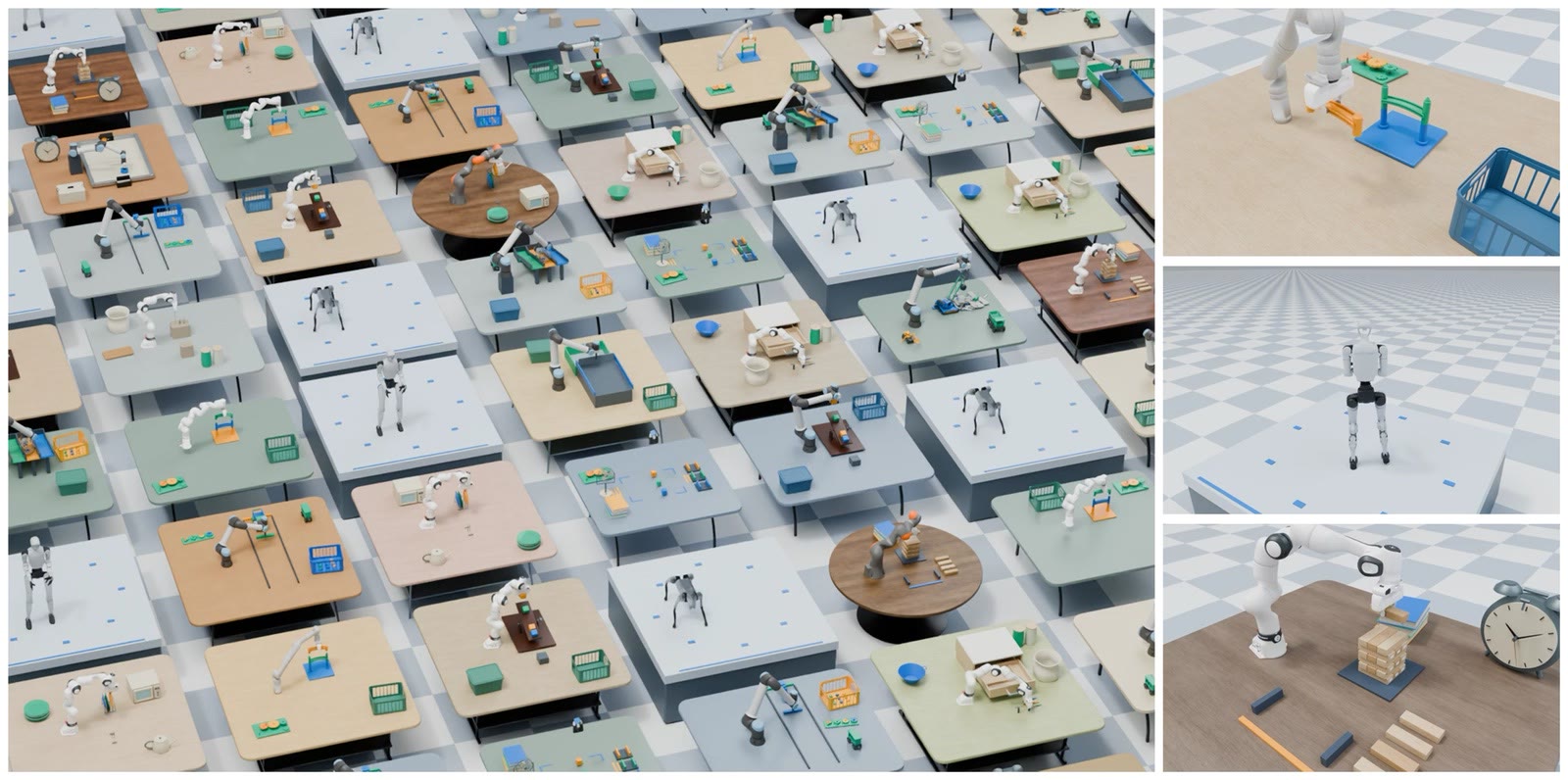
Robot foundation model company Skild AI open-sourced Steel on November 9, an internal physics solver built with NVIDIA and released under Apache 2.0. It is a GPU rigid-body dynamics solver contributed to the open-source Newton physics engine for robot training in Isaac Lab. Per the official blog, Steel averages 3.8x PhysX and about 1.3x MuJoCo Warp throughput (geometric mean) across 20 single-task benchmarks; on batches mixing 20 different robot tasks it reaches 13x PhysX peak throughput, and at a matched batch it uses about 11 GiB of GPU memory versus 29 GiB. A WebGPU port also lets you try it in a browser.
Zoom
Key Takeaways
Vendor figures: on a mixed 20-task batch Steel hits 3.90M env-steps/s at 245,760 environments vs PhysX peak of 300K, about 13x
At a matched 61,440 environments Steel runs 3.61M steps/s, 12x PhysX, using about 11 GiB vs 29 GiB of GPU memory (about 62% less)
Faster than PhysX on 19 of 20 single-task benchmarks, 3.8x geometric mean; about 1.3x MuJoCo Warp; 6.7x PhysX on the 23-joint Kuka-Allegro lift task
Apache 2.0, available in Newton as newton.solvers.SolverSteel; a WebGPU port runs 24 interactive scenes in the browser
Caveat: all numbers are simulation-only throughput on one RTX PRO 6000 Blackwell GPU, not end-to-end policy training speed
NVIDIA Robotics announced GR00T 2 at CoRL 2026, and NVIDIA GEAR lab lead Yuke Zhu posted the technical details. GR00T 2 is a new generation of world action model (WAM) built on Cosmos: one diffusion transformer denoises future video and an action chunk together, and one model drives parallel grippers, dexterous hands and humanoids. Pretraining mixes 402,730 hours of egocentric human video, 10,184 hours of handheld UMI gripper demos and 23,500 hours of robot teleoperation. By NVIDIA's numbers, it reaches 40% zero-shot success on 50 tasks the target robot never practiced, rising to 95% with five demos per task (under 3 minutes of robot data) and a 30-minute LoRA fine-tune on one RTX 5090. Reasoning models can call GR00T 2 as a tool through the WAM API. Code arrives in December; 100,000 hours of the human video data are already on Hugging Face.
Zoom
Key Takeaways
Architecture: one diffusion transformer predicts future video and action chunks together; small per-robot heads let one model cover grippers, dexterous hands and humanoids
Data: 402,730 h of egocentric human video + 10,184 h of UMI demos (2,897 tasks) + 23,500 h of teleoperation; going from 0% to 100% of the human video lifts real-robot task progress from 50% to 70% (NVIDIA figures)
Adaptation: 40% zero-shot on 50 unseen tasks, 71% with 1 demo, 95% with 5 demos, about a 30-minute LoRA fine-tune on one RTX 5090
Agents: a reasoning model calling GR00T 2 via the WAM API completes 97+ of 100 back-to-back assemblies for each of three toys; marking grasp points on the camera view lifts instruction following from 40% to 92%
GR00T 2 Turbo is a 2B-parameter variant running at 124 ms per prediction on the Unitree G1's Jetson Thor; code ships in December, and 100k hours of human video are already on Hugging Face
At 08:30 UTC on November 9, Omarchy creator DHH released v0.5.0 of omarchy-local-ai, the local model engine behind Omarchy. It extends local model support to 64 GB NVIDIA GB10 / N1x-class machines and makes Nemotron 3.5 Bolt the default for that tier (project measurements: full 262K context, 91 tok/s on short prompts and 82 tok/s at 32K, peaking under 40 GiB). About 20 minutes later he posted on X that Omarchy 4.6 will recommend the best model each machine can run, showing the agents panel on the Ryzen AI Max+ 495 machine AMD gave him, with a Claude Code subscription next to a local Qwen3.8 Flash Next using 94 GiB. The feature comes from PR #17267, merged November 1: one omarchy agent local use best command picks a model by GPU family and RAM class and runs it in a rootless Podman container with no network access, for coding agents such as OpenCode and pi. No release date for 4.6 has been announced.
Zoom
Key Takeaways
Release: DHH published omarchy-local-ai v0.5.0 at 08:30 UTC on November 9; the 64 GB GB10 / N1x default is Nemotron 3.5 Bolt, with Qwen3.8 27B (131K window) as fallback
Measured (project figures): on 64 GB, Bolt runs the full 262K context at 91 tok/s on short prompts and 82 tok/s at 32K, peaking under 40 GiB
The best.toml recommendation table covers 3 classes today: Strix Halo 128 GB (Flash Next, then 27B), GB10/N1x 128 GB (Flash Next, Bolt, 27B) and GB10/N1x 64 GB (Bolt, 27B)
On a Ryzen AI Max+ 395 / 128 GB, Flash Next reached 47.5 tok/s at 32K and 105 tok/s on code edits in v0.3.0; the 27B moved to 4-bit at 20.7 tok/s and 40 GiB
Security boundary: models run in rootless Podman containers with no network egress, a read-only root and all capabilities dropped, with the API key as a Podman secret; DHH's post had 163 likes and 21 replies after about 20 minutes
On November 9 at NVIDIA AI Day Seoul, LG AI Research made the K-EXAONE 2.5 API free through its EXAONE API Platform (docs.exaone.ai). Developers, startups, enterprises and research institutions can get an API key and use it for service development and research. K-EXAONE 2.5 is a technical validation model built by further training K-EXAONE 2.0, released in August: 750B total parameters with 31B active, text-only, Korean and English, a 512K context and an OpenAI-compatible endpoint. On four agentic benchmarks run internally, LG reports 59.2 on SWE-Bench Pro, 78.0 on BrowseComp, 74.6 on AutomationBench and 77.3 on Claw-Eval, roughly on par with DeepSeek-V4.1-Flash and GLM-5.3 but not leading across the board. NVIDIA says the model was trained with Nemotron datasets. LG has not published how long the free access lasts or any quota, and has not released 2.5 weights.
Zoom
Key Takeaways
Free access: the EXAONE API Platform launched on November 9 and is currently free of charge; get an API key to call it. EXAONE Tabular, a 21M-parameter tabular prediction model, launched alongside it
Specs: 750B total / 31B active parameters, text-only, Korean and English, 512K context and 512K max output, January 2026 knowledge cutoff; supports tool calling, structured outputs, code generation and streaming
API: OpenAI-compatible POST /v1/chat/completions with model name k-exaone_v2.5; reasoning cannot be turned off, reasoning_effort takes low / high / max (default max), and reasoning tokens count toward max_tokens
LG internal results (vs DeepSeek-V4.1-Flash / GLM-5.3): SWE-Bench Pro 59.21 vs 58.41 / 64.03; BrowseComp 78 vs 75.8 / 79; AutomationBench 74.6 vs 74.9 / 71.6; Claw-Eval 77.29 vs 75.78 / 77.64
Versus K-EXAONE 2.0: AutomationBench rose from 16.9 to 74.6 and SWE-Bench Pro from 47.1 to 59.21. All figures are vendor-run and not independently reproduced; LG has not stated the free period, quotas or whether 2.5 weights will be released
At NVIDIA AI Day Seoul, NVIDIA released Dynamo-optimized deployment recipes for four leading Korean open models: SK Telecom's A.X K2, LG AI Research's K-EXAONE 2.0 (750B-A37B), Upstage's Solar Open 2 (250B) and Motif Technologies' Motif-3. The recipes target B200 GPUs with NVFP4 weights, FP8 KV cache and a vLLM backend, and ship aggregated and disaggregated (prefill/decode split) Kubernetes manifests plus benchmark jobs. NVIDIA claims up to 2x inference performance out of the box, without naming the baseline. Per the Dynamo docs, Motif-3 on two B200s reaches about 294 output tok/s per GPU, and K-EXAONE 2.0 on four B200s hits a 291 ms median time to first token. The recipes are part of NVIDIA's AI for All collaboration with Korea's Ministry of Science and ICT.
Zoom
Key Takeaways
Covers four Korean open models: SK Telecom A.X K2, LG K-EXAONE 2.0 (750B-A37B), Upstage Solar Open 2 (250B) and Motif-3; recipes live under recipes/ in the ai-dynamo/dynamo GitHub repo
Per NVIDIA: up to 2x inference performance out of the box on B200, though NVIDIA does not name the baseline
Dynamo docs results (chat trace, SLA of at least 50 tok/s per user and TTFT p50 under 5 s): Motif-3 on 2x B200 at 293.96 tok/s per GPU with 388 ms TTFT; Solar Open 2 with two replicas at 216.88 tok/s per GPU with 308 ms TTFT
K-EXAONE 2.0 aggregated on 4x B200: 87 tok/s per GPU, 51.4 tok/s per user, 291 ms TTFT; A.X K2 on 8x B200 with EAGLE3: 76.49 tok/s per GPU, 0.525 s TTFT, plus a 32x H200 option
Caveats: Motif-3 and A.X K2 numbers use synthetic speculative-decoding acceptance lengths (about 2.1) and do not reflect real acceptance or output quality; Solar Open 2 defaults to high reasoning effort with a median GPQA output near 6,400 tokens, so set max_tokens generously
On 2026-11-05 Microsoft Foundry blogged that Foundry Local CLI 0.13.0+ can run 4-bit Qwen3.8-27B (~18 GB weights) on-device via ONNX Runtime and connect it to GitHub Copilot through Bring Your Own Key. Needs an NVIDIA GPU with at least 24 GB VRAM (about 64K context on 24 GB; up to the model's 262K max on 32 GB+). Vendor-cited model-card scores include Terminal-Bench 2.1 73.0 and SWE-bench Pro 61.7; Microsoft also reports higher generation speed than same-quant llama.cpp on RTX 5090 and DGX Spark. Mac and AMD support are still on the roadmap.
Zoom
Key Takeaways
Shape: Foundry Local 0.13.0+ runs 4-bit Qwen3.8-27B (~18 GB weights) and connects to the GitHub Copilot app via BYOK
Hardware: NVIDIA GPU with >=24 GB VRAM; ~64K context on 24 GB, up to 262K on 32 GB+; install CUDA/cuDNN yourself
Vendor-cited model-card scores (not a 4-bit re-run): Terminal-Bench 2.1 73.0, SWE-bench Pro 61.7, NL2Repo-Bench 42.3, DeepSWE 1.1 42.2
Stack: ONNX Runtime + DFlash2 speculative decoding + INT4/KV quant + prefix caching; Microsoft says the gap vs llama.cpp widens past 131K tokens
Limits: Microsoft says cloud models still win on hard reasoning; Mac/AMD not shipped; Copilot CLI local model does not imply offline—set COPILOT_OFFLINE separately
At AI Engineer NYC on 2026-10-13, Revolut AI ops lead David Abitbol said ~2,000 engineers now default to self-hosted GLM-5.3 on ~56 NVIDIA B200 GPUs at a blended ~$0.30 per million tokens—about one-tenth prior Anthropic/OpenAI invoices. Speaker charts claim ~60% better coding time and ~70% lead time. Claude Code/Codex remain hard-case exceptions; vision is routed elsewhere.
Key Takeaways
Source: Revolut AI ops lead David Abitbol, AI Engineer NYC 2026 talk (2026-10-13) + official transcript; Register coverage from 2026-11-03 (speaker figures)
Scale: ~2,000 engineers default to self-hosted GLM-5.3 on ~56 NVIDIA B200 GPUs; speaker blended cost ~$0.30 per million tokens
Cost: invoice about one-tenth prior Anthropic/OpenAI spend; ~60% coding-time and ~70% lead-time improvements claimed (not isolated from other changes)
Routing: GLM for text/code; vision to Gemini/GPT-class models; Claude Code/Codex kept for hard exceptions
Ops: same GPU count tuned TTFT ~14.3s→1.7s and +76% RPS; sandbox approvals + telemetry stressed for bank compliance
On 2026-11-06, Voyager/vork author Ravi Parikh (@ravisparikh; GitHub swag) posted on X announcing vork: a headless 3D/VFX engine for AI agents (Rust + Slang, Vulkan/Metal). Official docs say getting-started help is about 2,500 tokens; a million uniquely steered birds rendered in about 97 seconds on one NVIDIA L4. Research-preview source is at github.com/voyager-so/vork and free during preview. First-hand author announcement, not a big-lab product line.
Zoom
Key Takeaways
Source: Ravi Parikh (@ravisparikh) X post 2026-11-06 + voyager.so/vork and GitHub voyager-so/vork (research preview)
Design: no GUI; agents author scenes/shaders/cameras/physics as code, then render and revise; getting-started help ~2,500 tokens (vendor)
Perf (official site): ~1M birds on one L4 in ~97s; vs projected Blender EEVEE with finished flock ~8–11× (excludes ~3 min warmup)
Author X post also claims up to ~24× and EEVEE ~31 min—prefer the site's careful comparison; label author claims
Limits: no fog/volumes yet; heavy interiors may abort on Mac; path tracer slower than Cycles; free source-available preview
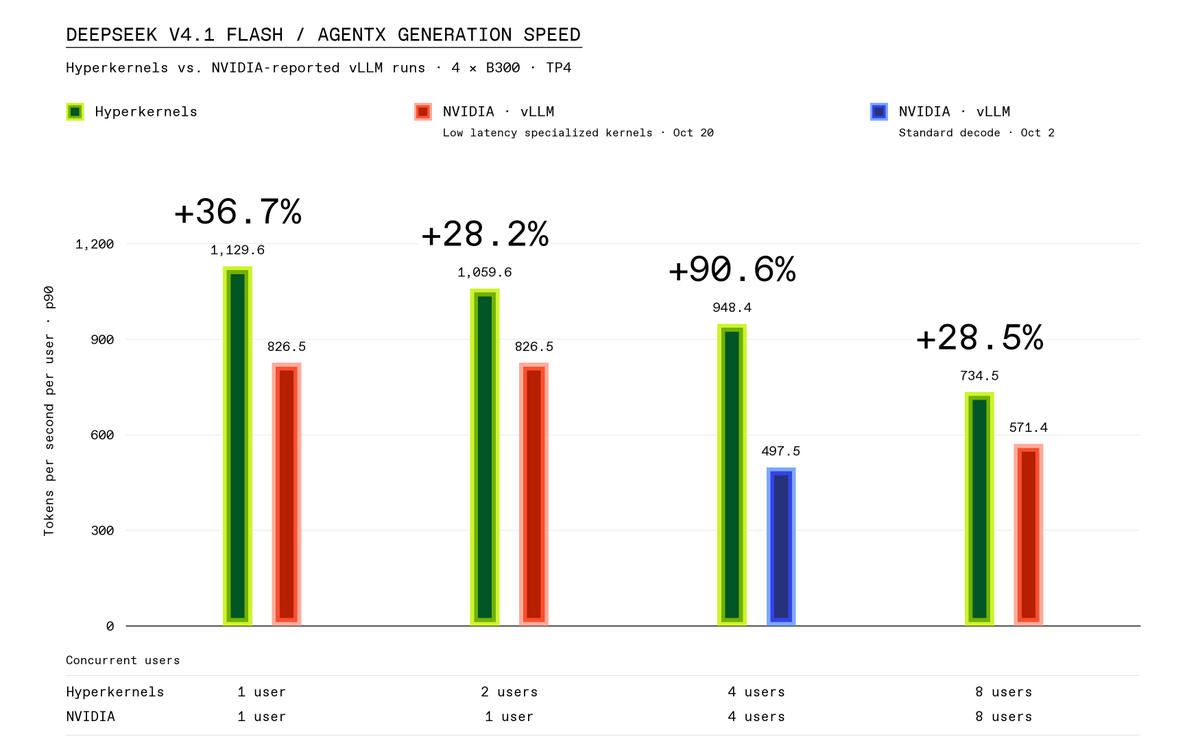
On 2026-11-05 Hyperstition open-sourced Hyperkernel’s first generated megakernels (Hyperserve), with vendor-reported gains versus NVIDIA-published vLLM baselines; Alpha, B300-oriented.
Zoom
Key Takeaways
Official: @hyperstition_cc on 2026-11-05; GitHub Hyperstitioncc/Hyperkernel (MIT, Alpha)
Vendor claim: DeepSeek v4.1 Flash ~36.7% higher per-user gen at C1 vs NVIDIA-published vLLM; ~90.6% at C4 vs AgentX
π₀-FAST ~94 vs ~243 ms; Matrix-Game ~37.4 vs ~11.6 FPS (~3.2×)
At BoxWorks 2026 on November 5, Box announced an expanded NVIDIA collaboration: Box Context Retrieval, a new engine built on NVIDIA Nemotron Retriever embedding models, combines keyword and semantic search to return the most relevant passages to AI agents while honoring existing file permissions, with general availability for Enterprise Advanced customers planned for early next year. Box's press release claims 20% better search accuracy (Recall@5), 90% fewer tokens and 4x faster answers. Open-weight Nemotron models, starting with Nemotron 3 Ultra, are available in Box AI now. Box also unveiled Box Architect, which designs workflows from a stated goal; Box Mount, which mounts Box folders inside agent sandboxes and works with NVIDIA OpenShell; and agent security controls including MCP Guardrails.
Zoom
Key Takeaways
Box Context Retrieval uses NVIDIA Nemotron Retriever with hybrid keyword and semantic search, honoring existing file permissions
Vendor claims: +20% Recall@5 accuracy, 90% fewer tokens, 4x faster answers; GA for Enterprise Advanced early next year
Open-weight Nemotron models, starting with Nemotron 3 Ultra, are available in Box AI now
Box Mount puts Box folders inside agent sandboxes and works with the NVIDIA OpenShell secure runtime
New agent security controls include MCP Guardrails, classification-based access policies and audit trails
At its first Forge conference on November 3, open-model inference platform Fireworks launched a batch of products. Ultra-fast, powered by NVIDIA Blackwell, is in public preview at up to 1,500 tokens per second on DeepSeek V4.1 Flash, cutting a 30-turn agent task from 1 minute to 8 seconds. Background Mode runs deferrable work at half price, alongside multi-day prompt caching and higher rate limits. Nexus Desktop brings open-model routing into the Codex app, Claude Desktop and OpenCode, with Pro plans from $8 per month. Fireworks also announced No Eval, serverless LoRA inference, the Fireworks Sovereign private preview and a 60+ partner Frontier Ecosystem.
Zoom
Key Takeaways
Ultra-fast public preview: on NVIDIA Blackwell, up to 1,500 tokens per second on DeepSeek V4.1 Flash; in Fireworks' benchmark a 30-turn agent task fell from 1 minute to 8 seconds (Fireworks blog)
Cost options: Background Mode runs deferrable work at half price; multi-day prompt caching cuts the cost of resuming long context; higher serverless rate limits and Elastic Burst are generally available
Nexus Desktop launches: personalized routing across open and closed models inside the Codex app, Claude Desktop and OpenCode; Pro from $8 per month, Teams from $10 per seat per month
Training: No Eval (private preview) turns production traces into task evals; serverless LoRA inference (public preview) starts with GLM 5.3 Flash at per-token pricing with no idle charge; free training on Muse Glimmer 30B through November 30
Enterprise: Fireworks Sovereign (private preview) runs the inference engine in a customer's own cloud or data center; Fireworks says it already manages over 25,000 GPUs in customer environments; plus a 60+ partner Frontier Ecosystem
fal, which hosts inference for image, video and audio models, announced on its official X account and blog on November 3 that it raised a combined $1.65B across Series E and Series F. Sequoia Capital led the Series E, closed earlier this year, and Bessemer Venture Partners led the Series F with continued investment from NVIDIA. fal did not disclose valuation or per-round amounts; Bloomberg reported the Series F at $1.3B at a $16B valuation, double the $8B from April. fal says the money funds inference capacity, hiring, and research and platform work in 2027.
Zoom
Key Takeaways
Confirmed by fal: $1.65B combined across Series E and F, Sequoia led E, Bessemer led F, NVIDIA continued investing (fal blog)
fal did not disclose valuation; Bloomberg reported the Series F at $1.3B at a $16B valuation and the Series E at $350M at $8B
Per Bloomberg, CEO Burkay Gur said demand spiked so much over the summer that fal had to rate limit customers, driving the large raise
Funds go to inference capacity, team growth and new research in 2027; fal hosts many third-party media models such as Seedance, Kling, Veo and FLUX
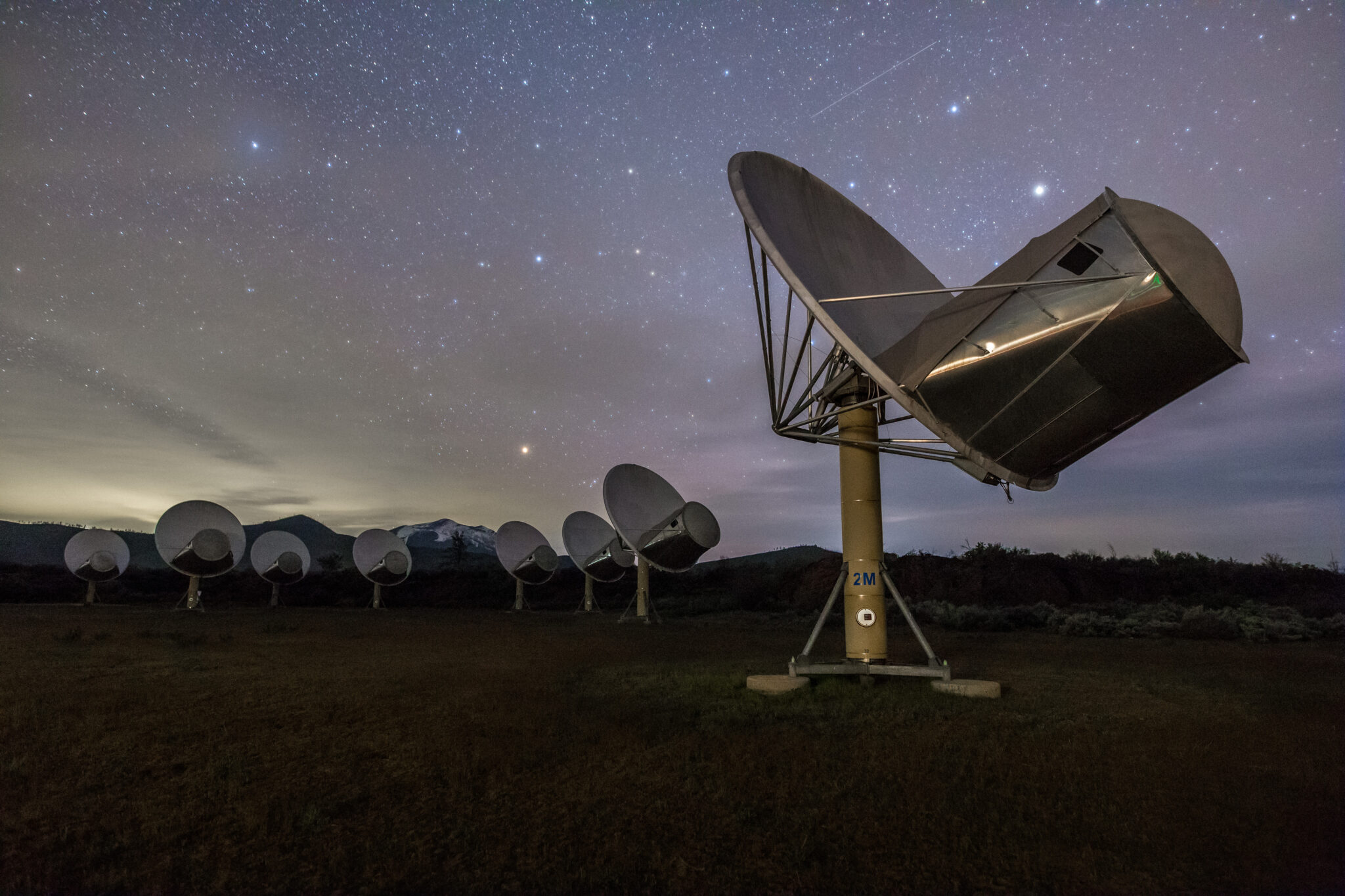
An Oct 30 NVIDIA blog post says Breakthrough Listen and the SETI Institute have brought agents into daily SETI work at the Allen Telescope Array (ATA, 42 dishes of 6 m each) in Northern California: from a single natural-language request, agents can steer the antennas, calibrate and focus, fix data errors, and run AI models on the live stream. Holoscan's DAQIRI library pulls sensor data straight into GPU memory, the SETI Institute's CyberEther handles signal processing, and the web-based orchestrator Nexus acts as the agent harness, handling up to 2.4 Tbps on premises on RTX PRO 6000 Blackwell GPUs. The pipeline has made the first real-time AI detection of a pulsar in the Crab Nebula, and the team is evaluating open models such as Nemotron. The @NVIDIAAI Halloween post on Oct 31 drew about 274 likes.
Zoom
Key Takeaways
Throughput: up to 2.4 Tbps of radio data on NVIDIA RTX PRO 6000 Blackwell GPUs, with inference running on premises next to the instrument (NVIDIA blog, vendor-reported)
Three layers: DAQIRI moves sensor data straight into GPU memory, CyberEther does the signal math with cuFFT and cuBLAS, and Nexus serves as the agent harness for instrument state, compute, and pipelines
Capability: one plain-language request can steer the ATA's 42 six-meter dishes, calibrate and focus, fix data errors, and plot results; NVIDIA says this compresses weeks or years of human work into hours
Milestone: the first real-time AI detection of a pulsar in the Crab Nebula; no false-positive rates or other metrics were published, and no extraterrestrial signal has been found
Next: evaluating open models such as Nemotron for observatories where data locality matters, possibly one day running offline on the far side of the Moon