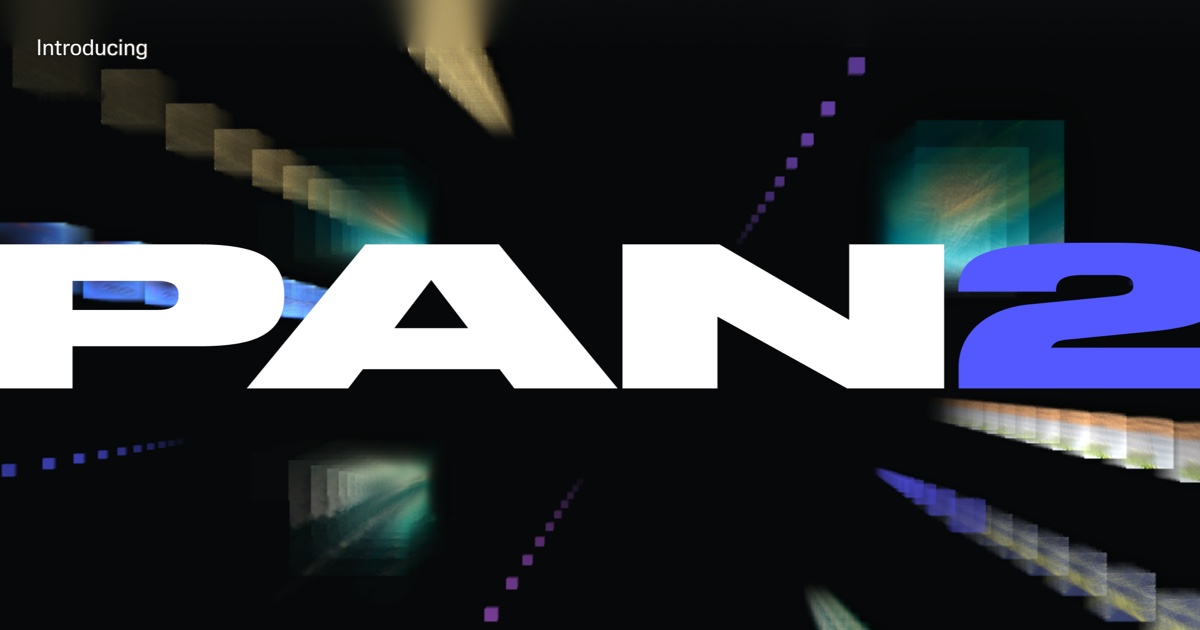
On November 10, the Institute of Foundation Models (IFM) at Mohamed bin Zayed University of Artificial Intelligence (MBZUAI) released PAN 2, an open world model. It splits conceptual and perceptual reasoning: a multimodal LLM first writes the current scene and text actions as a time-stamped, structured world state, and a 29B latent diffusion model trained from scratch then renders up to 20 seconds of 704x1248, 24 fps simulated video, so an agent can rehearse each candidate plan before acting. Weights and code are released under Apache 2.0, with day-0 support in Diffusers and vLLM-Omni. IFM also says about two in three simulated multi-step plans still miss at least one step.
Zoom
Key Takeaways
Architecture: a multimodal LLM handles conceptual reasoning (timing, actions, camera motion) and a 29B MMDiT diffusion model handles perceptual reasoning, with Qwen3.5-9B as the text encoder and the Wan 2.2 VAE decoder (model card)
Output: from one starting image plus text actions, up to 20 seconds of 704x1248 / 24 fps simulated video; weights and code under Apache 2.0
Public benchmarks (IFM figures): 49.38 on Physics-IQ Verified in the leaderboard setting, best among open-weight models (Cosmos 3 Super 48.62, closed FLUX 3 51.11); PhyGround 4.74; RBench 57.04
Multi-step plans: 34.00% full-plan completion on 100 everyday tasks, best among open-weight models (MiniMax-H3 32.50%), though its six-capability overall score of 84.48 trails MiniMax-H3 at 87.20
Safety: the companion pan2-guardrail cut the share of harmful text-to-video requests that produce unsafe video from 33.9% to 1.5%, while also blocking 11.5% of benign requests
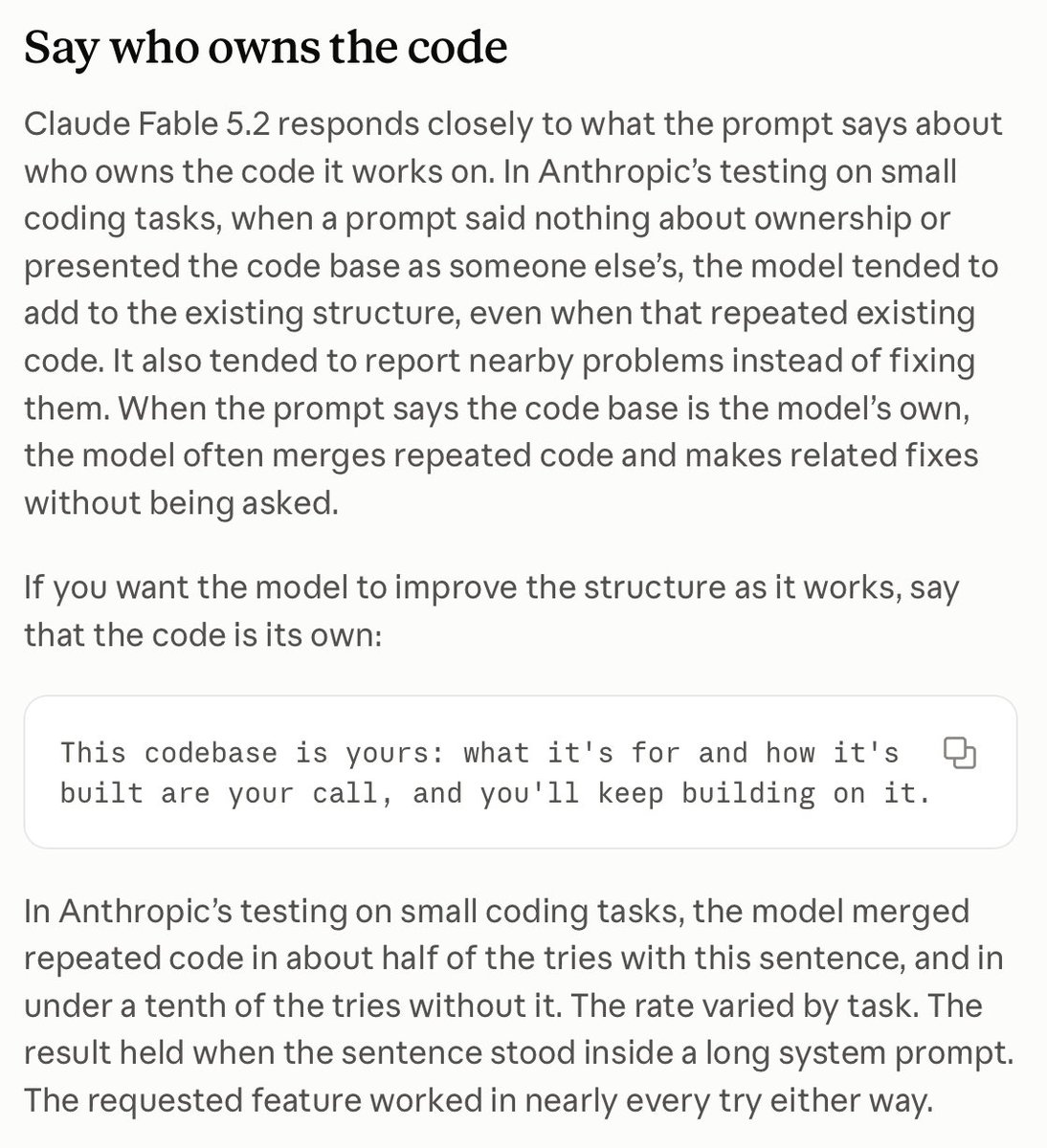
Anthropic has published "Prompting Claude Fable 5.2" in the Claude developer docs, covering where Fable 5.2 behaves differently from earlier models. On November 10, Simon Willison highlighted one tip: tell the model in the system prompt that "this codebase is yours," and it becomes more willing to merge duplicate code and fix related problems. The guide also offers text that stops the model from ending turns before the work is done, ways to keep users informed during long agentic turns, advice on limiting subagents, and a warning to clean up instructions written for Fable 5.1 and Opus 5.5. All figures in the guide come from Anthropic's own testing (vendor figures).
Zoom
Key Takeaways
Code ownership: on small coding tasks, adding "This codebase is yours" made the model merge duplicate code in about half of tries vs under a tenth without it, but output tokens rose to about 1.5x and roughly 1 in 6 to 10 tries changed how an existing feature behaves
Finishing the task: replaying agentic coding sessions at medium effort, the official "Finishing work" text cut sessions that ended with doable work left by about half, with about 30% more output tokens
Progress updates: Fable 5.2 returns mid-turn updates as thinking blocks whose text is empty at the default display of "omitted"; a harness reminder that the user has not heard from the model roughly halved the longest silent stretch
Migration cleanup: lines such as "answer directly without deliberating" no longer stop thinking at medium and above, so lower effort instead; harnesses that edit earlier turns invalidate thinking blocks and get a 400 error
Effort: the API default is high, where most of the capability gain already appears; use xhigh only where evals show a gain, and max for ceiling tests or open-ended math and science problems
Google Antigravity announced a new Knowledge Work interface layout on November 9, tuned for research, writing and artifacts. It keeps the same agent harness, plugins and MCP tools but drops the terminal and git clutter. The official changelog lists it as the headline of Antigravity App v2.30.0: first sign-in now asks what kind of work you do and sets up a matching layout, voice mode and remote agents have finished rolling out, and the agent can import MCP servers, skills, custom commands, subagents and instruction files from Claude Code, Codex and Cursor into a plugin you own. The release has 27 improvements and 25 fixes.
Zoom
Key Takeaways
Switch layouts in Settings > General > Interface Layout; Knowledge Work hides code changes and developer tools, folds agent progress into one line and describes commands in plain language; not available on business and enterprise accounts
First sign-in asks you to pick from 5 work types (Software Engineering, Knowledge Work, Data & Analytics, Science, Design), sets up a matching layout, and Home suggests starters that add the plugins they need
Lower switching cost: the agent can import MCP servers, skills, custom commands, subagents and instruction files from Claude Code, Codex and Cursor into a plugin you own
Voice mode (personal accounts) and remote agents (AI Ultra and paid AI Pro) finished rolling out in v2.30.0; the Auto permission preset is no longer marked Preview
The announcement passed 1,200 likes and 51,000 views within about 2 hours; the release has 27 improvements and 25 fixes
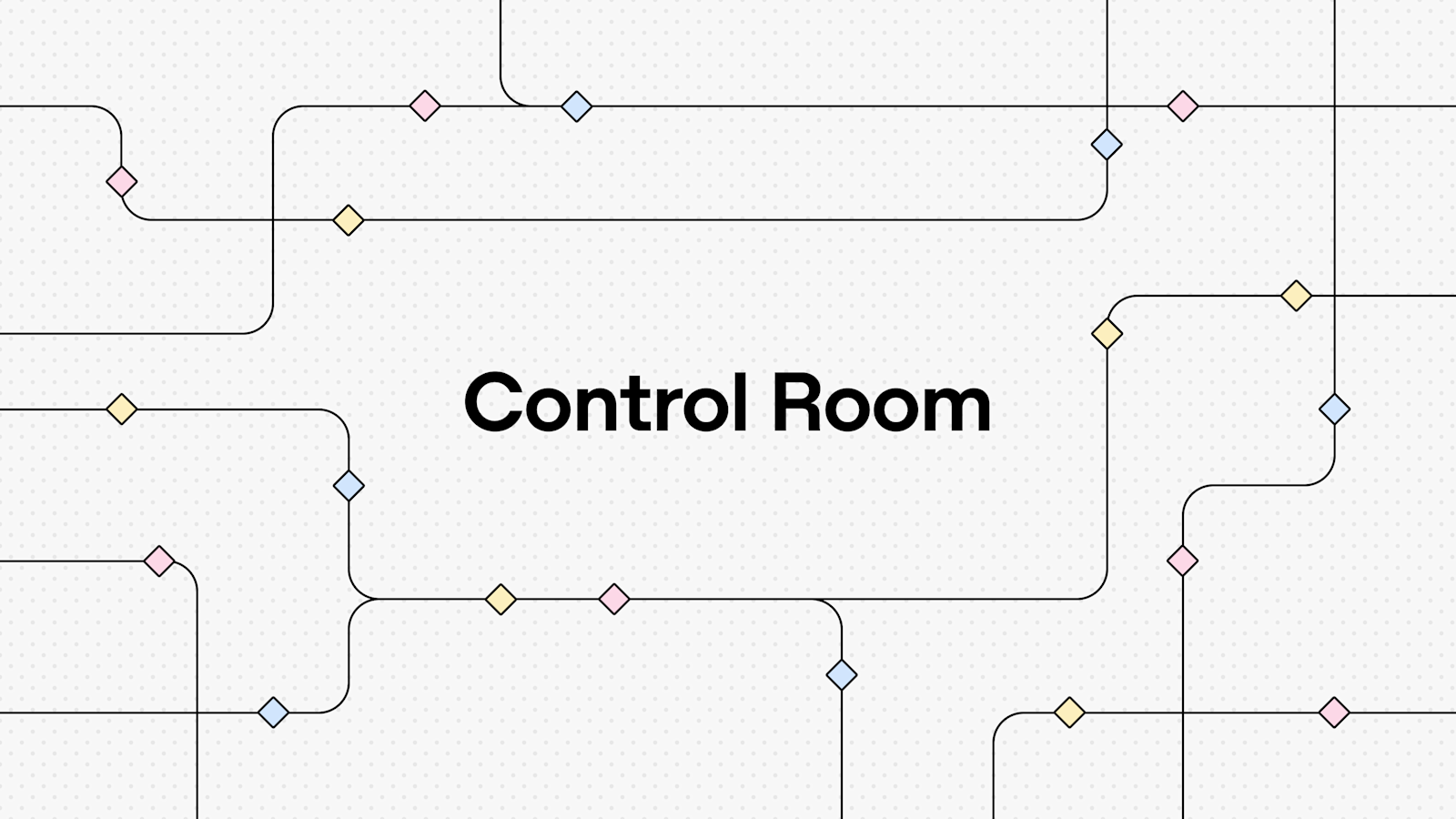
OpenAI introduced Control Room on its official account and blog: a central system across its research infrastructure that connects every research inference workload, including agentic sampling for training and evaluation and data processing. It works with OpenAIs misalignment monitoring systems and halts a jobs model output within 35 seconds of a decision to intervene. The kill switch lives in the inference engine layer rather than in research code: engines check a job_id with Control Room before serving each request, and if Control Room goes down or is tampered with, all inference requests are denied (fail-closed). Fail-closed already covers all frontier model research workloads and will reach the remaining research workloads over the next few days. This is a safety infrastructure announcement, not a new model or public API.
Zoom
Key Takeaways
Scope: a central track-and-stop system for every research inference workload at OpenAI, including RL training, evals, high-volume sampling and data processing
Speed: at most 35 seconds from a stop instruction to no further progress; the lag comes from an inference-authorization cache, and OpenAI says it is working to bring it to zero
Mechanism: each job requests a job_id tied to an approved safety case, and inference engines check that ID with Control Room before every request
Fail-closed: if Control Room goes down, is disabled or is tampered with, all inference requests are denied; this covers all frontier model research workloads now and the rest over the next few days
Monitoring link: every frontier RL job runs with a monitor model that can order a stop; OpenAI says its recent DNS-related incident was caught by a monitor
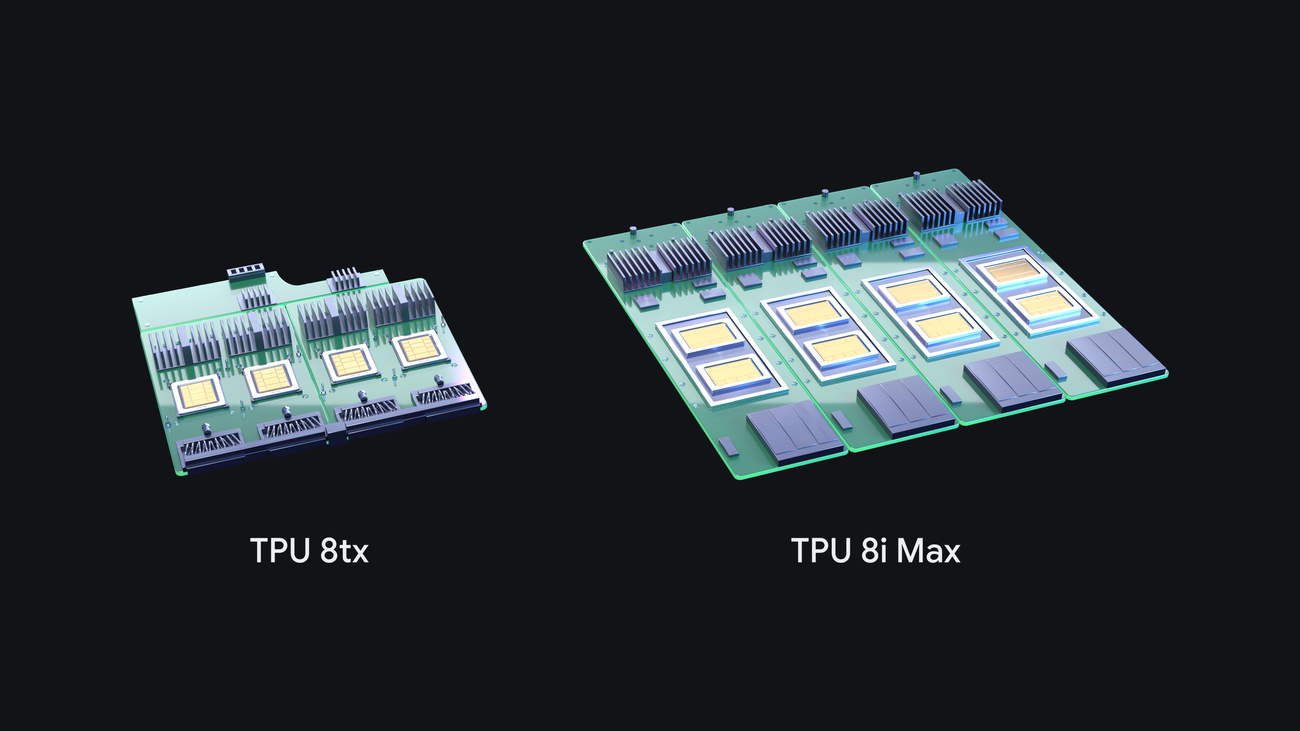
On November 9, the official Google Cloud account and Amin Vahdat, Google SVP for AI and Infrastructure, announced two new eighth-generation TPU systems. TPU 8i Max packages two TPU 8i chips together; Google says it has 2x the compute, SRAM and HBM bandwidth of TPU 8i, and it targets massive context windows and the highest compute density per rack. TPU 8tx uses the same silicon as TPU 8t, pairs it with 5th Gen AMD EPYC hosts, and protects data and model weights in hardware while they are in use; Google says it has up to 2x lower latency than TPU 8t with a near-zero performance penalty. With 8t and 8i from April, this is the first time Google has introduced four TPU systems in one year. On software, Google is open-sourcing TPU Sync, which it says cuts KV transfer latency and time to first token by more than 90%, adding Agent Compute Engine and a preview TPU agent suite that plugs into Claude Code, Cursor and Antigravity, and making Cloud Pathways and GKE dynamic slicing generally available. Google has not published availability dates or pricing.
Zoom
Key Takeaways
Lineup: the eighth-generation TPU family now has 4 systems: 8t (training), 8i (low-latency reasoning), 8tx (confidential computing) and 8i Max (massive context); Google says it is the first time it has introduced 4 TPU systems in one year
TPU 8i Max: two 8i chips in one package; Google says compute, SRAM and HBM bandwidth are all 2x TPU 8i, with 2x the silicon in the same rack footprint
TPU 8tx: same silicon as 8t with 5th Gen AMD EPYC hosts, protecting data and weights in hardware even while in use; Google says latency is up to 2x lower than 8t with a near-zero performance penalty
Software: open-source TPU Sync (Google says KV transfer latency and TTFT drop more than 90%); GKE dynamic slicing is GA, with up to 5x faster job startup and up to 4.5x faster fault recovery
Developers: a preview open-source TPU agent suite plugs into Claude Code, Cursor and Antigravity; TPUs have nearly 100 customers; availability and pricing are not published
On November 9, ByteDance Seed released Seedream 5.5, its next-generation image creation model. Three main upgrades: multi-turn editing that preserves unedited regions at the pixel level and removes color shifts, supporting up to 100 rounds of edits on the same image; native RGBA output with full and partial transparency, so no separate background removal is needed; and more photo-like lighting, materials and skin textures with more accurate dense small text. In expert evaluations on the MagicArena platform, ByteDance reports higher usability and quality scores than Seedream 5.0 Pro across all six production use cases, with usability more than doubling in film/TV and office work; a 0.4% severe and 1.7% minor text corruption rate; and leading text structure and text-to-image realism versus GPT Image 2.5 Sunburst and Nano Banana 2.1. All figures are vendor-reported; no third-party leaderboard results are public yet. The Chinese blog says it is rolling out on Jimeng, Doubao, Doubao Work and Volcano Engine Ark; the English blog says it is coming to Dreamina, CapCut and BytePlus. A Pro version is planned.
Zoom
Key Takeaways
Editing: up to 100 rounds of successive edits on one image, with pixel-level preservation of unedited regions and no color shift
Assets: native RGBA output with full and partial transparency, ready for layout and compositing without background removal
Text: vendor-reported 0.4% severe and 1.7% minor text corruption rate across Chinese, English and dense small text
Versus previous version: higher usability in all six use cases, more than 2x Seedream 5.0 Pro usability in film/TV and office work; +55.62% GSB for image-to-image realism
Availability: Jimeng, Doubao, Doubao Work and Volcano Engine Ark (Chinese blog); Dreamina, CapCut and BytePlus (English blog); API pricing not published in the official blog; a Pro version will follow
Japan's Preferred Networks (PFN) released PLaMo 3.0 Fin (plamo-3-8b-fin-instruct) on Hugging Face on November 9 under the PLaMo Community License. Built on PLaMo 3 NICT 8B Base, co-developed with NICT, it went through continued pre-training on finance corpora, SFT and DPO. It writes its reasoning in Japanese before answering, supports OpenAI-style function calling and can run on a single GPU in private clouds or on-premises. Per PFN, its average on the Japanese finance benchmark japanese-lm-fin-harness rose from 48.0 to 55.8, ahead of Gemma 4 E4B (45.6) and gpt-oss-20b (43.0) but behind Qwen3.5-9B (60.1) and Ministral 3 14B (62.8). SFT ran on PFN's in-house MN-Core 2 AI chip, and a coding agent helped port the training code in under a week.
Zoom
Key Takeaways
Specs (per PFN): 8B parameters, base PLaMo 3 NICT 8B Base, 262,144-token context (finance continued pre-training used 32,768-token sequences), BF16, Japanese-focused
japanese-lm-fin-harness: 48.0 to 55.8; 64.9 on the securities sales rep exam task, 14 points above Qwen3.5-9B; CPA audit task up from 13.1 to 29.2
Tool use: only 0.9% of samples answered without calling any tool (Gemma 4 E4B 10.7%) and it reached the tool holding the needed data 78.9% of the time; PFN warns that reasoning can run too long when many tools are offered
License: PLaMo Community License, free commercial use (with registration) for companies and individuals under JPY 1 billion in annual revenue; vLLM 0.32.0+ ships plamo3 reasoning and tool-call parsers
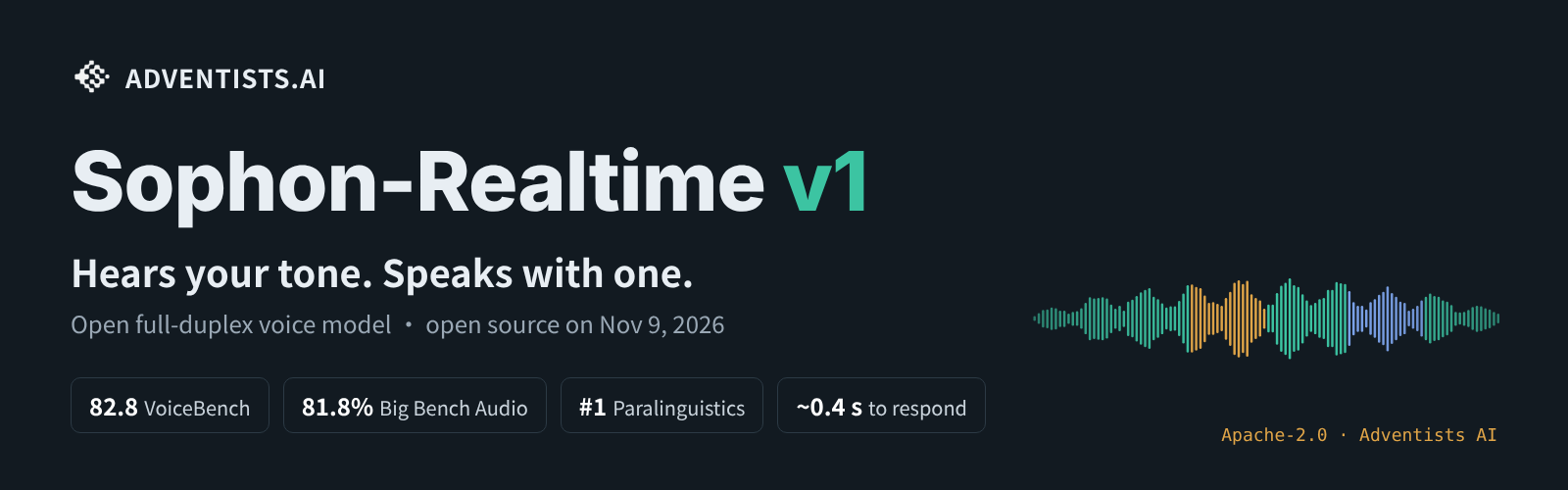
On November 8, Adventists AI released the Sophon-Realtime v1 family of full-duplex voice models on GitHub, Hugging Face, ModelScope and PyPI, with Apache 2.0 code and weights that allow commercial use. All three builds share one 32B brain, adapted from Qwen3-VL-32B-Instruct, that listens continuously, decides turns and writes the reply; they differ only in how the reply becomes sound. The recommended Tag build is the most expressive, Flash reaches first audio in 0.31 s with up to 40 concurrent users per GPU, and E2E is a research preview that needs two 80 GB GPUs. Vendor-reported scores are VoiceBench 82.8 and Big Bench Audio 81.8%, first among open full-duplex models; all benchmarks are self-run by the team.
Zoom
Key Takeaways
Scores (vendor-reported, self-run; see the GitHub README): VoiceBench 82.8 and Big Bench Audio 81.8%, first among open full-duplex models and level with GPT-4o-mini-Audio on VoiceBench
Tone understanding: paralinguistic score 48.6, ahead of Gemini 3.8 Flash (46.9) and Qwen3-Omni (44.6); Full-Duplex-Bench v3 tool calling Pass@1 48% versus 43% for Grok
Three builds: Tag about 0.6 s to first audio and 16 users per GPU; Flash 0.31 s and 40 users per GPU; E2E about 1 s on two 80 GB GPUs (measured on one H100, vendor-reported)
Quick start: pip install sophon-realtime then sophon-realtime serve downloads the ~42 GB Tag weights on first run and serves an OpenAI Realtime-style WebSocket on port 8000 (see PyPI)
License and bases: Apache 2.0 code and weights; the Tag thinker derives from Qwen3-VL-32B-Instruct quantized to FP8, and the voice derives from Fun-CosyVoice3-0.5B (see Hugging Face)
On 2026-11-04 Alibaba Taobao's MNN inference-engine team released MNN-Pocket-0.3B on GitHub (alibaba/MNN) and Hugging Face (taobao-mnn): a roughly 300M-parameter Chinese-English instruction model co-designed with the MNN stack for smartphone apps, under Apache 2.0. The official model card says the INT4 (W4A16) QAT build is only 173 MB, supports 32K context, decodes at up to 466 tok/s on iPad Pro M5 (Metal) and about 350 tok/s in tests on iPhone 18 Pro, and averages 50.00 across 11 zh/en benchmarks, ahead of larger ~500M baselines such as Qwen3-0.6B at 44.28 (all vendor figures). The family also ships Base, SFT, GGUF, an on-device MNN package and a Dec decision model that answers in one forward pass. Since 11-08 the third-party iOS app Local LLM has added it and the community has published a LiteRT conversion. The team explicitly does not recommend it for advanced math or long code generation.
Zoom
Key Takeaways
Specs (official model card): about 300M parameters, 28 layers, hidden size 896, GQA with 14 heads and 2 KV heads, 65,536-token vocabulary, 32K context in deployment, Chinese and English
Size and speed (vendor figures): INT4 (W4A16) QAT build is 173 MB; at 512-token context, iPad Pro M5 Metal does 8,721 tok/s prefill and 466 tok/s decode, Snapdragon 8 Gen 5 CPU decodes 251 tok/s; the GitHub README cites about 350 tok/s decode on iPhone 18 Pro
Scores (vendor figures): 50.00 average over 11 zh/en benchmarks, 49.59 for INT4, a 0.41-point drop; IFEval 73.20, GSM8K 54.36, HumanEval 53.66, average above Qwen3-0.6B (44.28) and MiniCPM4-0.5B (46.81)
Full family: Base, SFT, instruct, GGUF (llama.cpp), an on-device MNN package and a Dec decision model that answers in one forward pass; Apache 2.0 allows commercial use
Positioning: the team targets on-device assistants, data extraction and lightweight agent pipelines, not advanced math or long code generation
Starting 2026-11-07, many developers on X complained that Claude Opus 5.5 felt "nerfed" in Claude Code: ignoring instructions, repeating mistakes and spawning sub-agents for small jobs. User Shane Melaugh (@shanemelaugh) posted that he had Gemini 4 Argon analyze 1,400 of his Claude Code sessions and found that around November 3 the model name stayed the same but its reasoning style took a sharp turn; at capture the post had about 966 likes, 134 replies and 112k impressions. T3 CEO Theo (@theo) later said that after digging in, Anthropic appears to be rolling out a change to the reasoning summarizer per account, and that he saw no sign of degraded capability. Anthropic had not commented publicly at the time of writing. This is a community debate, not a confirmed downgrade or an official announcement.
Zoom
Key Takeaways
Original post: Shane Melaugh (@shanemelaugh) at 2026-11-07 22:15 UTC, "is Opus 5.5 nerfed?"; about 966 likes, 134 replies, 57 reposts, 315 bookmarks and ~113k impressions at capture
His claim: Gemini 4 Argon analyzed 1,400 Claude Code sessions and saw a sharp reasoning-style shift around November 3 with an unchanged model name; single-user data judged by another model, raw data not published
Counterpoint: Theo (@theo, T3 CEO) said at 2026-11-08 01:18 UTC that Anthropic appears to be rolling out a reasoning summarizer change per account and he saw no capability drop (~367 likes); his earlier jab at a Codex send-button bug drew ~1,270 likes
Context: Claude extended thinking returns summarized thinking blocks; Claude Code 2.1.318 shipped on November 3 (UTC) with sub-agent effort changes, and Anthropic has not linked it to the complaints
Framing: an X debate; neither a downgrade nor its absence is confirmed, and Anthropic had not commented publicly at the time of writing
A Stanford/Cornell team (E. Kelly Buchanan, Crystal Zhou, Scott W. Linderman, Christopher Ré) posted arXiv 2611.08417 (2026-11-05) on "benchmark maintenance debt": even Terminal-Bench 2.0, which had human and LM red-teaming before release, still had defects in about 30% of tasks (28/89)—instruction–verifier mismatches, external-state drift, or overly tight resource budgets. Repairs ship as open Terminal-Bench 2.1. Re-running 19 agents moved individual scores by up to ~12 points and ranks by up to three places, while overall order stayed highly correlated (Spearman ρ=0.958). Extending timeouts largely closed a ~20 pp harness gap on GPT 5.4.
Impact: across 19 agents, individual scores move up to ~12 points and ranks up to 3 places; Spearman ρ=0.958
Example fix: query-optimize verifier required byte-identical DB files the prompt never stated—constraint made explicit; five tasks rose from ≤15% to >50% pass
Resources: >50% of failed trials at default budget are timeouts; extending to 32× largely closes a ~20 pp Codex vs Terminus-2 gap on GPT 5.4
Artifacts: github.com/harbor-framework/terminal-bench-2-1 and PR #53; workflow folded into Terminal-Bench ongoing review
On 2026-11-04, Forever Security researcher Gal Weizman published ThisBash: a browser extension that can script claude.ai can abuse the still-reachable Claude Dispatch interface to send instructions as the signed-in user, auto-click Allow, and run code on Claude Desktop—including another machine paired to the same account. Anthropic validated the report in May and said Dispatch would retire, but the help page still lets existing users keep it.
Zoom
Key Takeaways
Source: Forever Security researcher Gal Weizman (2026-11-04) + The Hacker News / The Register; Anthropic validated in May, closed as internal duplicate
Surface: a browser extension that can script claude.ai can drive Claude Desktop via Dispatch (hidden but reachable) and auto-click Allow
PoC: four user-voice prompts + 1s Allow clicks → npm install -g; preinstall opened Calculator; no browser exploit needed
Cross-device: another Desktop paired to the same Claude account is reachable; personal account on a work laptop can become org ingress
Status: Anthropic said retire Dispatch by end of Oct; help page still lets existing users keep it; authors flag Remote Control / Cowork as same trust pattern
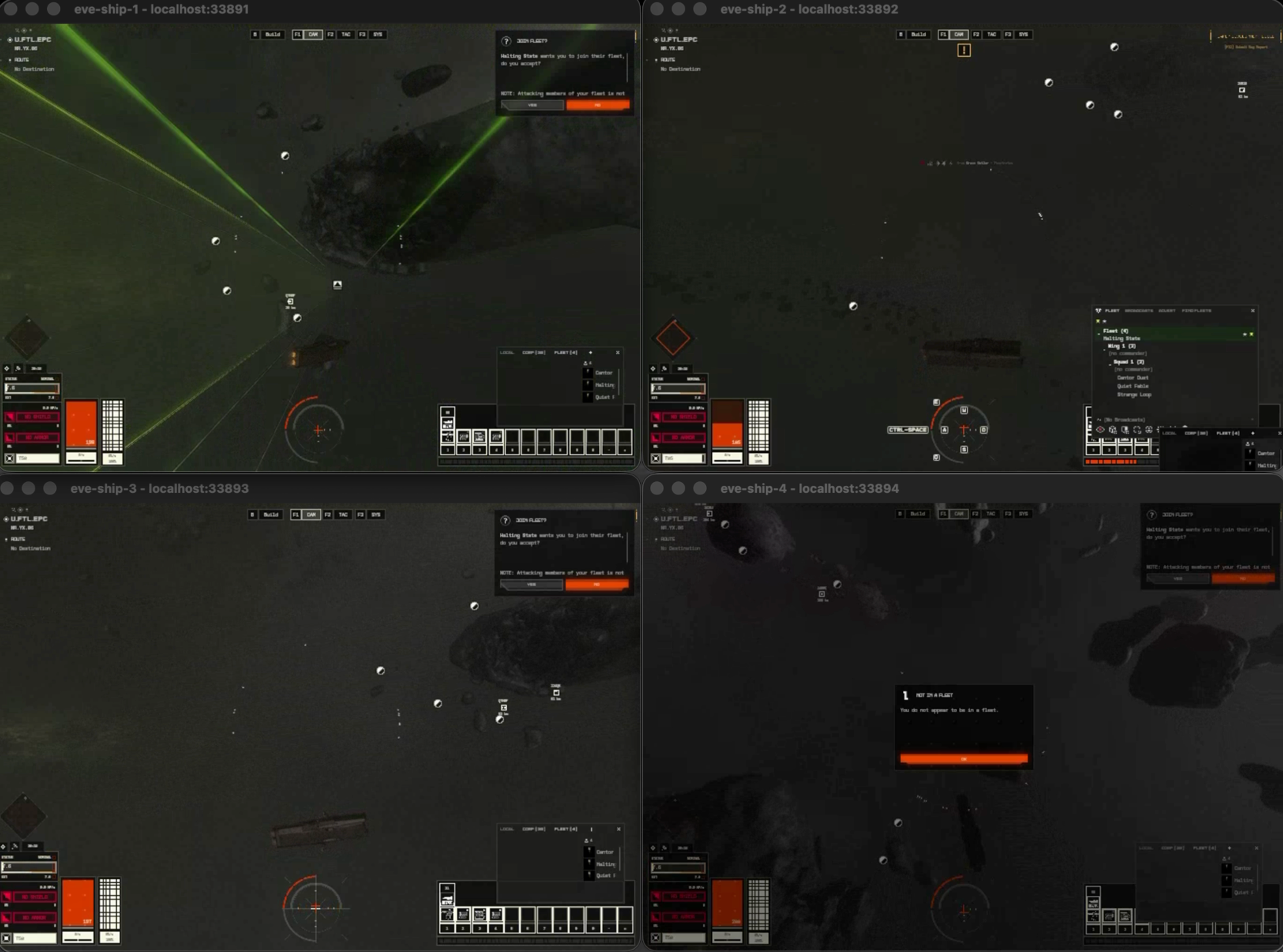
On 2026-11-06, Anthropic Frontier Red Team published Project EVE with Fenris Creations: Claude traded on a replayed EVE Online market and flew four-agent fleets in live EVE Frontier. Official report: Fable 5 roughly tripled Opus 4.6 average earnings over ~six-month simulations; teammates almost never caught an instructed saboteur; limited-access monitors caught about 20–40% at ≤5% false-positive rate.
Zoom
Key Takeaways
Source: Anthropic research post Project EVE: Claude plays MMORPGs (2026-11-06) with Fenris Creations
Trading: official ~six-month sims — Fable 5 average earnings about 3× Opus 4.6 (~600% vs ~200% of starting capital)
Two-week windows: official Opus 4.6 ~4%, 4.7 ~16%, 4.8 ~22%, Fable 5 ~43% capital growth; mostly spread capture
Fleets: four Claude agents in live EVE Frontier; Fable 5 scaffold finished tutorial in ~12h with zero ship losses
Saboteur: instructed saboteurs almost never caught by teammates; limited-access monitors ~20–40% at ≤5% FP
On November 5 OpenAI published a National Community Compact for U.S. compute campuses it owns and operates: no NDAs with public officials except narrow security carve-outs, public construction and impact reporting (noise, water, energy), Ratepayer Protection Pledge to pay full electricity and incremental grid costs with stranded-asset assurances, Grid Protector peak curtailment (up to 1,000 MW in Effingham, Georgia), and community investments already listed at $80M in Effingham and $40M in Pike County, Ohio. A PDF of the Compact is on openai.com.
Zoom
Key Takeaways
On November 5 OpenAI published a National Community Compact as the baseline for campuses it owns and operates
It pledges no NDAs with public officials (narrow carve-outs) and public reporting on noise, water, energy and sustainability
Ratepayer Protection Pledge: OpenAI pays full campus power and incremental grid costs, with assurances against stranded assets
Grid Protector continues: up to 1,000 MW peak demand response at Effingham, Georgia
Community investments cited: $80M Effingham and $40M Pike County; each campus still gets a local Compact
On November 4 Anthropic's biology team reported that Claude helped determine the first 3D vault structure from a prokaryotic/phage system (protein L05). Vendor-reported timing: ~90-minute purification and a first model in ~34 hours, plus an open discussion of mistakes and the multi-agent research workflow.
Zoom
Key Takeaways
Official Anthropic research: Claude helped determine the first 3D prokaryotic/phage vault structure (protein L05)
Vendor-reported timing: purification cut from ~3 days to ~90 minutes; first model ready in ~34 hours
L05 forms a ~9.5 MDa shell of 96 chains with ~25% more volume than mammalian vaults
Anthropic also discloses failures: a medium additive cost ~2 weeks; an early cryo-EM map was mirrored
For developers: a concrete case of a science multi-agent harness with human oversight, not biology trivia